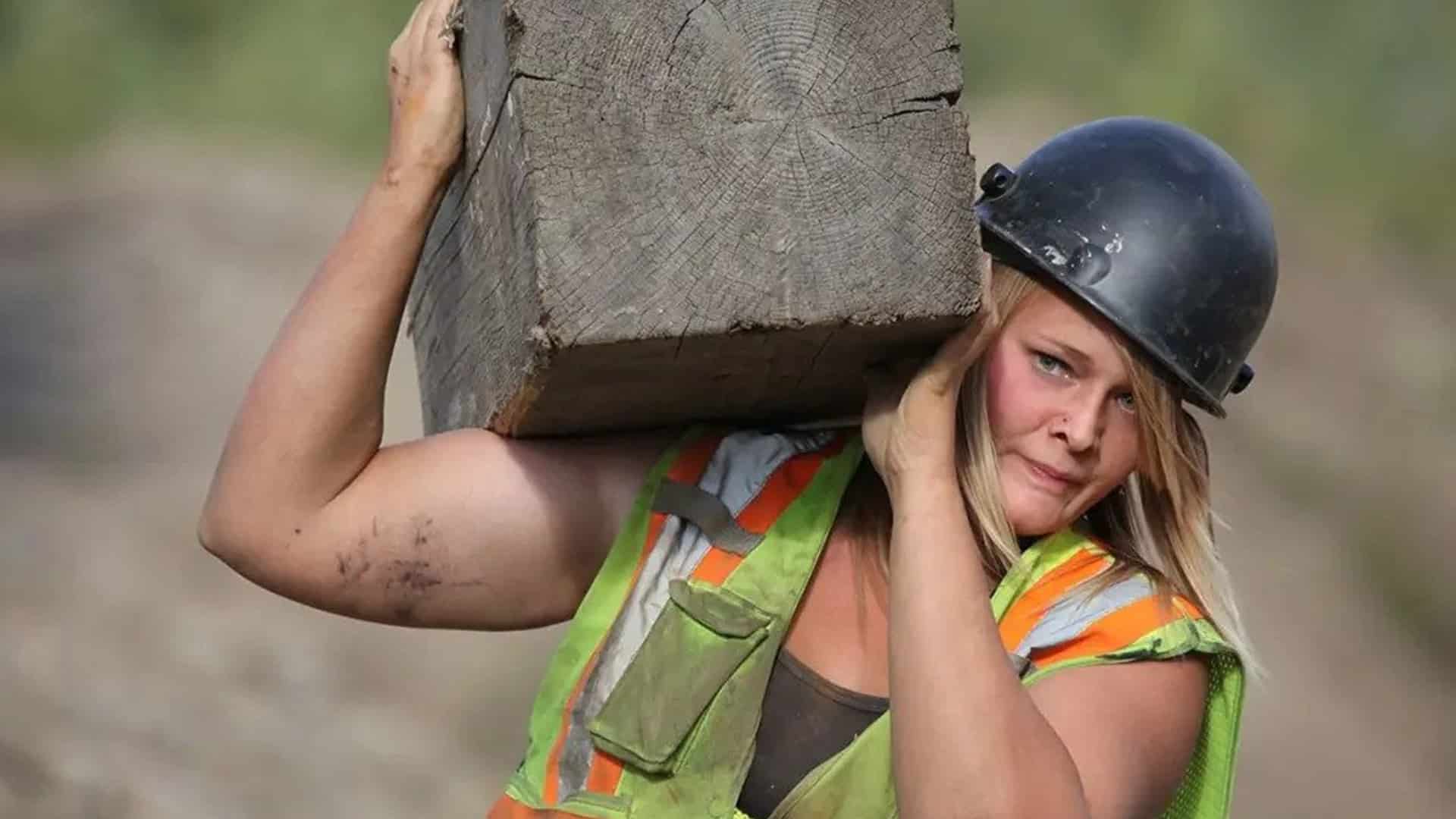
Monica Beets: Career, Heavy Equipment Expertise, and Role in Yukon Placer Mining
Monica Beets is a Canadian commercial gold miner and reality television personality best known for her prominent role on Discovery Channel’s long-running series Gold Rush. Working alongside her father, legendary Klondike mining icon To...
Monica Beets is a Canadian commercial gold miner and reality television personality best known for her prominent role on Discovery Channel’s long-running series Gold Rush. Working alongside her father, legendary Klondike mining icon Tony Beets, she has spent decades operating heavy machinery, supervising wash plant operations, and managing large-scale placer gold claims in Dawson City, Yukon.
Contents
Early Life and Apprenticeship in Dawson City Placer Mining
Born on November 7, 1993, in Dawson City, Yukon, Monica Beets was raised directly within the rugged environment of northern Canadian placer gold mining. As the youngest daughter of Tony and Minnie Beets, her childhood was inextricably linked to the seasonal rhythms of the Klondike gold fields. Unlike traditional upbringings, her early education combined formal schooling with practical immersion in heavy industrial operations at family claims such as Paradise Hill and Paradise Claim along the historic Klondike river basins.
Placer mining in the Yukon requires immediate familiarity with diesel mechanics, earth-moving logistics, and water management. By age twelve, Monica began learning the fundamentals of heavy equipment handling under the direct supervision of her father. By age sixteen, she had achieved full operational competency on primary mining machinery, serving as a full-time equipment operator during the intense, four-to-five-month northern summer season. This early apprenticeship established her operational foundation, enabling her to transition from basic earthmoving duties to high-stakes crew supervision and site management in her early twenties.
Her technical progression was defined by trial under extreme arctic conditions. Operating in permafrost terrain requires a specialized understanding of soil mechanical behavior, thermal degradation of frozen paydirt, and mechanical stress on cold-exposed hydraulic systems. These early experiences positioned her not merely as a televised personality, but as a credentialed field supervisor capable of running multi-million-dollar gold reclamation facilities.
Professional Evolution on Discovery Channel's Gold Rush
Monica Beets made her featured television debut on Discovery Channel's Gold Rush during its fifth season, though she had worked behind the scenes on Beets family claims since the show's inception. Her transition to on-screen prominence highlighted her ability to manage complex mining claims, lead diverse pit crews, and resolve severe mechanical bottlenecks under tight seasonal constraints.
Note: *Gold Rush* documents real-world Yukon placer operations where miners must extract enough troy ounces of fine gold between May and October to cover massive annual capital expenditures, fuel overhead, and equipment leases.
As her career progressed, Tony Beets assigned Monica increasing operational autonomy. She took over full supervisory responsibilities at key mining sites, including operations at Paradise Hill, Indian River, and Eureka Creek. Her responsibilities expanded from simple excavator work to orchestrating entire operational workflows:
- Pit Excavation and Stripping Management: Directing bulldozers and excavators to strip overburden (non-gold-bearing topsoil and frozen muck) down to the gold-rich gravel layers resting above bedrock.
- Wash Plant Feeding and Calibrations: Overseeing high-tonnage wash plants such as "Slucifer" and custom-built trommels, ensuring consistent hourly yardage throughput without overwhelming the internal riffle tables.
- Crew Directives and Shift Scheduling: Managing shift rotations, fuel supply logistics, and safety protocols for haul truck drivers, loader operators, and maintenance technicians.
- Gold Recovery and Cleanup: Executing sensitive gold cleanup processes using fluid-bed concentrators, shaker tables, and magnetics to isolate fine placer gold from heavy black sand (magnetite and hematite).
Her leadership style contrasts with the boisterous approach of her father, emphasizing precise mechanical pacing, preventative maintenance, and calm tactical problem-solving during chronic system breakdowns.
Heavy Equipment Operational Mastery & Technical Roles
Placer gold recovery relies on the efficient processing of thousands of loose bank cubic yards (BCY) of gravel per day. Monica Beets' technical reputation is built on her operational mastery of critical heavy machinery categories essential to high-volume northern placer mines.
Operational Insight: Hydraulic Excavator Placement Proper positioning of primary excavators at the feed hopper determines the overall efficiency of a wash plant. Operating high-capacity excavators like the CAT 349 or CAT 390 requires smooth bucket cycles to prevent surging in the trommel screen, which directly causes fine gold loss through tailings discharge.
Equipment Command and Functional Responsibilities
- High-Capacity Hydraulic Excavators: Utilized for digging deep paydirt cuts, loading articulated rock trucks, and feeding high-tonnage hoppers. Precision bucket control is necessary to scrape gold trapped within the top inches of fractured bedrock.
- Heavy Track-Type Tractors (Bulldozers): Operating CAT D10 and D11 dozers to push massive volumes of dry overburden, construct tailings dams, and maintain slope stability across active open pit cuts.
- Articulated Dump Trucks: Coordinating haulage fleets (such as Volvo A40 series) to transport raw paydirt from distant cuts to central processing plants while navigating steep, muddy haul roads.
- Trommel and Sluice Box Systems: Adjusting water volume supply pumps, screen angles, and sluice matting parameters to maximize fine gold retention (often down to 100-mesh particle sizes).
The technical complexity of placer mining lies in balancing water flow rate against slurry velocity. If water pressure is too low, the wash plant clogs with sticky clay; if water pressure is too high, fine gold flake is washed out the back end with coarse gravel tailings. Monica's expertise in fine-tuning these hydraulic parameters has repeatedly prevented substantial financial losses during high-tonnage runs.
Operational Profile & Career Milestones
The following table synthesizes the operational parameters, roles, and technical scope associated with Monica Beets' career across Yukon gold fields.
| Operational Dimension | Technical Details & Career Metrics | Operational Impact |
|---|---|---|
| Primary Region of Operation | Klondike Mining District, Dawson City, Yukon | Focus on unglaciated placer deposits along historic creek drainages. |
| Key Claim Locations | Paradise Hill, Indian River, Eureka Creek, Screamer Cut | High-yield alluvial gravel sites requiring deep overburden stripping. |
| Primary Equipment Operations | CAT 349/390 Excavators, CAT D10 Dozers, Volvo A40 Haul Trucks | Heavy earthmoving, bedrock scraping, and feed hopper loading. |
| Wash Plant Management | "Slucifer", High-Tonnage Trommels, Custom Sluice Runs | Optimization of slurry flow rates and fine-gold recovery mats. |
| Core Responsibilities | Mine Boss, Equipment Operator, Wash Plant Supervisor | Directing crew shifts, preventative maintenance, gold cleanup. |
| Media Profile | Discovery Channel’s Gold Rush (Featured Season 5–Present) | Technical demonstration of modern Yukon placer gold mining. |
The Economics and Environmental Realities of Yukon Mining
Operating a commercial placer gold mine in the Yukon involves severe financial risk, strict regulatory frameworks, and complex environmental geology. Monica Beets operates within a regulatory framework governed by the Yukon Water Board, Energy, Mines and Resources (EMR), and Fisheries and Oceans Canada (DFO).
Placer mining does not rely on chemical extraction like cyanide leaching used in hard-rock gold mining. Instead, it relies purely on gravity separation, using water to separate heavy gold (specific gravity ~19.3) from lighter rock and sand (specific gravity ~2.65). Consequently, water management is the most critical compliance liability for mine managers.
Yukon Water License Compliance Checklist: 1. Tailings Settlement Ponds: Settling suspended solids prior to discharging water back into natural watercourses. 2. Recycle Systems: Pumping settled water back to the wash plant to minimize fresh water extraction. 3. Fish Habitat Protection: Maintaining natural river buffers and stream diversions. 4. Progressive Land Reclamation: Re-contouring disturbed tailings and re-establishing topsoil layers.
From an economic perspective, operational success depends on managing high daily burn rates. Diesel fuel consumption for a full fleet of heavy excavators, bulldozers, haul trucks, and 100-horsepower water pumps can easily exceed thousands of gallons per day. As a site supervisor, Monica must constantly calculate the yield threshold—measured in raw troy ounces per hour of plant operation—to ensure that paydirt grade (e.g., 0.02 to 0.05 oz per yard) exceeds the combined overhead costs of fuel, equipment depreciation, labor, and land royalties.
Personal Life, Family Business, and Industry Legacy
Despite the public exposure that comes with starring in a internationally broadcast television show, Monica Beets has maintained a focus on field operations and family life in the Yukon. In 2018, she married Taylor Mayes in a ceremony in Dawson City, and she has since balanced the demands of raised family responsibilities with the intense shift work required during active mining seasons.
Within the family business structure, Monica represents an essential bridge between traditional Klondike mining practices and modern, efficiency-driven management. Working alongside her brothers Kevin and Mike under the overall direction of Tony and Minnie Beets, she has helped transform the Beets enterprise into one of the largest self-contained placer mining operations in the Klondike region.
Her presence in heavy industry has also made her a notable figure for women in non-traditional trades. Placer mining and heavy equipment operation historically featured severe gender imbalances. By demonstrating technical competency on heavy machinery and maintaining authority over large operational crews, Monica has become a widely recognized reference point for female operators entering commercial extraction, forestry, and civil construction sectors.
Frequently Asked Questions
What is Monica Beets' primary role on Gold Rush?
Monica Beets serves as a heavy equipment operator, wash plant supervisor, and mine boss for the Beets family gold mining operations in the Yukon. She is responsible for excavating paydirt, maintaining wash plant throughput, managing pit crews, and conducting fine-gold cleanups.
Where do Monica Beets and her family conduct their gold mining operations?
Their operations are located in the Klondike Mining District near Dawson City, Yukon Territory, Canada. Major claims operated by the family include Paradise Hill, Indian River, and Eureka Creek.
How long has Monica Beets been operating heavy machinery?
Monica began learning to operate heavy earthmoving machinery around age twelve under her father Tony Beets. By age sixteen, she was working as a full-time equipment operator on active commercial gold sites.
What equipment does Monica Beets specialize in operating?
She specializes in high-capacity hydraulic excavators (such as Caterpillar 349/390 models), heavy bulldozers (CAT D10/D11), articulated rock trucks, and advanced sluice/trommel wash plants designed for placer gold recovery.
How does placer gold recovery differ from hard-rock gold mining?
Placer mining extracts loose, eroded gold flakes and nuggets from sand and gravel deposits without chemical treatments. It relies entirely on physical water-and-gravity separation, whereas hard-rock mining requires drilling, blasting, crushing ore, and chemical leaching.
Is Monica Beets still actively involved in Yukon placer mining?
Yes, Monica Beets remains actively engaged in Klondike placer mining operations, managing seasonal shifts, equipment operations, and mine site supervision during the northern Yukon mining season.
Conclusion and Operational Takeaways
Monica Beets' career highlights the industrial rigor, mechanical skill, and environmental management required to succeed in northern placer gold mining. Beyond her role as a television personality, her practical mastery of high-tonnage excavation, wash plant fluid dynamics, and arctic field management positions her as a highly capable mine operator in the Canadian North. For industry observers and aspiring equipment operators alike, her work demonstrates that sustained success in extreme natural-resource extraction demands deep mechanical knowledge, operational adaptability, and unflinching discipline.
Image Gallery