Is the University of Pennsylvania Private? Public vs. Private Status Explained
Yes, the University of Pennsylvania (commonly called Penn or UPenn) is a private research university. Located in Philadelphia, Penn is an independent, non-profit institution governed by a private Board of Trustees. It is one of the eig...
Yes, the University of Pennsylvania (commonly called Penn or UPenn) is a private research university. Located in Philadelphia, Penn is an independent, non-profit institution governed by a private Board of Trustees. It is one of the eight private universities that comprise the Ivy League and receives no direct operational funding or oversight from the Commonwealth of Pennsylvania.
Contents
Why the University of Pennsylvania Is a Private Institution
The University of Pennsylvania operates under an independent charter as a non-profit higher education institution. While many flagship state universities share naming conventions with their home states—such as the University of Michigan, the University of Virginia, or the University of Florida—Penn’s structure, governance, and financial operations are entirely private.
Understanding Penn's legal and operational status requires looking at three core pillars: governance, funding, and athletic/academic affiliations.
Private Board Governance
Penn is governed by a self-perpetuating Board of Trustees. Trustees are responsible for appointing the university president, setting strategic priorities, approving academic programs, managing institutional assets, and overseeing the annual operating budget. Unlike public university boards, which often feature trustees appointed by state governors or elected by public vote, Penn’s trustees are selected internally from alumni, educational leaders, and corporate executives.
Independent Financial Model
Public universities rely heavily on annual appropriations from state legislatures to subsidize operational expenditures and keep tuition rates lower for state residents. Penn receives no ongoing operational appropriations from the Commonwealth of Pennsylvania. Instead, its operating budget relies on:
- Tuition and Fees: Student revenues cover educational costs.
- Private Philanthropic Support: Gifts from alumni, corporations, and philanthropic foundations.
- Endowment Income: Investment earnings generated by the university’s multi-billion-dollar private endowment fund.
- Competitive Research Grants: Federal agencies (such as the National Institutes of Health and National Science Foundation) award competitive research grants to Penn faculty, which are available to both public and private research institutions.
Ivy League Athletic and Academic Membership
Penn is an original member of the Ivy League, an athletic conference created in 1954 comprising eight elite institutions in the Northeastern United States. All eight Ivy League members—Brown, Columbia, Cornell, Dartmouth, Harvard, Penn, Princeton, and Yale—are private universities. None operate as state-funded institutions.
UPenn vs. Penn State: Clearing Up the Common Confusion
The primary reason people mistake the University of Pennsylvania for a public institution is its name, which closely resembles The Pennsylvania State University (commonly known as Penn State or PSU). Despite the phonetic similarity, these are two entirely separate entities with distinct campuses, administrative structures, and funding models.
Key Differences Between UPenn and Penn State
Institutional Type:
- University of Pennsylvania (Penn / UPenn): A private, highly selective Ivy League research university.
- Pennsylvania State University (Penn State / PSU): A public, state-related land-grant research university system.
Geographic Location:
- University of Pennsylvania: Situated on an urban campus in University City, West Philadelphia.
- Pennsylvania State University: Headquartered at a large rural/suburban campus in University Park (State College), Pennsylvania, alongside 19 commonwealth campuses across the state.
Tuition Rates and Residency Discounts:
- University of Pennsylvania: Charges a single tuition rate for all undergraduate students, regardless of whether they live in Pennsylvania, another U.S. state, or an international country.
- Pennsylvania State University: Offers significantly lower tuition rates to legal residents of Pennsylvania while charging higher rates to out-of-state and international students.
Student Population:
- University of Pennsylvania: Enrolls approximately 10,000 undergraduate students and 13,000 graduate/professional students.
- Pennsylvania State University: Enrolls over 45,000 undergraduate students at its main University Park campus alone, with total system-wide enrollment exceeding 85,000 students.
Historical Origins of the Name: Why Is a Private School Named After a State?
The history of the University of Pennsylvania pre-dates the founding of the United States, explaining why its corporate name sounds like a public state university.
Benjamin Franklin and the Founding of 1740
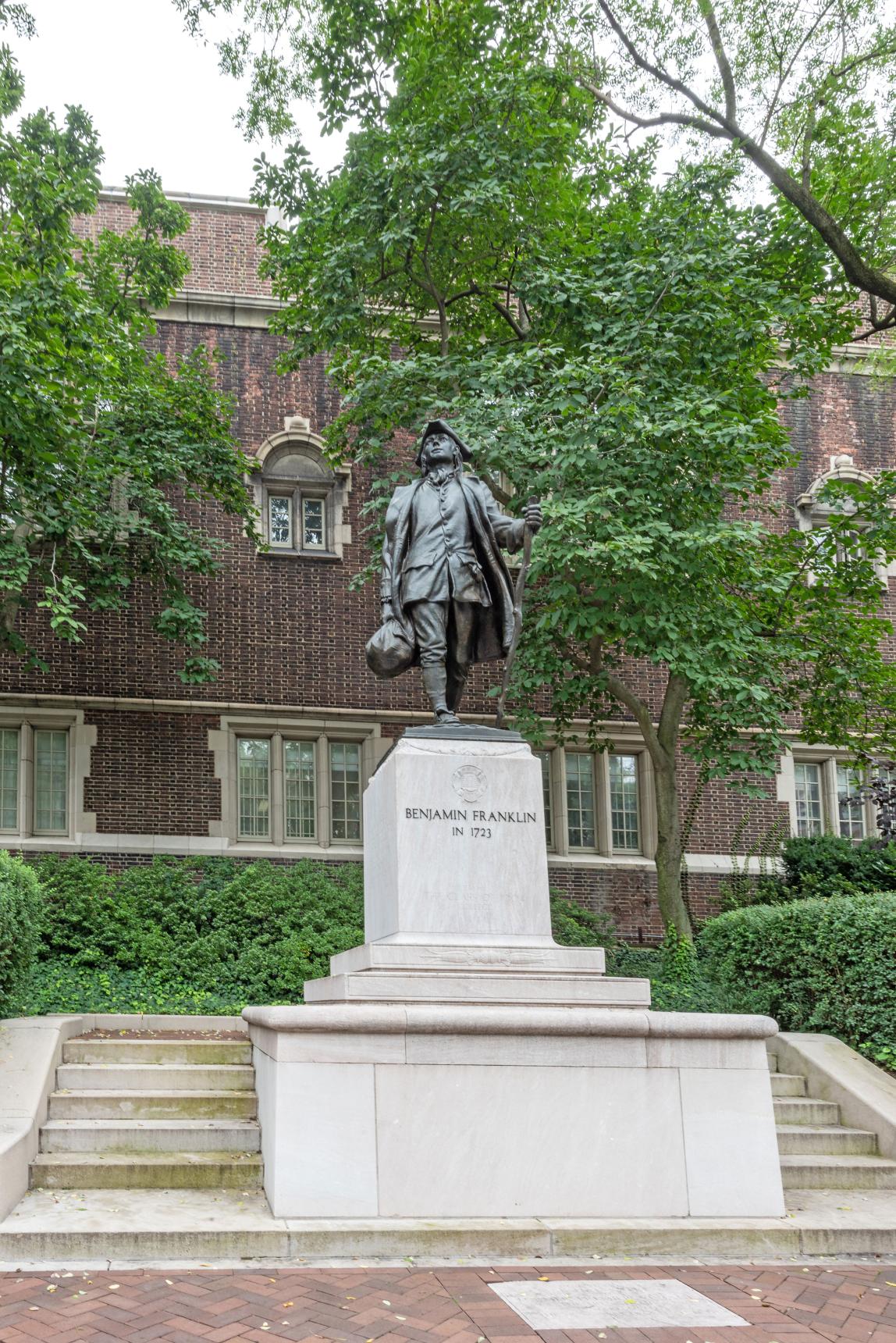
Penn traces its origins to 1740, when a trust was established to build a Philadelphia charity school and house of worship. In 1749, Benjamin Franklin published his famous essay, Proposals Relating to the Education of Youth in Pensilvania, leading to the establishment of the Academy of Philadelphia, which received its charter in 1755 as the College of Philadelphia.
During the colonial era, educational institutions were often named after their geographical locations or colonies, rather than private benefactors. At the time of its founding, the concept of a state-funded public university system did not yet exist in North America.
The Revolutionary War Era and the Brief State Intervention
During the American Revolution, political tension arose between the college's leadership and the radical Pennsylvania state government. In 1779, the Pennsylvania General Assembly revoked the college's colonial charter, claiming the institution was overly loyal to the British Crown. The state legislature created a new entity: the University of the State of Pennsylvania.
This marked the first institution in the United States to explicitly use the title "University." However, in 1789, the state legislature restored the original charter to the College of Philadelphia after determining the charter revocation was unconstitutional. In 1791, the private College of Philadelphia and the state-influenced University of the State of Pennsylvania formally merged into a single private corporate body: The Trustees of the University of Pennsylvania.
Since 1791, the university has maintained continuous status as a privately endowed, privately governed corporation.
Financial Implications for Students: Tuition and Financial Aid
Because Penn is a private institution, its tuition framework operates differently from public university systems. Understanding these financial structures helps prospective applicants evaluate real-world costs.
Flat Tuition Structure
At public state universities, tuition fees are tiered based on state residency because state taxpayers subsidize educational costs for local residents. Penn does not offer an in-state tuition discount. A resident of Philadelphia pays the exact same sticker price for tuition, housing, and fees as a student applying from California, Texas, or internationally.
All-Grant Financial Aid Model
While private university sticker prices are high, Penn operates one of the nation's largest grant-based undergraduate financial aid programs.
- Need-Blind Admissions: Penn practices need-blind admissions for domestic undergraduate applicants (U.S. citizens, permanent residents, and eligible non-citizens). An applicant's ability to pay tuition is not considered during the admissions review process.
- 100% Demonstrated Need Met: Penn commits to meeting 100% of a family's calculated financial need through university grant funding and work-study positions.
- No Student Loans in Aid Packages: Penn’s financial aid packages replace traditional student loans with university grants. Students can graduate without incurring federal or institutional student loan debt to cover calculated educational costs.
For low- and middle-income families, attending a private university like Penn with a strong grant-based aid program can prove less expensive than attending an out-of-state public university or even an in-state public institution without comparable grant aid.
Detailed Comparison: UPenn vs. Public State Universities
The table below contrasts the institutional structure, financial policies, and governance of the private University of Pennsylvania with typical public state research universities (such as Penn State or the University of Pittsburgh).
| Operational Metric | University of Pennsylvania (UPenn) | Typical Public State University (e.g., Penn State) |
|---|---|---|
| Institutional Status | Private, non-profit Ivy League research university | Public or state-related research university |
| Governing Authority | Private Board of Trustees | State-appointed or publicly elected Board of Regents/Trustees |
| Primary Revenue Stream | Tuition, private endowment income, gifts, federal research grants | State appropriations, tuition, state contracts, federal grants |
| In-State Tuition Discount | No (same rate for all geographic regions) | Yes (reduced rate for state residents) |
| Admissions Policy | Highly selective, private holistic review | Selective to broad access, often with state-mandated admission benchmarks |
| Financial Aid Philosophy | Need-blind (domestic); 100% need met with grant aid (no-loan policy) | Need-based and merit-based aid; packages often include federal/state student loans |
| Endowment Utilization | Multi-billion-dollar private endowment directly supporting university operations | Public endowment funds alongside state capital improvement funds |
| Campus Environment | Urban setting in Philadelphia, PA | Rural, suburban, or multi-campus statewide system |
Academic Structure and Professional Schools at Penn
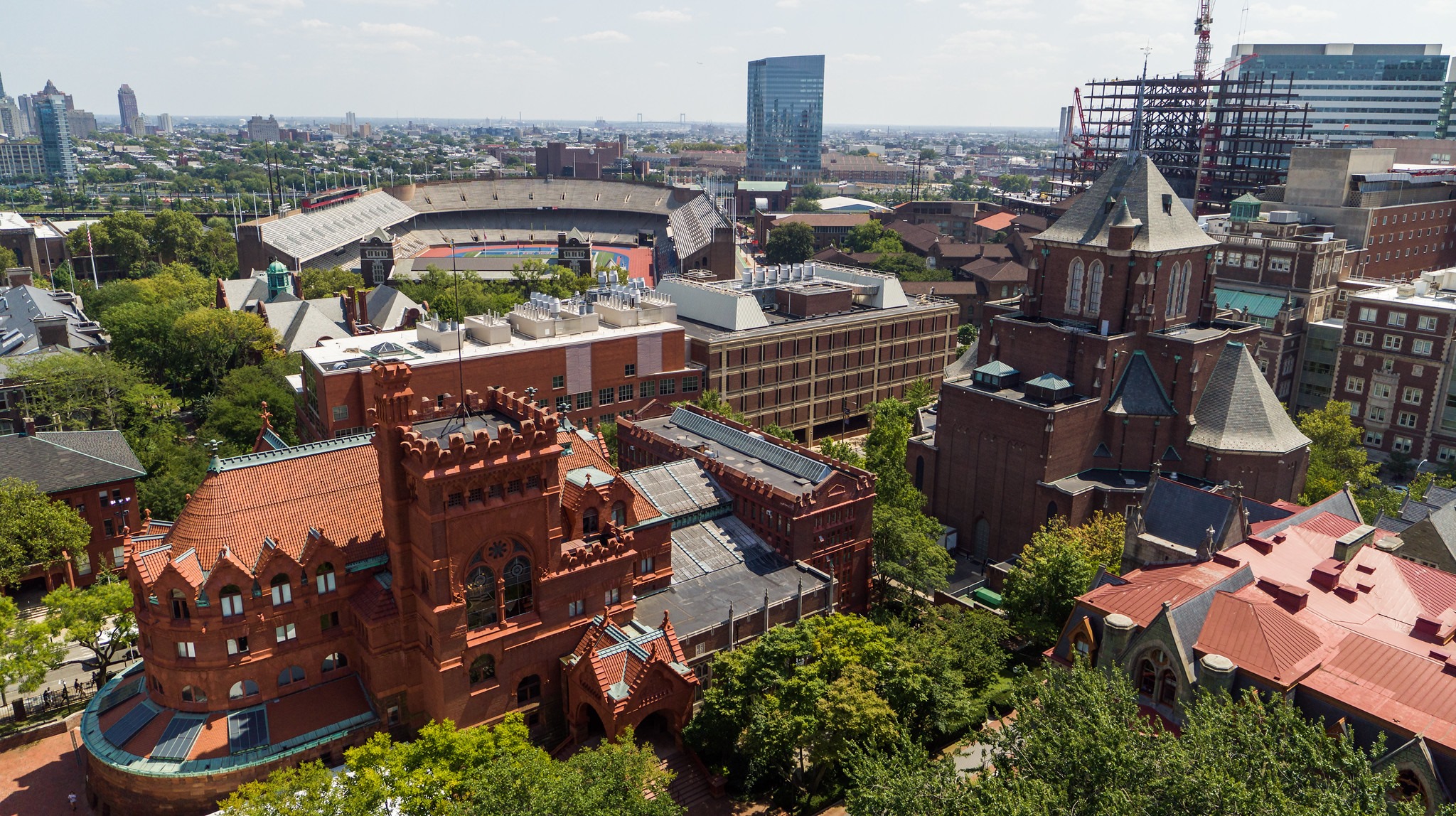
As a comprehensive private research university, Penn houses 12 academic schools located on a single, contiguous campus in Philadelphia. Four of these schools offer undergraduate degree programs, while all 12 offer advanced graduate and professional degrees.
Undergraduate Schools
- The College of Arts and Sciences: The central liberal arts school providing foundational humanities, social sciences, and natural sciences education.
- The Wharton School: One of the world’s leading business education institutions, offering specialized undergraduate business degrees.
- The School of Engineering and Applied Science (SEAS): Focuses on bioengineering, computer science, robotics, and fundamental engineering disciplines.
- The School of Nursing: Delivers undergraduate clinical nursing education combined with practical healthcare research experience.
Graduate and Professional Schools
Penn operates world-renowned professional faculties, including the Perelman School of Medicine, Penn Carey Law, the School of Dental Medicine, the School of Veterinary Medicine, the Stuart Weitzman School of Design, the Graduate School of Education, the School of Social Policy & Practice, and the Annenberg School for Communication.
Because Penn is a private university, all 12 schools share a unified administrative structure under the central authority of the University President, Provost, and Board of Trustees.
Frequently Asked Questions
Is the University of Pennsylvania an Ivy League school?
Yes. Penn is an original member of the Ivy League athletic conference, formed in 1954. All eight institutions in the Ivy League—Brown, Columbia, Cornell, Dartmouth, Harvard, Penn, Princeton, and Yale—are private research universities located in the Northeastern United States.
Does the University of Pennsylvania receive any state tax dollars?
Penn receives no direct annual operational funding from the Commonwealth of Pennsylvania budget to subsidize general instruction. However, like most major research universities, Penn receives competitive research contracts, specialized clinical health grants, and state-administered student financial aid programs (such as state grant awards applied for directly by resident students).
Is Penn State part of the University of Pennsylvania?
No. Penn State (The Pennsylvania State University) and Penn (The University of Pennsylvania) are completely separate institutions. Penn State is a public, state-related land-grant institution with its main campus in University Park, Pennsylvania. Penn is a private Ivy League university located in Philadelphia.
Why doesn't UPenn offer an in-state tuition discount for Pennsylvania residents?
In-state tuition discounts at public universities exist because local taxpayers contribute to the operational budget of state university systems. Because Penn is a private institution funded by private tuition, philanthropy, and endowment earnings without state taxpayer subsidies, it maintains a single, uniform tuition schedule for all students.
Is UPenn financial aid good for low-income families?
Yes. Penn meets 100% of demonstrated financial need for admitted undergraduate students using grant aid and work-study instead of student loans. Families earning below certain income thresholds (typically under $75,000 per year with typical assets) often receive financial aid packages covering full tuition, housing, dining, and fees.
Summary and Next Steps for prospective Students
Understanding that the University of Pennsylvania is a private institution helps applicants navigate admissions expectations, tuition planning, and financial aid strategies.
- For Admissions Planning: Recognize that Penn uses a private holistic admissions evaluation process. High academic performance, strong teacher recommendations, personal essays, and extracurricular involvement are evaluated alongside programmatic fit for specific undergraduate schools (such as Wharton or Engineering).
- For Financial Planning: Do not assume that living in Pennsylvania provides a tuition discount at Penn, and do not let the high sticker price deter application. Use Penn’s Net Price Calculator to estimate actual out-of-pocket costs based on household income, as grant-based financial aid frequently reduces costs below those of out-of-state public institutions.
- For Application Submissions: Ensure application materials are routed specifically to the University of Pennsylvania in Philadelphia, Pennsylvania, using official application portals such as the Common Application, paying close attention to institutional codes to avoid confusion with public institutions sharing similar names.
Image Gallery