Top 10 International Basketball Players of All Time: A Definitive Ranking
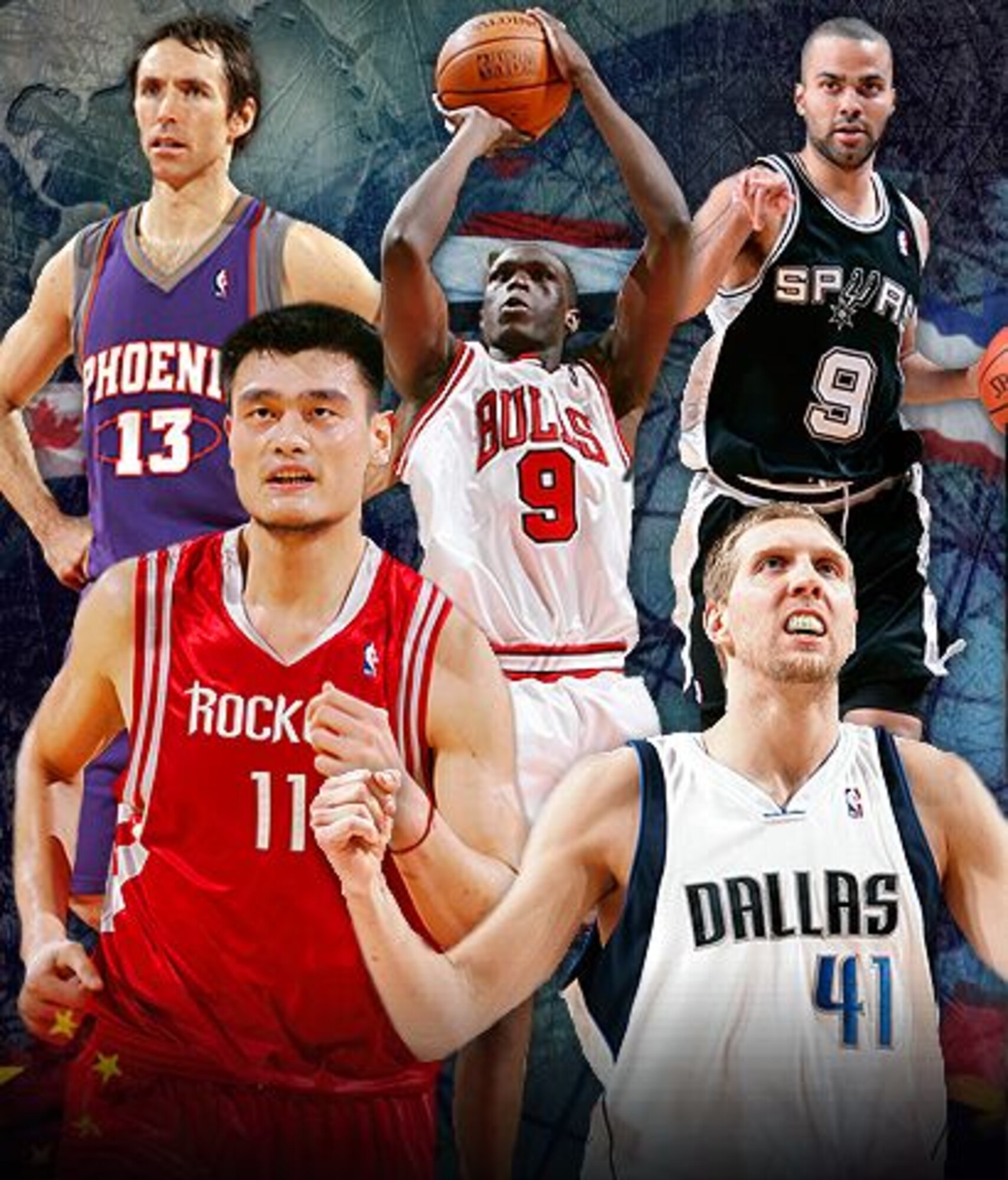
The greatest international basketball players of all time are Hakeem Olajuwon, Nikola Jokić, Giannis Antetokounmpo, Dirk Nowitzki, Steve Nash, Luka Dončić, Pau Gasol, Tony Parker, Manu Ginóbili, and Arvydas Sabonis. This ranking evalua...
The greatest international basketball players of all time are Hakeem Olajuwon, Nikola Jokić, Giannis Antetokounmpo, Dirk Nowitzki, Steve Nash, Luka Dončić, Pau Gasol, Tony Parker, Manu Ginóbili, and Arvydas Sabonis. This ranking evaluates career achievements, Most Valuable Player awards, NBA championships, FIBA performance, and structural impact on the modern game.
Contents
Defining the Criteria for International Greatness
To build an objective ranking of the top international basketball players, clear eligibility criteria and evaluation metrics must be established. For the purposes of this analysis, an international player is defined as a player born outside the United States, or someone who developed their basketball foundation in a foreign country and represented a foreign national team in FIBA competitions.
While players like Hakeem Olajuwon and Tim Duncan present unique edge cases—Olajuwon represented Team USA late in his career after becoming a naturalized citizen, and Duncan represented Team USA after growing up in the U.S. Virgin Islands—their paths reflect distinct international roots. Duncan is traditionally categorized within the U.S. basketball system due to his college pipeline and international play exclusively with Team USA. Olajuwon, conversely, was born, raised, and discovered in Lagos, Nigeria, making his international origins fundamental to his career.
Evaluation Metrics
Players are evaluated across four primary weighted categories:
- Individual Peak Performance & Hardware: NBA MVPs, Finals MVPs, All-NBA selections, Defensive Player of the Year awards, and scoring titles.
- Team Success & Championships: NBA Titles won as a primary or elite core contributor, as well as Olympic and FIBA World Cup gold medals.
- International / FIBA Legacy: Dominance in international play outside the NBA, including EuroLeague titles, FIBA Tournament MVPs, and Olympic achievements.
- Cultural & Tactical Impact: The degree to which the player shifted how the game is played, opened talent pipelines from their home country, or altered modern roster construction.
The Top 10 International Basketball Players of All Time
1. Hakeem Olajuwon (Nigeria)
- Key Achievements: 2× NBA Champion, 2× Finals MVP, 1994 NBA MVP, 2× Defensive Player of the Year, 12× NBA All-Star, 12× All-NBA Selection, Hall of Fame.
Born in Lagos, Nigeria, Hakeem "The Dream" Olajuwon stands as the single most dominant international player in basketball history. Drafted first overall in the historic 1984 NBA Draft by the Houston Rockets, Olajuwon combined unprecedented footwork, defensive instincts, and athletic grace. His signature move, the "Dream Shake," remains the gold standard for post footwork, taught to generations of modern superstars.
Olajuwon reached his absolute zenith in the mid-1990s. In the 1993–94 season, he became the only player in NBA history to win regular-season MVP, Defensive Player of the Year, and Finals MVP in a single campaign. As the all-time leader in official NBA blocked shots (3,830), Olajuwon anchored defense while functioning as a primary offensive engine. His ability to dominate both ends of the floor sets the benchmark for international big men.
2. Nikola Jokić (Serbia)
- Key Achievements: 3× NBA MVP (2021, 2022, 2024), 2023 NBA Champion, 2023 Finals MVP, 6× All-NBA Selection, Olympic Silver and Bronze Medalist.
Selected 41st overall in the second round of the 2014 NBA Draft by the Denver Nuggets, Nikola Jokić completed one of the most improbable ascents in sports history. The Serbian center revolutionized the position by acting as an elite, primary playmaker from the high and low post. Jokić combines historically efficient scoring with court vision that rivals the greatest point guards in basketball history.
Jokić achieved three NBA MVP awards within a four-year span, joining an elite group of legendary players. In 2023, he capped off a dominant postseason run by leading the Denver Nuggets to their first NBA franchise championship while earning Finals MVP honors. His international resume is bolstered by leading Serbia to an Olympic Silver Medal in 2016 and a Bronze Medal at the 2024 Paris Games, establishing him as the primary offensive engine of his generation.
3. Giannis Antetokounmpo (Greece)
- Key Achievements: 2× NBA MVP (2019, 2020), 2021 NBA Champion, 2021 Finals MVP, 2020 Defensive Player of the Year, 8× All-NBA Selection.
Born in Athens, Greece, to Nigerian parents, Giannis Antetokounmpo transformed from a raw 18-year-old prospect into one of the most physically overwhelming forces the game has ever seen. Standing 6-foot-11 with extreme mobility and elite length, the "Greek Freak" dominates through rim pressure, transition scoring, and versatile multi-positional defense.
Antetokounmpo joined Michael Jordan and Hakeem Olajuwon as the only players in league history to win MVP and Defensive Player of the Year in the same season (2019–20). In 2021, he delivered a championship to the Milwaukee Bucks, securing Finals MVP honors with a historic 50-point performance in Game 6 of the NBA Finals. Antetokounmpo remains a constant top-tier superstar and a cornerstone of the Greek national team.
4. Dirk Nowitzki (Germany)
- Key Achievements: 2007 NBA MVP, 2011 NBA Champion, 2011 Finals MVP, 14× NBA All-Star, 12× All-NBA Selection, 31,560 Career Points, Hall of Fame.
Dirk Nowitzki fundamentally transformed how frontcourt players operate. Hailing from Würzburg, Germany, Nowitzki introduced a 7-foot frame paired with automatic perimeter shooting and an iconic one-legged fadeaway that remains unguardable. He proved that an international European player could serve as the unquestioned first option and franchise leader of an NBA champion.
Nowitzki became the first European-born player to win the regular-season MVP award in 2007 after leading the Dallas Mavericks to 67 wins. His crowning achievement came in 2011, when he orchestrated one of the most memorable championship runs in modern sports history, defeating a stacked Miami Heat team to secure the title and Finals MVP. Internationally, he led Germany to a Bronze Medal at the 2002 FIBA World Championship (earning Tournament MVP) and a Silver Medal at EuroBasket 2005.
5. Steve Nash (Canada)
- Key Achievements: 2× NBA MVP (2005, 2006), 8× NBA All-Star, 7× All-NBA Selection, 5× NBA Assist Leader, Hall of Fame.
Born in South Africa and raised in Victoria, British Columbia, Steve Nash became the engine of the legendary "Seven Seconds or Less" Phoenix Suns teams of the mid-2000s. Nash was a master of the pick-and-roll, combining elite court vision, hyper-efficient perimeter shooting (joining the exclusive 50-40-90 club four times), and exceptional push tempo that served as the blueprint for modern high-pace NBA offenses.
Nash won back-to-back NBA MVPs in 2005 and 2006, joining an elite club of point guards to accomplish that feat. Internationally, Nash carried Senior Men's Basketball for Canada for over a decade, earning MVP honors at the 1999 FIBA AmeriCup and leading Canada to the quarterfinals of the 2000 Sydney Olympics.
6. Luka Dončić (Slovenia)
- Key Achievements: 5× All-NBA First Team, 5× NBA All-Star, 2024 NBA Scoring Champion, 2018 EuroLeague Champion & MVP, EuroBasket 2017 Gold Medalist.
Luka Dončić established an unprecedented draft resume before even stepping onto an NBA floor. Playing for Real Madrid, he won the EuroLeague title and MVP award as a teenager. After being drafted in 2018, the Slovenian prodigy stepped onto NBA courts as a fully developed, hyper-intelligent offensive mastermind.
Dončić achieved five All-NBA First Team selections before turning 25, demonstrating extraordinary mastery of pace, step-back shooting, and high-usage playmaking. Internationally, Dončić partnered with Goran Dragić to shock the world by winning EuroBasket gold for Slovenia in 2017, and later carried his home nation of two million people to a fourth-place finish at the 2020 Tokyo Olympics.
7. Pau Gasol (Spain)
- Key Achievements: 2× NBA Champion (2009, 2010), 6× NBA All-Star, 4× All-NBA Selection, 2006 FIBA World Cup Champion & MVP, 3× EuroBasket Champion, 3× Olympic Medalist, Hall of Fame.
Pau Gasol served as the cornerstone of Spanish basketball's golden generation and the essential co-star alongside Kobe Bryant during the Los Angeles Lakers' championship runs in 2009 and 2010. Born in Barcelona, Gasol offered high basketball IQ, exceptional passing out of the post, fluid post moves, and interior rim defense.
Gasol's international career is among the most accomplished in basketball history. Representing the Spanish Basketball Federation (FEB), he earned two Olympic Silver Medals (2008, 2012) and an Olympic Bronze Medal (2016), pushing Team USA to the absolute brink in consecutive gold medal games. Add a 2006 FIBA World Championship MVP and three EuroBasket gold medals, and Gasol stands as one of the most decorated global players ever.
8. Tony Parker (France)
- Key Achievements: 4× NBA Champion (2003, 2005, 2007, 2014), 2007 NBA Finals MVP, 6× NBA All-Star, 4× All-NBA Selection, EuroBasket 2013 Champion & MVP, Hall of Fame.
Drafted 28th overall in 2001 by the San Antonio Spurs, French point guard Tony Parker possessed teardrop floaters and rapid end-to-end speed that unlocked Gregg Popovich's offense for nearly two decades. Parker adapted his style from a high-speed slasher into an elite mid-range playmaker who consistently elevated his game during playoff crunch time.
In 2007, Parker became the first European player to win the NBA Finals MVP award after sweeping the Cleveland Cavaliers. As the general of the French national team, Parker led France to a historical EuroBasket title in 2013, solidifying his legacy as one of the elite European floor generals of all time.
9. Manu Ginóbili (Argentina)
- Key Achievements: 4× NBA Champion, 2004 Olympic Gold Medalist, 2001 EuroLeague Champion & Finals MVP, 2× NBA All-Star, 2008 NBA Sixth Man of the Year, Hall of Fame.
Emanating from Bahía Blanca, Argentina, Emanuel "Manu" Ginóbili is the ultimate winning competitor. Selected 57th overall in the 1999 NBA Draft, Ginóbili popularized the Eurostep in North America and accepted a sixth-man role with the San Antonio Spurs to maximize team efficiency.
Ginóbili achieved the rare basketball Triple Crown: winning an NBA Championship, a EuroLeague Title, and an Olympic Gold Medal. His legendary performance in the 2004 Athens Olympics—where he led Argentina past Team USA in the semifinals en route to the Gold—remains one of the single greatest national team feats in modern basketball.
10. Arvydas Sabonis (Lithuania)
- Key Achievements: 1988 Olympic Gold Medalist (USSR), 1995 EuroBasket MVP, 6× Euroscar Player of the Year, 2× Mister Europa Player of the Year, Hall of Fame.
Arvydas Sabonis is considered one of the greatest "what-if" stories in basketball due to late-career injuries and political barriers that delayed his entry into the NBA. In his 1980s prime with Žalgiris and the Soviet national team, the 7-foot-3 Lithuanian possessed court vision, perimeter shooting, and physical strength that astounded global scouts.
By the time Sabonis joined the Portland Trail Blazers in 1995 at age 30, severe Achilles and knee injuries had depleted his mobility. Despite physical limitations, he immediately became an effective NBA center through passing masterclasses and elite positioning. His legendary pre-NBA dominance and international accolades earn him the tenth spot on this list.
Statistical & Accomplishment Comparison
The following table compares the career accomplishments, primary origin, and peak honors across all ten legendary international players:
| Player | Country of Origin | Primary Era | NBA MVPs / Finals MVPs | NBA Championships | FIBA / Olympic Highlights |
|---|---|---|---|---|---|
| Hakeem Olajuwon | Nigeria | 1984–2002 | 1 MVP / 2 FMVP | 2 | 1996 Olympic Gold (Team USA) |
| Nikola Jokić | Serbia | 2015–Present | 3 MVP / 1 FMVP | 1 | 2016 Olympic Silver, 2024 Bronze |
| Giannis Antetokounmpo | Greece | 2013–Present | 2 MVP / 1 FMVP | 1 | 2024 Olympic Participant |
| Dirk Nowitzki | Germany | 1998–2019 | 1 MVP / 1 FMVP | 1 | 2002 World Cup Bronze (MVP) |
| Steve Nash | Canada | 1996–2014 | 2 MVP / 0 FMVP | 0 | 1999 FIBA AmeriCup MVP |
| Luka Dončić | Slovenia | 2018–Present | 0 MVP / 0 FMVP | 0 | 2017 EuroBasket Gold |
| Pau Gasol | Spain | 2001–2021 | 0 MVP / 0 FMVP | 2 | 2006 World Cup Gold (MVP), 2 Silver |
| Tony Parker | France | 2001–2019 | 0 MVP / 1 FMVP | 4 | 2013 EuroBasket Gold (MVP) |
| Manu Ginóbili | Argentina | 2002–2018 | 0 MVP / 0 FMVP | 4 | 2004 Olympic Gold (MVP) |
| Arvydas Sabonis | Lithuania | 1981–2005 | 0 MVP / 0 FMVP | 0 | 1988 Olympic Gold, 1995 EuroBasket MVP |
The Global Shift: How International Stars Reconfigured the NBA
The evolution of international players in North American basketball represents a fundamental structural shift in how scouting, development, and team strategy occur.
- 1980s: Isolated Pioneers
- 1990s: Post-Dream Team Explosion
- 2000s: Core Champions
- Modern Era: Total MVP Dominance
During the 1980s and early 1990s, international players were frequently viewed by NBA front offices as high-risk developmental projects or rotational perimeter shooters. The success of international pioneers—such as Dražen Petrović, Sarunas Marciulionis, Vlade Divac, and Toni Kukoč—began eroding these misconceptions.
The international expansion reached a turning point through three distinct phases:
- The 1992 Dream Team & Global Scouting: The 1992 Barcelona Olympics exposed global audiences to NBA talent while simultaneously showcasing European stars who were capable of competing against North American athletes. NBA front offices established international scouting networks in response.
- The San Antonio Spurs Model: Under Gregg Popovich and R.C. Buford, the Spurs demonstrated that drafting talent globally (e.g., Parker in France, Ginóbili in Argentina) could form a sustainable, championship-caliber core.
- The Positionless Revolution & European Fundamentals: European development programs prioritized fundamental skills—passing, court awareness, and multi-positional shooting—over pure early-stage athleticism. This developmental focus yielded big men like Dirk Nowitzki and Nikola Jokić, who unlocked modern 5-out offenses and high-post playmaking.
Official league records from the NBA Official Newsroom demonstrate that opening-night rosters feature over 120 international players from dozens of countries, with international stars claiming consecutive NBA MVP awards across multiple seasons.
FIBA Rules vs. NBA Rules: Adapting Styles of Play
To succeed at the highest levels of both international competition and the NBA, players must navigate subtle tactical differences between the two governance structures.
| NBA RULES | FIBA RULES |
|---|---|
| Defensive 3-Second Rule Enforced | No Defensive 3-Second Rule |
| Longer 3-Point Line (23'9") | Shorter 3-Point Line (22'1.75") |
| 48-Minute Games (4x12 min) | 40-Minute Games (4x10 min) |
| 6 Individual Fouls Limit | 5 Individual Fouls Limit |
| Strict Basket Interference Rules | Rim Touch Allowed After Hit |
Because FIBA rules permit defenders to camp inside the key without a defensive three-second restriction, lane driving becomes significantly more congested. Players who developed in FIBA environments—such as Luka Dončić, Pau Gasol, and Nikola Jokić—learned to operate within tight spaces, emphasizing ball movement, low-post passing angles, and deliberate footwork rather than relying exclusively on isolation speed.
When these players transition to the wider spatial landscape of the NBA, their developed processing speed and court awareness often allow them to dissect NBA defenses efficiently.
Frequently Asked Questions
Why is Tim Duncan excluded from this international rankings list?
While Tim Duncan was born in the U.S. Virgin Islands (an unincorporated U.S. territory), he played his college basketball at Wake Forest and spent his entire international career representing Team USA. By contrast, players on this list grew up in foreign country development pipelines or represented foreign national federations under FIBA official competition rules.
How many international players have won the NBA MVP award?
Five international players have won the NBA MVP award: Hakeem Olajuwon (1994), Steve Nash (2005, 2006), Dirk Nowitzki (2007), Giannis Antetokounmpo (2019, 2020), and Nikola Jokić (2021, 2022, 2024). Joel Embiid (2023) was born in Cameroon, though he holds U.S. and French citizenship.
Who is the highest-scoring international player in NBA history?
Dirk Nowitzki is the highest-scoring international player in NBA history, accumulating 31,560 career points over his 21-season career with the Dallas Mavericks. He ranks among the top scorers in overall NBA league history.
Which country outside the US has produced the most elite basketball talent?
Historically, Yugoslavia (and its successor states, particularly Serbia, Slovenia, and Croatia) along with Spain, Canada, and France have produced the largest volumes of top-tier basketball talent. Canada currently leads all non-U.S. nations in total active NBA roster spots, while Serbia, France, and Slovenia have produced modern MVP-caliber leaders.
Did Arvydas Sabonis play his entire career in the NBA?
No. Arvydas Sabonis spent the majority of his prime playing in Europe for Žalgiris and Real Madrid due to Cold War political restrictions and serious injuries. He did not enter the NBA until 1995 at age 30, playing seven seasons with the Portland Trail Blazers.
Next Steps for Fans and Analysts
To further examine global basketball metrics and international developments:
- Track historical tournament archives through the official FIBA Archive to compare historical international box scores across Olympic and World Cup games.
- Evaluate active international player metric trends across advanced statistical databases like Basketball-Reference.
- Follow national team qualification paths for upcoming FIBA Continental Championships (EuroBasket, FIBA AmeriCup, FIBA AfroBasket) to monitor the next wave of draft-eligible global talent.
Image Gallery