Understanding New York Sunset Times in 2026
The sunset time in New York City for any given day in 2026 is determined by the city's precise geographic coordinates—approximately 40.7128 degrees North latitude and 74.0060 degrees West longitude—combined with the Earth’s axial tilt...
The sunset time in New York City for any given day in 2026 is determined by the city's precise geographic coordinates—approximately 40.7128 degrees North latitude and 74.0060 degrees West longitude—combined with the Earth’s axial tilt and orbital position. Because New York operates on Eastern Time (ET), including a seasonal shift to Eastern Daylight Time (EDT) from March to November, sunset times vary significantly throughout the year, ranging from as early as 4:28 PM in December to as late as 8:31 PM in late June.
Contents
Astronomical Mechanics Governing New York Sunsets
The timing of the sunset in New York is not a static figure; it is a dynamic result of celestial mechanics. As the Earth orbits the Sun, the subsolar point (the location where the sun appears directly overhead at noon) shifts between the Tropic of Cancer and the Tropic of Capricorn. For a mid-latitude location like New York, this movement causes the duration of daylight and the specific time of dusk to fluctuate rhythmically.
Understanding these shifts requires awareness of three primary variables:
- Latitude: New York's northern position ensures a pronounced difference in daylight duration between summer and winter.
- Longitude and Time Zone: While the sun reaches its solar zenith at slightly different times across the globe, the standardized Eastern Time zone forces a singular clock time for the entire region.
- Daylight Saving Time (DST): Under the Uniform Time Act, New York advances clocks one hour forward on the second Sunday in March and reverts to Standard Time on the first Sunday in November. This legislative adjustment causes an artificial "jump" in sunset times on the calendar.
Seasonal Daylight Variance in 2026
The 2026 calendar year follows standard astronomical cycles. During the summer solstice in June, the Northern Hemisphere is tilted at its maximum toward the Sun, providing New York with its longest day and latest sunset. Conversely, during the winter solstice in December, the tilt away from the Sun results in the year's earliest sunset.
Average Sunset Trends by Quarter
| Quarter | Period | Sunset Trend Behavior |
|---|---|---|
| Q1 | January – March | Days lengthen rapidly; sunset times shift from 4:30 PM to 7:00 PM range. |
| Q2 | April – June | Sunset approaches the year's latest peak, hovering near 8:30 PM by late June. |
| Q3 | July – September | Days begin to shorten; sunset moves earlier, accelerating post-Equinox in September. |
| Q4 | October – December | Sunset times drop significantly, reaching the minimum shortly before the winter solstice. |
Why Sunset Times Shift Faster Than You Think
Many residents notice that the earliest sunset of the year does not actually occur on the winter solstice. This phenomenon is known as the Equation of Time. Because the Earth's orbit is elliptical rather than perfectly circular, the speed of the planet varies. This causes a misalignment between the "true" solar noon and the clock noon. In New York, the earliest sunset typically occurs in early December, while the latest sunrise occurs in early January, even though the winter solstice is the shortest day overall.
Similarly, in summer, the latest sunset occurs in late June, even though the summer solstice marks the day with the maximum total hours of daylight. These variations are critical for photography, marine navigation, and outdoor event planning in the metropolitan area.
Technical Factors Influencing Sunset Observation
If you are planning an event or a photography session, relying on generalized tables can lead to inaccuracies. Several environmental and technical factors must be considered to determine when the "Golden Hour" actually begins:
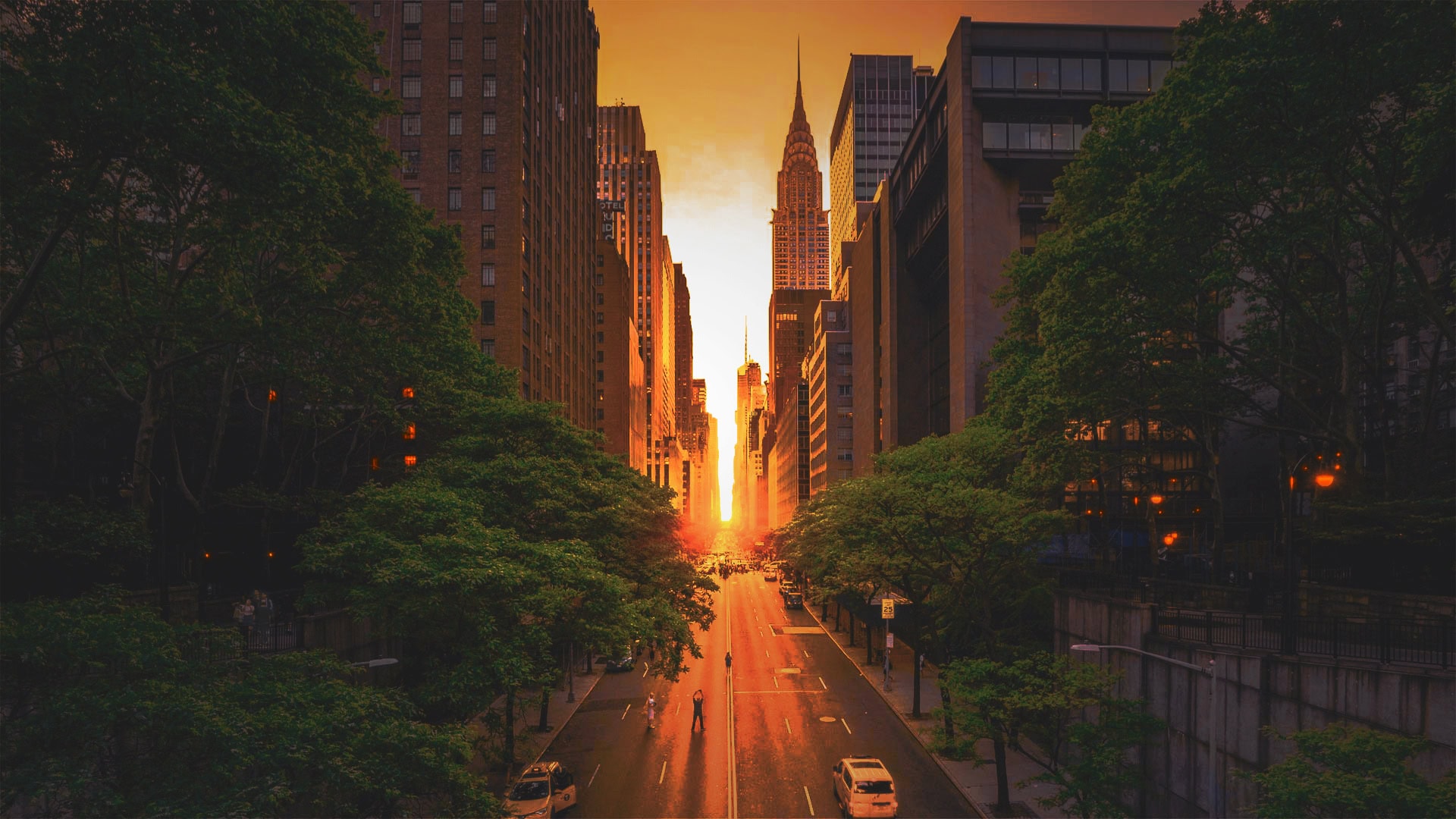
- Urban Canyon Effect: In Manhattan, the grid of tall skyscrapers can create a "false horizon." While the sun may officially set at 8:00 PM, a location at street level on a narrow avenue may experience "sunset" behind a building 15 to 20 minutes earlier.
- Atmospheric Refraction: The Earth's atmosphere bends sunlight. By the time you see the sun touch the horizon, it has technically already dipped below it. Standard calculations account for this, but local micro-climates and high air pressure can slightly alter the perception of the light.
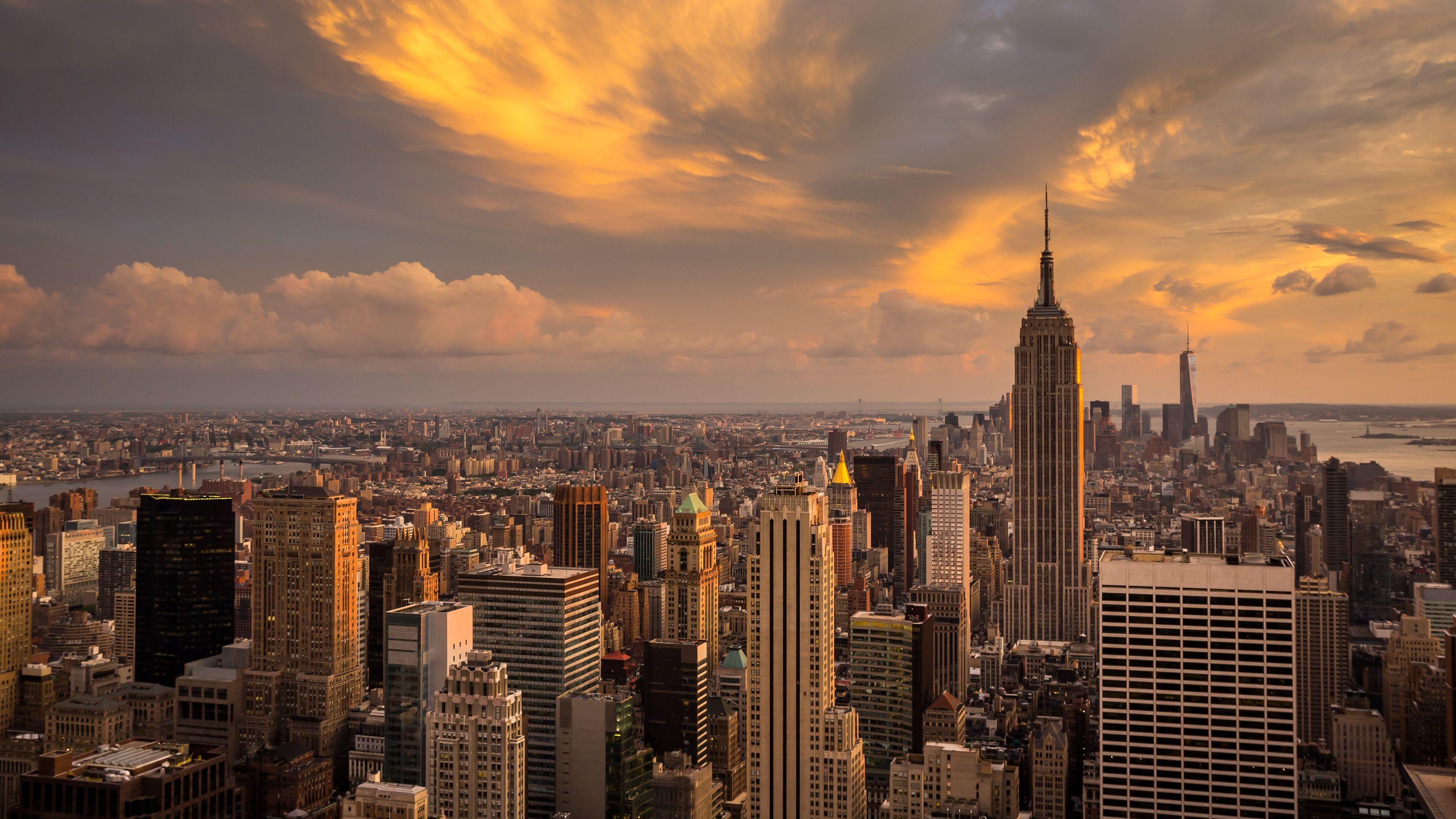
- Elevation: If you are viewing the sunset from a high-rise observation deck—such as the Top of the Rock or One World Observatory—your vantage point is higher than sea level. Consequently, you will observe the sunset later than someone standing at the harbor's edge. For every 100 feet of elevation, you gain roughly one minute of additional daylight.
Practical Applications for Sunset Data
Knowing the precise sunset time is essential for various professional and recreational activities across the five boroughs:
- Maritime Safety: For recreational boaters in the New York Harbor, the sunset marks the transition to nighttime navigation rules as stipulated by the United States Coast Guard.
- Cinematography and Photography: The "Golden Hour"—the period shortly before sunset—provides the optimal color temperature for high-quality imagery. Planning shoots based on exact solar positioning prevents missed windows for critical production lighting.
- Energy Management: Municipal building managers and smart-home users often utilize sunset data to automate lighting systems, optimizing electricity usage by syncing interior lights with the decline of natural ambient light.
Frequently Asked Questions
Does Daylight Saving Time change when the sun sets in New York?
Yes, Daylight Saving Time causes a one-hour shift in the sunset time on the clock. When clocks move forward in March, the sunset time appears to jump one hour later, and when they fall back in November, the sunset time appears to shift one hour earlier.
When is the latest sunset in New York during 2026?
The latest sunset in New York in 2026 occurs in late June, specifically around June 25th through June 27th, when the sun dips below the horizon at approximately 8:31 PM.
Is the sunset time the same for all parts of New York City?
While the difference is negligible for casual observers, longitude differences mean that the westernmost parts of Staten Island see the sunset approximately one minute later than the easternmost points of Queens.
Where can I find the most accurate sunset data for specific dates?
The most authoritative source for solar data is the United States Naval Observatory (USNO) or the official NOAA Solar Calculator. These platforms use precise geodetic algorithms that account for Earth's rotation and local topographic deviations.
Why does it get dark so early in December in New York?
It gets dark early in December due to the Earth's axial tilt, which causes the Northern Hemisphere to lean away from the Sun, resulting in shorter daylight hours and a lower solar arc across the sky.
Does the "Urban Canyon" affect sunset times?
Yes, in dense neighborhoods like Midtown Manhattan, skyscrapers block the direct line of sight to the horizon, meaning sunlight disappears from street level much earlier than the official astronomical sunset time.
Planning for Sunset-Dependent Activities
For those conducting activities that require specific lighting, it is recommended to cross-reference the astronomical sunset time with local elevation data. If you are operating in a dense urban environment, subtract at least 15 minutes from the official sunset time to account for building shadows. If you are located on an elevated platform or open waterfront, the official time is generally reliable. Always ensure that your logistical planning incorporates a buffer zone, particularly when weather patterns—such as heavy cloud cover—can diminish available light well before the sun actually reaches the horizon.
Image Gallery