Understanding Workers Compensation: A Comprehensive Guide for Employees and Employers
Workers compensation is a state-regulated insurance system that provides financial, medical, and rehabilitation benefits to employees who suffer job-related injuries or illnesses, in exchange for relinquishing the right to sue the empl...
Workers compensation is a state-regulated insurance system that provides financial, medical, and rehabilitation benefits to employees who suffer job-related injuries or illnesses, in exchange for relinquishing the right to sue the employer for negligence. Navigating this system requires a clear understanding of eligibility requirements, filing procedures, benefit types, and statutory dispute resolution mechanisms.
Contents
What is Workers Compensation and How Does It Work?
Workers compensation operates as a mandatory social compact between employers and employees. Established primarily through state laws rather than a single federal program, the system guarantees that workers receive immediate medical care and partial wage replacement following a workplace injury, regardless of fault. Concurrently, it shields businesses from costly civil tort litigation by making workers compensation the exclusive remedy for workplace injuries.
The mechanics of the system rely on employer-purchased insurance policies or self-insurance funds. When an injury occurs, the cost is absorbed by the insurance carrier rather than the individual worker's personal health insurance or the employer's direct operating budget. Because state governments administer these programs, specific regulations, filing deadlines, and benefit calculations vary significantly depending on the jurisdiction where the injury took place.
Understanding this framework requires looking at the obligations of all participating parties:
- The Employee: Must report injuries promptly, seek authorized medical treatment, and cooperate with the claims process.
- The Employer: Must maintain required insurance coverage, post mandatory workplace notices, and report injuries to the insurer immediately.
- The Insurance Carrier: Evaluates claims, authorizes medical care, disburses wage replacement benefits, and manages vocational rehabilitation.
- The State Agency: Oversees compliance, resolves disputes through administrative hearings, and enforces statutory penalties for non-compliance.
Eligibility Criteria: Who is Covered?
Not every worker or injury qualifies for workers compensation benefits. To establish eligibility, a claimant must satisfy specific statutory criteria proving an employment relationship and a direct connection between the work environment and the resulting medical condition.
The Employment Relationship
Coverage typically applies to full-time and part-time W-2 employees from their very first day on the job. However, independent contractors, gig workers, and sole proprietors are frequently excluded from mandatory coverage requirements, though they may sometimes purchase elective coverage or challenge their worker classification if they are misclassified. Certain industries, such as agricultural businesses, domestic employment, or small businesses with fewer than a specified number of employees, may also experience exemptions under specific state statutes.
Arising Out of and in the Course of Employment
To be compensable, an injury or illness must satisfy the legal standard of occurring "arising out of and in the course of employment."
- In the course of employment: Refers to the time, place, and circumstances under which the injury occurred. An injury sustained while performing job duties during regular working hours on company premises generally meets this standard.
- Arising out of employment: Requires a causal link between the employment conditions and the resulting harm. Occupational diseases, repetitive motion injuries like carpal tunnel syndrome, and sudden traumatic accidents all qualify if proven to stem directly from workplace activities.
Certain common scenarios fall into legal gray areas, such as injuries sustained during a lunch break, company-sponsored social events, or routine commutes. Generally, standard commutes are excluded under the "going and coming rule," unless the employee is traveling on a special errand for the employer or is required to use their vehicle for work-related transit throughout the day.
Types of Benefits Provided
Workers compensation provides several distinct categories of benefits designed to address immediate medical needs and long-term financial consequences. The exact monetary amounts are typically calculated as a percentage of the worker's average weekly wage, subject to statutory maximums and minimums set by the state.
| Benefit Type | Description | Duration / Limit |
|---|---|---|
| Medical Treatment | Covers all reasonable and necessary medical care, including doctor visits, surgeries, hospital stays, prescription medications, and physical therapy. | As long as medically necessary, directed by an authorized physician. |
| Temporary Total Disability (TTD) | Wage replacement benefits paid when an employee is completely unable to work while recovering from an injury. | Paid until the employee reaches Maximum Medical Improvement (MMI) or returns to work. |
| Temporary Partial Disability (TPD) | Benefits paid when an employee can return to work on light duty or reduced hours, earning less than their pre-injury wage. | Paid to bridge the wage gap until full recovery or MMI is reached. |
| Permanent Partial Disability (PPD) | Compensation awarded when an injury leaves a permanent impairment or loss of function in a specific body part, but does not completely preclude work. | Determined by a medical rating schedule and state statutory limits. |
| Permanent Total Disability (PTD) | Comprehensive benefits awarded when an injury renders the worker permanently and totally unable to engage in any gainful employment. | Often paid for life or until specific retirement age thresholds, depending on state law. |
| Vocational Rehabilitation | Retraining, job placement assistance, and educational services for workers who cannot return to their previous occupation. | Subject to state-mandated caps on duration and total expenditure. |
| Death Benefits | Financial support and funeral expense coverage provided to surviving dependents (spouse, children) of a worker who dies from a work-related injury. | Distributed according to statutory formulas based on dependency status. |
Step-by-Step Procedure for Filing a Claim
Successfully securing benefits requires strict adherence to procedural timelines and notification rules. Failing to follow these steps can result in claim denial or forfeiture of rights.
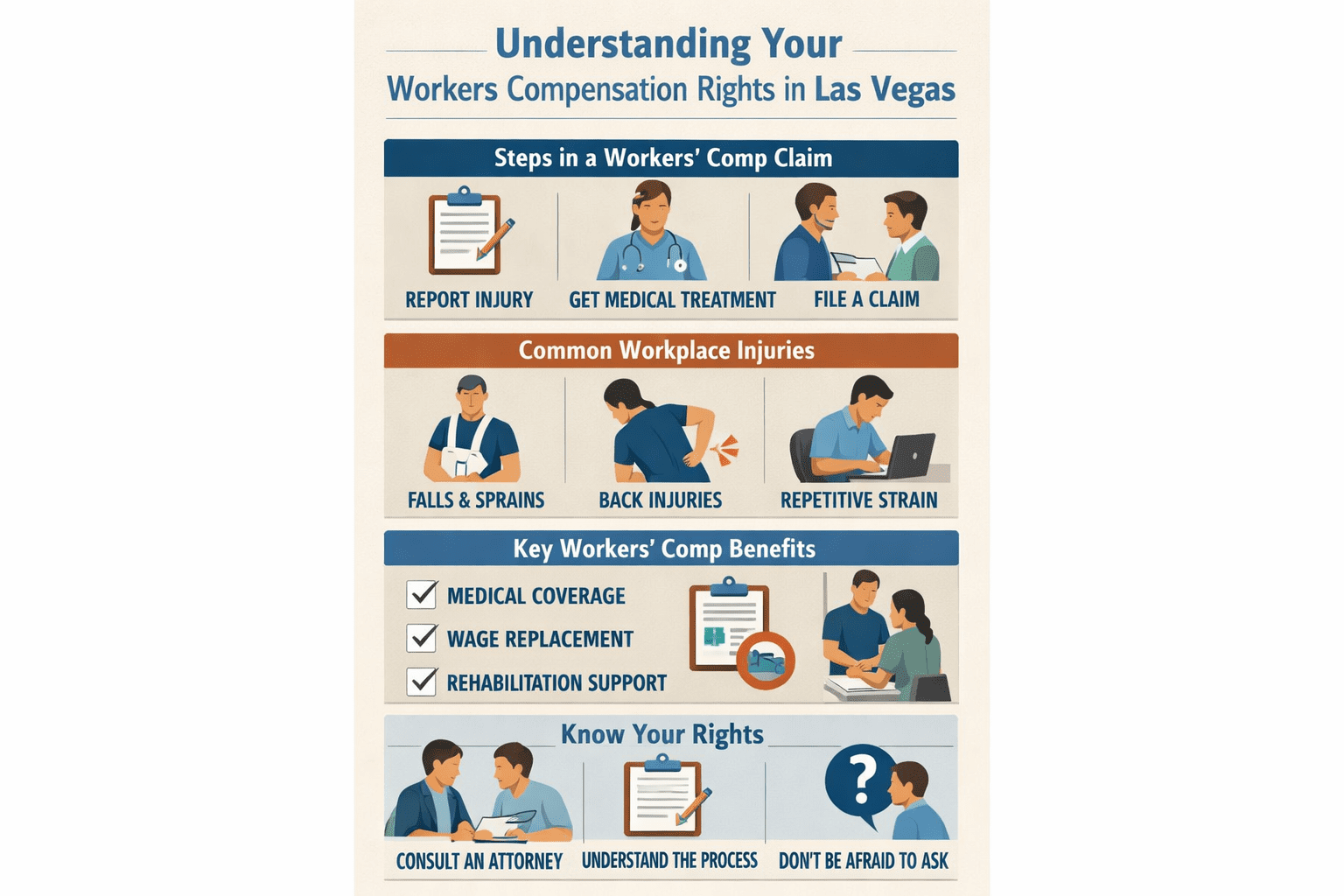
- Seek Immediate Medical Attention: For emergency situations, go to the nearest emergency room. For non-emergencies, notify the employer immediately to obtain a list of authorized medical providers, as seeing an unauthorized doctor can complicate or void claim approval.
- Notify the Employer in Writing: State laws impose strict deadlines—often ranging from 10 to 30 days, though some states allow up to 90 days—for notifying an employer of a workplace injury. Written notice prevents disputes regarding the timeliness of the report.
- Complete the Employee Claim Form: File the official state claim form (such as a Form CA-1 or state-equivalent workers compensation claim form) with both the employer and the state's workers compensation board or commission.
- Employer and Insurer Investigation: The employer files an employer's report of injury with their insurance carrier. The insurer investigates the claim's validity, verifies employment status, and reviews medical records before accepting or denying liability.
- Receive Benefit Determinations: If accepted, medical payments and wage replacement checks begin. If denied, the insurance company must issue a formal notice of contest outlining the legal or factual reasons for the rejection.
Common Pitfalls and Dispute Resolution
Even with clear evidence, claims can encounter obstacles. Recognizing common pitfalls helps prevent unnecessary denials.
Pre-Existing Conditions and Cumulative Trauma
Insurers frequently contest claims involving pre-existing degenerative conditions, arguing that the workplace incident merely aggravated an underlying issue rather than causing a new injury. Similarly, cumulative trauma disorders—injuries developing over months or years from repetitive motions—require detailed medical expert testimony to prove that workplace activities were the primary substantial contributing factor.
Independent Medical Examinations (IMEs)
Insurance carriers often require claimants to attend an Independent Medical Examination conducted by a physician chosen and paid by the insurer. The findings from an IME can contradict treating physicians, leading to disputes over whether the worker has reached Maximum Medical Improvement or requires further treatment.
Appealing a Denied Claim
If a claim is contested or benefits are prematurely terminated, the injured worker can file an appeal with the state workers compensation board. The administrative process typically involves:
- Mandatory Mediation or Informal Conferences: Attempting to reach a settlement between the employee, employer, and insurer before a judge.
- Formal Hearings: Presenting medical evidence, expert witness testimony, and factual depositions before an administrative law judge or workers compensation commissioner.
- Appellate Review: Appealing the administrative law judge's decision to a higher workers compensation appeals board or state appellate court if legal errors occurred during the hearing.
Disclaimer: Workers compensation laws are complex and vary substantially by jurisdiction. This article provides general educational information and should not be construed as formal legal or medical advice. Individuals facing specific disputes or complex claims should consult a qualified workers compensation attorney or their state's labor department.
Frequently Asked Questions
Can I choose my own doctor for a workers compensation injury?
In many states, employers or their insurance carriers have the right to direct medical care, requiring you to choose from a managed care organization or an approved panel of physicians for the initial treatment period. However, many jurisdictions allow employees to switch to a physician of their own choosing after a designated timeframe, provided proper notice is given.
What happens if my employer does not have workers compensation insurance?
If an employer fails to maintain mandatory workers compensation insurance, they face severe civil penalties, stop-work orders, and potential criminal prosecution by the state. In these circumstances, injured employees can typically file a civil lawsuit against the employer in court for negligence, circumventing the exclusive remedy rule, or seek recovery from a state-administered uninsured employers' fund.
Can I be fired for filing a workers compensation claim?
It is illegal in every U.S. state for an employer to terminate, demote, or otherwise retaliate against an employee simply for filing a good-faith workers compensation claim. If retaliation occurs, the worker may have grounds to file a separate wrongful termination or retaliatory discharge lawsuit against the employer.
Are workers compensation benefits taxable?
Generally, workers compensation wage replacement benefits are exempt from federal income tax and state income tax. However, if you receive Social Security Disability Insurance (SSDI) simultaneously, the combined total of SSDI and workers compensation benefits may be subject to an offset, which can impact the taxable status of the social security portion.
How long do workers compensation benefits last?
The duration depends on the classification of the injury. Temporary benefits continue until the treating physician determines you have reached Maximum Medical Improvement or you are cleared to return to work. Permanent disability benefits may be paid for a fixed number of weeks based on a statutory schedule or for life in cases of permanent total disability.
Next Steps for Injured Workers and Employers
For employees currently navigating an injury, prioritize strict compliance with medical treatment plans and maintain meticulous records of all communications, missed workdays, and out-of-pocket expenses. For employers, ensuring proactive safety protocols, maintaining compliant insurance coverage, and establishing clear lines of communication with injured staff minimize dispute risks and promote faster, safer returns to work. Review your specific state's labor department portal to access official claim forms and verify local statutory deadlines.
Image Gallery