The Structural Geometry of Life: Why Bacterial DNA Is Circular
Bacterial DNA is typically organized into a single, circular chromosome to facilitate rapid, efficient replication and segregation, which is essential for the high-speed binary fission that allows bacteria to colonize environments quic...
Bacterial DNA is typically organized into a single, circular chromosome to facilitate rapid, efficient replication and segregation, which is essential for the high-speed binary fission that allows bacteria to colonize environments quickly. This circular topology also provides inherent resistance to exonuclease degradation, protecting the genetic blueprint without the need for complex telomere structures found in eukaryotic linear chromosomes.
Contents
The Architectural Necessity of Circularity
In the microscopic world, bacteria operate on a principle of efficiency. Unlike eukaryotic cells, which house their DNA in a membrane-bound nucleus and manage it across multiple linear chromosomes, the vast majority of bacteria maintain their primary genetic material in a closed-loop, circular configuration. This circularity is not a biological accident but a strategic adaptation to the constraints of rapid cellular turnover.
The primary driver for this structure is the mechanism of DNA replication. In a circular chromosome, replication typically begins at a single site known as the origin of replication (oriC). From this point, two replication forks move in opposite directions around the loop, meeting at a termination site. This bidirectional mechanism allows the cell to double its genetic material in a fraction of the time required to replicate the complex, fragmented DNA of higher organisms. By avoiding the challenges of linear ends, bacteria bypass the "end-replication problem," where DNA polymerases fail to replicate the very tips of linear chromosomes, a limitation that requires eukaryotes to utilize specialized sequences called telomeres and the enzyme telomerase.
Molecular Stability and Protection
Beyond the speed of replication, circularity offers a significant structural advantage regarding longevity and integrity. Linear DNA molecules possess free ends, which are inherently vulnerable to cellular enzymes known as exonucleases. These enzymes act as a quality control mechanism, breaking down damaged or foreign DNA fragments that enter the cell. If a chromosome were linear, it would constantly risk being "chewed up" at its ends.
By adopting a circular topology, the bacterium effectively hides its ends. The continuity of the DNA backbone means that there is no terminal point for exonucleases to attack. This closed-loop design acts as a natural shield, ensuring that the genetic library remains intact throughout the lifespan of the cell. This stability is critical for bacteria, as their survival often depends on the rapid expression of specific genes in fluctuating environmental conditions.
Supercoiling: Managing DNA Within a Compact Space
While the term "circular" implies a simple loop, the reality of bacterial DNA organization is far more complex. A single bacterial chromosome is often many times longer than the cell itself. To fit this massive molecule into the nucleoid—a dense, irregularly shaped region of the cytoplasm—bacteria employ a process called supercoiling.
DNA supercoiling is the biological equivalent of twisting a rubber band until it coils upon itself. Enzymes known as topoisomerases and DNA gyrases are responsible for this process. By introducing these twists, the cell can condense its genetic material into a highly compact state. Beyond mere packing, supercoiling is a regulatory tool. The degree of supercoiling can influence how tightly DNA is wound, which in turn determines how accessible certain genes are for transcription. When the cell needs to transcribe a specific gene, it can locally alter the supercoiling density, effectively switching genes "on" or "off" based on the structural tension of the chromosome.
Comparative Overview: Bacterial vs. Eukaryotic Chromosomes
The differences between bacterial and eukaryotic chromosomal architectures reflect different evolutionary pressures. Bacteria prioritize speed and efficiency, while eukaryotes prioritize complexity and regulation.
| Feature | Bacterial Chromosome | Eukaryotic Chromosome |
|---|---|---|
| Geometry | Primarily Circular | Primarily Linear |
| Number | Single primary chromosome | Multiple chromosomes |
| Location | Nucleoid (cytoplasm) | Nucleus (membrane-bound) |
| End Protection | Not required (no ends) | Telomeres required |
| Replication | Single origin of replication | Multiple origins per chromosome |
| Packing | Supercoiling | Histone protein complexes |
The Role of Plasmids: Supplementary Genetic Material
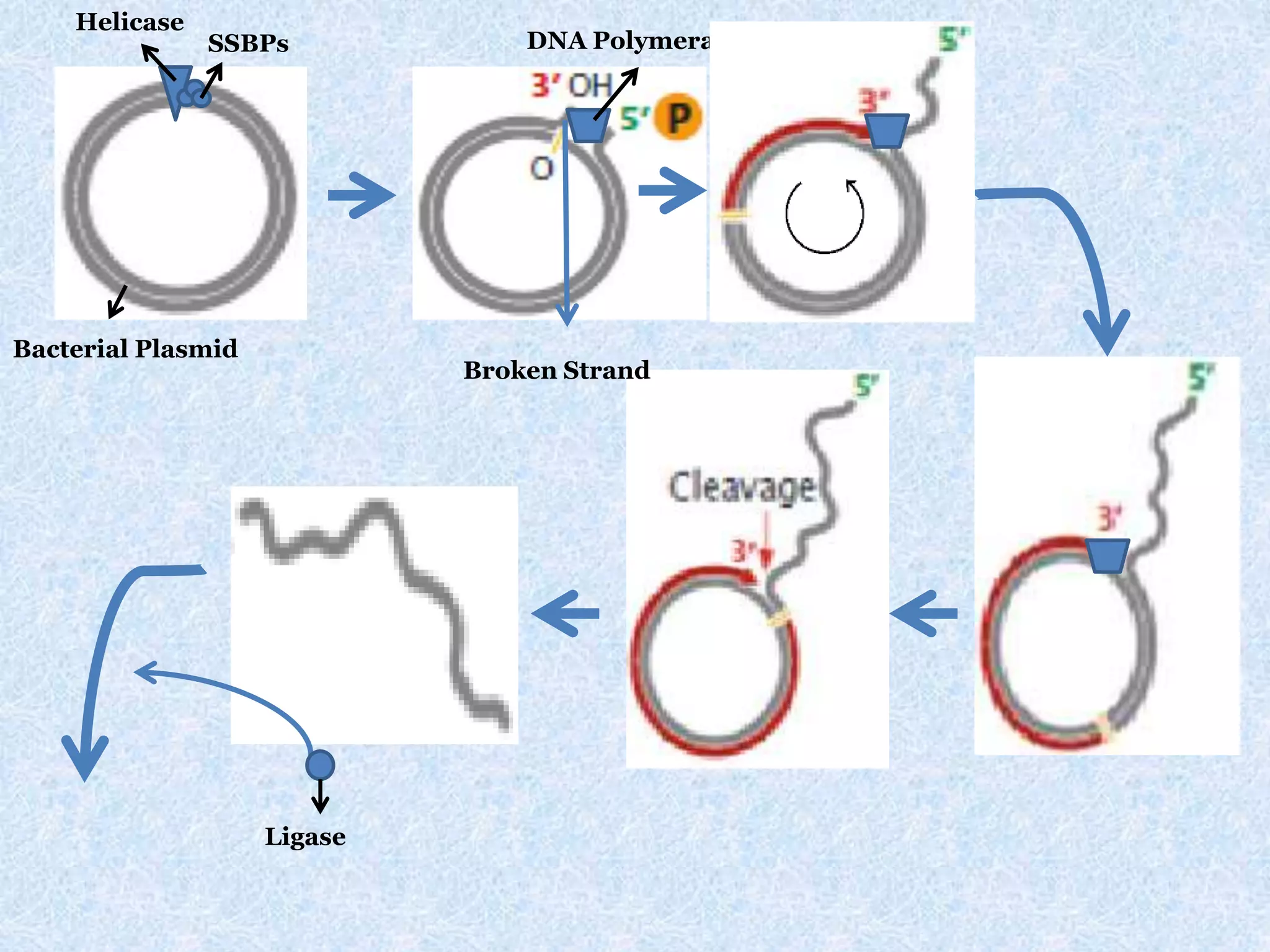
While the main chromosome defines the core genetic identity of the bacterium, it is rarely the only DNA present. Many bacteria also contain plasmids—small, independent, circular DNA molecules. These secondary rings function as modular genetic toolkits.
Plasmids can replicate independently of the main chromosome and are often swapped between bacteria through a process known as horizontal gene transfer (conjugation). This mechanism is how antibiotic resistance genes frequently spread through bacterial populations. The circular nature of plasmids is highly advantageous here; because they are small, mobile, and circular, they are easily integrated into and removed from the host, providing the bacterium with the ability to acquire new traits—such as metabolic versatility or toxin production—without altering its core genome.
Biological Significance and Clinical Implications
Understanding the circular nature of bacterial DNA is foundational to modern microbiology and medicine. Because the mechanisms for managing circular DNA—such as bacterial-specific DNA gyrases—differ significantly from those in human cells, scientists have developed potent therapeutic targets. Many antibiotics, including the fluoroquinolone class (e.g., ciprofloxacin), work precisely by interfering with the enzymes that manage bacterial DNA topology. By locking the DNA in its supercoiled state or preventing the cell from resolving the physical knots that form during replication, these drugs effectively stall the cell's machinery, leading to bacterial death.
Furthermore, the stability of circular DNA is a major factor in the persistence of bacterial infections. Because the genome is protected from enzymatic degradation and is highly compact, some bacteria can remain viable in harsh environments for extended periods, essentially "hibernating" until conditions become favorable again. This structural resilience is a key focus of current research aimed at developing next-generation antimicrobial treatments that can penetrate or disrupt the dense nucleoid structure of persistent bacterial colonies.
Frequently Asked Questions
Does all bacterial DNA exist as a circular loop? While the vast majority of bacterial species feature circular chromosomes, there are notable exceptions. Some species, such as Borrelia burgdorferi (the causative agent of Lyme disease), possess linear chromosomes. However, these linear molecules often utilize unique end-protein structures to protect themselves, proving that circularity is the most efficient but not the only viable solution for bacterial survival.
How is the chromosome organized if it lacks histones? While bacteria do not have the complex histone proteins found in eukaryotes, they use histone-like proteins and polyamines to bind and organize the DNA. These proteins help fold the chromosome into a condensed structure while keeping the double helix accessible for the rapid transcription-translation coupling that characterizes bacterial gene expression.
What happens if the circular DNA becomes knotted during replication? During replication, the circular strands can become intertwined or knotted. Bacteria utilize specialized enzymes called topoisomerases to act as "molecular scissors." These enzymes cut the DNA, allow the strands to pass through one another to resolve the knot, and then reseal the backbone. This process is vital for the separation of the two daughter chromosomes before cell division.
How does circularity relate to horizontal gene transfer? Circular DNA is inherently easier to package into transportable forms and transfer across cell membranes. When a bacterium undergoes conjugation, it can easily nick its circular plasmid and "thread" a single strand into a recipient cell, which then synthesizes the complementary strand. The circular geometry is ideally suited for this efficient exchange of genetic information.
Why don't humans use circular chromosomes? Eukaryotic genomes are vastly larger and require complex regulatory networks involving gene silencing and chromatin remodeling. The linear structure allows for the attachment of regulatory proteins that can keep massive segments of DNA packed away in an inactive state (heterochromatin). Circularity is efficient for small, fast-replicating genomes, but linearity provides the structural flexibility required for the large, multicellular complexity of eukaryotes.
Concluding Guidance
The circular structure of bacterial DNA is a testament to the evolutionary demand for speed and resilience in the face of environmental pressures. For researchers and students alike, understanding this geometry is the first step toward appreciating how bacteria thrive in nearly every habitat on Earth. If you are conducting research involving bacterial cultures or genetic modifications, remember that the topological state of the DNA—its degree of supercoiling and its circularity—is as important as the sequence itself. Always consider the use of specific topoisomerase inhibitors or specialized extraction protocols that account for the unique mechanical properties of circular chromosomal rings to ensure the integrity of your experimental results.
Image Gallery