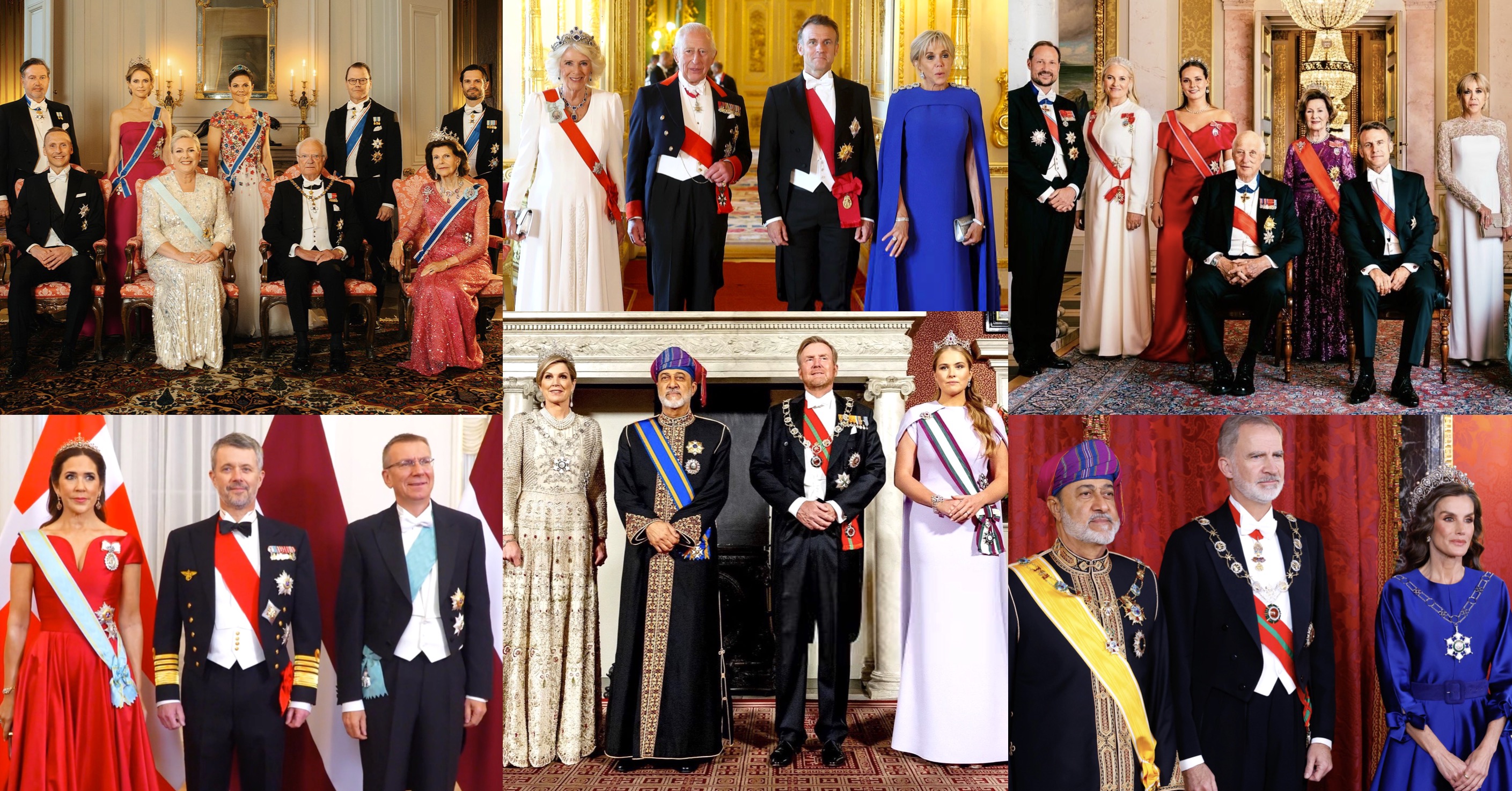
5 Upcoming State Visits 2025: Diplomatic Agendas, Protocols, and Strategic Outcomes
State visits represent the highest tier of international diplomatic engagement, executed by a host head of state to formalize bilateral alliances, negotiate economic treaties, and reinforce security partnerships. High-profile state vis...
State visits represent the highest tier of international diplomatic engagement, executed by a host head of state to formalize bilateral alliances, negotiate economic treaties, and reinforce security partnerships. High-profile state visits in 2025 highlight critical shifts in global defense pacts, trade corridor negotiations, and sovereign diplomatic protocol across Europe, North America, the Asia-Pacific, and the Holy See.
Contents
Understanding Diplomatic Classifications: State Visit vs. Official and Working Visits
To evaluate major foreign visits accurately, policy analysts and legal scholars distinguish between the formal categories of international diplomatic engagements. Diplomatic protocol, governed in part by international custom and the Vienna Convention on Diplomatic Relations (1961), dictates strict rules regarding hosting duties, security detail funding, ceremonial honours, and legislative access.
- STATE VISIT: Highest honour; hosted by Head of State; full salute.
- OFFICIAL VISIT: Hosted by Head of Gov/State; targeted agenda.
- WORKING VISIT: Bilateral policy/negotiation; minimal ceremony.
- PRIVATE/GUEST VISIT: Informal or event-driven; restricted protocol.
Key Differences in Protocol and Execution
- State Visit: The formal visit of a foreign Head of State (e.g., a Monarch or President) upon the official invitation of the host Head of State. It features full military honours, including a 21-gun salute, inspection of the guard of honour, an official state banquet, accommodation at an official royal or presidential residence (such as Windsor Castle or Blair House), and frequently an address to the host nation’s legislature.
- Official Visit: Typically undertaken by a Head of Government (such as a Prime Minister or Chancellor) or a Head of State for focused bilateral discussions. Official visits maintain high protocol standards—including an official luncheon or dinner and guard of honour—but omit certain royal or state pageantry reserved strictly for heads of state.
- Working Visit: A targeted mission focused on bilateral negotiations, international summit attendance (such as G7, G20, or NATO), or treaty drafting. Ceremonial protocol is minimized to maximize operational conference hours.
- Private or Guest Visit: Non-official visits for personal engagements, academic lectures, or regional summits where ceremonial honours are omitted entirely.
Analysis of 5 Major State Visits in 2025
The following five state visits represent pivotal international summits where sovereign heads of state converge to sign bilateral treaties, realign trade terms, and strengthen regional defense architecture.
- UK Royal Hostings & European Bilateral Engagements
- United States Executive State Visits & Blair House Protocols
- French Republic & Élysée Strategic Autonomy Summits
- Holy See Sovereign Engagements during Jubilee 2025
- Japan Imperial Household & East Asian Security State Visits
1. United Kingdom Royal Hosting and European Bilateral Engagements
Host and Guest Entities
- Host: King Charles III, Foreign, Commonwealth & Development Office (FCDO)
- Primary Guests: Selected European and Indo-Pacific Heads of State
- Primary Location: Windsor Castle and Buckingham Palace, London
Diplomatic Framework and Agenda
State visits hosted by the British Monarch serve as key instruments of soft power and economic alignment for the United Kingdom. Engagements emphasize post-Brexit trade agreements, bilateral security agreements, and defense technology transfers under frameworks such as AUKUS and NATO partnerships.
The ceremonial structure follows rigid protocol established by the Marshal of the Diplomatic Corps. The visiting head of state is greeted by royal representatives at their point of arrival, transferred to Horse Guards Parade for a royal salute and guard of honour inspection, and escorted via carriage procession to Buckingham Palace or Windsor Castle.
Key Strategic Outcomes
- Formalization of bilateral defense pacts and intelligence-sharing protocols.
- Enhancement of bilateral trade corridors, particularly in financial services, clean energy infrastructure, and pharmaceutical manufacturing.
- Joint declarations regarding European security architecture and maritime trade route security.
2. United States Executive State Visits and Blair House Engagements
Host and Guest Entities
- Host: President of the United States, U.S. Department of State
- Primary Guests: Key Strategic Allies (Indo-Pacific and European Heads of State)
- Primary Location: Washington, D.C. (The White House and Blair House)
Diplomatic Framework and Agenda
The United States Department of State Office of the Chief of Protocol manages state visits to Washington, D.C. Visiting heads of state reside at Blair House, the President's official guest house. The state visit protocol includes an arrival ceremony on the South Lawn of the White House with full military honours, bilateral Oval Office cabinet meetings, a joint press conference, a State Dinner in the East Room or State Dining Room, and frequently an address to a joint session of the United States Congress.
High-priority agenda items center on bilateral supply chain resilience, advanced technological cooperation (semiconductors, artificial intelligence, and quantum computing), and collective defense commitments under mutual defense treaties.
Key Strategic Outcomes
- Signing of bilateral Memoranda of Understanding (MoUs) regarding critical mineral supply chains and semiconductor manufacturing investments.
- Enactment of joint security guarantees and interoperability agreements between military forces.
- Strengthening of legislative cooperation through formal addresses to Congressional committees and joint sessions.
3. French Republic State Visits and Élysée Diplomatic Architecture
Host and Guest Entities
- Host: President of the French Republic, Ministry for Europe and Foreign Affairs
- Primary Guests: European Union and African Heads of State
- Primary Location: Élysée Palace, Paris, and Versailles Palace
Diplomatic Framework and Agenda
French state visits emphasize strategic autonomy, European integration, and bilateral trade within the Francophonie network and broader international alliances. Hosted by the French President, visiting leaders receive full military honours from the Republican Guard (Garde républicaine) at the Hôtel des Invalides before proceeding to the Élysée Palace for executive summits.
State dinners are frequently conducted at the Élysée Palace or historic venues such as the Palace of Versailles to reinforce France's cultural and diplomatic heritage. Key discussions involve joint defense procurement, maritime security, European energy grid independence, and multilateral regulatory standards.
Key Strategic Outcomes
- Bilateral defense technology integration, including joint development of naval and aerospace platforms.
- Signing of trade and green energy accords supporting European carbon neutrality goals.
- Diplomatic coordination on regional security and maritime sovereignty frameworks.
4. Holy See Sovereign Engagements during Jubilee 2025
Host and Guest Entities
- Host: Pope Francis (Head of State, Vatican City State), Secretariat of State of the Holy See
- Primary Guests: Global Heads of State and International Sovereign Entities
- Primary Location: Apostolic Palace, Vatican City State
Diplomatic Framework and Agenda
During the Jubilee Year 2025, the Holy See hosts an extraordinary sequence of sovereign state visits and official audience engagements. As a recognized sovereign entity under international law, the Holy See maintains diplomatic relations with over 180 nations. State visits to the Vatican follow strict pontifical protocol managed by the Prefecture of the Papal Household.
Visiting heads of state are received by the Swiss Guard and High Dignitaries of the Papal Court in the San Damaso Courtyard before proceeding to private audience chambers in the Apostolic Palace. Discussions prioritize international humanitarian law, diplomatic mediation in conflict zones, religious freedom, and international development aid.
Key Strategic Outcomes
- Signing and ratification of concordats and bilateral agreements governing church-state legal frameworks.
- Coordinated international humanitarian initiatives and diplomatic peace mediation efforts.
- High-level bilateral exchanges between foreign executive delegations and the Holy See Secretariat of State.
5. Japan Imperial Household and East Asian Security State Visits
Host and Guest Entities
- Host: Emperor Naruhito (Imperial Household Agency) and Prime Minister of Japan
- Primary Guests: Asian-Pacific Partners and Global Sovereign Leaders
- Primary Location: Tokyo Imperial Palace and Akasaka Palace (State Guest House)
Diplomatic Framework and Agenda
State visits to Japan feature a constitutional division of diplomatic roles. The Emperor of Japan performs ceremonial host duties, while executive policy negotiations are conducted by the Prime Minister and Cabinet.
Visiting heads of state reside at the Akasaka Palace (State Guest House) and are welcomed with a formal imperial welcoming ceremony at the Imperial Palace plaza, including a review of the Japan Self-Defense Forces Guard of Honor. The diplomatic itinerary incorporates an Imperial State Banquet, followed by bilateral policy summits at the Prime Minister's Official Residence (Kantei). Priorities focus on Indo-Pacific maritime security, microchip supply chain stability, and bilateral free trade frameworks.
Key Strategic Outcomes
- Establishment of bilateral Reciprocal Access Agreements (RAA) for enhanced defense interoperability.
- Securing technology transfer pacts and clean energy infrastructure investments across the Indo-Pacific.
- Standardization of regional trade compliance and digital economy regulations.
Comprehensive Comparison of 2025 State Visits
The following table summarizes the operational, protocol, and strategic characteristics of major 2025 state visits:
| Visiting Delegation & Target Host | Official Protocol Level | Primary Host Venue | Core Strategic Focus | Key Diplomatic Deliverables |
|---|---|---|---|---|
| UK Sovereign Hosting | Full State Visit | Windsor Castle / Buckingham Palace | Defense alliances, post-Brexit bilateral trade, energy infrastructure | Security accords, cross-border investment treaties |
| U.S. Executive Hosting | Full State Visit | White House / Blair House | Critical technologies, Indo-Pacific defense, semiconductor supply lines | Bilateral MoUs, joint technology transfer protocols |
| French Republic Hosting | Full State Visit | Élysée Palace / Versailles | European strategic autonomy, defense procurement, green energy | Bilateral defense pacts, European grid agreements |
| Holy See Pontifical Hosting | Sovereign Audience / State Visit | Apostolic Palace, Vatican City | International law, humanitarian relief, conflict resolution | Bilateral concordats, joint humanitarian accords |
| Japan Imperial Hosting | State / Official Guest Visit | Akasaka Palace / Imperial Palace | Maritime security, tech supply chains, regional trade corridors | Reciprocal Access Agreements, microchip trade pacts |
Logistics, Security Architecture, and Treaty Mechanics
Executing a formal state visit requires months of inter-agency planning between host nation foreign ministries, domestic intelligence services, and visiting diplomatic advance teams.
- STAGE 1: Official Invitation & Diplomatic Clearance (6–12 months prior)
- STAGE 2: Advance Logistics & Security Site Assessments (3–6 months prior)
- STAGE 3: Bilateral Treaty & MoU Drafting (Inter-Ministry Negotiations)
- STAGE 4: Formal Execution: Ceremonial Protocol & Executive Summits
- STAGE 5: Post-Visit Ratification & Implementation Monitoring
1. Diplomatic Immunity and Legal Protections
Under the 1961 Vienna Convention on Diplomatic Relations and customary international law, visiting heads of state enjoy absolute personal inviolability and full immunity from host-state civil and criminal jurisdiction (ratione personae). This protection extends to their immediate entourage, official communications, and diplomatic baggage.
2. Operational Security Architecture
Host nations assume primary legal and financial responsibility for the physical protection of visiting state delegations. Security operations are coordinated between elite protective agencies, such as:
- United States: U.S. Secret Service (Dignitary Protective Division) and Department of State Diplomatic Security Service (DSS).
- United Kingdom: Metropolitan Police Specialist Protection (RSP) and Royalty and Specialist Protection Command.
- France: Service de Protection (SDLP) and the Republican Guard.
- Japan: Security Police (SP) of the Tokyo Metropolitan Police Department.
Operations include secure air traffic corridors, armored vehicle motorcades, sweeping of host venues for electronic surveillance devices, and real-time intelligence monitoring.
3. Drafting and Execution of Treaties and MoUs
The political objective of a state visit is the formalization of international agreements. Inter-ministerial teams draft legal instruments prior to the arrival of the head of state:
- Bilateral Treaties: Binding legal instruments under international law that require legislative advice, consent, or parliamentary ratification.
- Memoranda of Understanding (MoUs): Non-binding political commitments detailing bilateral cooperation frameworks in research, defense technology exchange, or educational programs.
Frequently Asked Questions
What constitutes the official invitation for a state visit?
A state visit can only occur following a formal, written invitation extended directly by the host nation's Head of State to the visiting foreign Head of State. Unlike working visits arranged by government ministries, state visits represent sovereign-level invitations and are strictly limited in frequency—typically to one or two per year per host head of state.
Who covers the expenses of a formal state visit?
The host nation funds all official costs associated with ceremonial functions, state banquets, secure local transportation, and accommodation for the visiting head of state and their core diplomatic delegation at official state guest houses (e.g., Blair House in Washington, D.C., or Akasaka Palace in Tokyo). The visiting nation remains responsible for international transit costs and additional non-official delegation personnel.
How does a state visit differ from a G7 or G20 summit appearance?
A state visit is a bilateral engagement focused exclusively on the relations between two sovereign nations, featuring extensive ceremonial honours and state banquets. In contrast, G7, G20, or NATO summits are multilateral working conferences focused on broad international policy. Leaders attending summits do so as delegates to an international forum rather than as state guests of the host nation.
Can a Prime Minister conduct a state visit?
In parliamentary systems where the Prime Minister is the Head of Government rather than the Head of State (e.g., the UK, Canada, or Japan), the Prime Minister conducts Official Visits or Working Visits. Full state visits are reserved for constitutional heads of state, such as monarchs or presidents. However, in presidential systems where the President holds both roles (e.g., the United States or France), the President conducts state visits in their capacity as Head of State.
What is the legal status of agreements signed during a state visit?
Agreements signed during state visits carry high political visibility and legally binding authority if executed as treaties in accordance with the 1969 Vienna Convention on the Law of Treaties. Treaties require domestic legislative ratification to take full legal effect, whereas administrative Memoranda of Understanding (MoUs) take effect immediately upon signature by executive officials.
Recommendations for Diplomatic Analysts and Policy Researchers
For researchers, legal scholars, and international business executives analyzing the strategic impacts of state visits, the following verification steps are recommended:
- Review Official State Communiqués: Verify bilateral deliverables by examining official joint statements published directly by host executive offices (e.g., the White House Press Office, the Élysée Palace, or the UK Foreign, Commonwealth & Development Office).
- Analyze Treaty Depositories: Cross-reference signed treaties against official national treaty series (such as the United States Treaties and Other International Acts Series - TIAS) to determine ratification requirements and effective operational dates.
- Track Legislative Implementation: Monitor parliamentary and congressional committee calendars to track the progress of enabling legislation required for defense technology transfers, tariff adjustments, or foreign aid commitments established during the visit.
Image Gallery