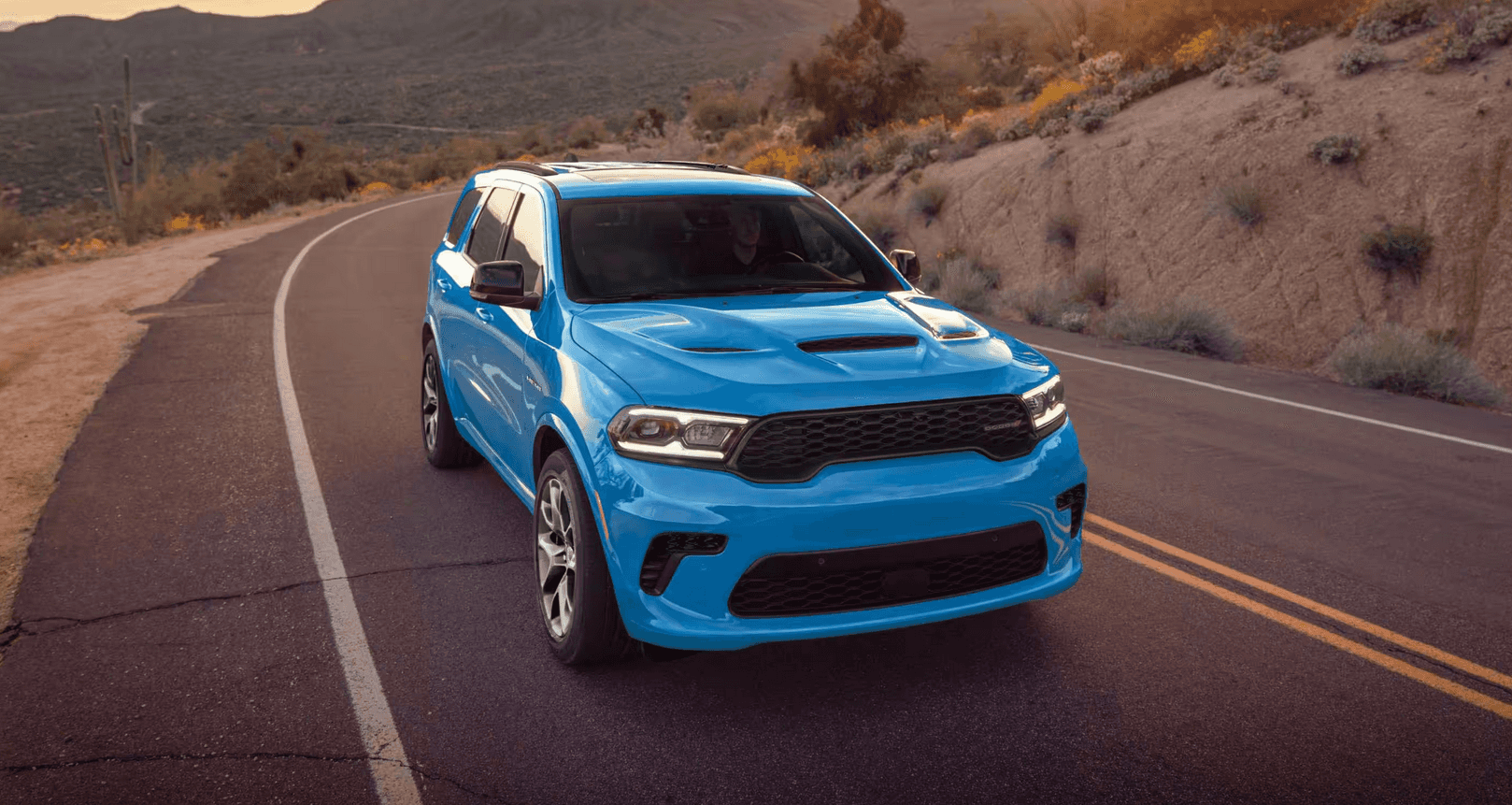
Understanding the Dodge Durango Top Speed and Performance Capabilities
The Dodge Durango, particularly in its high-performance SRT and Hellcat configurations, achieves top speeds ranging from 118 mph in standard V6 models to an electronically limited 180 mph in the supercharged 6.2L HEMI Hellcat variant....
The Dodge Durango, particularly in its high-performance SRT and Hellcat configurations, achieves top speeds ranging from 118 mph in standard V6 models to an electronically limited 180 mph in the supercharged 6.2L HEMI Hellcat variant. These figures reflect the vehicle's evolution from a standard three-row utility SUV into a high-performance machine capable of track-oriented speeds.
Contents
The Evolution of Durango Performance
The Dodge Durango has transitioned significantly throughout its production history. Originally positioned as a traditional body-on-frame SUV, the modern iterations—specifically the third generation—have been engineered to bridge the gap between family utility and muscle-car performance. This shift is most evident in the development of the SRT (Street and Racing Technology) line.
Performance enthusiasts often focus on the top speed as a metric of the vehicle’s engineering ceiling. However, it is essential to distinguish between the various powertrain options, as the Durango’s mechanical architecture dictates its maximum velocity. The base 3.6L Pentastar V6 models are calibrated primarily for fuel efficiency and daily driving, meaning their top speed is governed by tire speed ratings and aerodynamic stability, usually capping out at approximately 118 to 120 mph.
Powertrain Hierarchy and Speed Potential
To understand the Durango’s capabilities, one must look at the specific engine and drivetrain combinations. The Durango lineup historically includes three primary tiers of performance: the standard V6, the 5.7L HEMI V8, and the high-output supercharged variants.
- 3.6L Pentastar V6: This engine is the standard for the base models. While capable of highway cruising, the gearing and electronic limiters are set to prioritize long-term reliability and fuel economy rather than sustained high-speed performance.
- 5.7L HEMI V8: Offering more torque and higher output, this engine provides a significant increase in acceleration. The top speed for these models is generally electronically limited to around 130–135 mph, a figure largely dictated by the OEM-specified all-season tires.
- 6.4L HEMI SRT: The naturally aspirated 6.4L engine pushes the Durango into the realm of true performance SUVs, with a top speed rated at approximately 155 mph.
- 6.2L Supercharged HEMI Hellcat: The pinnacle of the Durango lineup, the Hellcat utilizes a supercharger to produce over 700 horsepower. This version is factory-tested to reach a top speed of 180 mph.
Aerodynamics and Stability at High Speeds
Achieving high speeds in a three-row SUV is a complex engineering challenge. Unlike a low-profile sports car, the Durango has a large frontal area and a relatively high center of gravity. At speeds approaching the 180 mph mark, aerodynamic drag increases exponentially.
Dodge engineers addressed these challenges through the implementation of functional aerodynamics. The SRT and Hellcat variants feature specific front fascia designs that manage airflow to provide front-end downforce and direct cooling air to the radiator and heat exchangers. Suspension tuning is equally critical; these models utilize adaptive damping systems that stiffen at high speeds to reduce pitch and roll, ensuring that the vehicle remains stable during high-speed maneuvers.
The Role of Tires and Braking
Top speed is not merely a matter of engine power; it is a matter of safety and mechanical limits. The tires installed on a vehicle are speed-rated; exceeding these ratings risks tread separation or catastrophic failure. When Dodge provides an official top speed figure for the Durango Hellcat, it assumes the vehicle is equipped with the factory-certified high-performance summer tires.
Braking systems also play a vital role. Moving a vehicle weighing over 5,000 pounds from high speed to a complete stop requires massive thermal capacity. The SRT models come standard with Brembo high-performance braking systems, utilizing multi-piston calipers and ventilated rotors to handle the kinetic energy generated during high-speed operation. Owners must ensure that any aftermarket modifications—such as tire changes—do not compromise these safety margins.
Comparative Performance Metrics
The following table provides a generalized overview of performance tiers based on factory specifications for recent model years.
| Trim Level | Engine | Estimated Top Speed | Primary Focus |
|---|---|---|---|
| SXT / GT | 3.6L V6 | 118 mph | Efficiency / Daily Utility |
| R/T | 5.7L HEMI V8 | 130 mph | Balanced Power / Towing |
| SRT 392 | 6.4L HEMI V8 | 155 mph | Track Performance |
| SRT Hellcat | 6.2L SC HEMI | 180 mph | Maximum Velocity |
Operational Limits and Safety Considerations
It is critical to note that "top speed" figures are obtained under controlled, closed-course conditions by professional drivers. Public roadways are never appropriate environments to test these limits. Furthermore, the Durango’s speed capabilities are heavily dependent on factors such as ambient temperature, tire pressure, fuel quality (specifically the use of premium unleaded 91 octane or higher), and vehicle maintenance status.
Drivers should also be aware of the "limp mode" or electronic engine management protections. If the vehicle’s computer detects temperatures exceeding safe operating parameters for the transmission or engine oil, it will proactively reduce power output, regardless of the accelerator pedal position. This is a vital safety feature designed to preserve the longevity of the drivetrain.
Frequently Asked Questions
Is the top speed of the Dodge Durango limited by software? Yes. Modern Dodge vehicles use Engine Control Modules (ECM) that enforce electronic speed limiters. These are programmed at the factory based on the safety ratings of the tires provided with the vehicle and the aerodynamic limits of the chassis.
Does installing aftermarket parts increase the top speed? While air intake and exhaust modifications may increase horsepower, they do not necessarily increase the top speed unless the factory speed limiter is removed via an aftermarket tune. Removing the limiter is not recommended, as it voids the powertrain warranty and can lead to dangerous situations if the vehicle's suspension and tires are not rated for higher velocities.
Can I reach 180 mph in any Dodge Durango? No. Only the specific SRT Hellcat trim is engineered and tested to achieve 180 mph. Attempting to reach this speed in a non-Hellcat trim is unsafe and physically impossible due to the electronic speed governors and engine power output differences.
How does towing affect top speed? Towing is entirely antithetical to high-speed operation. The Durango is rated for high towing capacities, but towing significantly increases the stress on the transmission and cooling systems. The maximum speed while towing is generally dictated by the trailer’s stability and legal speed limits for towed vehicles, which are significantly lower than the vehicle's unladen top speed.
Does cold weather improve top speed? Generally, cooler, denser air allows an internal combustion engine to make more power. While this may improve acceleration times, it does not change the electronic top speed limiter, which is a software-defined cap rather than a purely mechanical one.
Recommendation for Performance Enthusiasts
If you are interested in the high-speed capabilities of the Durango, the most responsible way to experience its performance is through professional high-performance driving events or track days at sanctioned automotive venues. Ensure your vehicle is strictly maintained according to the owner's manual, keep your tire pressure at the manufacturer's recommended settings for high-speed operation, and always prioritize braking and handling over raw speed. If you intend to use the vehicle for track applications, ensure your insurance policy covers closed-course driving, as many standard auto policies exclude such activities.
Image Gallery