The History and Forensic Legacy of Jesse James’s Coffin
Jesse James’s coffin refers to the burial vessels used to inter the notorious American outlaw following his death in 1882, as well as the focal point of the 1995 forensic exhumation that verified his identity. For over a century, the c...
Jesse James’s coffin refers to the burial vessels used to inter the notorious American outlaw following his death in 1882, as well as the focal point of the 1995 forensic exhumation that verified his identity. For over a century, the contents of the coffin were the subject of intense speculation, fueled by rumors that James had faked his own death. Today, the grave site and the historical artifacts associated with his burial remain significant icons of the American frontier and forensic science.
Contents
The Death of an Outlaw: The 1882 Burial
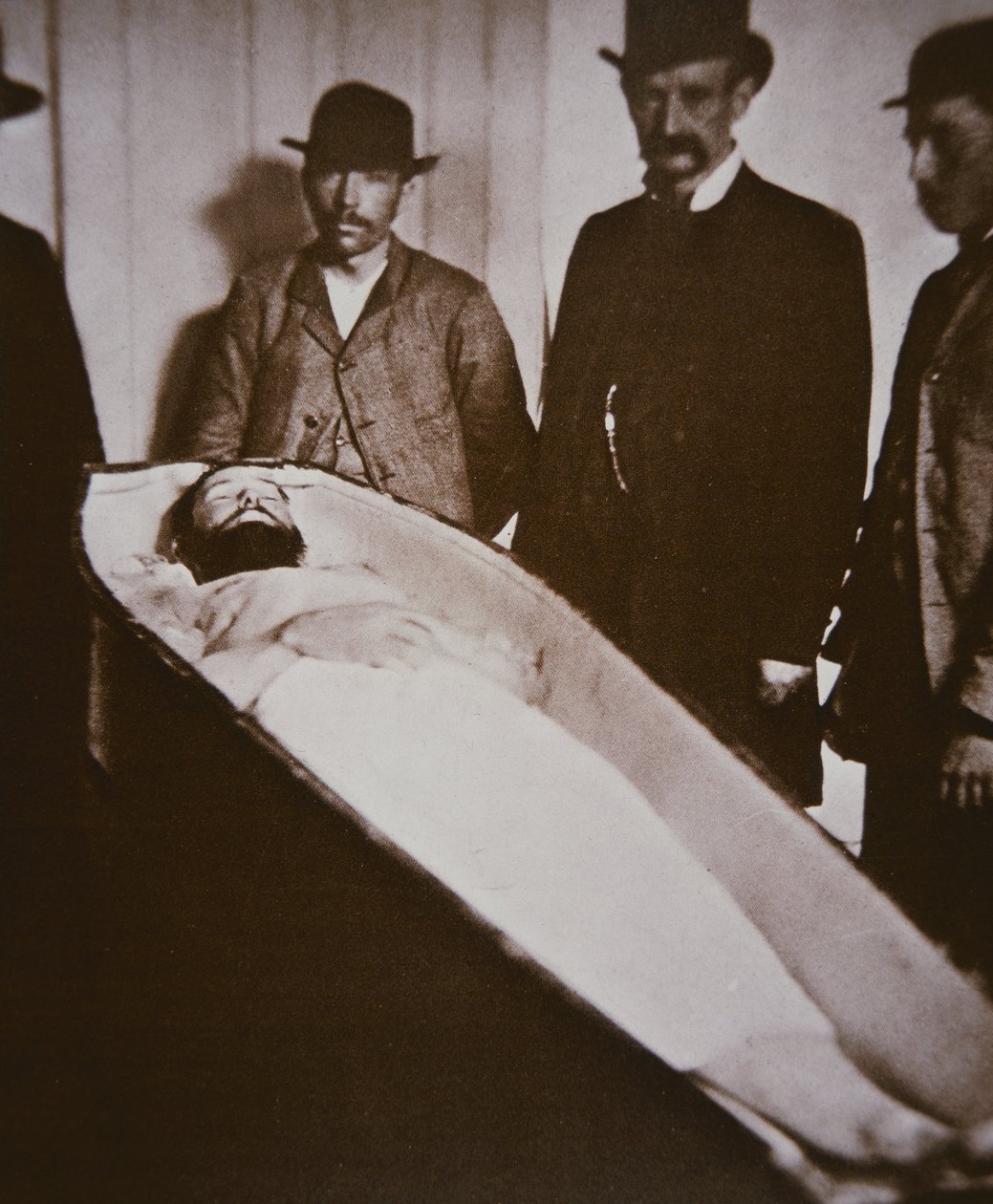
On April 3, 1882, Jesse James was shot and killed by Robert Ford in St. Joseph, Missouri. The event immediately became a national sensation, and the subsequent funeral arrangements were handled with a mixture of grief and high-security concern. Jesse’s mother, Zerelda Samuel, was deeply concerned about grave robbers—a common problem for high-profile figures in the late 19th century—and took specific measures regarding his coffin and burial site.
The Original 1882 Coffin
The original coffin was a high-quality metallic burial case. In the 1880s, metallic caskets were marketed as being "air-tight" and "vermin-proof," offering a level of preservation and security that traditional wooden "six-board" coffins could not provide. These iron-clad or zinc-lined cases were expensive, reflecting the James family's desire to provide a dignified end for a man who, despite his criminal record, was viewed by many in the South as a Robin Hood-like figure.
Jesse was initially buried on the family farm in Kearney, Missouri. Zerelda Samuel famously had the grave dug deep and positioned it within sight of her bedroom window so she could monitor it for intruders. She even went so far as to charge tourists for small pebbles from the grave site, which she would later replenish from a nearby creek, turning the site of her son's coffin into one of the earliest "true crime" tourist attractions in America.
The Legend of the Empty Grave: Why the Coffin Was Questioned
For decades after 1882, the primary question surrounding Jesse James's coffin was not what it was made of, but who was actually inside it. The "death hoax" theory suggested that Jesse James had conspired with the Ford brothers to fake his assassination, allowing him to retire into obscurity while a different man (often cited as Charles Bigelow) was buried in his place.
The J. Frank Dalton Claim
The most significant challenge to the coffin’s occupant came from a man named J. Frank Dalton. In 1948, at the age of 101, Dalton made a public appearance claiming to be the real Jesse James. He provided detailed accounts of the gang’s activities and bore scars that matched descriptions of Jesse’s wounds. When Dalton died in 1951, he was buried in Granbury, Texas, under a headstone that read "Jesse Woodson James." This sparked a legal and historical battle that lasted until the mid-1990s, centering on the need to open Jesse’s Missouri grave to settle the matter once and for all.
The 1995 Exhumation: Science Inside the Coffin
In 1995, a team of forensic scientists, led by Professor James Starrs of George Washington University, received legal permission to exhume the remains from Jesse James’s grave at Mt. Olivet Cemetery in Kearney (where he had been moved from the family farm in 1902). This was a landmark event in forensic archaeology, utilizing modern techniques to resolve a century-old mystery.
Archaeological Findings and Coffin Condition
Upon reaching the burial depth, the team discovered that the 1902 re-interment had left the remains in a fragmented state. The original 1882 metallic coffin had degraded significantly over time. However, the team successfully recovered:
- Two molar teeth and several fragments of bone.
- Hair samples that had adhered to the interior of the burial vessel.
- Metallic coffin handles and decorative ornaments from the 1902 casket.
The condition of the remains was consistent with a body that had been moved and re-buried. More importantly, the physical evidence found inside—specifically the skull fragments—showed clear evidence of a gunshot wound behind the ear, consistent with the historical account of Jesse’s death.
Mitochondrial DNA Verification
The defining moment for the "Jesse's coffin" mystery was the DNA analysis. Forensic scientists extracted mitochondrial DNA (mtDNA) from the recovered teeth and hair. Because mtDNA is passed down through the maternal line, it was compared to DNA samples from verified descendants of Jesse’s sister, Susan James.
The results were definitive: the DNA from the remains in the coffin matched the James family line with a statistical probability exceeding 99%. This proved that the man killed in 1882 was indeed Jesse James, effectively debunking the J. Frank Dalton theory and various other "imposter" claims that had persisted for 113 years.
Comparing the Burial Sites and Remains
The history of Jesse James's final resting place is divided into three distinct phases. The following table outlines the transition of the coffin and remains through history.
| Period | Location | Coffin Type | Key Outcome |
|---|---|---|---|
| 1882–1902 | James Family Farm, Kearney, MO | Metallic Burial Case | Initial burial under mother's supervision. |
| 1902–1995 | Mt. Olivet Cemetery, Kearney, MO | Standard Wood/Metal Casket | Moved for easier public access and security. |
| 1995–Present | Mt. Olivet Cemetery, Kearney, MO | Modern Protective Vault | Re-interred after DNA testing; modern forensic seal. |
The Second Burial: 1995 Re-interment
After the forensic examination was completed, Jesse James was re-buried in a ceremony that reflected both his historical status and the scientific closure of the case. On October 28, 1995, over 600 people attended the re-interment at Mt. Olivet Cemetery.
The "new" coffin used in 1995 was a modern, high-security casket designed to preserve the remaining fragments for future generations. The James family descendants participated in the ceremony, which was conducted with the honors of a Confederate veteran, acknowledging Jesse’s service under William Quantrill and "Bloody Bill" Anderson during the Civil War. The current grave site is marked by a large granite monument, and the 1995 exhumation essentially "sealed" the historical record.
Technical Specifications of 19th-Century Metallic Coffins
To understand why the 1882 coffin was a significant choice, one must look at the technical specifications of burial technology in that era. In 1882, the "Fisk Metallic Coffin" or similar iron-based designs were the gold standard.
- Cast Iron Construction: These cases were cast in two halves and bolted together.
- Lead or Zinc Lining: To ensure an "air-tight" seal, many were lined with softer metals that could be soldered shut.
- Glass Viewports: High-end models often featured a glass plate over the face of the deceased, allowing for a viewing without exposing the body to the air, which was thought to slow decomposition.
- Weight: A metallic coffin of this era could weigh between 200 and 400 pounds empty, making the task of grave-robbing nearly impossible for a small group of people.
When the 1995 team exhumed the site, the "rust halo" in the soil confirmed that a substantial iron-based vessel had once been there, though the acidic soil of Missouri had eventually reclaimed most of the metal.
Frequently Asked Questions
Is the original 1882 coffin still in the ground?
No. When Jesse was moved in 1902, the remains were transferred to a new casket. The remnants of the 1882 metallic case were largely degraded by the time of the 1995 exhumation. Small fragments and hardware from the various burials are occasionally held in museum collections, such as the Jesse James Farm & Museum.
Why was Jesse James moved from the farm to Mt. Olivet?
After Jesse's mother, Zerelda, grew older and the farm passed to other family members, there were concerns about the long-term maintenance and security of the grave. Moving him to a formal cemetery in 1902 ensured the grave would be managed by a perpetual care trust.
Did the DNA test include J. Frank Dalton's body?
In 2000, researchers attempted to exhume the body of J. Frank Dalton in Texas to compare his DNA. However, the exhumation was complicated by the fact that the cemetery had been flooded, and they accidentally exhumed the wrong body (a man named Henry Holland). Subsequent attempts and historical analysis have largely dismissed Dalton’s claims in light of the Missouri DNA results.
Can tourists visit Jesse’s coffin site in 2026?
Yes. The grave in Mt. Olivet Cemetery in Kearney, Missouri, is open to the public. While you cannot see the coffin itself, the monument and the history of the site are well-documented for visitors. The Clay County Department of Parks maintains the nearby farm where the original burial took place.
Was anyone else buried in the coffin with Jesse?
There is no evidence that anyone else was buried with him. However, forensic teams in 1995 found small animal bones in the upper layers of the grave soil, which is common in historical burials as rodents often burrow into disturbed earth.
Recommendations for History Enthusiasts
If you are researching the burial of Jesse James or the technical details of his coffin for historical or genealogical purposes, consider the following steps:
- Visit the Jesse James Farm and Museum: Located in Kearney, Missouri, the museum houses original artifacts from the James family, including the location of the first grave.
- Review the Forensic Report: For those interested in the science, Professor James Starrs’s book, The Many Faces of Jesse James, provides an exhaustive look at the 1995 exhumation and the forensic techniques used to identify the remains.
- Consult the Clay County Historical Society: They maintain records regarding the 1902 move and the local impact of the outlaw’s death.
The story of Jesse James’s coffin is more than a footnote in a criminal biography; it is a testament to how modern science can finally settle the restless myths of the American West.
Image Gallery