Stephanie from LazyTown: The Complete Character History, Actresses, and Legacy
Stephanie is the central protagonist of the internationally acclaimed children’s television series LazyTown, created by Icelandic gymnast and entrepreneur Magnús Scheving. Known for her bright pink hair, optimistic personality, and ene...
Stephanie is the central protagonist of the internationally acclaimed children’s television series LazyTown, created by Icelandic gymnast and entrepreneur Magnús Scheving. Known for her bright pink hair, optimistic personality, and energetic dance moves, Stephanie inspires the resident puppets of LazyTown to abandon sedentary habits in favor of active play, healthy eating, and outdoor sports alongside the superhero Sportacus.
Contents
Originally adapted from Icelandic stage plays, the character became a global pop culture icon during the show’s television run on Nick Jr. and international networks. Understanding Stephanie requires looking closely at her character origins, the physical and artistic demands placed on her portrayers, the groundbreaking production technology that brought her world to life, and the enduring legacy of the franchise.
Character Origins and Cultural Impact of Stephanie in LazyTown
The concept of LazyTown began in Iceland during the 1990s as a series of children's books and stage productions created by Magnús Scheving. Titled Áfram Latibær! ("Go LazyTown!") and later Glanni Glæpur í Latabæ ("Robbie Rotten in LazyTown"), these early theatrical productions aimed to combat growing childhood obesity and inactivity by framing physical fitness as an exciting adventure.
In the original theatrical performances, the character who would become Stephanie was named Solla Stirða ("Solla Stiff"), a young girl who struggled with physical flexibility but wanted to dance. When the concept was adapted into an international television series for Nickelodeon's Nick Jr. block in 2004, Solla Stirða was reimagined as Stephanie.
Character Background Narrative Framework:
- Stephanie arrives in LazyTown to visit her uncle, Mayor Milford Meanswell.
- Encounters local kids (Ziggy, Trixie, Stingy, Pixel) dominated by sedentary habits.
- Teams up with athletic hero Sportacus to introduce active play ("SportsCandy").
- Serves as the primary antagonist to Robbie Rotten's plots to keep the town lazy.
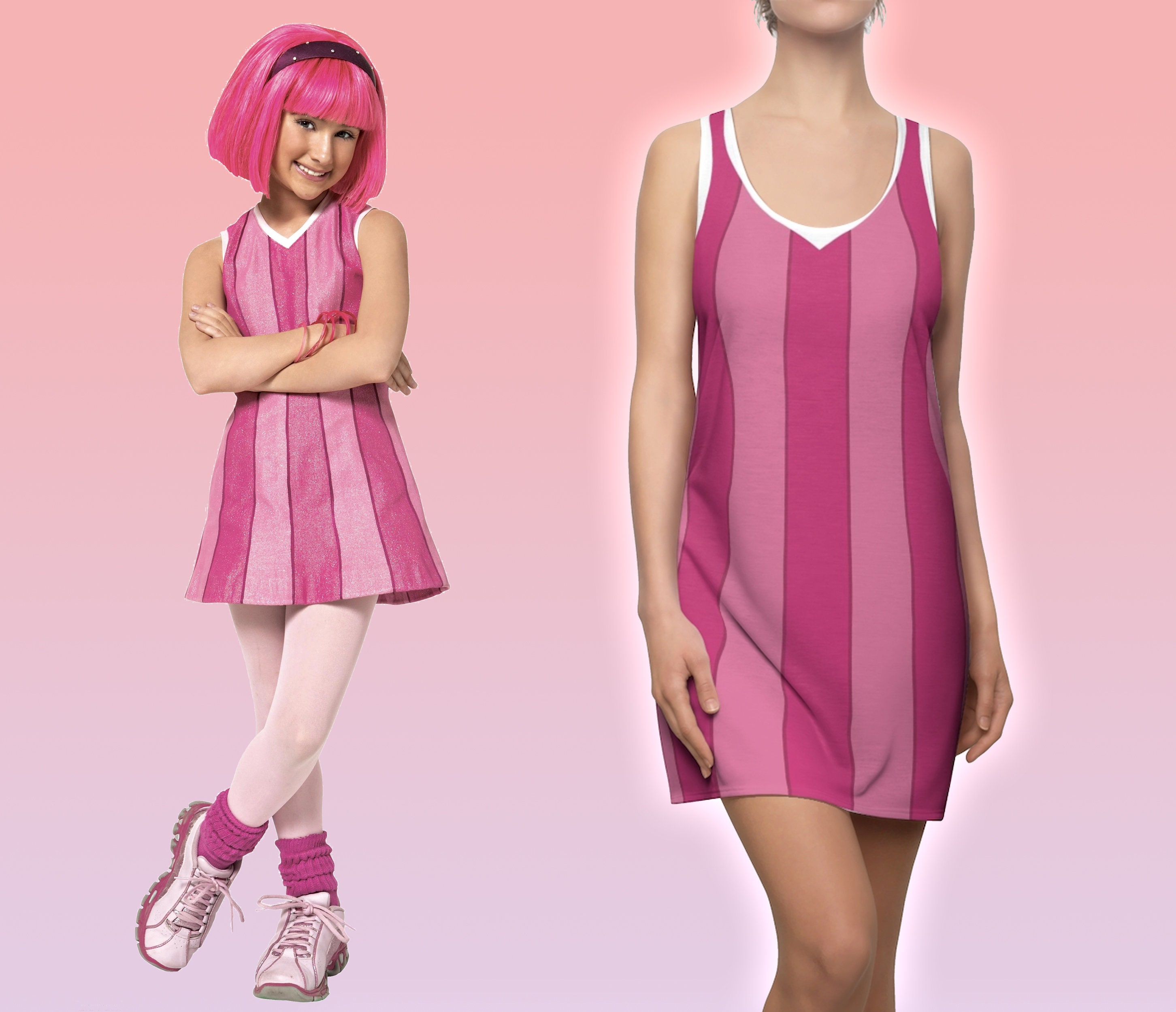
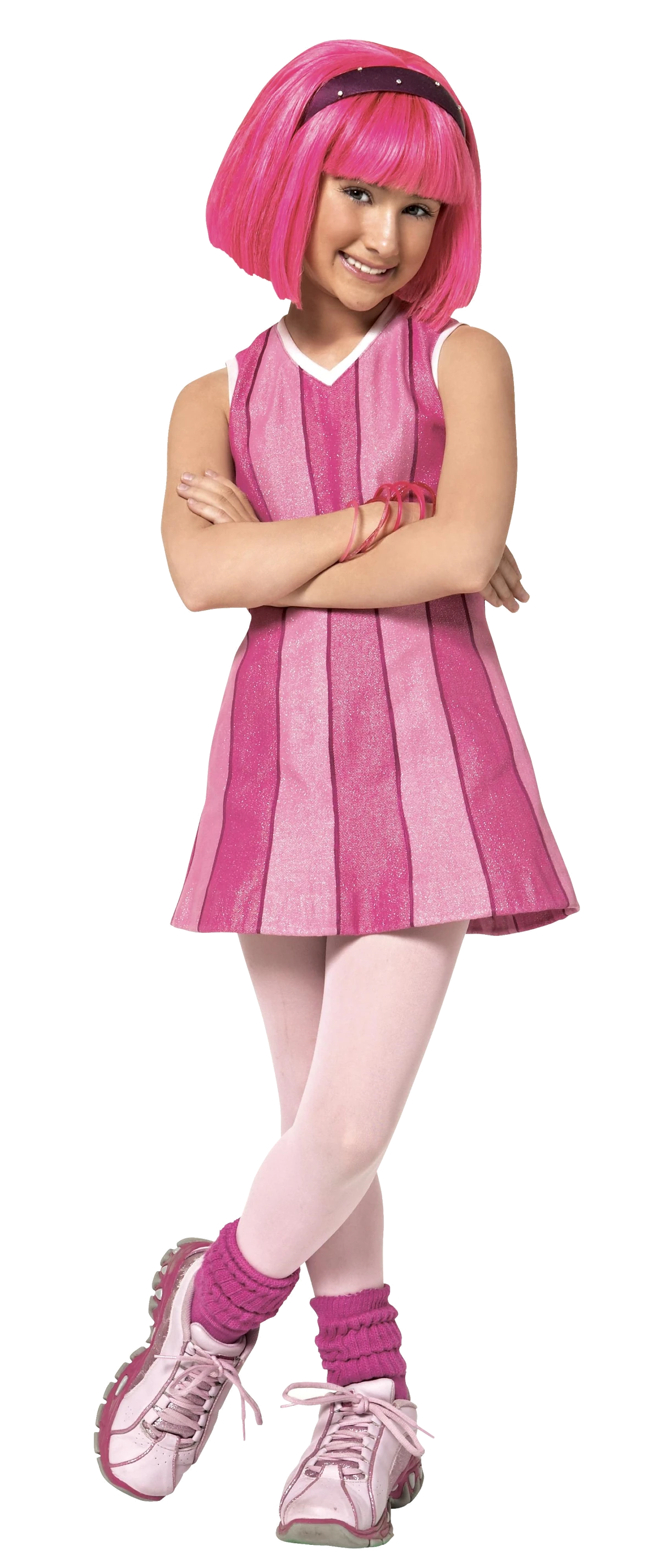
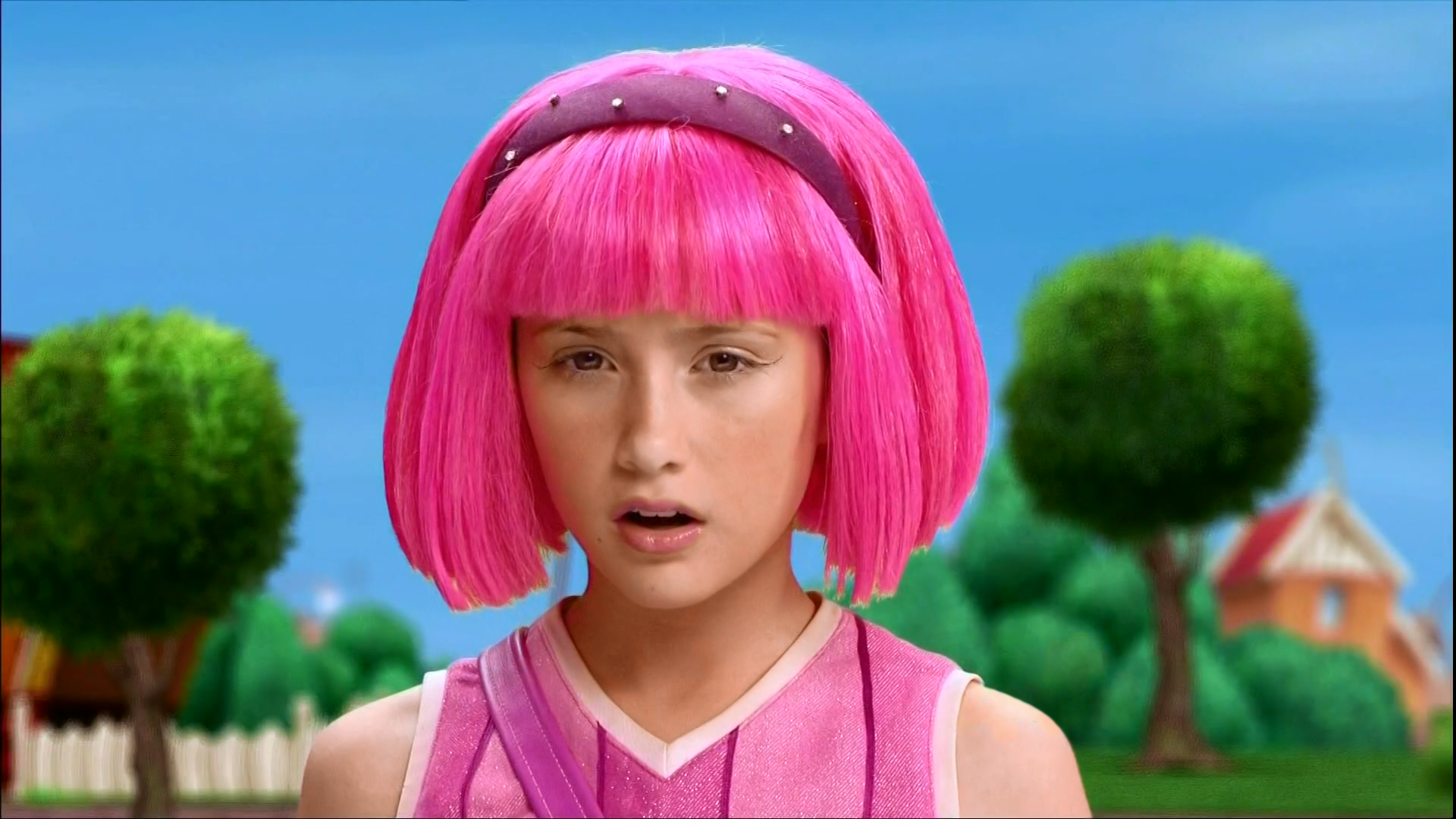
Unlike traditional educational programming that relied on passive instruction, Stephanie served as an active peer surrogate. She did not lecture her friends; instead, she engaged them through music, dance, and play. Her signature pink dress, matching hair, and athletic sneakers visually set her apart from the muted, puppet-driven backdrop of the town, symbolizing optimism and kinetic energy.
Key Takeaway on Character PhilosophyStephanie represents the bridge between the child viewer and the hyper-athletic world of Sportacus. While Sportacus performs Olympic-level gymnastics, Stephanie performs accessible, dance-based movements that children can easily replicate at home.
The Actresses Behind the Pink Hair: Julianna Rose Mauriello and Chloe Lang
Bringing Stephanie to life required an actress capable of delivering demanding physical choreography, live singing, and expressive acting opposite both human cast members and complex puppets. Two primary actresses portrayed Stephanie across the four television seasons.
Julianna Rose Mauriello (Seasons 1–2, LazyTown Extra)
Julianna Rose Mauriello was cast as the original television Stephanie after an extensive international talent search. Mauriello brought a strong background in performing arts, having performed on Broadway in productions such as Oklahoma!, Gypsy, and A Tree Grows in Brooklyn.
- Tenure: 2004–2007 (Seasons 1 and 2, plus the 2008 short-form series LazyTown Extra).
- Performance Style: Marked by exceptional dance precision, expressive facial acting, and powerful vocal delivery. Mauriello performed her own dance routines and acrobatic maneuvers.
- Critical Recognition: Her performance earned a Daytime Emmy Award nomination in 2006 for Outstanding Performer in a Children's Series, an exceptionally rare honor for an international non-network production shot outside the United States.
- Post-LazyTown Career: Mauriello retired from professional screen acting shortly after her work on LazyTown. Pursuing a career in healthcare, she completed her Master of Science in Occupational Therapy at Columbia University and works as a licensed pediatric occupational therapist, continuing her life's work of supporting child development through specialized clinical care.
Chloe Lang (Seasons 3–4)
When LazyTown returned for its third and fourth seasons in 2013, Julianna Rose Mauriello had outgrown the childhood role. Production executives cast American dancer and actress Chloe Lang following auditions in New York City.
- Tenure: 2013–2014 (Seasons 3 and 4).
- Performance Style: Lang brought a modern, highly athletic dance style influenced by competitive dance training. She maintained the character’s characteristic enthusiasm while adapting to updated musical arrangements and faster choreography.
- Post-LazyTown Career: Following LazyTown, Lang continued working as a professional dancer, content creator, and musician, releasing independent music singles and maintaining an active presence in the performing arts space.
Additional Portrayals and Unaired Pilots
Prior to the full series pickup by Nickelodeon, an unaired American pilot episode was filmed starring actress Shelby Young as Stephanie. When production formally relocated to Iceland under full-series funding, Young opted not to relocate, leading to Mauriello’s casting. In the original Icelandic stage productions, the character Solla Stirða was originated by acclaimed Icelandic actress and singer Selma Björnsdóttir.
Performance and Production Comparison
The structural differences between the two primary television eras of LazyTown reflect shifts in television production technology, dance styles, and target demographic pacing between 2004 and 2014.
| Feature / Metric | Julianna Rose Mauriello (Seasons 1–2) | Chloe Lang (Seasons 3–4) |
|---|---|---|
| Active Years on Air | 2004–2007 (plus 2008 Extra) | 2013–2014 |
| Episodes Headlined | 52 Main Episodes + 26 Extra Shorts | 26 Main Episodes |
| Primary Background | Broadway Theater & Classical Ballet | Competitive Dance & Contemporary Acrobatics |
| Production Format | Standard High-Definition Video (35mm equivalent) | 3D Digital Compositing & Red Camera Systems |
| Emmy Recognition | Nominated: Outstanding Performer (2006) | N/A |
| Key Song Performances | "Bing Bang", "Step by Step", "Spooky Song" | "Bing Bang (Updated)", "Time to Play", "Dancing Shoes" |
| Current Professional Focus | Licensed Pediatric Occupational Therapist | Performing Artist & Digital Content Creator |
Technical Production: How LazyTown Created Its Visual Style
The character of Stephanie operated within one of the most technologically advanced television production environments of its era. Produced at 380 Studios in Garðabær, Iceland, LazyTown combined live-action human actors, physical puppetry, and real-time 3D CGI virtual environments.
1. High-Definition Chroma Keying and Compositing
Stephanie was filmed entirely against physical green-screen soundstages. The physical set elements—such as Stephanie's pink bedroom or the town square—were constructed virtually inside high-end 3D rendering engines (such as Softimage XSI).
- Real-Time Camera Tracking: Cameras were equipped with specialized motion sensors that communicated directly with graphics processors. When the physical camera moved around the real-life actress playing Stephanie, the virtual 3D background moved in real-time parallax synchronization.
- Lighting Match Techniques: Specialized lighting rigs were built to match the saturated, stylized palette of the digital backgrounds, ensuring that Stephanie's pink hair and attire blended seamlessly into the computer-generated cityscape.
2. Physical Puppetry Integration
Stephanie regularly shared scenes with puppet characters created by puppet designer Neal Scanlan (known for his work with The Jim Henson Company and Star Wars).
- Puppeteer Execution: Puppeteers operated beneath elevated floor grids covered in green screen material, requiring the actresses playing Stephanie to maintain precise eye lines with characters like Ziggy, Trixie, Stingy, and Pixel.
- Physical Contact: Interacting with puppets required precise physical coordination so that live handshakes, object transfers, and dance routines did not break the optical isolation needed for visual effects keys.
Musical Achievements and Cultural Legacy
Music served as Stephanie's primary tool for driving narrative action. Composed primarily by Máni Svavarsson, the soundtrack relied heavily on Eurodance, pop, and electronic synth-pop structures designed to keep young viewers moving.
"Bing Bang (Time to Dance)"
Every episode of LazyTown concluded with Stephanie performing "Bing Bang," a celebratory dance routine summarizing the episode's health message.
"Bing Bang" Choreographic Structure:
- [Intro Syncopation] Jump and arms overhead.
- [Verse narrative] Marching steps with puppet interaction.
- [Chorus Sequence] "Bing bang diggiriggidong..." (4-step lateral jump).
- [Outro] High kick into signature pose with Sportacus.
In 2006, a full-length extended version of "Bing Bang (Time to Dance)" was released as a commercial single in the United Kingdom, climbing to Number 4 on the UK Singles Chart. This achieved a rare crossover success for a preschool children's character theme song.
Internet Memes and Modern Pop Culture
Years after the original production ceased, Stephanie and the rest of the LazyTown cast experienced a massive cultural resurgence through internet pop culture.
- Remix Culture: Songs featuring Stephanie, alongside tracks like "You Are a Pirate" and Robbie Rotten's "We Are Number One," became foundational elements of early remix culture on video platforms.
- Health Messaging: The show's core branding—referring to fruits and vegetables as "SportsCandy"—remains widely recognized by audiences who grew up during the original broadcast era.
Practical Insights for Performing Arts and Child Media Analysis
Studying the character of Stephanie provides valuable insights into children's media production, physical theater, and role transitioning in long-running television franchises.
Production Lesson: Managing Child Lead TransitionsRecasting a iconic lead character requires matching physical agility, vocal register, and costume styling rather than seeking an exact facial visual double. Chloe Lang succeeded Julianna Rose Mauriello because production maintained Stephanie's distinct dance language and energy while allowing the new performer to bring her own natural athletic timing.
Performance Technique: Green-Screen Spatial AwarenessPerforming as Stephanie required spatial discipline. Without physical walls or furniture on set, performers had to memorize exact floor markings (marks) to ensure their feet lined up with digital stairs, prop tables, and background structures rendered in post-production.
Frequently Asked Questions About Stephanie from LazyTown
Who played Stephanie in LazyTown?
Stephanie was primarily played by Julianna Rose Mauriello in Seasons 1 and 2 (2004–2007) and Chloe Lang in Seasons 3 and 4 (2013–2014). In an unaired initial pilot episode, Shelby Young played the role, while Selma Björnsdóttir originated the early stage version in Iceland.
Why was Stephanie recast after Season 2?
Stephanie was recast because Julianna Rose Mauriello outgrew the role visually during the five-year hiatus between Season 2 (2007) and Season 3 (2013). Because the character of Stephanie is permanently defined as a young girl, production executives cast Chloe Lang to maintain the character's age profile.
What is Julianna Rose Mauriello doing now?
Julianna Rose Mauriello retired from television acting to pursue a career in pediatric healthcare. She earned a Master of Science degree in Occupational Therapy from Columbia University and practices as a licensed pediatric occupational therapist.
Where was LazyTown filmed?
LazyTown was filmed inside 380 Studios located in Garðabær, Iceland. The production utilized high-definition green-screen soundstages combined with real-time 3D computer graphics and physical puppets.
Why does Stephanie have pink hair?
Stephanie's signature pink hair originates from her initial theatrical design in Iceland as "Solla Stirða." The bright color was retained for the television series to make her visually distinct, vibrant, and instantly recognizable against both puppet characters and digital backgrounds.
Elevating Children's Media Literacy
The lasting success of LazyTown and the character of Stephanie demonstrates the power of combining high-production values, engaging music, and positive health messaging. For media researchers, performers, and fans alike, Stephanie remains a landmark example of how physical theater and cutting-edge visual technology can come together to inspire generations of young viewers toward active living.
Image Gallery