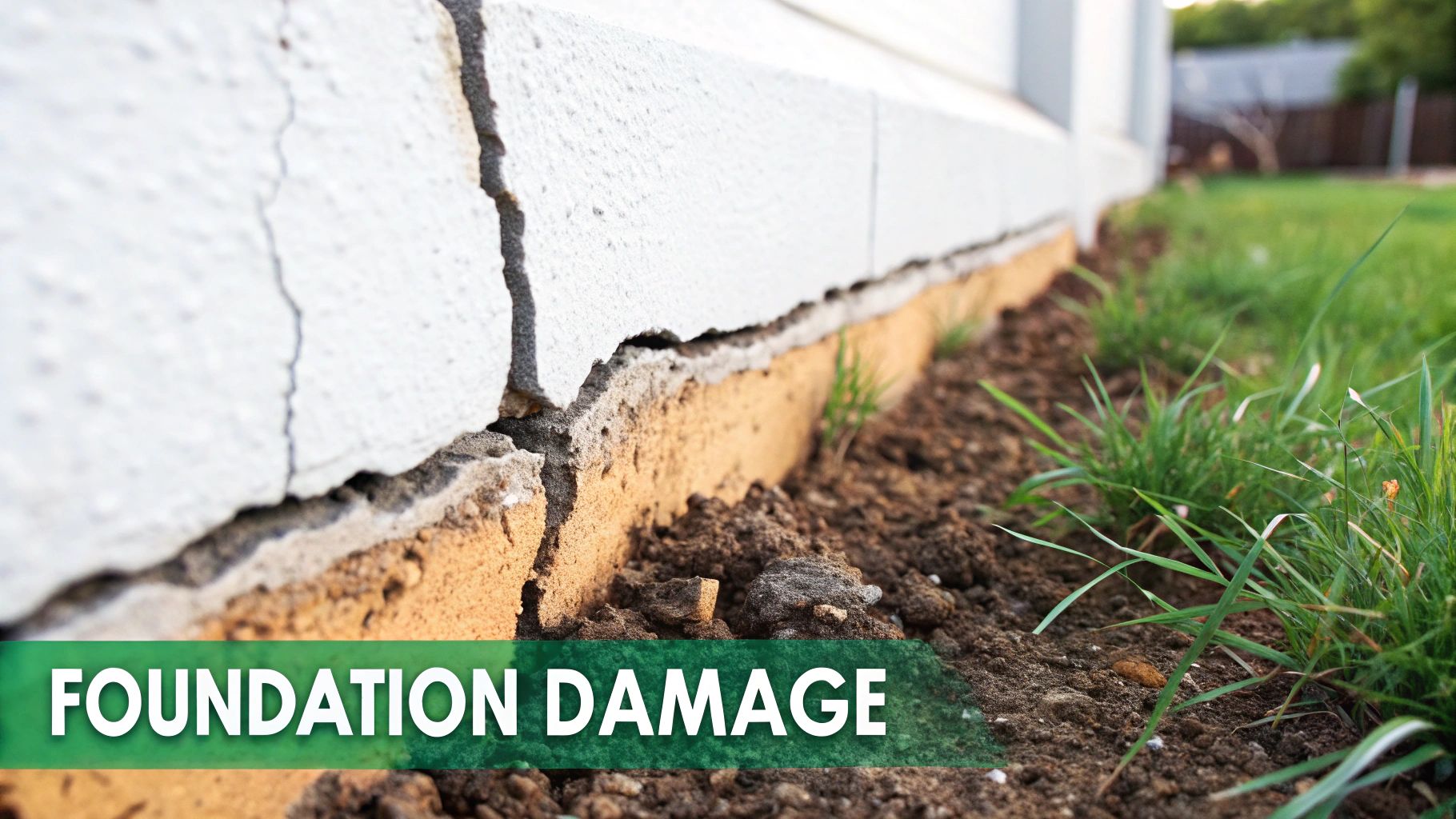
Why Homeowners Insurance Coverage for Foundation and Roof Repair Matters
Homeowners insurance coverage for foundation and roof repair is critical because these components constitute the structural integrity of your property. Without adequate protection against "covered perils" like fire or windstorms, homeo...
Homeowners insurance coverage for foundation and roof repair is critical because these components constitute the structural integrity of your property. Without adequate protection against "covered perils" like fire or windstorms, homeowners face catastrophic out-of-pocket expenses—often exceeding $30,000—that can lead to significant financial instability or the loss of home equity.
Contents
The roof and the foundation are arguably the two most important physical elements of any building. The roof serves as the primary barrier against atmospheric elements, while the foundation provides the literal base upon which the entire structure rests. When either of these fails, the safety and habitability of the home are immediately compromised. Understanding the nuances of how insurance interacts with these components is no longer just a matter of "having a policy"; in 2026, it is a sophisticated exercise in risk management and asset protection.
The Financial Stakes of Structural Integrity
To understand why this coverage matters, one must first look at the financial consequences of structural failure. In the current 2026 economic landscape, the costs of labor and specialized materials have risen significantly compared to the early 2020s. A standard roof replacement for a mid-sized home can easily range from $12,000 to $25,000, while complex foundation stabilization—such as piering or slab jacking—can soar past $40,000 depending on the severity of the shift.
Most homeowners do not have $50,000 in liquid savings reserved specifically for structural emergencies. Therefore, insurance acts as the primary safety net. However, the "matter" of this coverage lies in the distinction between a covered loss and a maintenance issue. Insurance is designed to protect against "sudden and accidental" events. If a tornado rips off your shingles, insurance is your lifeline. If your roof leaks because it is 30 years old and the wood is rotting, you are likely on your own. This distinction is why proactive policy management is essential for long-term homeownership.
Why Foundation Coverage is Often Misunderstood
The foundation is the most expensive part of a home to repair, yet it is also the area where homeowners most frequently find themselves underinsured. The primary reason foundation coverage matters is that standard HO-3 policies (the most common type of homeowners insurance) contain strict exclusions regarding "earth movement" and "settling."
The "Settling" Exclusion vs. Covered Perils
Standard policies generally do not cover foundation damage caused by the natural settling, shrinking, or expansion of soil. This is often frustrating for homeowners who notice cracks in their drywall or doors that won't close. However, foundation coverage does matter because it triggers when the damage is the result of a separate covered peril. For example:
- Plumbing Leaks: If a pipe bursts under your foundation (a "slab leak"), the cost to tear out and replace the foundation to reach the pipe is often covered, even if the foundation repair itself has limitations.
- Fire and Explosion: If a gas leak leads to an explosion that cracks the foundation, the coverage is absolute.
- Falling Objects: A massive tree falling onto the house can transmit enough force to damage the foundation, which would typically be a covered event.
In 2026, many insurers offer specific endorsements for "Sewer Backup" or "Foundation Water Damage." These add-ons are vital because they bridge the gap between standard exclusions and the reality of modern homeownership risks.
The Critical Role of Roof Coverage in Property Retention
The roof is your home’s first line of defense. When a roof is compromised, the damage rarely stops at the shingles. Water intrusion leads to attic mold, ruined insulation, compromised ceiling drywall, and even electrical hazards. This cascading effect is why robust roof coverage is non-negotiable.
Replacement Cost Value vs. Actual Cash Value
A major reason roof coverage matters in 2026 is the shift in how insurers calculate payouts. You must distinguish between Replacement Cost Value (RCV) and Actual Cash Value (ACV):
- RCV: The insurer pays the cost to replace the roof at today's prices, minus your deductible.
- ACV: The insurer pays the depreciated value of the roof. If your 20-year-old roof is destroyed by hail, an ACV policy might only pay a fraction of the cost to replace it, leaving you with a massive bill.
With the increased frequency of severe weather events in 2026, many insurance companies have moved toward mandatory ACV for roofs over 15 years old. Knowing this allows a homeowner to decide whether to pay a higher premium for an RCV endorsement or to start a dedicated savings fund for future replacement.
The "Uninsurable" Home Phenomenon
Another reason roof coverage matters is the impact on your ability to maintain insurance at all. Many carriers now use aerial surveillance and AI-driven imaging to inspect roofs. If an insurer deems a roof to be in poor condition, they may issue a non-renewal notice. Without insurance, most mortgage lenders will force-place a policy that is significantly more expensive and provides less coverage, or they may even declare the loan in default. Keeping your roof covered and maintained is a prerequisite for staying in the traditional insurance market.
Comparison of Coverage Scenarios
The following table outlines how standard insurance typically responds to various foundation and roof issues in 2026.
| Issue | Component | Standard Coverage Status | Actionable Detail |
|---|---|---|---|
| Wind/Hail Damage | Roof | Generally Covered | Requires immediate filing to prevent secondary water damage. |
| Normal Aging/Wear | Roof | Excluded | Homeowners must fund replacement as part of maintenance. |
| Tree Fall | Roof/Foundation | Generally Covered | Covers both the removal of the tree and the structural repair. |
| Hydrostatic Pressure | Foundation | Often Excluded | Damage from water pressure in soil usually requires a specific rider. |
| Slab Leak | Foundation | Partially Covered | Often covers "access" to the leak, but not always the pipe itself. |
| Earthquake/Sinkhole | Foundation | Excluded | Requires a separate policy or specific earthquake endorsement. |
The Impact of Climate and Construction Trends in 2026
As we navigate 2026, two external factors have made foundation and roof coverage more significant than in previous decades: climate volatility and material costs.
Increased Storm Intensity
Meteorological data from the past five years indicates a higher frequency of "micro-bursts" and high-intensity hail events in regions that were previously considered low-risk. This shift means that homeowners who once felt safe with minimal coverage are now in the "firing line." A roof that was built to last 30 years might be compromised in year 10 by a storm that exceeds its design specifications.
Inflation in Building Materials
The cost of asphalt shingles, metal roofing, and specialized foundation resins has outpaced general inflation. When a structural claim is filed in 2026, the dollar amount is significantly higher than it would have been in 2020. Without insurance, the "sticker shock" of a repair quote can be enough to force a homeowner into a distressed sale. Insurance provides a hedge against this construction-cost inflation, ensuring that your most valuable asset can be restored to its original condition regardless of market fluctuations.
How to Verify and Optimize Your Coverage
To ensure that your foundation and roof coverage actually "matters" when you need it, you must take active steps to verify your policy limits.
- Review the "Declarations Page": Look for the "Perils Insured Against" section. Ensure you have an "Open Perils" policy (HO-3 or HO-5) rather than a "Named Perils" policy, which is much more restrictive.
- Inspect for "Matching" Endorsements: In some states, if a portion of your roof is damaged, the insurer is only required to replace the damaged shingles. If those shingles no longer exist or the colors don't match, you end up with a "patchwork" roof that lowers property value. A "matching" endorsement requires the insurer to replace the entire slope or roof to ensure a uniform appearance.
- Check Your Deductible Type: Many modern policies have a separate, higher deductible for wind and hail (often a percentage of the home's value, like 2% or 5%). On a $400,000 home, a 5% deductible is $20,000. You need to know if your "coverage" only kicks in after you’ve paid $20,000 out of pocket.
- Document Everything: In 2026, insurers rely heavily on data. Annual photos of your roof and foundation (especially the basement or crawlspace) provide "baseline" evidence. If a crack appears after a nearby construction blast or a minor tremor, having a photo from six months ago proving the crack wasn't there is the difference between a claim being approved or denied.
Frequently Asked Questions
Does homeowners insurance cover a roof leak?
It depends on the cause of the leak. If the leak is caused by a sudden event, such as a falling branch or a severe hail storm, the repair and the resulting interior damage are typically covered. However, if the leak is caused by gradual deterioration, missing shingles that weren't replaced, or general lack of maintenance, the claim will likely be denied.
Will insurance pay for a foundation that is sinking?
Standard policies almost never cover sinking or "subsidence" caused by soil movement or erosion. This is considered a fundamental exclusion in the insurance industry. To get coverage for a sinking foundation, you would typically need a separate Earthquake policy or a Landsubsidence endorsement, which are available in specific high-risk geographic areas.
How old can a roof be for insurance to cover it?
While there is no universal age limit, many insurance companies in 2026 will not write a new policy for a home with a roof older than 20 years. For existing policies, if the roof is older than 15-20 years, the insurer may switch the coverage from Replacement Cost to Actual Cash Value, meaning they will only pay what the old roof was worth at the time of the damage, not what it costs to buy a new one.
Does insurance cover foundation cracks?
Insurance only covers foundation cracks if they are the direct result of a covered peril, such as a vehicle hitting the house, an explosion, or a sudden water pipe burst. Cracks that develop over years due to the house "settling" into the ground are considered a maintenance responsibility of the homeowner and are not covered by standard insurance.
What is a "roof supplement" in an insurance claim?
A roof supplement is a request for additional funds submitted by a contractor after the initial insurance estimate has been approved. This happens when the contractor discovers hidden damage—such as rotted decking under the shingles—that was not visible during the initial adjuster's inspection. In 2026, most reputable roofing companies are experienced in navigating the supplement process to ensure the roof is restored to local building codes.
Practical Recommendations
If you are a homeowner concerned about structural protection, your next action should be a two-fold approach: maintenance and review.
First, perform a visual inspection of your foundation for cracks wider than a quarter-inch and check your roof for granular loss or curling shingles. Addressing these issues now out-of-pocket for $500 can prevent a $20,000 loss that an insurer might later deny due to "neglect."
Second, contact your insurance agent and specifically ask: "In the event of a total roof loss, am I covered for Replacement Cost or Actual Cash Value?" and "Do I have any coverage for foundation access if a pipe breaks under the slab?" Getting these answers in writing allows you to adjust your coverage before a disaster strikes, ensuring that your insurance serves its primary purpose: keeping you and your investment safe in an unpredictable world.
Image Gallery