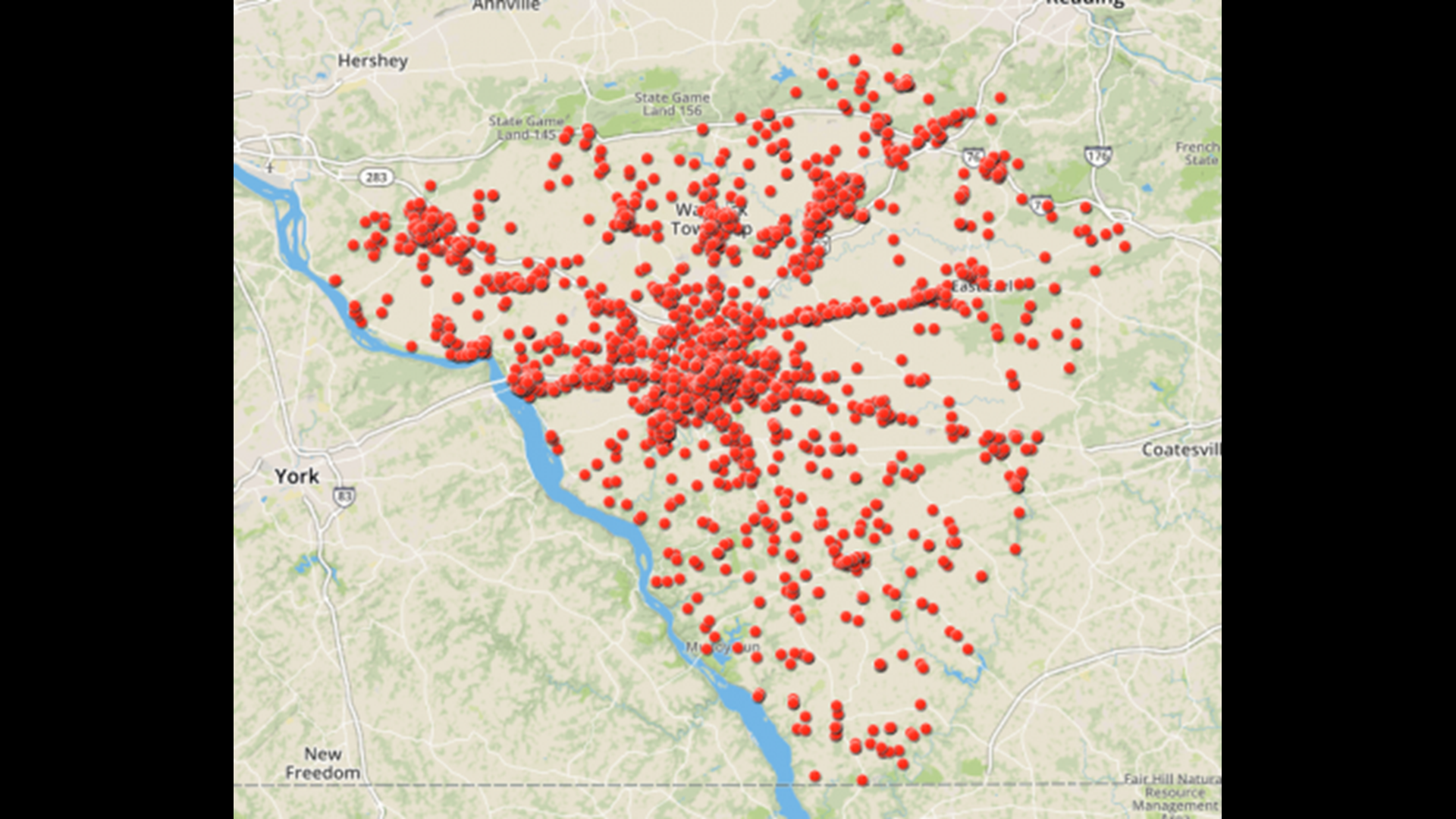
Monitoring 911 Incidents and Public Safety Data in Lancaster, PA for 2026
Residents and visitors in Lancaster, Pennsylvania, seeking real-time or historical data regarding 911 incidents should utilize official public safety portals and authenticated emergency communications platforms. While private aggregati...
Residents and visitors in Lancaster, Pennsylvania, seeking real-time or historical data regarding 911 incidents should utilize official public safety portals and authenticated emergency communications platforms. While private aggregation sites exist, the most accurate information is maintained by the Lancaster County-Wide Communications (LCWC) center, which manages emergency dispatch services for the region’s diverse urban and rural jurisdictions.
Contents
Understanding the Lancaster County-Wide Communications Infrastructure
The Lancaster County-Wide Communications (LCWC) center serves as the primary Public Safety Answering Point (PSAP) for the entirety of Lancaster County. Understanding how this system functions is essential for interpreting incident data correctly. Unlike localized municipal dispatch centers found in larger metropolitan areas, LCWC functions as a centralized hub that processes thousands of calls daily, coordinating responses across 60 municipalities, including Lancaster City and the surrounding townships.
In 2026, the operational backbone of LCWC relies on Next Generation 911 (NG911) standards. This technology allows for the integration of digital data streams, including enhanced geolocation services and potential future support for real-time video or text-to-911 communications. When an incident is logged, it is categorized based on the nature of the emergency, such as fire, medical, or law enforcement-related issues. This classification determines which resources—ranging from local police departments like the Lancaster Bureau of Police to regional volunteer fire companies—are dispatched to the scene.
Accessing Official Incident Records and Public Safety Data
Public access to 911 incident logs is governed by the Pennsylvania Right-to-Know Law. It is a common misconception that all 911 activity is available in real-time for public consumption. While some regions utilize third-party scanners or web-based dashboards, these platforms often provide unverified information that can lead to public confusion.
For official documentation or to obtain incident reports, citizens must navigate the formal records request process:
- Identification of the involved agency: Determine if the incident was handled by the Lancaster Bureau of Police, the Pennsylvania State Police, or a specific local municipal department.
- Submission of a formal request: Requests for police reports or incident logs must be directed to the designated Open Records Officer for the specific agency involved.
- Verification of status: Ensure the case is not part of an ongoing criminal investigation, as such records are generally exempt from public disclosure under the Criminal History Record Information Act (CHRIA).
- Fee structures: Municipalities often charge a nominal administrative fee for the processing and reproduction of physical or digital records, which is standard practice in 2026.
Comparison of Incident Data Sources
The following table differentiates between various sources of incident information, highlighting the reliability and utility of each for the public in 2026.
| Data Source | Type of Information | Reliability | Accessibility |
|---|---|---|---|
| Official LCWC/Municipal Records | Verified incident reports and logs | High (Primary) | Formal Request Required |
| Official Agency Social Media | Timely alerts for major incidents | High (Limited) | Publicly Available |
| Third-Party Scanner Apps | Raw audio/dispatch alerts | Low (Secondary) | Real-time |
| Local News Outlets | Investigated journalistic reports | Moderate | Publicly Available |
The Role of Technology in Modern Emergency Response
By 2026, the integration of advanced computer-aided dispatch (CAD) systems has streamlined how emergency services operate in Lancaster. These systems provide dispatchers with a comprehensive view of units in the field, traffic patterns, and historical data that assists in resource allocation. For the public, this means that response times are optimized through data-driven routing.
However, citizens should remain cautious regarding the information they consume on social media during active incidents. During a developing emergency, unverified reports on community forums can inadvertently interfere with public safety operations. Always prioritize information disseminated through official channels, such as the Lancaster County emergency alert systems or verified municipal police department social media accounts.
Procedures for Emergency Reporting
When you encounter an emergency, the most critical factor is the speed and accuracy of the information provided to the dispatcher. Adhering to these standards ensures the most effective response:
- Remain calm and speak clearly to the 911 call taker.
- Provide the exact location, including landmarks or cross-streets.
- Specify the nature of the emergency (e.g., medical vs. fire).
- Do not hang up until instructed to do so by the dispatcher.
- If you are in a safe location, keep the line open for further instructions or to provide updates as the situation evolves.
Frequently Asked Questions Regarding 911 Services
Can I listen to a live feed of Lancaster 911 dispatches? While some amateur radio enthusiasts stream scanner traffic, these feeds are not official, may be delayed, and often lack context. Official emergency communications are not broadcast for public surveillance to protect the privacy of those involved in incidents.
How do I report a non-emergency issue in Lancaster? For non-emergencies, such as reporting a noise complaint or a minor traffic accident with no injuries, you should use the non-emergency administrative lines of the local police department rather than dialing 911. This keeps emergency lines clear for life-threatening situations.
Are all 911 records available to the public? No, only records that do not compromise ongoing investigations, victim privacy, or national security are subject to disclosure. Requests for specific incident reports are reviewed individually under Pennsylvania state law.
Why does the police response time vary across the county? Response times are affected by geographic distance, current traffic conditions in Lancaster City, and the priority level assigned to the call. High-priority incidents, such as active threats or severe medical crises, always receive precedence in dispatch queues.
How can I receive emergency alerts in Lancaster, PA? Residents are encouraged to register for local emergency notification systems, which provide direct alerts about severe weather, road closures, and significant public safety events via text or email.
Practical Recommendations for Public Safety Awareness
To stay informed and safe, prioritize the installation of official safety apps authorized by county officials. Avoid relying on third-party crowd-sourced maps or alert applications that lack verification protocols. If you reside in a specific township, familiarize yourself with the jurisdictional boundaries of your local police department, as this will expedite your requests for information or assistance.
For those seeking to understand public safety trends or advocate for policy changes, attend the public sessions of the Lancaster County Board of Commissioners. These meetings are the appropriate venue to address concerns regarding emergency service funding, resource allocation, and the evolution of safety infrastructure as the county continues to grow in 2026.
Image Gallery