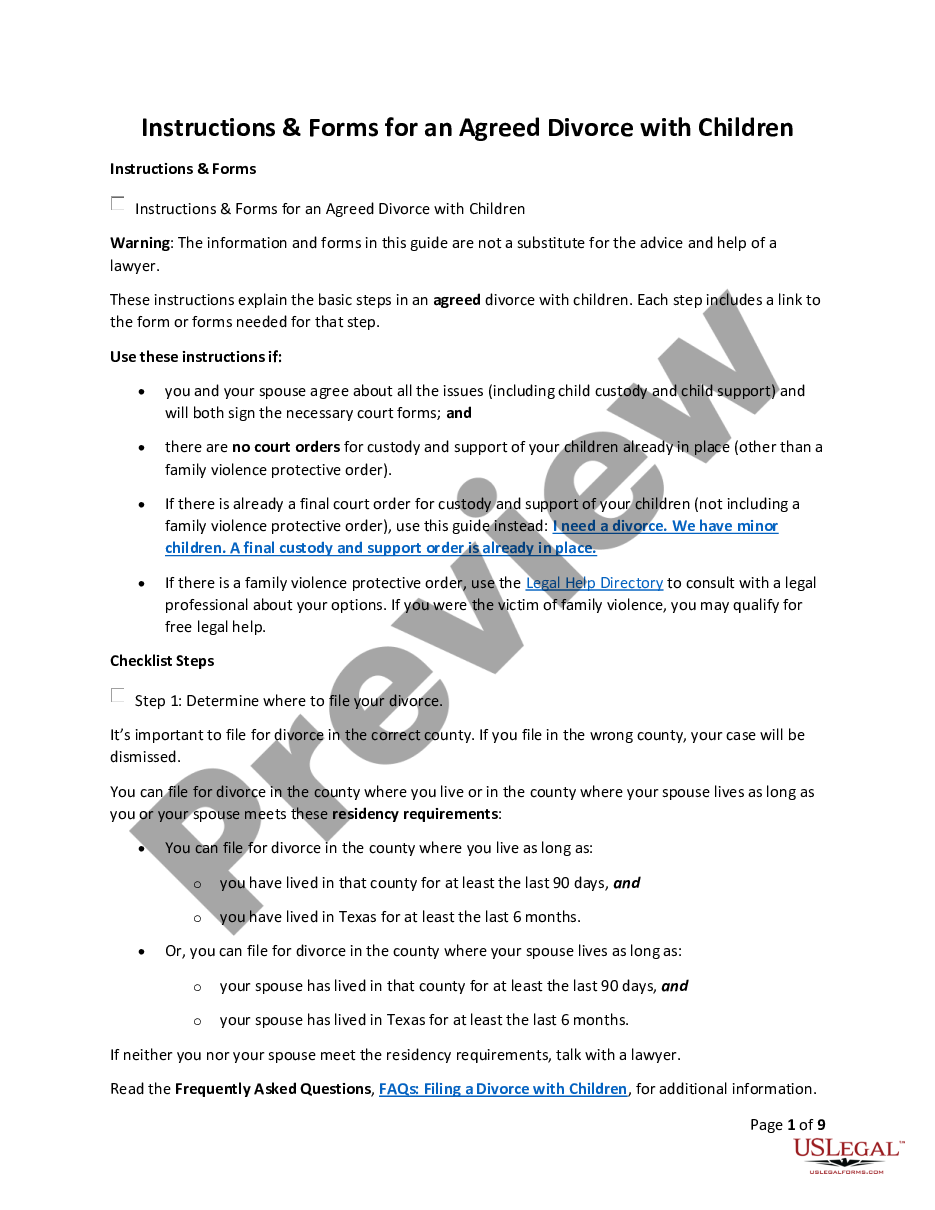
How to Get Texas Uncontested Divorce Forms Free
In Texas, individuals seeking an uncontested divorce can obtain standardized, court-approved forms at no cost through the Texas Law Help website or by accessing self-help resources provided by individual county district clerk offices....
In Texas, individuals seeking an uncontested divorce can obtain standardized, court-approved forms at no cost through the Texas Law Help website or by accessing self-help resources provided by individual county district clerk offices. These forms are designed for couples who have reached a full agreement on all issues, including property division, debt allocation, and child-related matters, allowing them to finalize their dissolution without hiring private legal counsel.
Contents
Understanding the Uncontested Divorce Process in Texas
An uncontested divorce, technically referred to in Texas as a "divorce on agreed grounds," occurs when both spouses agree on every aspect of the termination of their marriage. This includes the division of community property, the assignment of debts, and, if applicable, the terms of child custody, visitation, and support. Because there are no disputed issues for a judge to resolve, the court process is significantly streamlined.
Before you begin, it is critical to recognize that "free" refers specifically to the legal forms provided by state-sponsored legal aid organizations or court systems. While the forms themselves may be free, you will still encounter mandatory court costs. These include filing fees, which vary by county, and potential costs for service of process if your spouse does not sign a waiver of service. If you are experiencing financial hardship, you may be eligible to file a "Statement of Inability to Afford Payment of Court Costs," which, if approved by a judge, can waive your filing fees.
Sources for Legitimate, Free Divorce Forms
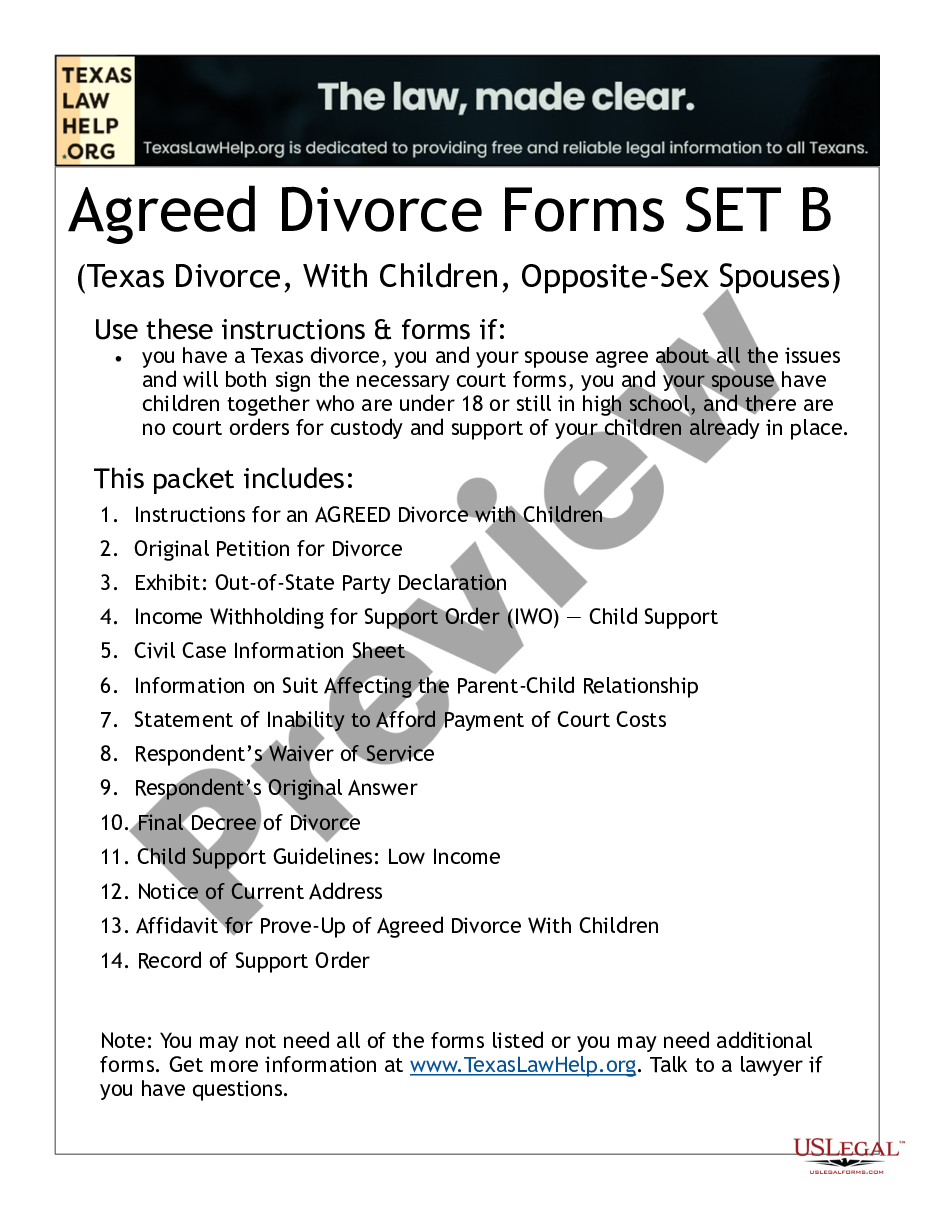
The most reliable source for free divorce forms in Texas is Texas Law Help, a project supported by the Texas Legal Services Center and funded by the Texas Access to Justice Foundation. This resource provides state-approved "pro se" packets—meaning forms designed for individuals representing themselves.
1. Texas Law Help (Statewide Resource)
This website offers an interactive interview process. Instead of downloading a static PDF, you answer a series of questions about your specific situation (e.g., whether you have minor children or real estate). The system then generates a customized, accurate set of documents based on your inputs. This minimizes the risk of using incorrect or outdated forms.
2. County Law Libraries and District Clerk Offices
If you prefer traditional paper forms, most Texas county district clerk websites maintain a "self-help" section. Some larger counties, such as Harris, Dallas, or Travis, provide comprehensive packets that you can download or pick up in person. Always verify that the forms you are using are labeled for the current year, as legislative changes to the Texas Family Code can render older versions of these documents obsolete.
Prerequisites for Filing Pro Se
Before utilizing free forms, you must verify that you meet the jurisdictional requirements established by the Texas Family Code. You cannot use these forms if you do not meet the following criteria:
- Residency: At least one spouse must have been a domiciliary of Texas for at least six months and a resident of the county where the suit is filed for at least 90 days.
- Agreement: You and your spouse must be in complete agreement. If your spouse contests any part of the divorce, or if you cannot locate them, the standard "uncontested" forms will not suffice, and you may require formal legal assistance.
- Documentation: You must have access to all necessary financial and personal information. To complete the forms, you will need documentation regarding bank accounts, retirement accounts, vehicle titles, real estate deeds, and, if applicable, detailed information regarding your children’s current living arrangements.
Navigating the Required Documentation
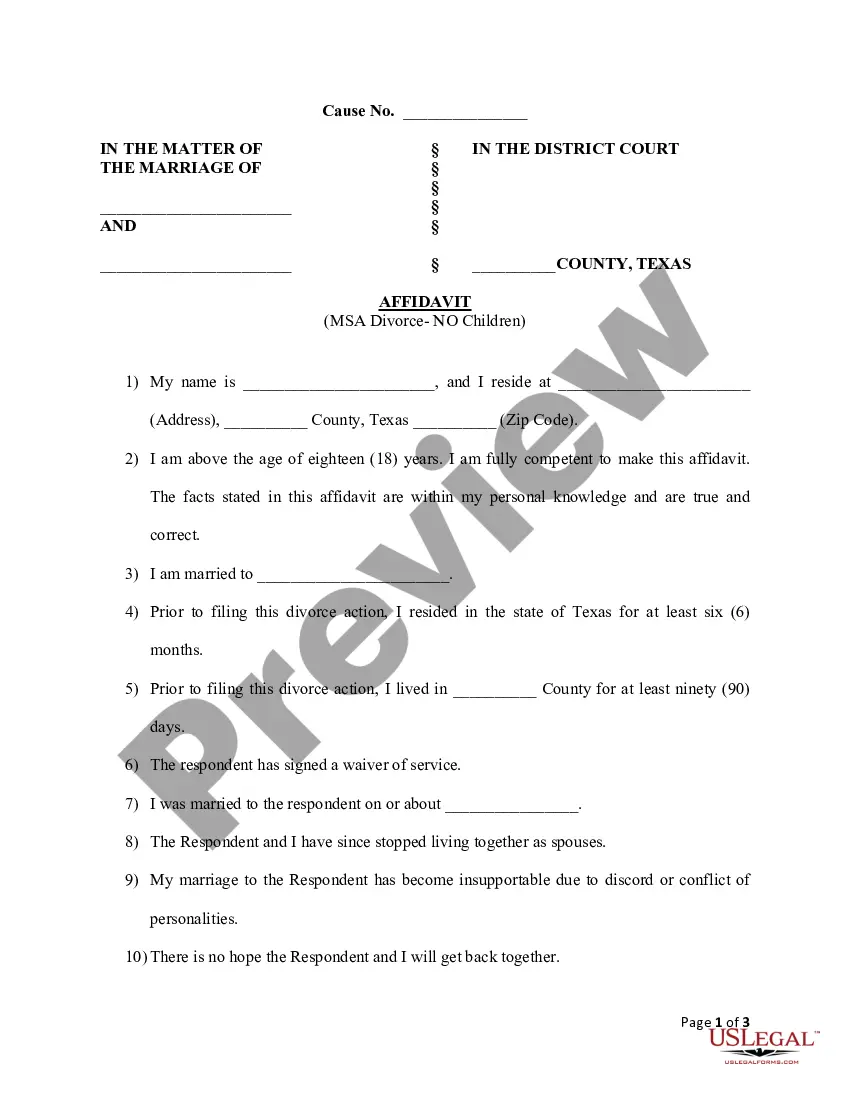
When you access a free divorce packet, you will generally find a specific set of documents that must be completed, filed, and presented to the court. While the exact forms change based on whether you have children, the core structure remains consistent.
| Form Name | Purpose |
|---|---|
| Original Petition for Divorce | Formally starts the divorce case. |
| Civil Case Information Sheet | Required by the court for administrative data entry. |
| Waiver of Service | Allows the spouse to waive the formal service of process. |
| Final Decree of Divorce | The document that the judge signs to finalize the divorce. |
| Information on Suit Affecting the Family Relationship | Required for the Bureau of Vital Statistics. |
Steps to Filing Your Uncontested Divorce
Once you have secured the appropriate forms, follow these steps to ensure a smooth processing of your case:
- Preparation and Review: Read every instruction document provided in the packet. Even if the forms are free, the court clerk will not provide legal advice or check your documents for accuracy. Errors can lead to your case being rejected or delayed.
- Notarization: Many of the forms, specifically the "Waiver of Service" and the "Final Decree of Divorce," require signatures to be witnessed by a notary public. Do not sign these forms until you are in the presence of a notary.
- Filing with the District Clerk: Take your completed documents to the District Clerk’s office in the county where you are filing. You will need to pay the filing fee unless you have been granted a fee waiver. The clerk will provide you with a "cause number," which you must reference in all future filings.
- The Waiting Period: Texas law imposes a mandatory 60-day waiting period from the date the petition is filed before a judge can sign the Final Decree of Divorce. Use this time to ensure that all assets are divided and documents are in perfect order.
- The Final Hearing: Depending on the county, you may be required to attend a short, formal hearing where a judge reviews the paperwork and signs the decree. In some counties, if all paperwork is correct, the judge may waive the physical appearance.
Common Mistakes to Avoid
The most frequent error in pro se divorces is the failure to complete all required fields. Judges in Texas are strictly bound by the rules of civil procedure; if a form is missing a required signature or a case number, the court cannot finalize the divorce.
Another common pitfall is the failure to properly disclose community property. If you fail to include an asset or a debt in the Final Decree of Divorce, it may become a source of litigation later. If your situation involves complex assets—such as business ownership, large investment portfolios, or significant tax liabilities—proceeding without a lawyer, even if the forms are free, may expose you to long-term financial risk.
Seeking Legal Assistance
While you can obtain and file divorce forms for free, this does not equate to receiving legal advice. If at any point you feel confused by the language in the forms, or if your spouse introduces new demands after you have reached an initial agreement, you should pause the process and consult with a licensed family law attorney. If you have limited income, you may qualify for free or low-cost legal aid through organizations such as Legal Aid of NorthWest Texas, Texas RioGrande Legal Aid, or Lone Star Legal Aid.
Frequently Asked Questions
1. Does using free forms affect the validity of my divorce? No. As long as the forms are the current, official versions accepted by Texas courts and are filed according to the Texas Rules of Civil Procedure, a divorce obtained via self-help forms is as legally binding as one processed by an expensive law firm.
2. Can I get a free divorce if I have children? Yes, but the paperwork is more extensive. You will need to include a "Parenting Plan" and a "Medical and Dental Support Order." These are included in the standard "Divorce with Children" packets provided by Texas Law Help.
3. What if I cannot find my spouse? If you cannot locate your spouse, your divorce is legally "contested" by default because you cannot obtain their signature for the waiver. You will need to serve them via "publication," which is a complex process and does not qualify as a standard uncontested divorce.
4. Are online legal services that charge money the same as free state forms? Often, commercial websites charge a premium for the same forms that are available for free on the Texas Law Help portal. Be cautious of websites that promise "fast" or "guaranteed" divorces, as these are often just document-preparation services that do not offer legal representation.
5. How long does an uncontested divorce take? Under Texas law, the minimum time is 60 days from the date of filing. In practice, depending on the county court's docket and how quickly you file your paperwork, it usually takes between 60 and 90 days.
Next Action
Visit the Texas Law Help website to use their interactive form generator. Begin by reviewing the "Divorce" section to identify which specific packet applies to your situation. Ensure you gather all relevant financial and personal documents before starting the electronic interview process to ensure your generated forms are complete and ready for the court.
Image Gallery