How to Deal With Rejection: Evidence-Based Strategies for Emotional Resilience
To deal with rejection effectively, you must first acknowledge the physiological pain as a valid biological signal before employing cognitive reframing techniques. By decoupling your self-worth from external outcomes and practicing sel...
To deal with rejection effectively, you must first acknowledge the physiological pain as a valid biological signal before employing cognitive reframing techniques. By decoupling your self-worth from external outcomes and practicing self-compassion, you can transform a perceived failure into a strategic pivot, utilizing the experience to refine your future approach.
Contents
The Neurobiology of Rejection: Why It Hurts So Much
In 2026, clinical understanding of social exclusion has solidified the link between emotional and physical pain. Research from the National Institutes of Health (NIH) and various neuroscientific studies confirms that rejection activates the dorsal anterior cingulate cortex and the anterior insula—the same regions of the brain that process physical injury. This is not a psychological weakness; it is an evolutionary survival mechanism.
Historically, human survival depended on tribal belonging. Being cast out of a group was often a death sentence. Consequently, our brains developed an early warning system that treats social rejection with the same urgency as a physical wound. When you experience a "sting" after a job denial or a romantic rebuff, your body is producing a real stress response, releasing cortisol and adrenaline. Understanding this biological foundation is the first step toward management; it allows you to view your feelings as data rather than a definitive judgment on your character.
Frameworks for Processing Immediate Rejection
Navigating the immediate aftermath of rejection requires a structured approach to prevent emotional spiraling. Mental health professionals often recommend a multi-phased framework to stabilize your perspective.
The 24-Hour Rule
The immediate goal following a rejection is emotional regulation. When the "fight or flight" system is active, your prefrontal cortex—the part of the brain responsible for logic and long-term planning—is effectively offline. The 24-hour rule mandates that you refrain from making major decisions, sending impulsive emails, or engaging in self-critical monologues for one full day. This period allows your neurochemistry to return to a baseline state, enabling a more objective "cognitive appraisal" of the situation.
Cognitive Reframing and the ABC Model
Cognitive Behavioral Therapy (CBT) offers the ABC Model to help dismantle the narrative of rejection:
- A (Activating Event): The actual rejection (e.g., a "no" from a publisher).
- B (Belief): Your interpretation of the event ("I am a bad writer").
- C (Consequence): The emotional result (despair, quitting).
By challenging the "B" (Belief), you can change the "C" (Consequence). Instead of viewing the rejection as a verdict on your talent, reframe it as a mismatch of current needs or a lack of alignment in timing. This shift from "I am a failure" to "This specific attempt failed" is the hallmark of emotional resilience.
Categorizing Rejection: Professional vs. Personal
Not all rejections are created equal, and the strategies for managing them must be tailored to the specific context. In 2026, the distinction between professional "gatekeeping" and personal "social exclusion" is vital for targeted recovery.
Navigating Professional and Career Rejection
In the professional sphere, rejection is frequently a matter of logistics rather than merit. A candidate might be overqualified, or a company may have shifted its internal budget. To deal with career rejection, adopt a "Growth Mindset," a concept popularized by psychologist Carol Dweck. This mindset views abilities as qualities that can be developed through dedication and hard work.
- Request Specific Feedback: If possible, ask for one or two areas of improvement. This turns a "no" into a roadmap for future "yeses."
- Audit the Process: Was the rejection due to a skill gap, or was it a presentation issue? Distinguish between your actual competence and your ability to market that competence.
- The Numbers Game: High-achievers in 2026 recognize that success is often a statistical certainty if the volume of attempts is high enough. Treat each rejection as a necessary data point in a larger sequence.
Managing Romantic and Interpersonal Rejection
Interpersonal rejection often feels more visceral because it targets our core identity and desire for connection. The key here is recognizing incompatibility. If someone rejects a romantic overture, it is a signal that the fundamental requirements for a successful partnership—mutual attraction, shared values, or synchronized timing—were not present. Accepting this early saves both parties from a long-term, dysfunctional relationship.
Comparative Coping Strategies
The following table outlines the differences between healthy, constructive responses to rejection and common maladaptive behaviors.
| Feature | Constructive Coping (Healthy) | Maladaptive Coping (Unhealthy) |
|---|---|---|
| Internal Dialogue | Focuses on specific behaviors and external factors. | Focuses on global, permanent character flaws. |
| Social Interaction | Seeks support from a trusted circle or mentor. | Isolates or lash out at others to protect the ego. |
| Future Outlook | Adjusts strategy and tries again or pivots. | Gives up entirely to avoid the risk of more pain. |
| Emotional Processing | Allows the feeling to exist without judgment. | Numbs the feeling through avoidance or substances. |
| Feedback Integration | Analyzes feedback for actionable improvements. | Dismisses feedback as "unfair" or "wrong." |
The Role of Self-Compassion in Long-Term Recovery
Dr. Kristin Neff, a leading researcher in self-compassion, suggests that treating oneself with the same kindness one would offer a friend is the most effective way to recover from social pain. Self-compassion consists of three main components: self-kindness, common humanity, and mindfulness.
- Self-Kindness: Stopping the harsh inner critic. If you wouldn't tell a friend they are "worthless" after a breakup, don't say it to yourself.
- Common Humanity: Recognizing that rejection is a universal part of the human experience. You are not uniquely flawed; you are participating in a struggle shared by everyone from CEOs to world-class athletes.
- Mindfulness: Observing your pain without over-identifying with it. You can acknowledge, "I feel rejected right now," without becoming the rejection itself.
Rejection Sensitivity Dysphoria (RSD) and Mental Health
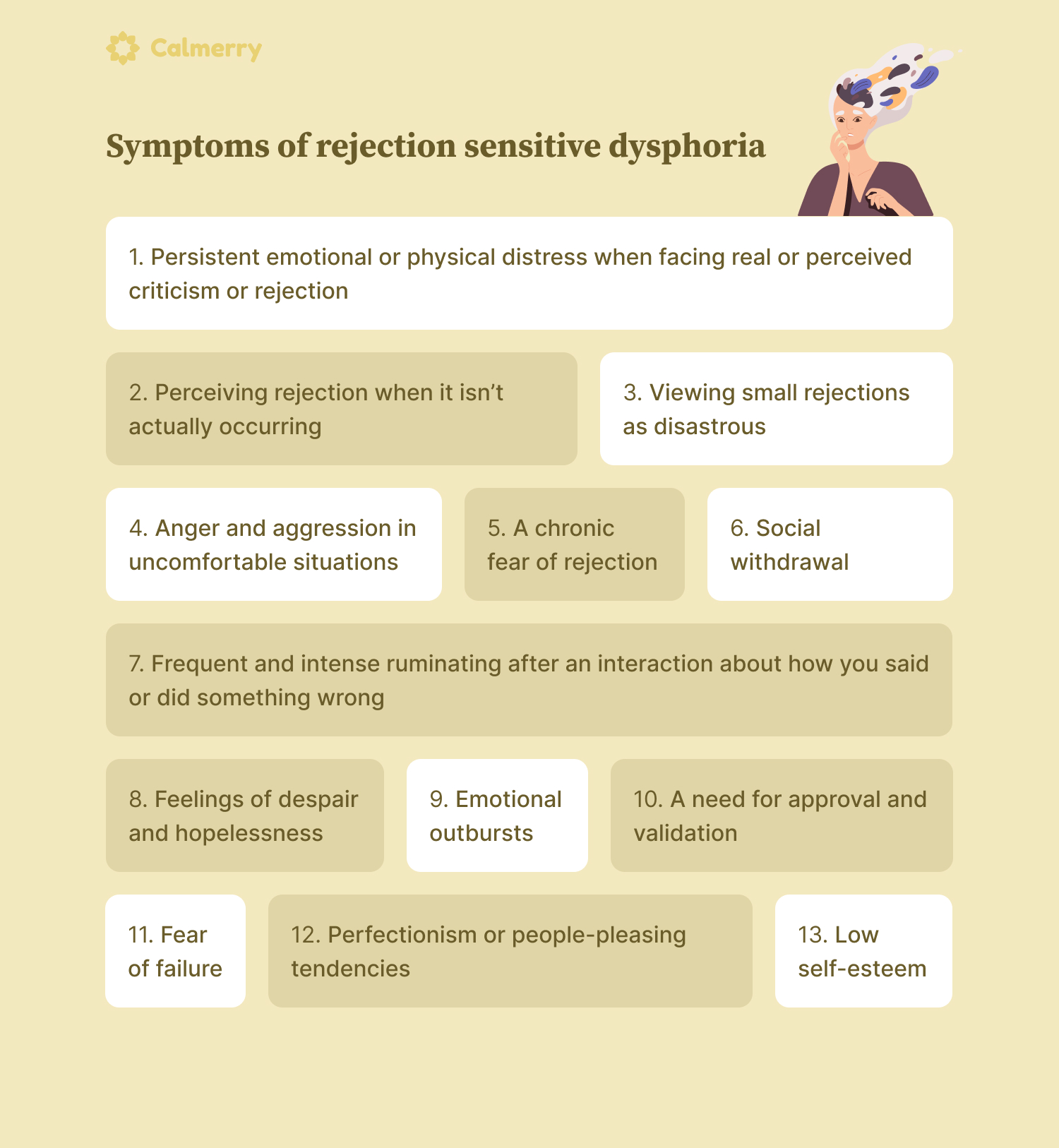
For some individuals, particularly those with ADHD or certain personality traits, rejection can trigger an intense, overwhelming emotional response known as Rejection Sensitivity Dysphoria (RSD). RSD is characterized by an extreme sensitivity to the perception of being rejected or criticized.
If your reaction to rejection involves suicidal ideation, severe withdrawal, or physical illness, it is imperative to consult a mental health professional. In 2026, therapeutic interventions such as Dialectical Behavior Therapy (DBT) are the gold standard for managing high emotional sensitivity, providing tools like "distress tolerance" and "emotional regulation" to help bridge the gap between stimulus and response.
Strategic Resilience: Turning "No" into "Next"
The most successful individuals do not avoid rejection; they optimize for it. By increasing your "rejection tolerance," you broaden the scope of opportunities you are willing to pursue. This involves "exposure therapy" in small doses—intentionally putting yourself in situations where a "no" is possible to desensitize the nervous system.
Expert guidance from the American Psychological Association (APA) emphasizes that resilience is not a fixed trait but a muscle that must be exercised. Every time you face a rejection and choose to maintain your self-worth, you are strengthening that muscle for the challenges ahead.
Frequently Asked Questions
Does the pain of rejection ever go away entirely?
The initial "sting" of rejection is a hardwired biological response that rarely disappears completely. However, with consistent practice in cognitive reframing, the duration and intensity of the pain decrease significantly. You move from "grieving" for weeks to "processing" in hours or minutes.
How can I help a friend who is dealing with a major rejection?
The most effective support is validation followed by normalization. Avoid toxic positivity (e.g., "Everything happens for a reason"). Instead, acknowledge that "it really hurts right now," and remind them of their value outside of that specific situation. Only offer advice or "silver linings" once they have had space to vent.
Is it possible to be "too sensitive" to rejection?
Sensitivities vary based on temperament and past trauma. If rejection consistently prevents you from pursuing your goals or maintaining relationships, you may have high rejection sensitivity. This is not a moral failing but a psychological hurdle that can be managed through therapy and specific mindfulness techniques.
Should I always ask for feedback after being rejected?
Not necessarily. In professional settings, feedback is highly valuable. In romantic settings, asking for "feedback" can be counterproductive and intrusive. Generally, if the rejection is based on performance (jobs, auditions, writing), seek feedback. If it is based on personal chemistry, it is better to accept the incompatibility and move on.
Can rejection actually be good for you?
While painful, rejection serves as a powerful corrective signal. It prevents you from wasting years on the wrong career path or in the wrong relationship. In this sense, rejection is "protection" from paths that would not have led to long-term fulfillment.
Practical Recommendation for Immediate Action
If you are currently reeling from a rejection, your next step is a Self-Care Audit. For the next 24 hours, focus exclusively on physical regulation: ensure you are hydrated, get eight hours of sleep, and engage in at least 20 minutes of physical movement to help process the excess cortisol in your system. Once your body is out of "crisis mode," write down three things that are true about your skills or character that have nothing to do with the person or entity that rejected you. This simple exercise anchors your identity in internal truths rather than external validation.
Image Gallery