Integrating DevOps with Machine Learning: A Comprehensive Guide to MLOps in 2026
Integrating DevOps with Machine Learning, known as MLOps, applies continuous integration, delivery, and monitoring to the machine learning lifecycle. By unifying data engineering, model development, and IT operations, organizations can...
Integrating DevOps with Machine Learning, known as MLOps, applies continuous integration, delivery, and monitoring to the machine learning lifecycle. By unifying data engineering, model development, and IT operations, organizations can automate model retraining, manage data lineage, and ensure reliable deployment of AI-driven applications at scale in production environments.
Contents
The convergence of software engineering and data science is no longer a luxury but a necessity for enterprise stability in 2026. As machine learning (ML) models move from isolated experimental notebooks to the core of business applications, the traditional "throw it over the wall" approach between data scientists and IT operators has become obsolete. This guide explores the technical architecture, strategic advantages, and practical implementation steps required to successfully integrate DevOps with machine learning workflows.
The Fundamental Shift: From DevOps to MLOps
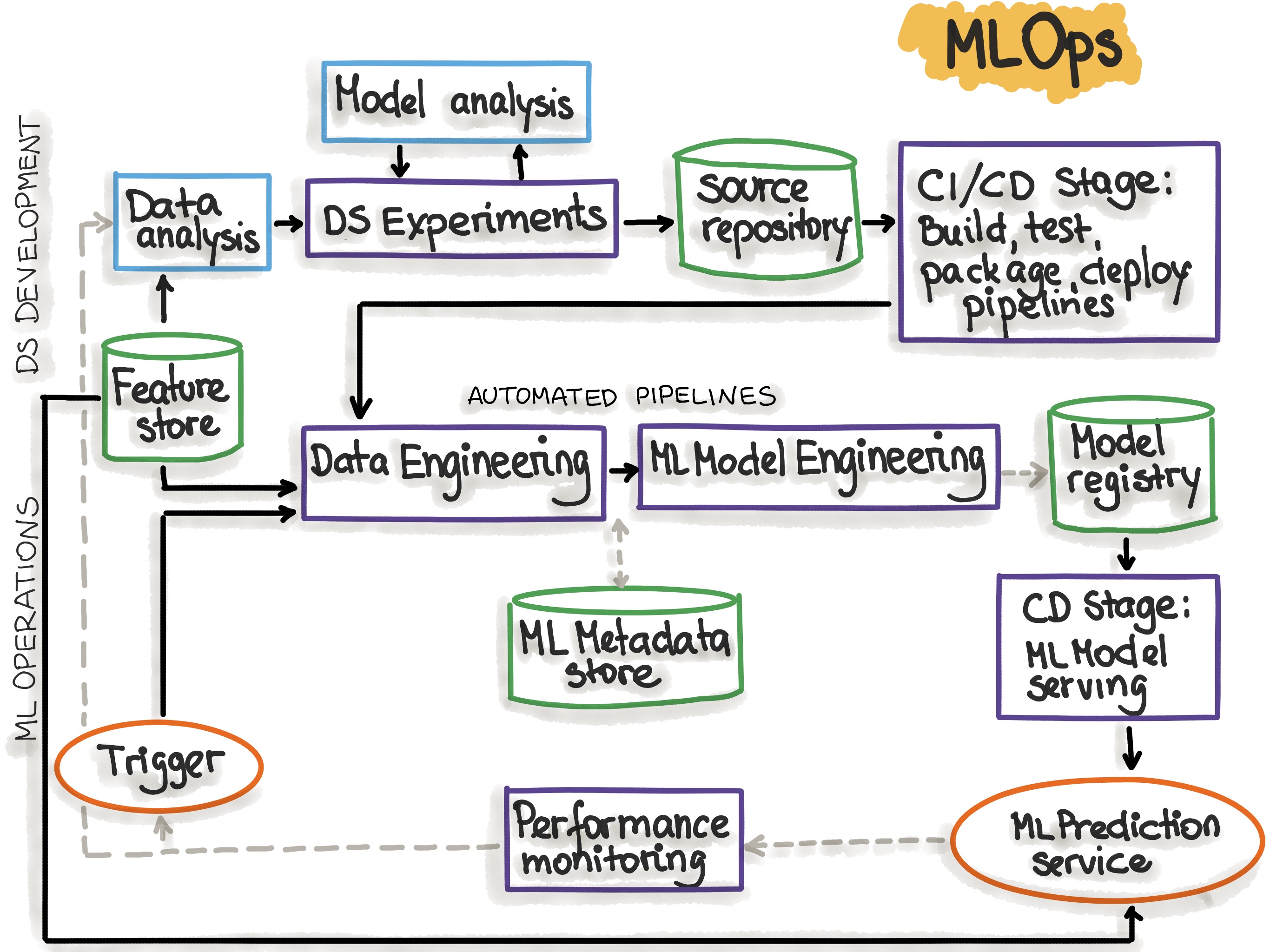
Traditional DevOps focuses on the lifecycle of code. In a standard web application, if the code passes its unit tests and integration tests, it is generally considered safe for deployment. However, machine learning introduces a third dimension: data. A machine learning system is a combination of code, models, and data. Even if the code remains unchanged, the system's performance can degrade if the underlying data distribution shifts.
In 2026, the industry distinguishes this integration through the term MLOps. While DevOps emphasizes continuous integration (CI) and continuous delivery (CD), MLOps introduces continuous training (CT). This ensures that models are not just deployed once but are periodically or reactively retrained on fresh data to maintain their predictive accuracy. Integrating these disciplines requires a cultural shift where data scientists adopt software engineering best practices, such as version control and modularization, while DevOps engineers learn to manage non-deterministic systems where the "correct" output is often a statistical probability rather than a boolean value.
Core Pillars of the Integrated Lifecycle
To successfully integrate DevOps with machine learning, organizations must build their strategy around four foundational pillars. These pillars provide the framework for scaling AI from a single prototype to hundreds of production models.
1. Versioning for Reproducibility
In a standard DevOps pipeline, versioning applies to source code. In an integrated ML environment, versioning must extend to the datasets and the model artifacts. If a model produces an unexpected result in production, engineers must be able to roll back not just to a previous code version, but to the exact dataset and hyperparameter configuration used to train that specific model version. Tools like DVC (Data Version Control) or integrated cloud features allow teams to treat data as code, creating an immutable audit trail.
2. Automated Testing and Validation
Testing in MLOps is significantly more complex than in traditional software. Beyond unit tests for the training pipeline code, teams must implement:
- Data Validation: Checking for schema changes, missing values, or statistical anomalies in the input pipeline.
- Model Validation: Evaluating the model against a "gold standard" holdout set to ensure it meets performance benchmarks (e.g., F1-score, Precision, Recall) before deployment.
- Bias and Fairness Audits: In 2026, regulatory compliance requires automated checks to ensure models do not exhibit discriminatory behavior against protected groups.
3. Continuous Delivery and Deployment (CD)
Deployment in an ML context often involves serving a model as a REST API or an asynchronous worker. Integration with DevOps means using containerization (Docker) and orchestration (Kubernetes) to package the model with its dependencies. This ensures environment parity between the training environment and the production environment, eliminating the "it worked on my machine" problem frequently encountered by data scientists.
4. Continuous Monitoring and Feedback Loops
The lifecycle does not end at deployment. MLOps requires sophisticated monitoring to detect data drift (changes in input data distributions) and concept drift (changes in the relationship between inputs and targets). When performance drops below a predefined threshold, the system should automatically trigger the CI/CD pipeline to retrain and redeploy the model.
Technical Comparison: DevOps vs. MLOps
Understanding the nuances between these two methodologies is essential for resource allocation and tool selection. The following table highlights the operational differences.
| Feature | Traditional DevOps | Machine Learning Operations (MLOps) |
|---|---|---|
| Primary Artifact | Compiled code and binaries. | Trained model artifacts and data snapshots. |
| Testing Focus | Unit, integration, and UI testing. | Data validation, model quality, and bias checks. |
| Deployment Goal | High availability and low latency. | Predictive accuracy and model reliability. |
| Monitoring | System health (CPU, RAM, Error rates). | Model decay, data drift, and feature importance. |
| Primary Actors | Software Engineers, SREs. | Data Scientists, ML Engineers, DevOps. |
| Update Trigger | Code changes or feature updates. | Data changes, performance decay, or time-based. |
Step-by-Step Implementation Strategy
Integrating these two worlds requires a phased approach. Attempting to automate everything at once often leads to fragile pipelines that are difficult to debug.
Phase 1: Establishing the Baseline
The first step is to move data science code out of local notebooks and into a centralized repository (Git). Code should be modularized into scripts for data ingestion, preprocessing, training, and evaluation. During this phase, teams should also implement a Feature Store. A feature store acts as a centralized repository for curated features, ensuring that the same data transformations used during training are applied during real-time inference, preventing training-serving skew.
Phase 2: Pipeline Automation (CI/CD)
Once the code is versioned, the next step is to automate the building and testing process. Using tools like Jenkins, GitHub Actions, or GitLab CI, teams can create pipelines that automatically trigger a training job whenever code is pushed. This stage focuses on the "Build" and "Test" aspects, ensuring that every model produced is accompanied by a comprehensive report detailing its performance metrics and data lineage.
Phase 3: Automated Deployment and Serving
With a reliable build process, the focus shifts to deployment. The integrated system should package the model into a container and push it to a registry. In 2026, most enterprises use Shadow Deployments or Canary Releases. In a shadow deployment, the new model receives production traffic and makes predictions, but those predictions are not shown to the user. Instead, they are logged and compared against the current production model to verify performance in a real-world setting without risk.
Phase 4: Full MLOps Maturity (Continuous Training)
The final stage of integration is the implementation of an automated feedback loop. This involves setting up a monitoring service that tracks the model’s statistical properties in real-time. If the model's accuracy dips or if the input data drifts significantly from the training set, the system automatically triggers Phase 2 (retraining) and Phase 3 (deployment), creating a self-healing AI system.
Common Challenges and Troubleshooting
Even with the best tools, integrating DevOps with machine learning presents unique challenges. One common issue is dependency hell, where the libraries used for training (like specific versions of PyTorch or TensorFlow) conflict with the production environment. Using standardized base images and strictly defined requirements.txt or Conda files is the primary defense against this.
Another frequent problem is feedback delay. In many ML applications, such as fraud detection, the actual "truth" (whether a transaction was truly fraudulent) may not be known for days or weeks. This makes real-time monitoring of model accuracy impossible. In these scenarios, teams should focus on monitoring proxy metrics, such as changes in the distribution of input features, which can serve as an early warning system for model decay.
The Role of Infrastructure as Code (IaC)
A critical component of the 2026 MLOps landscape is Infrastructure as Code. ML workloads are often computationally expensive and require specialized hardware like GPUs or TPUs. By using tools like Terraform or Pulumi, DevOps engineers can define the required infrastructure in code. This allows the ML pipeline to dynamically provision high-performance compute resources during the training phase and tear them down once the model is trained, significantly optimizing costs. For inference, IaC can manage the scaling of Kubernetes clusters based on request volume, ensuring that the integration remains cost-effective and responsive.
Frequently Asked Questions
What is the most important tool for integrating DevOps and ML?
There is no single "most important" tool, as the stack depends on your cloud provider. However, a Version Control System (Git) is the absolute prerequisite. Beyond that, a container orchestration platform like Kubernetes is generally considered the industry standard for managing the deployment and scaling of machine learning models in 2026.
How does MLOps handle data privacy and security?
Integration with DevOps allows for automated security scanning of containers and data encryption at rest and in transit. In 2026, MLOps pipelines often incorporate Differential Privacy and Federated Learning techniques to ensure that sensitive data used for training is protected and that the models do not inadvertently "leak" private information through their predictions.
Can we use standard CI/CD tools for Machine Learning?
Yes, standard tools like GitHub Actions, Jenkins, and GitLab can be used, but they usually require extensions or custom scripts to handle ML-specific tasks like GPU allocation or tracking large data files. Many organizations choose to use these general-purpose tools to orchestrate specialized ML tools like MLflow or Kubeflow.
How often should a machine learning model be retrained?
The retraining frequency depends on the stability of your data. For volatile environments like stock market prediction, retraining may happen hourly. For more stable environments like image recognition for static objects, retraining might only occur monthly or when new labeled data becomes available. The goal of MLOps integration is to make this frequency data-driven rather than schedule-driven.
Practical Recommendation for Next Actions
To begin integrating DevOps with machine learning, start by conducting a "Reproducibility Audit" of your current ML projects. Identify whether a colleague can take a model currently in production and recreate it from scratch using only the versioned code and data available in your repositories. If the answer is no, your first priority should be implementing Data Versioning and Environment Standardization via Docker.
Once reproducibility is achieved, focus on automating the "manual handoff" points. Start by automating the testing of your data preprocessing scripts and then move toward automated deployment. By 2026 standards, the goal is to reach a state where a data scientist can improve a model and see that improvement reflected in production without a single manual intervention from the operations team, provided all automated quality gates are passed.
Image Gallery