Understanding the Physics of Force: The Insight into kg m/s²
The expression kg m/s² represents the base International System of Units (SI) composition of the newton, the standard unit of force. This derivation originates directly from Isaac Newton’s Second Law of Motion, which defines force as t...
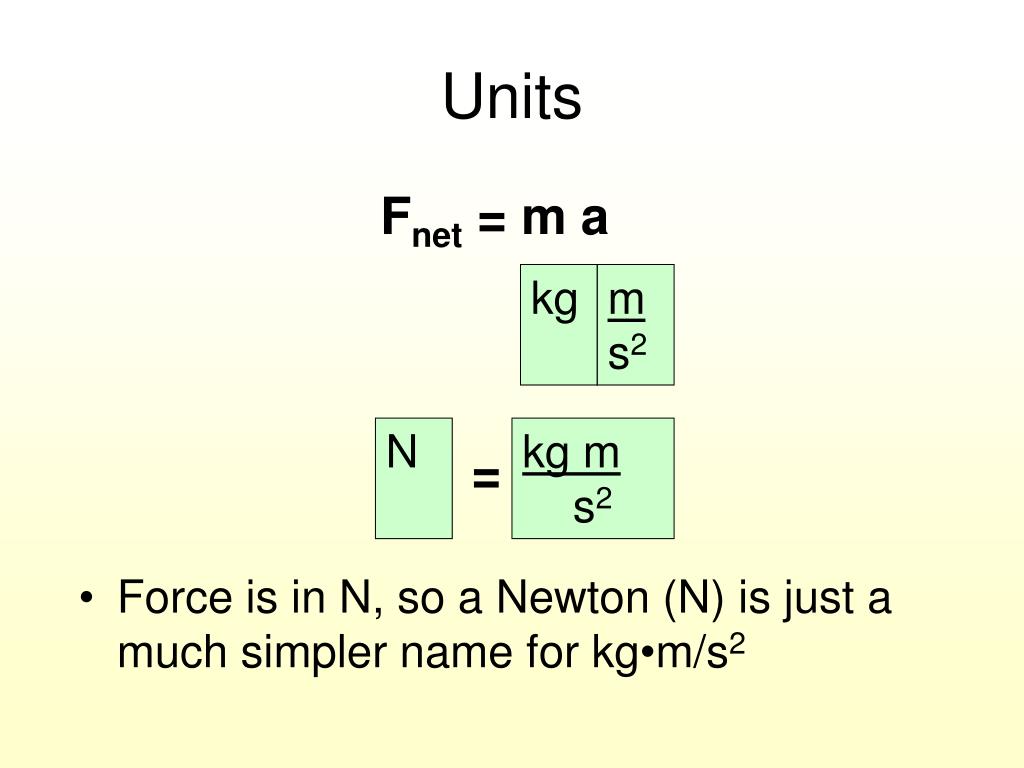
The expression kg m/s² represents the base International System of Units (SI) composition of the newton, the standard unit of force. This derivation originates directly from Isaac Newton’s Second Law of Motion, which defines force as the product of mass and acceleration (F=ma). By understanding this relationship, you can calculate the dynamic force exerted on any object with mass experiencing a change in velocity.
Contents
The Foundation of Classical Mechanics
To grasp why force is measured in kg m/s², one must first look at the bedrock of classical physics: the relationship between an object's mass and its motion. Sir Isaac Newton codified this relationship in his second law, stating that the force acting on an object is equal to the mass of that object multiplied by its acceleration.
In the International System of Units (SI), mass is measured in kilograms (kg), and acceleration is measured in meters per second squared (m/s²). When you multiply these two fundamental dimensions—mass and acceleration—the resulting unit of measurement becomes kg·m/s². This is not merely a label; it is a mathematical proof of the physical definition of force. The newton (N) is simply the shortened, eponymous name given to this composite unit to streamline scientific communication and documentation.
Dissecting the Dimensions
The power of the kg m/s² notation lies in its dimensionality. In physics, dimensional analysis allows scientists to ensure that equations are balanced and logical. When you encounter a force calculation, the result must reconcile with these three fundamental dimensions:
- Mass (kg): The quantity of matter in an object, representing its inertia or resistance to a change in state of motion.
- Length (m): The spatial measurement of the displacement or distance covered by the object.
- Time squared (s²): A component of acceleration, indicating how quickly velocity changes over time.
By breaking a newton down into its base units, you can troubleshoot complex equations. If you are calculating a force and your result does not simplify to kg m/s², you have likely made an error in your derivation or applied the wrong units during your conversion steps. This insight is critical for engineers and physicists working in fields ranging from structural analysis to orbital mechanics.
Practical Applications of the Unit
Understanding the kg m/s² structure is essential when dealing with real-world scenarios where force is either applied or resisted. Consider the following contexts where this unit is indispensable:
- Structural Engineering: When designing beams or foundations, engineers must calculate the load an object exerts due to gravity (mass x gravity). Gravity acts as an acceleration (approximately 9.81 m/s²), meaning an object with a mass of 1 kg exerts a force of 9.81 kg m/s² downward.
- Automotive Safety: The force of an impact is a direct function of mass and deceleration. A vehicle’s mass measured in kg multiplied by the rate at which it stops (m/s²) provides the total force exerted on the occupants and the vehicle frame.
- Aerospace Dynamics: Calculating the thrust required for a rocket launch requires precise knowledge of the force being generated. Engineers ensure the thrust (in newtons) is sufficient to overcome the gravitational force acting on the vehicle's mass.
Comparative Unit Table
The following table illustrates how the standard unit of force relates to other common measurements of force and weight, allowing for quick cross-referencing.
| Unit Name | Symbol | Equivalent in Base SI (kg m/s²) | Context/Origin |
|---|---|---|---|
| Newton | N | 1 | SI Derived Unit of Force |
| Dyne | dyn | 0.00001 | CGS System (Centimeter-Gram-Second) |
| Pound-force | lbf | ~4.448 | Imperial/US Customary System |
| Kilogram-force | kgf | ~9.806 | Gravitational Metric System |
Troubleshooting Force Calculations
One of the most common pitfalls for students and professionals alike is the confusion between mass (kg) and weight (N). While colloquially used interchangeably, they represent different physical concepts. Mass is constant regardless of location, whereas weight is a force—the result of mass being acted upon by an acceleration (gravity).
When performing calculations, always ensure that your input variables are in the correct SI base units. If you are provided with mass in grams, you must convert it to kilograms before calculating force. If you are provided with time in minutes or hours, you must convert it to seconds. Neglecting these conversions is the most frequent cause of error in mechanical calculations.
The Role of SI Prefixes
Because force can vary from the infinitesimal to the immense, the scientific community uses SI prefixes to make the unit kg m/s² manageable. You will rarely see numbers expressed in raw "kg m/s²" in professional reports. Instead, prefixes like kilo-, mega-, or milli- are applied to the newton:
- Millinewtons (mN): Used in precision engineering and micro-electromechanical systems (MEMS).
- Kilonewtons (kN): Frequently used in civil engineering to describe the load-bearing capacity of bridges or industrial machinery.
- Meganewtons (MN): Used in aerospace to describe the thrust generated by heavy-lift launch vehicles.
These prefixes do not change the fundamental nature of the force; they simply scale the expression for readability. Whether you are dealing with a millinewton or a meganewton, the underlying physics remains defined by the base units of mass, length, and time.
Frequently Asked Questions
Why is the unit written as kg m/s² instead of N?
While "Newton" is the standard name, kg m/s² is its base unit representation. Scientists use the base unit form when they need to perform dimensional analysis to verify that an equation is physically consistent or when deriving new physical relationships from scratch.
Is weight the same as mass in kg m/s²?
No. Mass is a measure of an object's inertia in kilograms. Weight is the force exerted on that mass due to gravity, expressed in kg m/s² (or Newtons). An object's mass remains the same in space, but its weight changes depending on the gravitational field it is in.
How do I convert lbf (pound-force) to kg m/s²?
To convert from pound-force to kg m/s², multiply your value by approximately 4.448. Since 1 lbf is the force required to accelerate 1 pound of mass at the standard gravity of Earth, it inherently incorporates the conversion factors between the Imperial and SI systems.
Can I use kg m/s² for centrifugal force?
Yes. Centrifugal force is still a force, and therefore it follows the same dimensional rules. Regardless of the type of force—whether it is magnetic, gravitational, or mechanical—if it is a force, its derivation must always resolve to kg m/s².
What happens if I have the units wrong in my calculation?
If your units do not resolve to kg m/s², your final result will be physically meaningless. In scientific research, maintaining unit integrity is the primary method for identifying calculation errors. If the dimensions do not match, the equation is mathematically invalid.
Next Steps for Mastery
To solidify your understanding of force, start by performing a dimensional analysis on your next physics problem. Do not simply rely on the shorthand unit (N); write out the calculation using kg, m, and s. By consistently substituting the base units into your work, you will develop an intuitive grasp of how mass and acceleration interact. For further exploration of SI standards, the Bureau International des Poids et Mesures (BIPM) provides the authoritative documentation on the evolution and precise definitions of these physical units.
Image Gallery