Strategies for Scaling with a Multi Channel Platform in 2026
A multi channel platform is a centralized software solution that allows businesses to manage sales, inventory, and customer interactions across various online and offline touchpoints from a single interface. By synchronizing data betwe...
A multi channel platform is a centralized software solution that allows businesses to manage sales, inventory, and customer interactions across various online and offline touchpoints from a single interface. By synchronizing data between marketplaces, webstores, social commerce channels, and physical points of sale, these platforms eliminate manual entry errors and provide a unified operational command center.
Contents
In the commercial landscape of 2026, the complexity of consumer touchpoints has reached a critical peak. Shoppers no longer follow a linear path to purchase; they may discover a product on a social media feed, research it on a dedicated marketplace, and ultimately complete the transaction through a mobile app or a physical storefront. To maintain consistency and operational efficiency across these fragmented environments, organizations rely on a multi channel platform to serve as the "single source of truth" for their business logic.
The Architectural Core of Multi Channel Platforms
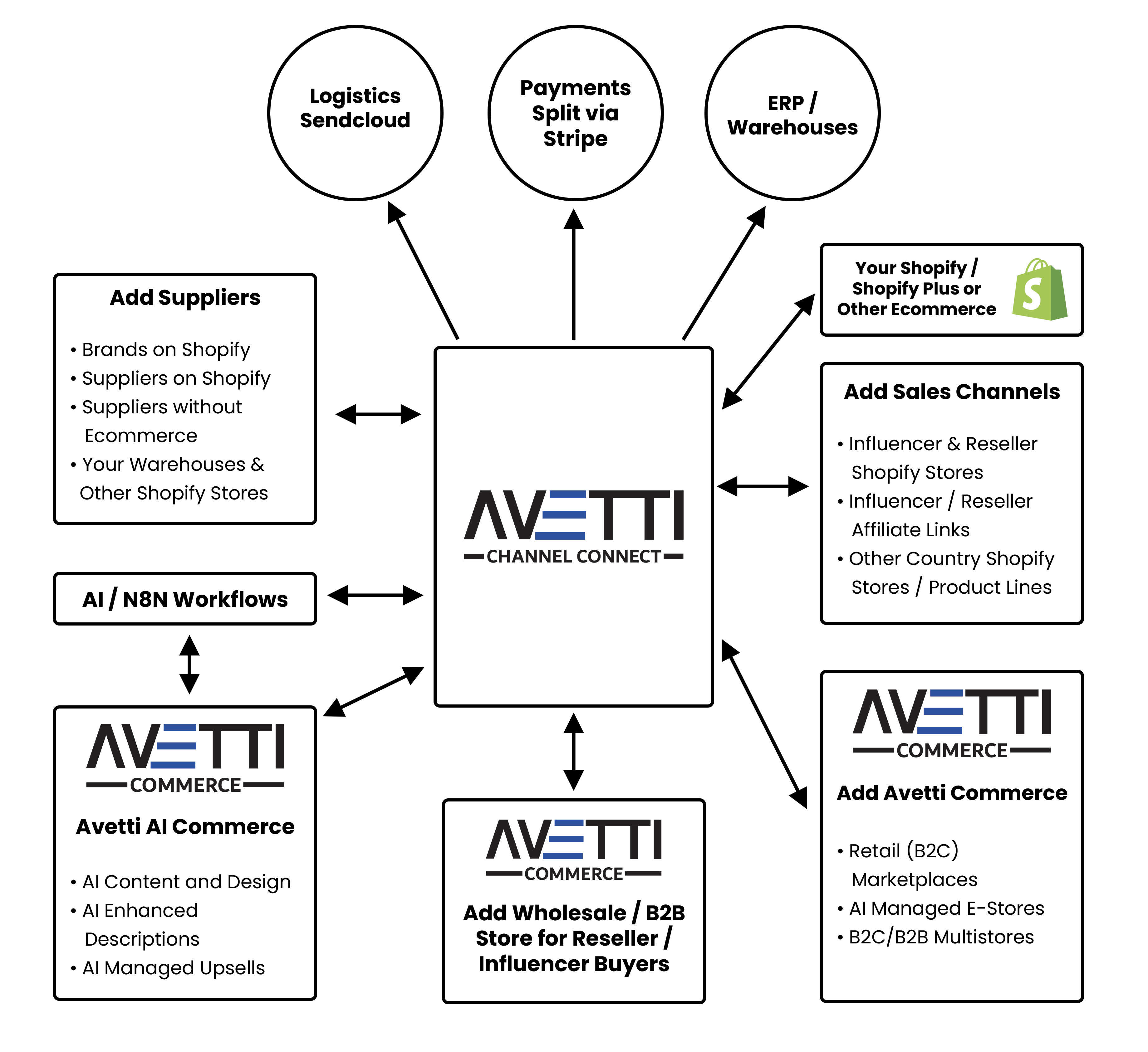
The primary function of a multi channel platform is to act as a bridge between a company’s internal systems (like ERPs or warehouses) and the external sales channels. By 2026, these platforms have evolved from simple listing tools into sophisticated engines powered by Artificial Intelligence (AI) and headless commerce architectures.
Centralized Inventory Management
The most immediate challenge of selling on multiple channels is inventory reconciliation. Without a centralized platform, a business risks "overselling"—selling a product on Amazon that was just purchased on their Shopify store seconds earlier. A robust platform utilizes real-time APIs (Application Programming Interfaces) to update stock levels across every connected channel the moment a transaction occurs. This prevents stockouts, reduces the need for safety stock, and protects the seller's reputation on marketplaces that penalize unfulfilled orders.
Unified Order Orchestration
Order orchestration refers to the logic used to route an order from the point of purchase to the optimal fulfillment location. In 2026, multi channel platforms use automated workflows to determine the most cost-effective or fastest shipping route. For instance, if a customer in Berlin orders a product, the platform can automatically route that order to a third-party logistics (3PL) provider in Germany rather than a primary warehouse in the United States, significantly reducing carbon footprints and shipping costs.
Product Information Management (PIM)
Each sales channel has unique requirements for product data. Amazon requires specific bullet points and backend keywords; Google Merchant Center demands specific structured data for "Buy on Google"; and Instagram Shopping relies heavily on high-resolution visual assets. A multi channel platform includes or integrates with a PIM system to store a "master" version of a product record, which it then reformats and "maps" to meet the specific technical specifications of each individual channel.
Distinguishing Multi-Channel from Omni-Channel
While often used interchangeably, there is a technical distinction between multi-channel and omni-channel strategies that businesses must understand before selecting a platform.
- Multi-Channel: Focuses on being present on as many platforms as possible. The primary goal is reach. The platform ensures that the product is available for purchase on eBay, Walmart, and the brand's own site, but the customer experiences on these channels may remain siloed.
- Omni-Channel: Focuses on the continuity of the customer experience. An omni-channel approach ensures that if a customer adds an item to a cart on a mobile app, it appears in their cart when they log in via a desktop, and they can return that item at a physical retail location.
By 2026, the most successful multi channel platforms have integrated omni-channel capabilities, allowing for "Buy Online, Pick Up In-Store" (BOPIS) and "Buy Online, Return In-Store" (BORIS) workflows, which are now standard consumer expectations.
Key Technical Features and Requirements
When evaluating a platform in 2026, technical decision-makers must look beyond basic connectivity. The following features are essential for maintaining a competitive edge:
- Headless Commerce Support: The ability to decouple the frontend presentation layer from the backend commerce functionality. This allows developers to build custom user experiences for VR/AR environments or IoT devices while still using the central platform for transactions.
- Predictive Analytics: Modern platforms now incorporate machine learning models that analyze historical sales data to predict future demand. This helps businesses optimize their procurement cycles and avoid capital being tied up in slow-moving stock.
- Automated Listing Optimization: Using Natural Language Processing (NLP), platforms can now automatically adjust product titles and descriptions to align with the trending search terms of specific regions or platforms, improving organic visibility without manual intervention.
- Global Localization: This includes automated currency conversion, localized tax calculation (such as VAT or GST compliance), and translation services that ensure product listings resonate with local cultural nuances.
Comparative Analysis of Platform Tiers
The selection of a multi channel platform depends largely on the volume of transactions and the complexity of the existing tech stack. The following table compares common platform categories as of 2026.
| Feature | SMB-Focused Platforms | Mid-Market Solutions | Enterprise-Grade Suites |
|---|---|---|---|
| Typical User | Independent retailers | Scaling direct-to-consumer brands | Global conglomerates |
| Integration Depth | Pre-built "Plug-and-Play" | Extensive APIs and Webhooks | Fully custom SDKs |
| Inventory Nodes | 1–5 locations | 5–50 locations | Global multi-node networks |
| Support Levels | Documentation and Chat | Dedicated Account Manager | 24/7 Technical Engineering |
| AI Capabilities | Basic forecasting | Automated listing optimization | Full supply chain autonomy |
| Data Security | Standard SSL/GDPR | SOC2 Type II Compliance | Custom Governance & Sovereignty |
Implementation Challenges and Solutions
Transitioning to a multi channel platform is not without its hurdles. Data integrity is the most frequent point of failure during implementation.
Data Mapping and Normalization
When importing data from legacy systems, discrepancies in "SKU" (Stock Keeping Unit) naming conventions can cause havoc. For example, a "Blue T-Shirt" might be labeled TS-BLU-01 in the warehouse but Blue-Shirt-Small on a retail site. The platform must be able to "map" these disparate identifiers to a single global ID. Modern platforms solve this with AI-assisted mapping, which identifies likely matches even when naming conventions differ.
Latency and Synchronization
In high-volume environments, even a five-minute delay in synchronization can result in overselling during peak periods like Black Friday. High-performance platforms utilize Webhooks rather than traditional "polling" methods. Instead of the platform asking the store for updates every ten minutes, the store "pushes" the data to the platform instantly whenever an event occurs.
Selecting the Right Platform for 2026
The choice of a multi channel platform should be governed by the three-year growth plan of the business. Organizations should prioritize platforms that offer modular scalability, allowing them to add features—such as cross-border logistics or advanced B2B modules—as they grow, rather than forcing a complete system migration.
Leading providers such as Shopify Plus, BigCommerce, and Rithum (formerly ChannelAdvisor) continue to dominate the market by offering deep integrations with emerging channels like TikTok Shop and various regional marketplaces in Asia and Latin America.
Frequently Asked Questions
What is the difference between a multi channel platform and an ERP?
An Enterprise Resource Planning (ERP) system manages the broad internal functions of a company, including HR, finance, and manufacturing. A multi channel platform is more specialized, focusing specifically on the external "front-facing" commerce operations. While some ERPs have commerce modules, most businesses find that a dedicated multi channel platform provides superior agility and deeper integrations with modern sales channels.
Can a multi channel platform handle B2B and B2C sales simultaneously?
Yes, many modern platforms are designed to handle hybrid models. They allow businesses to maintain separate pricing tiers, bulk-ordering rules, and credit terms for B2B wholesale clients while simultaneously managing standard B2C retail transactions on the same inventory pool.
How does a multi channel platform help with international expansion?
These platforms often include built-in tools for localized tax compliance, currency conversion, and international shipping integrations. By connecting to local marketplaces (like Mercado Libre in Latin America or Shopee in Southeast Asia) through a single hub, businesses can test new markets with significantly lower overhead costs.
What are the ongoing costs associated with these platforms?
Pricing models typically involve a combination of a fixed monthly subscription fee and a variable component, such as a percentage of Gross Merchandise Volume (GMV) or a fee per transaction. Businesses should also budget for implementation costs, which may include developer fees for custom API work or data migration services.
Is AI integration mandatory for a multi channel platform in 2026?
While not "mandatory" for basic operation, AI has become a standard feature for staying competitive. Platforms without AI-driven insights for inventory optimization and automated content generation often result in higher manual labor costs and slower response times to market shifts, making them less viable for scaling enterprises.
Strategic Recommendation
For businesses aiming to scale in 2026, the transition to a multi channel platform should be treated as a strategic digital transformation rather than a simple software installation. Start by auditing your current "data health"—ensuring your product information is clean and your inventory counts are accurate. Prioritize a platform that offers robust API documentation and a strong ecosystem of third-party integrations. This ensures that as new sales channels emerge in the coming years, your business can integrate them rapidly without rebuilding its core operational architecture.
Image Gallery