Cartier Most Expensive Item: The Pinnacle of High Jewelry and Auction Records
The most expensive Cartier item ever sold at public auction is the Hutton-Mdivani Jadeite Necklace, which commanded a record-breaking price of $27.44 million at a Sotheby’s auction in 2014. Historically, the most valuable commission ev...
The most expensive Cartier item ever sold at public auction is the Hutton-Mdivani Jadeite Necklace, which commanded a record-breaking price of $27.44 million at a Sotheby’s auction in 2014. Historically, the most valuable commission ever completed by the Maison was the Patiala Necklace, a 1928 ceremonial piece for the Maharaja of Patiala, which featured 2,930 diamonds and is estimated to be worth over $30 million in its original state.
Contents
As we evaluate the landscape of luxury in 2026, Cartier remains the "King of Jewelers and Jeweler to Kings," a title bestowed by King Edward VII that continues to be validated by the astronomical prices their heritage and high-jewelry pieces command. The value of a Cartier item is rarely determined by the raw materials alone; instead, it is a complex calculation of provenance (previous ownership), rarity, historical significance, and the unmatched craftsmanship of the Parisian workshops. To understand why certain items reach the eight-figure mark, one must examine the specific masterpieces that have defined the brand’s legacy over the last century.
The Patiala Necklace: A $30 Million Historical Enigma
Commissioned in 1925 and completed in 1928, the Patiala Necklace stands as the most ambitious project in Cartier’s history. It was created for Bhupinder Singh of Patiala, the Maharaja of a powerful Indian princely state. The necklace was an architectural marvel of the Art Deco era, consisting of five rows of diamond-encrusted platinum chains.
The Composition of a Masterpiece
The center of the necklace was dominated by the "De Beers" diamond, a 234.65-carat cushion-cut yellow diamond, which was at the time the seventh-largest polished diamond in the world. Surrounding this centerpiece were 2,929 other diamonds, including seven large diamonds ranging from 18 to 73 carats. The total weight of the piece was approximately 1,000 carats.
The necklace disappeared from the Patiala royal treasury around 1948. In 1998, Eric Nussbaum, a Cartier representative, discovered the remnants of the necklace in a second-hand jewelry shop in London. The large stones, including the De Beers diamond, were missing. Cartier purchased the remains and spent four years restoring it. Because the original large diamonds were unavailable, the Maison used cubic zirconia and synthetic diamonds to recreate the aesthetic of the original for their archival collection. If the original necklace were intact today with its primary stones, experts estimate its value would exceed $30 million, making it arguably the most expensive piece of jewelry ever conceived by the brand.
The Hutton-Mdivani Jadeite Necklace: The Auction Record Holder
While the Patiala Necklace represents the pinnacle of commission work, the Hutton-Mdivani Jadeite Necklace holds the title for the highest price ever paid for a Cartier item at auction. Sold in 2014 to the Cartier Collection itself, the necklace is a testament to the brand's ability to blend Eastern materials with Western design.
Provenance and Quality
The necklace is composed of 27 "magnificent" jadeite beads of extraordinary size and translucent green color. The beads belonged to Barbara Hutton, the Woolworth heiress and one of the wealthiest women of the 20th century. For her wedding to Prince Alexis Mdivani in 1933, her father commissioned Cartier to create a custom clasp for the beads.
The resulting clasp is a masterpiece of Art Deco design, featuring calibrated rubies and baguette-cut diamonds set in platinum and 18k yellow gold. The contrast between the deep green of the jadeite and the vibrant red of the rubies is a hallmark of Cartier’s bold color palette. The necklace's $27.44 million price tag was nearly double its pre-sale estimate, fueled by the rarity of "Imperial" grade jadeite and the legendary status of its former owner.
The "Tutti Frutti" Phenomenon
The "Tutti Frutti" style is perhaps Cartier’s most recognizable contribution to high jewelry. Inspired by the colorful carved gemstones of the Mughal Empire in India, these pieces feature a riot of rubies, sapphires, and emeralds carved into leaves, flowers, and berries.
In the 1930s, these pieces were commissioned by fashion icons like Daisy Fellowes. Her "Collier Hindou," a massive necklace featuring over 500 carats of gemstones, is one of the most valuable items in the Cartier archives. In the modern market, Tutti Frutti bracelets and necklaces frequently sell for between $1 million and $5 million. The complexity of these pieces lies in the "Mughal cutting" technique—the gems are not faceted to sparkle but are instead carved to mimic nature, a process that requires hundreds of hours of manual labor.
The Panthère de Cartier: The Icon of Power
No discussion of expensive Cartier items is complete without the Panthère. Introduced in 1914, the panther motif became the signature of Jeanne Toussaint, Cartier’s Director of Fine Jewelry from 1933. The most expensive Panthère item ever sold was a sapphire, diamond, and emerald panther bracelet formerly owned by the Duchess of Windsor (Wallis Simpson).
In 2010, this onyx and diamond panther bracelet sold at Sotheby’s for over $12 million. The piece was revolutionary for its time, featuring a "fur" setting (pavage) where tiny wires of gold hold diamonds in a way that mimics the texture of animal hair. The panther's eyes were two marquise-shaped emeralds, providing a lifelike gaze that has become a hallmark of the collection.
Summary of Cartier’s Most Expensive Masterpieces
The following table compares the most significant high-value items in Cartier’s history based on auction records and historical valuations adjusted for modern context.
| Item Name | Primary Materials | Notable Owner | Estimated/Sale Value | Significance |
|---|---|---|---|---|
| Hutton-Mdivani Necklace | Jadeite, Rubies, Diamonds | Barbara Hutton | $27,440,000 | Record auction price for Cartier and jadeite. |
| Patiala Necklace | 2,930 Diamonds, Platinum | Maharaja of Patiala | $30,000,000+ | Most expensive commission in Maison history. |
| Duchess of Windsor Panther | Diamonds, Onyx, Sapphires | Wallis Simpson | $12,400,000 | Highest price for a Panthère bracelet. |
| The Sunrise Ruby | 25.59ct Burmese Ruby | Private Collector | $30,300,000 | Set by Cartier; world record for a ruby. |
| Daisy Fellowes Collier Hindou | Carved Emeralds, Rubies | Daisy Fellowes | Priceless (Archive) | The definitive "Tutti Frutti" masterpiece. |
| Maria Félix Crocodiles | Emeralds, Yellow Diamonds | Maria Félix | Priceless (Archive) | Iconic "Nature Sauvage" custom commission. |
Why Cartier Items Retain and Increase in Value
The valuation of Cartier items in 2026 is driven by several technical and market factors that distinguish the brand from other high-jewelry houses.
- The Cartier Collection Strategy: Cartier actively buys back its own most important historical pieces. By participating in auctions (as they did with the Hutton-Mdivani necklace), they ensure that the market value of their heritage remains high.
- Meticulous Documentation: Every significant Cartier piece since the late 19th century is recorded in the Maison’s archives. This "pedigree" allows buyers to verify the authenticity and history of an item, which is critical for seven-figure investments.
- Innovative Setting Techniques: Cartier pioneered the use of platinum in jewelry at the turn of the 20th century. Platinum’s strength allowed for more delicate, "invisible" settings that made diamonds appear to float, a technique that remains a benchmark for high jewelry today.
- Cultural Resonance: Cartier pieces are often tied to major historical shifts, such as the Art Deco movement or the liberation of women’s fashion in the 1920s. Collectors are buying a piece of art history, not just a gemstone.
FAQs About Cartier's Most Expensive Items
What is the most expensive Cartier watch?
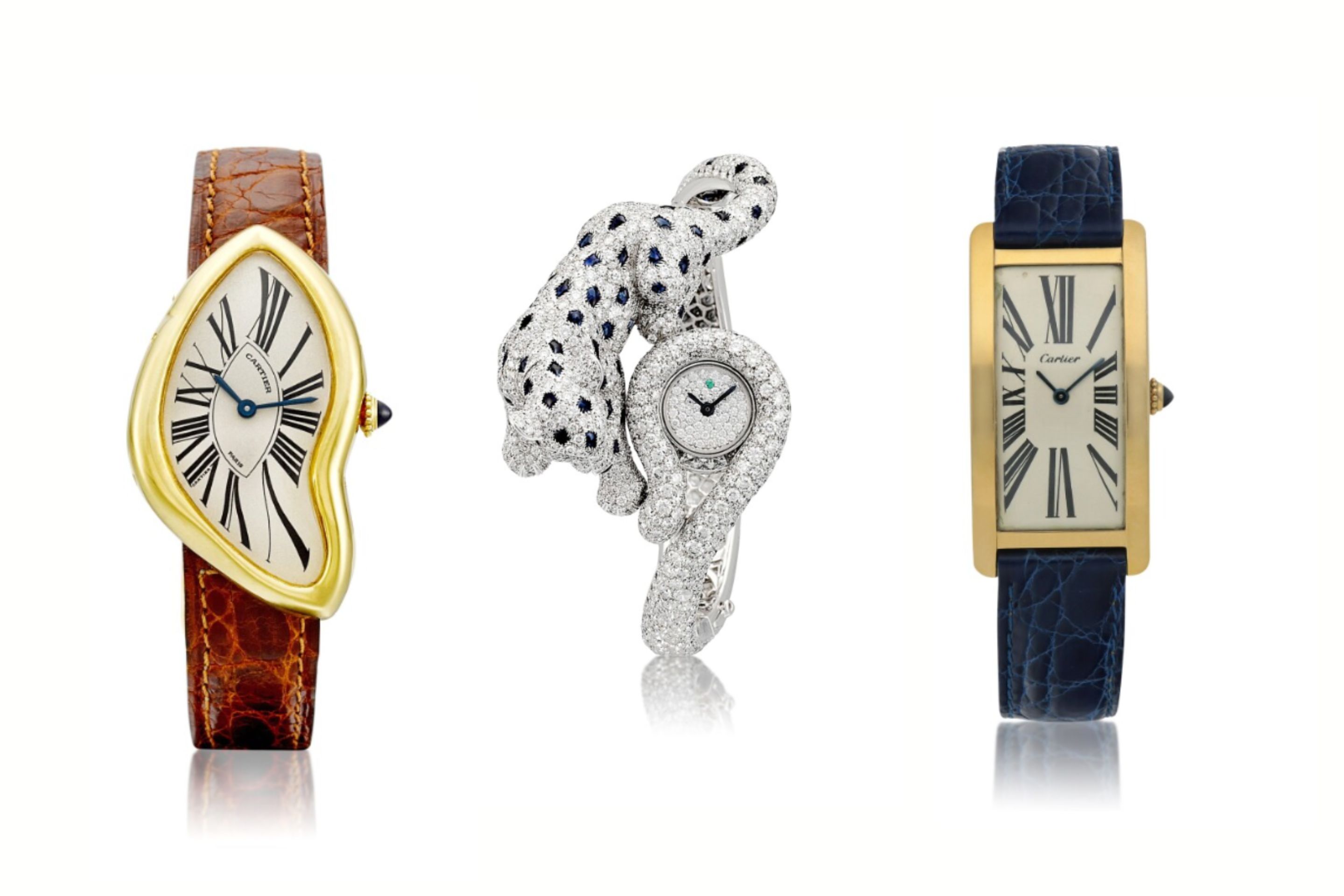
While jewelry commands the highest prices, Cartier watches like the Phoenix Décor Secret Watch, made of 18k white gold and covered in 3,010 diamonds totaling 80 carats, are valued at approximately $2.7 million. Heritage pieces like the 1920s "Mystery Clocks" can also fetch several million dollars at auction.
Is Cartier a good investment?
High-jewelry pieces from Cartier, particularly those from the Art Deco period (1920–1935) or unique "Tutti Frutti" items, have historically appreciated in value. Standard retail items like the Love Bracelet or Tank watch hold their value well compared to other luxury brands but are generally not considered high-yield investments like "Pièces Uniques."
Can I buy the most expensive Cartier items in a retail store?
The most expensive items—those exceeding $10 million—are usually "Pièces Uniques" (one-of-a-kind) or heritage pieces sold through private salons or auctions. However, Cartier’s high-jewelry collections, such as Nature Sauvage or Cartier Libre, feature retail pieces priced between $500,000 and $5,000,000 available to elite clients.
Who owns the most expensive Cartier pieces today?
Many of the most valuable items are owned by the Cartier Collection, the brand’s private museum. Other significant pieces are held by royal families (notably the British Royal Family and various Middle Eastern dynasties) and private ultra-high-net-worth collectors in Asia and North America.
How do I verify if a Cartier item is authentic?
Verification requires a "Certificate of Authenticity" from Cartier. For vintage pieces, collectors often seek an "Excerpt from the Archives," which matches the item's serial number to the original production records in Paris. High-value items should always be appraised by a specialized auction house like Christie's or Sotheby's.
Practical Recommendation for Collectors
If you are looking to acquire a piece of Cartier’s "most expensive" legacy, focus on pieces with impeccable provenance and original hallmarks. While modern high jewelry is breathtaking, the secondary market consistently places the highest premiums on pieces from the 1920s and 30s. If your goal is long-term value retention, the "Tutti Frutti" style or the "Panthère" motifs remain the most resilient in the global market. Always ensure that any purchase over $100,000 is accompanied by GIA reports for the stones and a verified archival match from the Maison.
Image Gallery