Understanding the Credit Report for a Home Loan: A Comprehensive Guide for 2026
A credit report for a home loan is a specialized "tri-merge" document that aggregates your financial history from Equifax, Experian, and TransUnion. Lenders use this data to calculate your risk profile, determine your mortgage interest...
A credit report for a home loan is a specialized "tri-merge" document that aggregates your financial history from Equifax, Experian, and TransUnion. Lenders use this data to calculate your risk profile, determine your mortgage interest rate, and establish your eligibility for specific loan programs based on your documented repayment behavior.
Contents
For most prospective homeowners in 2026, the credit report is the single most influential document in the mortgage application process. Unlike a standard consumer credit report you might see on a banking app, a mortgage credit report is a more rigorous assessment. It provides a historical narrative of your relationship with debt, illustrating not just what you owe today, but how consistently you have met your obligations over the past seven to ten years. Understanding the nuances of this report is essential for securing favorable terms and avoiding a loan denial.
The Tri-Merge Credit Report: A Mortgage Industry Standard
When you apply for a home loan, lenders do not look at just one score. They pull what is known as a Residential Mortgage Credit Report (RMCR) or a tri-merge report. This document combines data from the three primary national credit bureaus: Equifax, Experian, and TransUnion.
The reason for this redundancy is that not all creditors report to all three bureaus. A local credit union might only report to TransUnion, while a major national bank might report to all three. By merging these records, the lender gets a 360-degree view of your liabilities. In 2026, the mortgage industry continues to use the "middle score" method for pricing. If your three scores are 720, 740, and 750, the lender will use 740 as the qualifying score. If there are two borrowers, the lender typically looks at the lower of the two middle scores.
Why the Mortgage Score Differs from Consumer Scores
Many borrowers are surprised to find that the score on their mortgage report is lower than the one shown on their credit card dashboard or a free monitoring service. This is because mortgage lenders use specific versions of the FICO score designed to predict the likelihood of a 90-day delinquency specifically on a housing payment. While the industry is transitioning toward newer models like FICO 10T and VantageScore 4.0—which incorporate trended data—many legacy systems still prioritize FICO Scores 2, 4, and 5. These older models are more sensitive to high credit utilization and recent inquiries than the "educational" scores provided to consumers.
Core Components of the Mortgage Credit Report
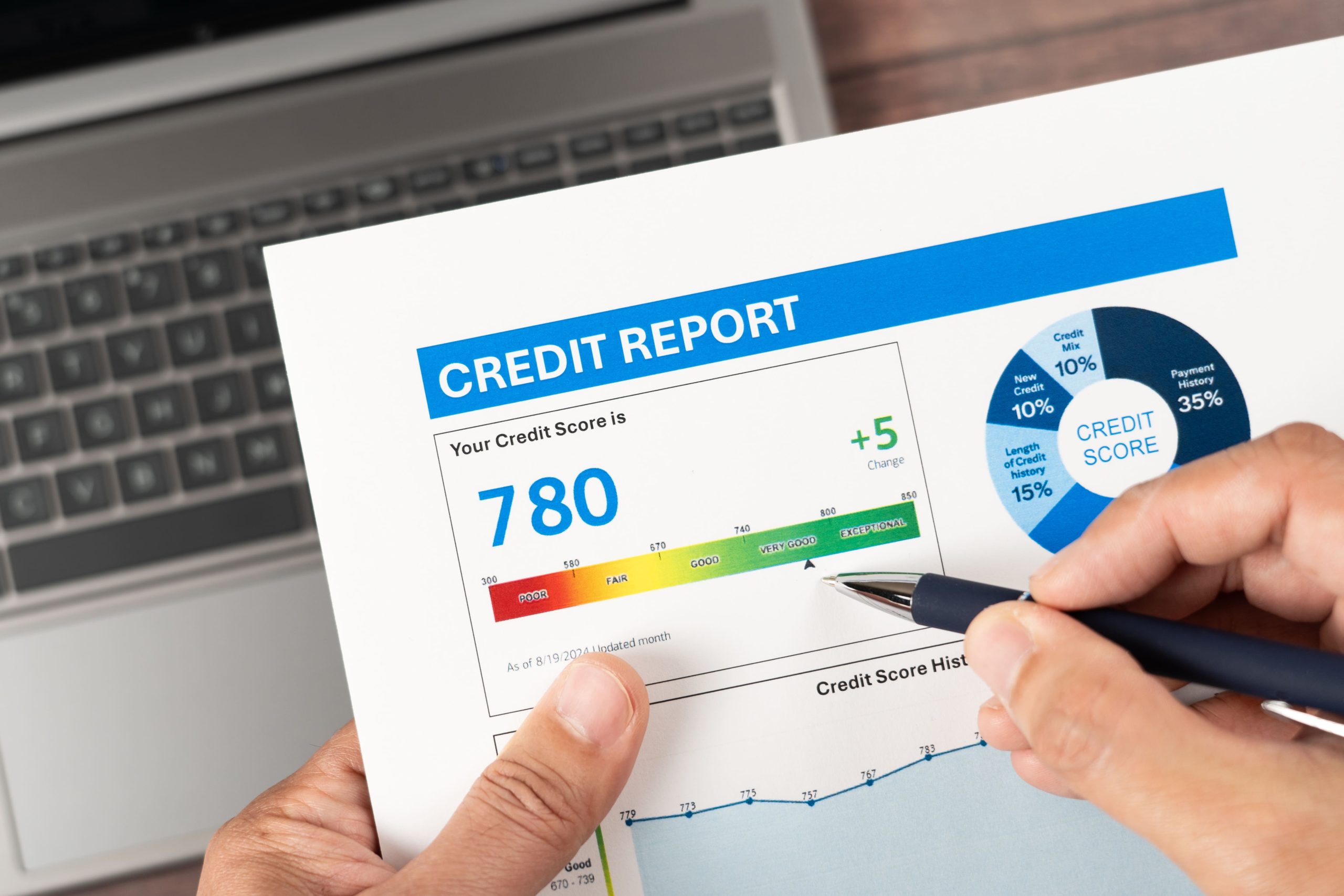
To understand your report, you must break it down into the five primary categories that dictate your score. Each category is weighted differently, and mortgage lenders scrutinize certain behaviors more than others.
1. Payment History (35%)
This is the most critical factor. Lenders are looking for a pattern of on-time payments. In the context of a home loan, a single 30-day late payment within the last 12 months can significantly impact your score and may require a "letter of explanation" to the underwriter. Recent delinquencies suggest current financial instability, whereas older mistakes (over 24 months old) carry less weight.
2. Amounts Owed and Utilization (30%)
Lenders evaluate your Credit Utilization Ratio, which is the amount of revolving credit you are using compared to your total limits. For a mortgage, keeping this ratio below 10% is ideal, though staying under 30% is generally considered acceptable. High utilization suggests that a borrower may be overextended and could struggle to manage an additional monthly mortgage payment.
3. Length of Credit History (15%)
The "age" of your accounts matters. A longer history provides more data points for the lender to assess risk. This is why financial advisors often recommend against closing old credit cards before applying for a mortgage; doing so shortens your average account age and can inadvertently drop your score.
4. Credit Mix (10%)
Lenders prefer to see that you can manage different types of debt, including revolving accounts (credit cards) and installment loans (auto loans, student loans, or previous mortgages). A healthy mix demonstrates financial versatility.
5. New Credit and Inquiries (10%)
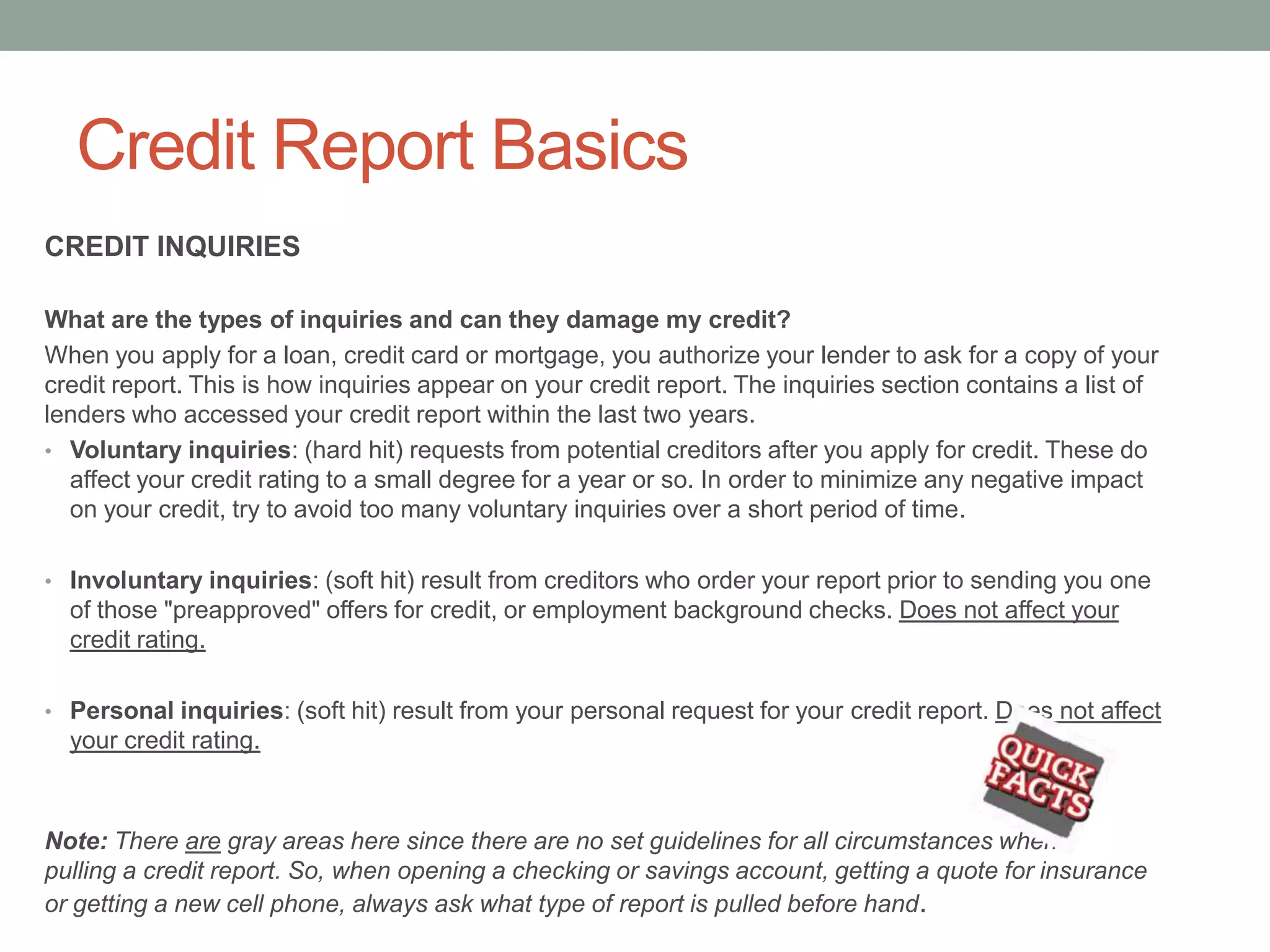
Each time you apply for credit, a "hard inquiry" is recorded. While one or two inquiries have a negligible effect, a cluster of new applications in a short period can signal "credit hunger." However, 2026 mortgage guidelines continue to provide a "shopping window"—usually 14 to 45 days—where multiple inquiries from mortgage lenders are treated as a single event for scoring purposes.
The Introduction of Trended Data in 2026
A significant evolution in understanding the credit report for a home loan is the use of trended data. Traditional credit reports were a "snapshot" in time; they showed what you owed at the moment the report was pulled.
In contrast, trended data allows lenders to look back at the last 24 months of your payment behavior. They can see whether you are a "transactor" (someone who pays off their balance in full every month) or a "revolver" (someone who only pays the minimum and carries a balance). Lenders view transactors as lower risk, even if their total debt is higher, because it shows they have the cash flow to manage their obligations. If your report shows a steady decline in debt over the last two years, you are viewed much more favorably than a borrower whose balances are steadily climbing.
Essential Credit Metrics for Mortgage Approval
| Factor | Weight | Ideal Range for Prime Rates | Impact on Underwriting |
|---|---|---|---|
| Payment History | 35% | 0 late payments in 24 months | Critical; determines basic eligibility. |
| Credit Utilization | 30% | Under 10% | High impact on the interest rate offered. |
| Credit Age | 15% | 7+ years average age | Moderate; helps build "depth" in the file. |
| Account Mix | 10% | Mix of revolving & installment | Low; shows experience with various debt. |
| Recent Inquiries | 10% | 0-2 in the last 12 months | Low; can be offset by a strong explanation. |
How to Audit and Dispute Your Credit Report
Errors on credit reports are remarkably common, ranging from misspelled names to incorrectly reported "late" payments that were actually on time. Because a mortgage involves hundreds of thousands of dollars, a 20-point difference caused by an error can cost you tens of thousands in interest over the life of the loan.
Identifying Inaccuracies
When you pull your report, check for:
- Accounts that don't belong to you: This could be a sign of identity theft or a "mixed file" with someone who has a similar name.
- Incorrect payment status: Ensure that accounts marked as late were actually late.
- Inaccurate credit limits: If a bureau reports a lower limit than you actually have, your utilization ratio will appear higher than it is.
- Outdated information: Negative information (except for some bankruptcies) should generally fall off after seven years.
The Dispute Process
If you find an error, you must file a dispute with the credit bureau reporting the data. Under the Fair Credit Reporting Act (FCRA), bureaus generally have 30 days to investigate and respond. In 2026, most of this is handled through digital portals. It is vital to provide documentation—such as bank statements or "paid in full" letters—to support your claim.
Caution: Do not dispute valid negative items right before applying for a mortgage. Open disputes can actually pause the mortgage underwriting process because the lender cannot rely on the accuracy of the score while a dispute is pending. It is better to resolve these issues at least three to six months before you begin house hunting.
Impact of the Credit Report on Loan Terms
Your credit report doesn't just decide if you get a loan; it decides how much that loan will cost. Mortgage insurance (PMI) premiums, for instance, are tiered based on credit scores. A borrower with a 760 score will pay significantly less in monthly PMI than a borrower with a 640 score, even if they are buying the same house with the same down payment.
Furthermore, lenders use the report to calculate your Debt-to-Income (DTI) ratio. They take the minimum monthly payments listed on your credit report and divide them by your gross monthly income. If your credit report shows high monthly obligations (like a $800 car payment), it directly reduces the amount of mortgage you can afford, regardless of how high your credit score is.
Frequently Asked Questions
What is the minimum credit score for a home loan in 2026?
Minimum scores vary by loan type. Generally, FHA loans may allow scores as low as 580 (or even 500 with a 10% down payment), while conventional loans usually require at least a 620. However, to access the best interest rates and lower insurance costs, a score of 760 or higher is typically required.
How long do hard inquiries stay on my mortgage credit report?
Hard inquiries remain on your credit report for two years, but they only affect your FICO score for the first 12 months. In the context of a mortgage, lenders are mainly concerned with inquiries from the last 90 days, as these might indicate new debt that hasn't appeared as a balance on the report yet.
Will paying off a collection improve my score immediately?
In 2026, many newer scoring models ignore "paid" collection accounts. However, many mortgage lenders still use older models where a paid collection is still a negative mark. While paying a collection is generally good for underwriting (as it removes a potential lien risk), it may not result in an immediate, dramatic score increase. Always consult with a mortgage professional before paying off old collections.
Can I get a home loan with a "thin" credit file?
Yes, it is possible through a process called manual underwriting. If your credit report doesn't have enough data to generate a score, lenders may look at "non-traditional" credit, such as consistent utility payments, cell phone bills, and 12 months of on-time rent verification. This process is more document-intensive but provides a path to homeownership for those who avoid traditional debt.
Does a high credit score guarantee a low interest rate?
Not necessarily. While a high score is a primary factor, lenders also consider your Loan-to-Value (LTV) ratio and your Debt-to-Income (DTI) ratio. A borrower with an 800 score but a very small down payment may still receive a higher rate than someone with a 740 score putting 25% down.
Practical Recommendations
Before applying for a home loan in 2026, your first step should be to pull your own reports from AnnualCreditReport.com to ensure there are no surprises. Avoid opening new lines of credit or making large purchases (like a new vehicle) at least six months prior to your application. If your score is on the cusp of a higher tier—for example, a 735 when the next "prime" tier starts at 740—consider a "rapid rescore." This is a service offered by mortgage lenders that can update your credit file in a matter of days rather than months, provided you have the documentation to prove balances have been paid down or errors have been corrected.
Image Gallery