The World's Biggest Passenger Airplane: Airbus A380 Specifications, Capacity, and Seating Guidelines
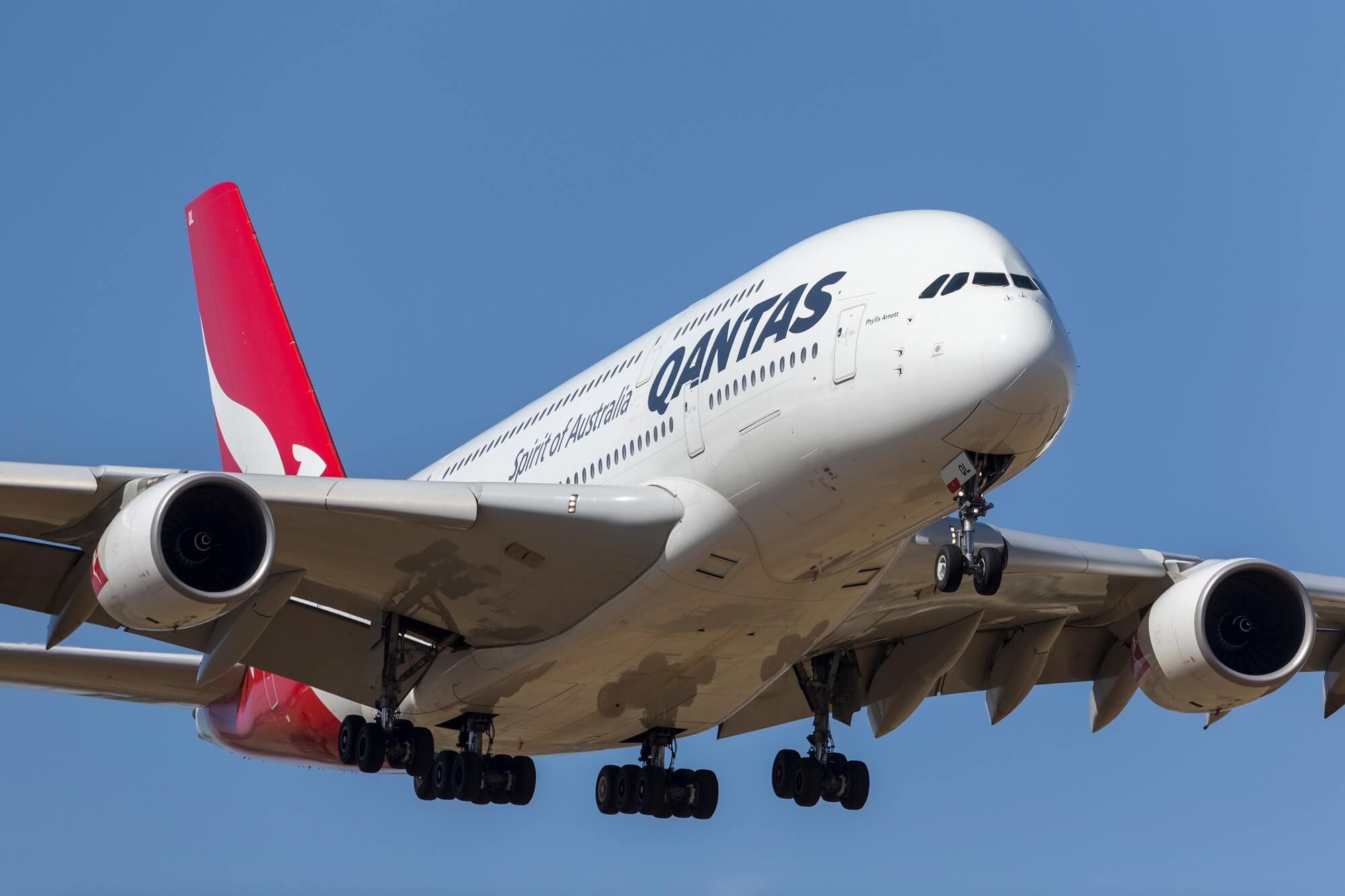
The Airbus A380-800 is the world's largest passenger airplane, featuring a full-length double-deck design with a maximum certified capacity of 853 passengers in a single-class layout and a standard 525-passenger capacity in a three-cla...
The Airbus A380-800 is the world's largest passenger airplane, featuring a full-length double-deck design with a maximum certified capacity of 853 passengers in a single-class layout and a standard 525-passenger capacity in a three-class configuration. Powered by four engine options from Engine Alliance or Rolls-Royce, it remains the undisputed giant of commercial aviation.
Contents
Defining the World's Largest Passenger Airliner
When measuring aircraft size, aviation engineers evaluate multiple parameters: maximum takeoff weight (MTOW), overall wingspan, total interior floor area, and maximum passenger capacity. Across all these categories, the Airbus A380-800 stands as the largest commercial passenger airliner ever constructed.
First flown in April 2005 and entering commercial service with Singapore Airlines in October 2007, the double-decker aircraft transformed high-density, long-haul international travel. Although production concluded in late 2021 with the final delivery to Emirates, major global airlines continue to operate large fleets of A380s across key global hubs.
Beyond physical airframe dimensions, discussion around aircraft size often extends to individual cabin accommodations, seat width, and airline policies for passengers requiring extra space. This guide covers both dimensions: the engineering facts of the largest passenger aircraft and the operational guidelines commercial airlines use for passenger seating space.
Airbus A380 vs. Competitors: Technical Specifications
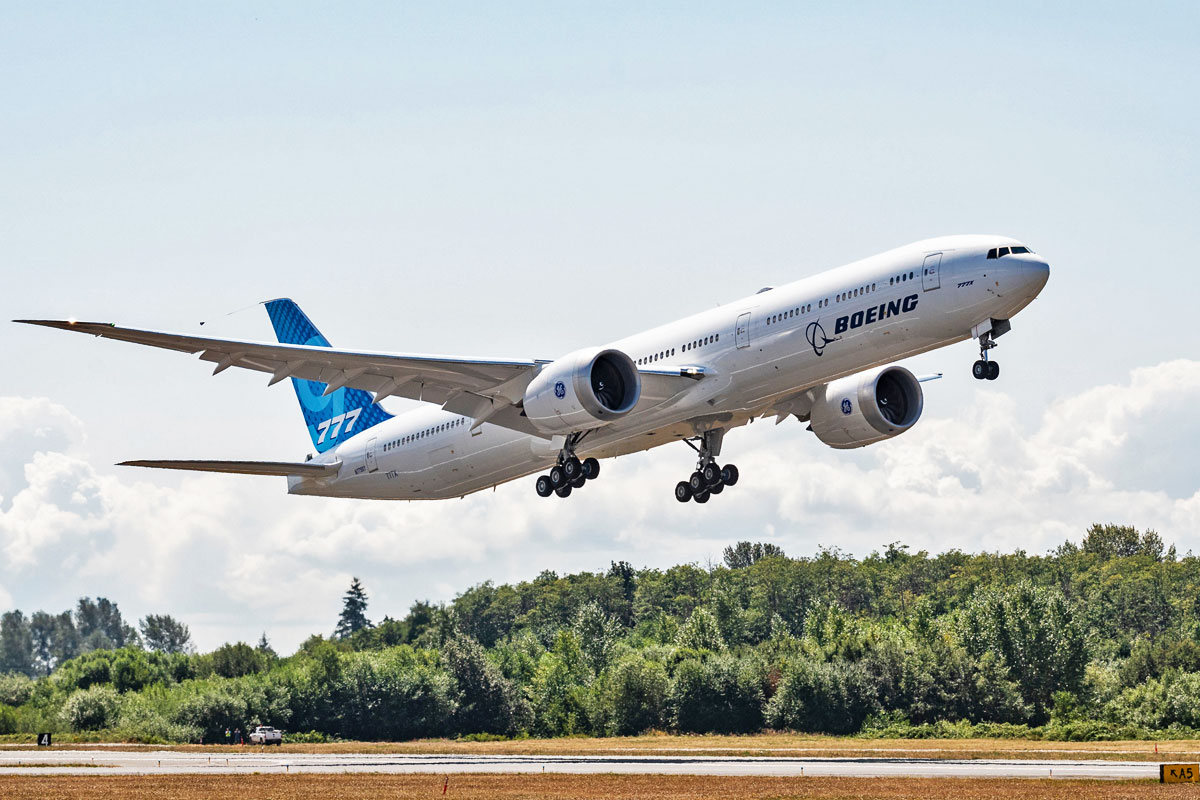
To understand the scale of the Airbus A380, it helps to compare it against other large wide-body airliners, including the Boeing 747-8 Intercontinental (the longest commercial passenger aircraft) and the Boeing 777-9.
| Specification Parameter | Airbus A380-800 | Boeing 747-8 Intercontinental | Boeing 777-9 |
|---|---|---|---|
| Overall Length | 72.72 m (238 ft 7 in) | 76.3 m (250 ft 2 in) | 76.72 m (251 ft 9 in) |
| Wingspan | 79.75 m (261 ft 8 in) | 68.4 m (224 ft 7 in) | 71.75 m (235 ft 5 in) |
| Overall Height | 24.09 m (79 ft 1 in) | 19.4 m (63 ft 6 in) | 19.68 m (64 ft 7 in) |
| Max Takeoff Weight (MTOW) | 575,000 kg (1,268,000 lb) | 447,700 kg (987,000 lb) | 351,500 kg (775,000 lb) |
| Maximum Passenger Seats | 853 (Single-class exit limit) | 605 (Single-class limit) | 426 (Typical 2-class) |
| Typical 3-Class Capacity | 480 to 555 passengers | 410 passengers | 395 passengers |
| Usable Cabin Floor Area | 550 m² (5,920 sq ft) | 321 m² (3,455 sq ft) | ~260 m² (2,798 sq ft) |
| Engine Thrust (x4) | 70,000–72,000 lbf per engine | 66,500 lbf per engine | 105,000 lbf per engine (x2) |
Key Airframe Engineering Highlights
- Dual Full-Length Decks: Unlike the Boeing 747, which features an upper deck restricted to the forward section of the fuselage, the A380 features two full-length passenger decks. The main deck is 6.58 meters (21 ft 7 in) wide, while the upper deck measures 5.92 meters (19 ft 5 in) across.
- Advanced Composite Construction: Over 20% of the A380 airframe is constructed from carbon-fiber-reinforced plastic (CFRP) and GLARE (Glass Reinforced Aluminum Laminate), reducing overall weight and improving structural fatigue resistance.
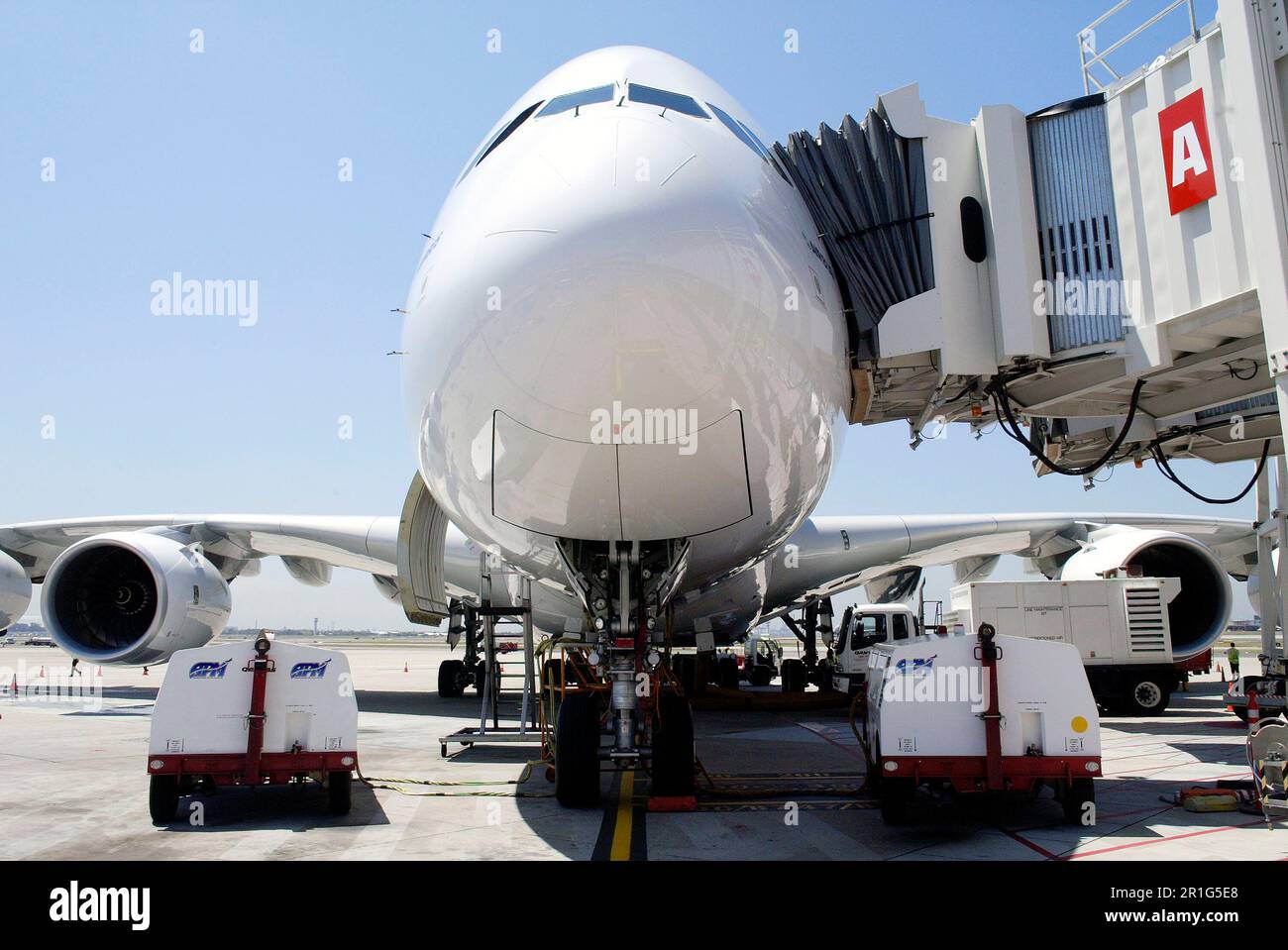
- Airport Compatibility (ICAO Code F): Due to its 80-meter wingspan box limit, airports operating the A380 required specialized gate infrastructure, including dual-deck boarding bridges and widened runway shoulders to handle engine blast.
Cabin Layouts and Passenger Capacity Configurations
The internal volume of the A380 allows commercial carriers unprecedented flexibility in cabin design. While the aircraft is certified by the Federal Aviation Administration (FAA) and the European Union Aviation Safety Agency (EASA) to transport up to 853 passengers in a high-density, single-class seating layout, no commercial airline has deployed this maximum configuration.
- UPPER DECK (Width: 5.92 m)
- First / Business Class Suites
- Onboard Lounge / Bar
- Premium
- MAIN DECK (Width: 6.58 m)
- First Class / Economy Seating (10-abreast: 3-4-3 Arrangement)
Standard Airline Configurations
- Three-Class Layout (525 Passengers): The baseline configuration designed by Airbus provides 10 First Class suites, 84 Business Class lie-flat seats, and 431 Economy Class seats.
- Four-Class Layout (484 to 516 Passengers): Operating airlines frequently integrate Premium Economy sections. Emirates, British Airways, and Singapore Airlines utilize four-class layouts on ultra-long-haul routes.
- Ultra-Luxury Configurations: Certain international carriers equipped their A380s with multi-room suites, full-height privacy doors, onboard showers, and dedicated lounge/bar areas for premium-cabin passengers.
Fleet Status and Operating Airlines
Following its peak manufacturing period, Airbus officially ended the A380 production program in 2021. However, high demand for long-haul trunk routes between congested hub airports has led to continued operations across multiple flag carriers.
Primary Operators of the A380
- Emirates: The world's largest operator of the type, maintaining over 100 A380 aircraft in active service.
- British Airways: Operates a dedicated fleet connecting London Heathrow with high-density long-haul destinations in North America and Asia.
- Singapore Airlines: Continues long-haul transcontinental service with refreshed cabin interiors.
- Qatar Airways & Lufthansa: Reactivated significant portions of their A380 fleets to meet surging international passenger demand on major long-haul corridors.
- All Nippon Airways (ANA): Operates specially painted "Flying Honu" A380s configured primarily for high-volume leisure routes between Tokyo and Hawaii.
Passenger Dimensions, Seat Widths, and Airline Guidelines
While the Airbus A380 is the physical "biggest passenger airplane," individual travelers often search for information regarding passenger size restrictions, seat dimensions, and accessibility requirements across major commercial carriers.
Standard economy class seats across commercial airliners—including the Airbus A380, Airbus A350, and Boeing 777—range between 17.0 inches and 19.0 inches in width, with a seat pitch (distance between the same point on two consecutive seats) ranging from 30 to 32 inches.
- TYPICAL ECONOMY SEAT
- Seat Width: 17.0 - 19.0 in
- Seat Cushion
- Armrest
- Seat Pitch: 30.0 - 32.0 in (Legroom)
Airline "Passenger of Size" Policies
Commercial airlines maintain specific regulatory and operational policies to ensure passenger safety, seatbelt functionality, and cabin comfort.
- Armrest Requirement: Most major network carriers (including Delta Air Lines, United Airlines, and American Airlines) require that passengers be able to sit comfortably with both armrests lowered throughout the flight.
- Seatbelt Extensions: FAA and EASA safety regulations mandate that every passenger must be securely fastened with a lap belt during taxi, takeoff, turbulence, and landing. Commercial airlines provide approved seatbelt extensions (adding approximately 24 inches of length). Passengers are not permitted to use personal, non-certified seatbelt extenders.
- Extra Seat Requirements: If a passenger cannot lower the armrests or encroaches on the adjacent passenger's seating area, airlines generally require the purchase of an additional seat.
- Southwest Airlines Customer of Size Policy: Southwest Airlines offers a widely documented policy where passengers who exceed the width of a single seat (17.5 inches) can purchase an additional seat in advance and apply for a full refund after travel, provided the flight did not depart overbooked.
Steps for Booking Flights when Requiring Extra Seating Space
If you are planning air travel and require additional physical seating space on wide-body aircraft like the Airbus A380 or narrow-body jets:
- Review Seat Specifications in Advance: Check seat width and pitch parameters for your specific aircraft type using official airline fleet maps.
- Contact the Airline's Accessibility Desk: Call the carrier's dedicated customer service or accessibility desk before booking to confirm seat belt extender policy and adjacent seat availability.
- Book Adjacent Seats on a Single Reservation: If purchasing an extra seat, ensure both tickets are booked under the same name and record locator (PNR) to prevent automated system cancellations of an "unoccupied" seat.
- Select Premium Economy or Business Class: Premium Economy seats on wide-body aircraft like the A380 generally offer seat widths of 19.5 to 21 inches, while Business Class offers fully flat individual suites with unconstrained lateral room.
Frequently Asked Questions
What is the largest passenger airplane ever built?
The Airbus A380-800 is the largest commercial passenger airplane ever built by maximum takeoff weight (575 tonnes), passenger capacity (up to 853 passengers), and usable floor space (550 square meters across two decks).
Is the Boeing 747 larger than the Airbus A380?
The Boeing 747-8 is longer overall (76.3 meters compared to the A380's 72.72 meters), but the Airbus A380 has a significantly larger wingspan, higher maximum takeoff weight, wider main deck, full-length upper deck, and far greater total passenger capacity.
Can an Airbus A380 land at any commercial airport?
No. Due to its ICAO Code F classification, wingspan of nearly 80 meters, and dual-deck passenger loading requirements, airports must possess widened runways, reinforced taxiways, and specialized gate infrastructure (such as double-decker jet bridges) to support scheduled A380 operations.
How wide are seats on the Airbus A380?
Economy seats on the Airbus A380 main deck are among the widest in the industry for standard economy, typically measuring 18 to 18.5 inches wide, compared to the 17-inch industry baseline found on narrow-body jets.
What are the safety rules for seatbelt extenders on commercial flights?
Passengers must use airline-provided, FAA/EASA-certified seatbelt extenders. Commercial carriers prohibit personal extenders brought from home because they have not been crash-tested or certified for specific seat latching mechanisms.
Summary and Planning Recommendations
Whether researching aviation history or planning travel, understanding aircraft specifications helps put commercial air transport into perspective. The Airbus A380 remains an engineering marvel, delivering unmatched passenger capacity and quiet cabin operations on major international corridors. For travelers seeking maximum seat width, booking long-haul flights operated by wide-body aircraft like the A380—or reserving an extra seat under carrier-specific guidelines—ensures a comfortable, safe journey.
Image Gallery