Avengers: Infinity War Salaries and Top Payouts Explained
For the 2018 blockbuster Avengers: Infinity War, Marvel Studios deployed one of the largest talent budgets in cinematic history. Robert Downey Jr. led all payouts with an estimated total earnings package of $75 million, driven by an ex...
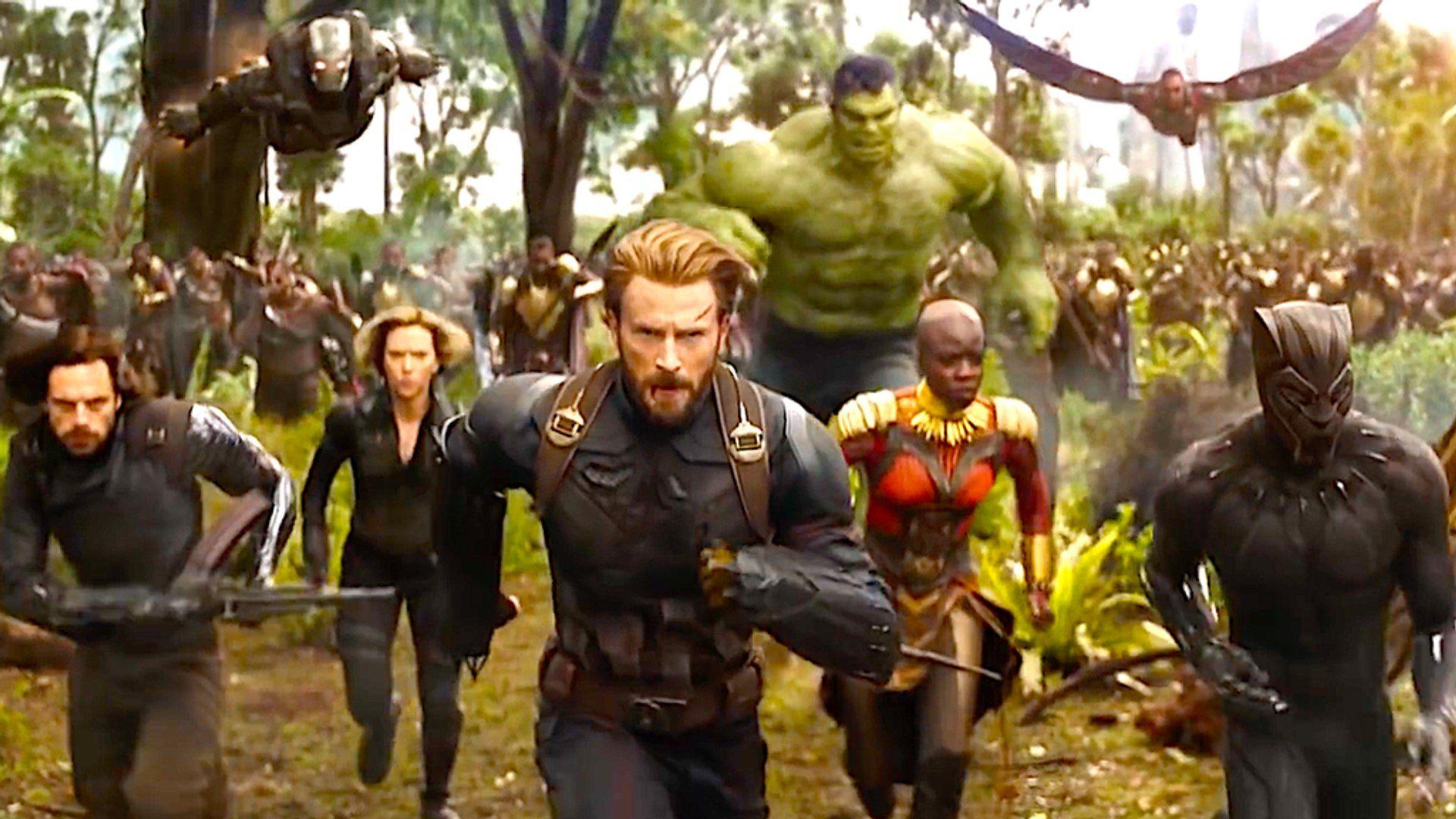
For the 2018 blockbuster Avengers: Infinity War, Marvel Studios deployed one of the largest talent budgets in cinematic history. Robert Downey Jr. led all payouts with an estimated total earnings package of $75 million, driven by an exclusive backend profit-sharing agreement. Primary co-stars including Chris Evans, Chris Hemsworth, and Scarlett Johansson earned upfront salaries of approximately $15 million each, supplemented by box-office performance bonuses as the film crossed $2.048 billion worldwide.
Contents
The Marvel Financial Ecosystem: How Infinity War Contracts Were Structured
The economic architecture behind Avengers: Infinity War represented a calculated departure from traditional Hollywood talent contracting. Marvel Studios, under the parent ownership of The Walt Disney Company, built a compensation model that combined controlled upfront base salaries with tiered backend contingency bonuses triggered by specific global box-office thresholds.
- Marvel Studios / Disney Production Budget
- Upfront Guaranteed Fees (Base Salary Escalation)
- Tier 1 (RDJ): ~$20M
- Tier 2 (Evans, Hemsworth): ~$15M
- Tier 3 (Mid/Rising): $2M-$5M
- Backend Profit Sharing (Gross Profit / Box Office Points)
- Tier 1 (RDJ): ~$55M (~8% Profit Pool)
- Tier 2 & 3: Performance Bonuses (Triggered at $1.5B / $2B Targets)
- Upfront Guaranteed Fees (Base Salary Escalation)
In typical studio productions, top-tier talent often demands high fixed upfront compensation regardless of theatrical performance. Marvel Studios initially mitigated project risk during Phase 1 and Phase 2 of the Marvel Cinematic Universe (MCU) by locking performers into long-term, multi-picture contracts—frequently spanning six to nine films—with modest base compensation that scaled gradually per installment.
By the time Infinity War entered production, several key actors had either completed their original multi-picture agreements or reached contractual escalation milestones. This forced Marvel Studios to renegotiate contracts at peak talent leverage. To manage cash flow while securing an ensemble of over 30 headline actors, Marvel implemented a bifurcated compensation structure:
- Guaranteed Base Upfront Salaries: Baseline fees paid out during principal photography to cover standard performer compensation and schedule exclusivity.
- Backend Box-Office Bonuses: Escalating percentage points or fixed milestone bonuses paid out after the film reached break-even status and hit global theatrical milestones (such as $1 billion, $1.5 billion, and $2 billion).
This dual system allowed Marvel Studios to limit fixed cash risk during production while rewarding key talent when Infinity War became the fourth film in history to surpass $2 billion in global box-office revenue.
Top Cast Pay Breakdown: Who Earned What on Avengers: Infinity War
Robert Downey Jr.: The $75 Million Standard-Bearer
Robert Downey Jr.’s compensation for Avengers: Infinity War remains a benchmark for superhero film compensation. Following his foundational role in establishing the MCU with 2008’s Iron Man, Downey’s legal representative negotiated a unique financial arrangement with Marvel Studios President Kevin Feige and Disney executives.
Rather than relying solely on a flat salary, Downey secured backend profit participation tied directly to the film's total theatrical gross earnings. Industry reports from outlets such as The Hollywood Reporter established that Downey earned an upfront base salary of approximately $20 million for Infinity War. However, his backend arrangement—estimated at roughly 8% of the film’s net profits after studio break-even—pushed his total payout for Infinity War to approximately $75 million.
Downey’s leverage stemmed from his position as the box-office anchor of the franchise. His contract ensured that as the film's global revenue scaled, his earnings grew proportionally, far exceeding standard SAG-AFTRA scale arrangements and standard principal performer rates.
The $15–$20 Million Tier: Chris Hemsworth, Chris Evans, and Scarlett Johansson
Below Robert Downey Jr. sat the core leaders of the original Avengers lineup: Chris Hemsworth (Thor), Chris Evans (Captain America), and Scarlett Johansson (Black Widow). Each of these actors had previously completed their initial low-cost, multi-film contracts and renegotiated their terms prior to entering the back-to-back production of Infinity War and Avengers: Endgame.
- Chris Evans: Having completed his original six-picture contract with Captain America: Civil War, Evans renegotiated his contract to cover Infinity War and Endgame. He secured an upfront base salary of approximately $15 million for Infinity War, along with box-office bonus escalators that increased his final earnings upon reaching major theatrical milestones.
- Chris Hemsworth: Similarly, Hemsworth renegotiated his original contract following Thor: Ragnarok. He earned an upfront salary of $15 million to $20 million for Infinity War, matching Evans' revised compensation scale.
- Scarlett Johansson: Johansson earned an estimated upfront payment of $15 million for her appearance in Infinity War. This base payout established the foundation for her subsequent deal terms on Avengers: Endgame and her standalone Black Widow project.
The Mid-Tier Leads: Benedict Cumberbatch, Chadwick Boseman, and Chris Pratt
The second distinct compensation bracket contained established stars who anchored their own standalone MCU franchises but occupied supporting or co-lead roles within the broader Infinity War ensemble narrative.
- Benedict Cumberbatch (Doctor Strange): Serving as a primary narrative catalyst in Infinity War, Cumberbatch was positioned in a higher pay bracket than relative newcomers due to his established international box-office track record prior to joining Marvel. His payout for Infinity War was reported in the $5 million to $7 million range upfront, supported by performance-based bonuses.
- Chadwick Boseman (T'Challa / Black Panther): Infinity War entered theaters shortly after Black Panther became a global cultural phenomenon, earning over $1.3 billion worldwide. Because Boseman’s contract for Infinity War had been negotiated prior to Black Panther’s theatrical release, his base compensation sat in the $2 million to $5 million range, though subsequent contract adjustments and backend bonuses reflected the elevated value of his character.
- Chris Pratt (Peter Quill / Star-Lord): Coming off two successful Guardians of the Galaxy releases, Pratt secured an upfront salary estimated between $5 million and $8 million for his ensemble contribution to Infinity War.
Rising Stars and Supporting Ensemble: Tom Holland, Zoe Saldana, and Elizabeth Olsen
The lower-tier compensation bracket comprised performers who were earlier in their multi-film contract cycles, as well as character actors operating in essential supporting roles.
- Tom Holland (Peter Parker / Spider-Man): Holland’s contract was structured under a joint production and licensing arrangement between Sony Pictures and Marvel Studios. For his appearance in Infinity War, Holland earned an estimated base salary of $3 million, representing a significant increase from his ~$500,000 base pay for Spider-Man: Homecoming.
- Zoe Saldana (Gamora) & Elizabeth Olsen (Wanda Maximoff): Given Gamora's central role in the narrative arc involving Thanos, Saldana commanded a compensation package estimated between $2 million and $4 million, matching similar supporting lead payouts earned by Elizabeth Olsen, Sebastian Stan (Bucky Barnes), and Anthony Mackie (Sam Wilson).
Salary Comparison Table: Estimated Infinity War Compensation Breakdown
The table below summarizes verified industry estimates for upfront salaries, contract structures, and total estimated payouts for key cast members of Avengers: Infinity War.
| Actor | Character | Estimated Upfront Base | Estimated Total Payout (Inc. Backend) | Contractual Context |
|---|---|---|---|---|
| Robert Downey Jr. | Tony Stark / Iron Man | $20,000,000 | ~$75,000,000 | Custom backend profit-participation deal (~8%) |
| Chris Hemsworth | Thor Odinson | $15,000,000–$20,000,000 | ~$20,000,000+ | Renegotiated post-Thor: Ragnarok |
| Chris Evans | Steve Rogers / Captain America | $15,000,000 | ~$15,000,000–$20,000,000 | Renegotiated extension post-initial 6-film deal |
| Scarlett Johansson | Natasha Romanoff / Black Widow | $15,000,000 | ~$15,000,000–$20,000,000 | Baseline rate established before Black Widow deal |
| Chris Pratt | Peter Quill / Star-Lord | $5,000,000–$8,000,000 | ~$8,000,000+ | Franchise lead rate from Guardians of the Galaxy |
| Benedict Cumberbatch | Doctor Strange | $5,000,000 | ~$7,000,000+ | Lead ensemble compensation structure |
| Chadwick Boseman | T'Challa / Black Panther | $2,000,000–$5,000,000 | ~$5,000,000+ | Contract pre-dated Black Panther release |
| Tom Holland | Peter Parker / Spider-Man | $3,000,000 | ~$4,000,000+ | Multi-picture contract via Sony/Marvel deal |
| Zoe Saldana | Gamora | $2,000,000–$4,000,000 | ~$4,000,000+ | Expanded narrative role bonus structure |
Note: Data compiled from entertainment trade reporting by outlets including Forbes, Variety, and The Hollywood Reporter. Total payouts include estimated backend profit allocations and box-office milestone payments.
The Economics of Back-to-Back Filming: Infinity War vs. Endgame Budgets
To manage the financial scale of producing two massive crossover blockbusters, Disney and Marvel Studios opted to shoot Avengers: Infinity War and Avengers: Endgame back-to-back. Principal photography began in January 2017 at Pinewood Atlanta Studios and concluded in January 2018.
- Combined Production Period (Jan 2017 – Jan 2018)
- Total Combined Budget: ~$600M – $1.0B
- Operational Efficiencies: Shared sets, crew, visual effects pipelines
- Talent Expense Strategy: Separate salary payments per film installment
This back-to-back production strategy provided distinct financial advantages:
1. Production Overhead Amortization
By maintaining continuous physical production, Marvel avoided the financial overhead of tearing down and rebuilding massive sets, such as the Wakandan battlegrounds or the Sanctum Sanctorum. Soundstages, crew retainers, and technical equipment were shared across both features, lowering the effective budget per movie.
2. Schedule Coordination for High-Value Talent
Coordinating the schedules of over two dozen world-class actors individually would have taken years if handled through separate production cycles. Filming back-to-back allowed Marvel to lock down cast availability in a single operational window, minimizing delay penalties and actor holding fees.
3. Financial Segregation of Talent Contracts
Despite simultaneous filming, talent contracts strictly separated compensation for Infinity War and Endgame. Actors were paid distinct base salaries and backend allocations for each movie.
While combined production costs for both films ranged between $600 million and $1 billion according to reporting in Forbes, Infinity War alone held an estimated budget of roughly $300 million to $400 million. Of this figure, talent compensation accounted for a substantial portion—estimated at upwards of $100 million for the primary cast alone.
How Infinity War Reshaped Talent Compensation in Hollywood
The scale of payouts for Avengers: Infinity War influenced studio economics across the film industry. The project demonstrated how major film franchises manage talent compensation when scaling global intellectual property (IP).
- Traditional Studio Talent Model
- High Upfront Fixed Salary (Low Studio Profit Margin)
- MCU IP-Centric Model
- Tiered Base + Backend Perks (Risk Spreading via Gross)
Shift from Upfront Fees to Performance-Based Risk Sharing
Before the MCU model gained traction, top Hollywood stars routinely demanded fixed upfront salaries of $20 million or more regardless of box-office results. Marvel Studios proved that offering lower upfront compensation paired with substantial backend profit points aligns talent incentives with overall box-office performance, insulating studios against theatrical underperformance.
The Value of Franchise Leverage
The payout disparities in Infinity War highlight the difference in leverage between actors tied to specific roles and the studios managing broader cinematic universes. Robert Downey Jr.’s leverage allowed him to negotiate terms comparable to top classic Hollywood figures like Tom Cruise or Will Smith. Conversely, newer stars entering the MCU signed standardized multi-film options that kept baseline costs manageable during early contract phases.
Post-Theatrical and Streaming Backend Impact
The compensation models developed during Infinity War also provided a template for subsequent contract disputes across Hollywood as theatrical windows evolved. By setting strict contractual definitions for box-office milestones and profit definitions, Marvel established benchmarks for backend calculations that studios and talent representatives continue to reference during major contract negotiations.
Frequently Asked Questions
Who was the highest-paid actor in Avengers: Infinity War?
Robert Downey Jr. was the highest-paid actor in Avengers: Infinity War, earning an estimated total of $75 million. This payout included a $20 million base upfront salary alongside an estimated 8% backend profit-sharing deal triggered by the film crossing global revenue milestones.
How much did Chris Evans and Chris Hemsworth make for Infinity War?
Both Chris Evans and Chris Hemsworth earned estimated upfront base salaries of $15 million to $20 million each for Infinity War. Both actors renegotiated their contracts prior to filming after fulfilling their initial multi-picture contracts with Marvel Studios.
Were actors paid separately for Avengers: Infinity War and Avengers: Endgame?
Yes. Although Infinity War and Endgame were filmed back-to-back between January 2017 and January 2018, actors had separate contractual provisions, base salaries, and backend bonus structures for each film.
How do backend profit-sharing bonuses work in Marvel contracts?
Backend profit-sharing bonuses allow key performers to receive a percentage of net profits or box-office gross earnings after the studio recovers its production and marketing costs. Additional fixed bonuses are often triggered when a film hits global box-office targets, such as $1 billion or $1.5 billion.
Why did Robert Downey Jr. earn significantly more than his co-stars?
Robert Downey Jr. earned substantially more because of his early contractual leverage. Having launched the Marvel Cinematic Universe with 2008's Iron Man, Downey negotiated a unique backend profit-participation agreement early in the franchise's expansion, giving him a direct cut of profits that other cast members did not possess.
Strategic Industry Takeaway: The Legacy of MCU Compensation
The salary landscape of Avengers: Infinity War illustrates how studio talent management operates at the highest levels of global entertainment. By pairing long-term option contracts for rising performers with highly lucrative backend incentives for established franchise anchors, Marvel Studios successfully managed production risks while delivering historical box-office returns.
For industry observers and entertainment professionals, Infinity War serves as a textbook study in risk-mitigated talent compensation: establish baseline talent fees early, reward long-term franchise commitment, and share backend revenues when a project achieves extraordinary theatrical success.
Image Gallery