San Francisco Escape Room Walkthroughs: Strategy, Venue Profiles, and Puzzle Mechanics Guide
San Francisco escape room walkthroughs analyze spatial layouts, puzzle structures, and team execution tactics across top Bay Area venues like Palace Games and PanIQ Room. Rather than revealing direct code spoilers, professional walkthr...
San Francisco escape room walkthroughs analyze spatial layouts, puzzle structures, and team execution tactics across top Bay Area venues like Palace Games and PanIQ Room. Rather than revealing direct code spoilers, professional walkthroughs focus on logic frameworks, environmental searching, lock-and-sensor mechanics, and hint optimization to help teams complete rooms within standard 60-to-90-minute time limits.
Contents
Tactical Mechanics of San Francisco Escape Rooms: Hardware, Software, and Narrative Architecture
The San Francisco escape room ecosystem reflects the city's unique intersection of historical architecture and Silicon Valley technology development. Unlike standard turn-key franchise escape games that rely predominantly on physical padlocks, San Francisco venues frequently feature custom-engineered puzzles, automation systems, and high-density mechanical designs. Understanding the underlying technology and structural design of these rooms is essential for navigating them efficiently.
Escape rooms in the San Francisco Bay Area operate on three primary mechanical frameworks:
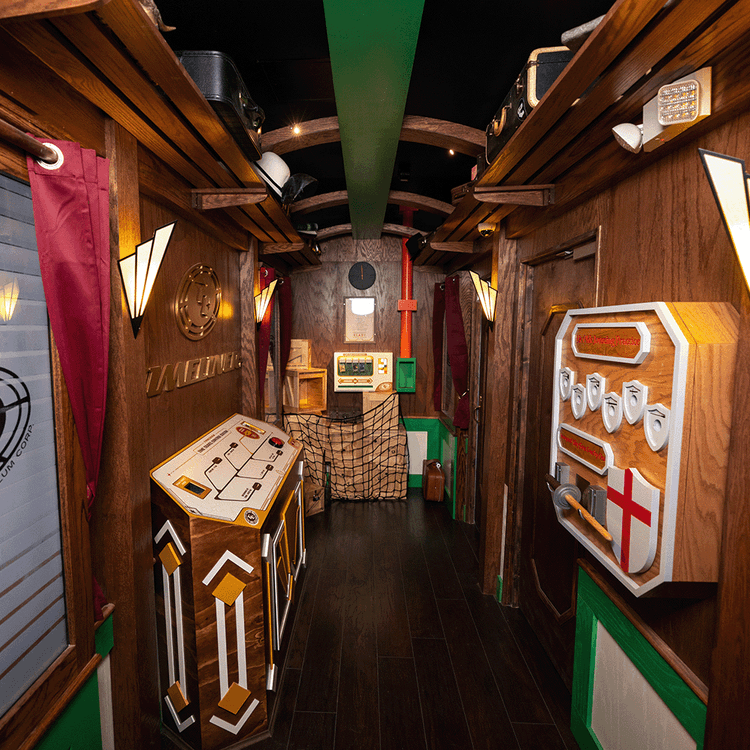
- Electromechanical and Sensor Automation: Rooms designed by high-tech SF venues utilize microcontrollers (such as Arduino and Raspberry Pi networks), RFID tag reader arrays, weight sensors, photolithography sensors, and electromagnetic solenoids. Puzzles in these environments automatically trigger magnetic door releases, lighting changes, or secret compartment drops when physical items are placed in specific geographic configurations or orientations.
- Analog and Physical Lock Systems: Traditional escape rooms utilize dynamic physical locks. These include directional padlocks (requiring precise sequence entries of north, south, east, west), 4-to-5 digit combination locks, keyed directional deadbolts, and multi-disc word padlocks.
- Information Cipher and Meta-Puzzle Architecture: Complex room designs incorporate meta-puzzles—master challenges requiring players to collect multiple secondary items or solved codes throughout the room to unlock the final escape sequence. Encryption styles range from standard substitution ciphers and Caesar shift wheels to complex spatial overlay grids and UV-pigment reveals.
Operational Insight: The Tech-to-Lock Ratio In high-tech San Francisco escape rooms, mechanical padlocks account for less than 30% of all gating mechanisms. Players should look for subtle physical cues, such as brass contact plates, hidden magnetic sensors, or aligned optical targets, rather than searching exclusively for keys or numeric codes.
Walkthrough Breakdown of San Francisco’s Premier Escape Venues
San Francisco features several world-renowned escape room locations, each catering to distinct player styles, difficulty tiers, and technical formats.
Palace Games (Palace of Fine Arts, Marina District)
Located inside the historic Palace of Fine Arts building constructed for the 1915 Panama-Pacific International Exposition, Palace Games offers some of the largest, longest, and most complex escape experiences in North America.
- The Edison Room: A massive multi-chamber experience focused on electrical flow, light manipulation, and mechanical innovation. Walkthrough strategies require teams to divide into small sub-units to monitor power routing across multiple panels simultaneously.
- The Roosevelt Escape: Features an extraordinary density of physical and historical puzzles. Success relies heavily on observational cross-referencing between historical portraits, physical books, and mechanical secret doors.
- The Houdini Escape Room: Built to honor Harry Houdini, this room emphasizes physical dexterity, optical illusions, and hidden spatial mechanics.
- The Attwater Study: A non-linear puzzle room featuring intricate woodcraft, hidden mechanism triggers, and spatial alignment challenges.
PanIQ Escape Room San Francisco (Fisherman's Wharf)
Situated near the northern waterfront, PanIQ Room offers atmospheric, narrative-driven 60-minute rooms with high visual immersion and structured difficulty curves.
- Medieval Dungeon: Focuses on low-light searches, physical chain mechanisms, tactile manipulation, and key discovery.
- Submarine Incident: High-pressure environment incorporating sound cues, valve controls, sonar alignment, and switch panel sequences.
- Wizard Trials: High-tech magic-themed room using hidden RFID wands, spellbook symbol translation, and elemental sensor activation.
Reason (SoMa / Financial District Area)
Reason focuses on futuristic technology, incorporating robotics, virtual reality elements, 3D printing, and sci-fi narrative concepts.
- Reactor: Teams must work through technical protocols, energy grid distribution, and physical relay connections to prevent a core meltdown.
- Lola: Sci-fi escape room featuring artificial intelligence narratives, digital terminal hacking, and sensor-grid spatial puzzles.
Comparative Matrix: Top San Francisco Escape Room Experiences
The following data table compares key operational metrics, difficulty scales, puzzle styles, and optimal team configurations across major San Francisco escape room venues.
| Venue Name | Neighborhood | Signature Room | Difficulty Rating | Primary Puzzle Mechanics | Optimal Team Size | Time Limit |
|---|---|---|---|---|---|---|
| Palace Games | Marina District | The Edison Room | High (9.5/10) | Electromechanical, Relays, Spatial | 6–8 Players | 100 Minutes |
| Palace Games | Marina District | The Roosevelt Escape | High (9.0/10) | Physical Mechanisms, History Ciphers | 6–8 Players | 90 Minutes |
| PanIQ Room SF | Fisherman's Wharf | Submarine Incident | Moderate (7.5/10) | Pressure Controls, Audio Cues, Switches | 4–6 Players | 60 Minutes |
| PanIQ Room SF | Fisherman's Wharf | Medieval Dungeon | Moderate (7.0/10) | Physical Locks, Keys, Hidden Latches | 3–5 Players | 60 Minutes |
| Reason | SoMa / FinDist | Reactor | High (8.5/10) | Robotics, Circuit Arrays, Digital Codes | 4–6 Players | 60 Minutes |
| Reason | SoMa / FinDist | Lola | Moderate (8.0/10) | AI Terminals, RFID Triggers, Logic | 3–6 Players | 60 Minutes |
Step-by-Step Strategic Framework for Solving Bay Area Escape Rooms
To maximize success across any San Francisco escape room, teams should execute a systematic, phase-based walkthrough methodology.
- PHASE 1: Room Sweep & Physical Inventory
- Search all accessible drawers, furniture, sub-shelves, and walls.
- PHASE 2: Information Sorting & Station Centralization
- Group related items in a central area; separate used locks/keys.
- PHASE 3: Parallel Logic Processing & Lock Matching
- Assign 2-person sub-teams to open locks matching active clues.
- PHASE 4: Meta-Puzzle Integration & Final Escape
- Combine outputs from previous sub-puzzles to solve the exit gate.
Phase 1: Systematic Room Sweep and Search Protocol
Upon entry into the room, instantly initiate a thorough physical sweep. Divide the room into physical quadrants and assign one player per quadrant.
- Open every unlocked cabinet, chest, desk drawer, and hidden panel.
- Feel along the undersides of tables, desk frames, and shelf lips for taped keys or magnet-attached tools.
- Check behind hung picture frames, canvas paintings, and wall mirrors for hidden safe dials or keypad inputs.
- Examine books for hollowed pages, weighted bindings, or hidden bookmarks containing cipher keys.
Phase 2: Central Staging Area and Item Categorization
Select a central table or prominent counter to serve as the team's command center. Place all discovered items, loose papers, keys, and props in this single location.
- Group items by visual themes (e.g., matching symbols, colored dots, or numbered sequences).
- Separate consumed keys and spent lock boxes from active clues to avoid re-searching empty containers.
- Keep write-on boards or notebooks easily accessible for calculation, letter shifting, and spatial mapping.
Phase 3: Lock-to-Clue Pairing and Parallel Processing
Match open puzzles directly to locked inputs based on digit counts, letter lengths, or mechanical types.
- 4-Digit Locks: Look for dates, years, time stamps on clocks, or counts of specific room objects.
- Directional Locks: Search for mazes, line drawings, compass markers, arrow sequences, or specific word trails (e.g., Up, Down, Left, Right).
- Word Locks: Search for 4-to-5 letter key terms emphasized in diary entries, bolded texts, or specific room posters.
- Assign exactly two team members per active puzzle node. Avoid having five people crowd around a single padlock, as this slows down overall progress.
Phase 4: Meta-Puzzle Assembly and Exit Execution
In non-linear rooms, early and mid-game puzzles yield individual components (e.g., brass gears, colored gems, or single-digit numbers) required for the final master challenge. Collect these outputs in the staging area until the final containment structure or exit gate opens.
Room Master Protocols and Hint Optimization Tactics
Game Masters (GMs) monitor team progress via hidden overhead cameras, microphones, and directional audio speakers. Using the hint system effectively often makes the difference between escaping in time and failing at the final stage.
Game Master Communication Guidelines Request hints as soon as total team progress stalls for more than 7 to 10 minutes on a single puzzle node. When asking for a clue, state clearly what items have already been found and what specific mechanism is currently being targeted. This prevents the Game Master from giving redundant information about steps the team has already completed.
Types of In-Room Clue Systems
- Integrated Video Displays: Text messages appear on wall-mounted monitors or themed computer terminals within the room.
- Audio Voiceover / Intercom: Direct voice communication from the Game Master through room speakers, maintaining narrative immersion.
- Physical Hint Triggers: Some tech-focused SF rooms require players to place an in-game item on a designated "hint altar" or scanner to request automated assistance without breaking character.
Common Failure Modes in SF Escape Rooms and Troubleshooting Actions
Escape room failures rarely stem from a lack of intelligence; instead, they result from poor group communication, bad organization, or overcomplicating simple mechanics.
Failure Mode 1: Over-Complicating Simple Clues
- The Problem: Teams spend 15 minutes calculating complex math equations or analyzing background wall art when the puzzle simply required counting physical items in the room.
- Troubleshooting Action: Step back and re-read the primary prompt. Most escape rooms are designed for general audiences and do not require advanced academic knowledge, calculus, or outside historical trivia unless explicitly provided in the room.
Failure Mode 2: Missing Hidden Sensors and Contact Points
- The Problem: A physical puzzle has been solved logically, but the automated magnetic door latch fails to release.
- Troubleshooting Action: Ensure physical items placed on RFID sensor pads or magnetic trays are perfectly centered. Tech-heavy rooms in San Francisco often require precise physical alignment to trigger circuit connections.
Failure Mode 3: Bottlenecking and Cognitive Overload
- The Problem: The entire team gathers around a single lock while three other unlocked boxes or puzzles remain completely ignored.
- Troubleshooting Action: Designate a Team Lead whose primary role is to stand back, monitor overall room flow, track open lock types, and delegate available players to unworked puzzle nodes.
Failure Mode 4: Reset Failures and Misread Codes
- The Problem: Players enter the correct code into a directional lock or keypad, but the lock fails to open because it was not cleared properly before entry.
- Troubleshooting Action: For directional padlocks, push the shackle inward twice to clear previous entries before attempting a combination. For numeric keypads, press the clear/asterisk button before entering numbers.
Frequently Asked Questions About San Francisco Escape Rooms
How do escape room walkthroughs avoid spoiling key solutions?
Walkthrough guides focus on operational strategies, team organization, puzzle categories, room layouts, and high-level mechanics rather than publishing exact numeric codes, key locations, or narrative plot twists.
What sets San Francisco escape rooms apart from standard national venues?
San Francisco escape rooms frequently feature custom engineering, advanced sensor automation, and high-density puzzle designs driven by the region's strong tech culture and unique historical venues, such as the Palace of Fine Arts.
What is the recommended team size for complex rooms like Palace Games?
While standard escape rooms perform best with 4 to 6 players, massive multi-room experiences like Palace Games' Edison Room or Roosevelt Escape are designed for larger groups of 6 to 8 players due to their non-linear structures and spatial footprint.
Do San Francisco escape rooms locked doors violate local building codes?
No. In compliance with San Francisco Fire Code and California Building Code regulations, emergency exit doors are never physically locked from the inside. Players can exit the room at any time using exit buttons or unlatched panic hardware.
How early should teams arrive for an escape room booking in San Francisco?
Teams should arrive 15 to 20 minutes before their scheduled booking time to complete safety waivers, store personal belongings in lockers, and receive the pre-game briefing from their Game Master.
Image Gallery