How Group Life and Accident Insurance Shapes Employee Benefits
Group life and accident insurance form the foundational safety net of modern employee benefits packages. By transferring catastrophic risk to institutional insurance carriers, employers provide low-cost, guaranteed-issue protection tha...
Group life and accident insurance form the foundational safety net of modern employee benefits packages. By transferring catastrophic risk to institutional insurance carriers, employers provide low-cost, guaranteed-issue protection that aids talent acquisition, boosts employee retention, and shields worker households from severe financial hardship following unexpected severe injury or loss of life.
Contents
The Strategic Role of Life and Accident Insurance in Benefits Design
In contemporary compensation strategy, employee benefits extend far beyond major medical coverage. Group Term Life (GTL) and Accidental Death and Dismemberment (AD&D) insurance represent core components of holistic financial wellness programs. While health insurance manages routine and chronic medical expenses, life and accident policies address low-frequency, high-severity events that can permanently alter an employee's or beneficiary's financial trajectory.
Employers utilize these group policies to achieve several distinct strategic goals:
- Talent Attraction and Competitive Parity: Offering baseline employer-paid life coverage (often structured as a flat amount like $50,000 or a multiple of annual salary such as 1x or 2x earnings) has become a baseline expectation for skilled candidates across corporate, non-profit, and public sectors.
- Access to Guaranteed Issue Coverage: One of the most significant advantages of group insurance is the guaranteed issue limit. Under writing rules established by group carriers, employees can secure substantial death benefits without submitting to medical exams or answering detailed health questionnaires, up to predetermined group thresholds. This enables uninsurable or high-risk employees to secure vital coverage that would be cost-prohibitive on the individual market.
- Risk Transfer and Corporate Social Responsibility: When an employee dies or suffers a catastrophic injury, companies often feel an ethical or practical obligation to assist the surviving family. Structured group life and AD&D plans establish explicit, objective financial support, removing the need for ad hoc corporate relief efforts.
Key Components: Group Term Life vs. Accidental Death & Dismemberment
Although often packaged together as a single employee benefit, Group Term Life and AD&D serve different risk profiles and operate under distinct payout triggers. Understanding their operational differences is essential for benefits administrators and plan designers.
- Total Employer Financial Safety
- Group Term Life
- Covers Death from Any Cause*
- Terminal Illness Riders
- Imputed Income over $50k
- Group AD&D
- Covers Accidental Death
- Covers Specific Injuries
- Double Indemnity Events
- Group Term Life
*Subject to standard policy exclusions such as suicide clauses within early policy windows.
Group Term Life (GTL) Insurance
Group term life covers death from natural causes (illness, disease, aging) as well as accidental causes. It provides pure insurance protection for a set term—typically matching the employer’s annual policy renewal period. GTL plans do not accumulate cash value or investment returns, which keeps employer premiums manageable compared to permanent or whole life policies.
GTL is usually structured into two tiers:
- Basic Life (Employer-Paid): Funded entirely by the employer (non-contributory). Coverage is commonly capped at $50,000 or 1x annual earnings to balance cost with meaningful income replacement.
- Voluntary/Supplemental Life (Employee-Paid): Funded by the employee through payroll deductions (contributory). Employees can purchase additional coverage—often up to 5x or 6x annual earnings—taking advantage of group-discounted premium rates negotiated by the employer.
Accidental Death and Dismemberment (AD&D) Insurance
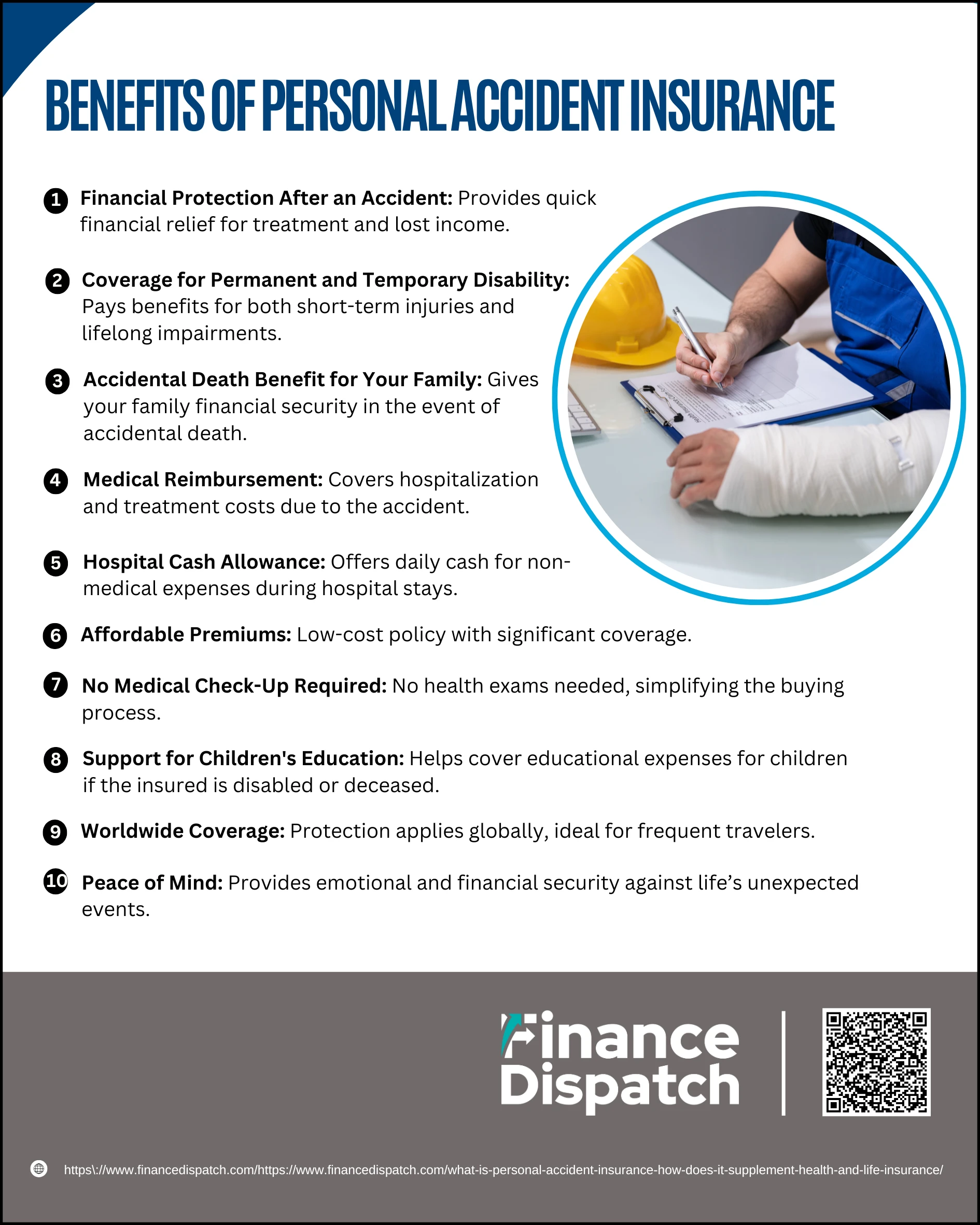
AD&D acts as a specialized supplement to life insurance. It pays benefits only when an insured individual dies or suffers specific severe bodily injuries resulting directly from a covered accident.
- Accidental Death: If an employee dies due to an accident, AD&D pays 100% of the principal sum. If the employee also held basic life insurance, the carrier pays both benefits—a scenario known as "double indemnity."
- Dismemberment and Loss of Function: If an accident results in traumatic injury short of death, AD&D pays a percentage of the principal sum based on a standardized schedule of losses.
Typical AD&D schedule payouts include:
- 100% of Principal Sum: Loss of two limbs, total loss of sight in both eyes, or complete paralysis (quadriplegia).
- 50% of Principal Sum: Loss of one hand, one foot, sight in one eye, or complete loss of speech or hearing.
- 25% of Principal Sum: Loss of a thumb and index finger on the same hand.
Regulatory Framework, Tax Implications, and Compliance
Designing a group life and accident insurance plan requires strict adherence to federal tax codes and employee benefit regulations, particularly in the United States under the Internal Revenue Code (IRC) and the Employee Retirement Income Security Act (ERISA).
IRS Section 79 and Imputed Income
Under Internal Revenue Code Section 79, the cost of employer-provided group term life insurance up to $50,000 is completely tax-free to the employee. However, if an employer provides basic life insurance coverage exceeding $50,000, the calculated cost of the coverage over $50,000 must be treated as taxable income to the employee—a concept known as imputed income.
Imputed income is not calculated based on the actual premium the employer pays to the carrier. Instead, the IRS prescribes standardized monthly rates per $1,000 of coverage based on five-year age brackets (known as IRS Table I). Employers must report this imputed income on the employee's Form W-2 (Boxes 1, 3, and 5).
Note: AD&D insurance benefits paid for by the employer are generally excluded from IRC Section 79 imputed income rules, provided the policy only covers accidental injury or death and does not offer general life coverage.
ERISA and Plan Documentation
Group life and AD&D plans maintained by private-sector employers are subject to ERISA oversight. Compliance mandates include:
- Summary Plan Description (SPD): Plan sponsors must provide employees with clear SPDs detailing eligibility rules, claim procedures, benefit schedules, and limitations.
- Form 5500 Filing: Plans meeting certain participant thresholds (typically 100 or more participants at the beginning of the plan year) must file an annual Form 5500 with the U.S. Department of Labor.
- Non-Discrimination Rules: Under IRC Section 79(d), key employees (such as highly compensated officers or owners) cannot receive disproportionately higher tax-favored life insurance benefits than rank-and-file workers. If a plan violates non-discrimination rules, key employees lose the $50,000 tax exclusion.
Comparing Group Insurance Components
The following table contrasts the major structural elements of employer-sponsored group life and accident benefits:
| Feature / Dimension | Basic Group Term Life (GTL) | Voluntary Supplemental Life | Basic / Voluntary AD&D |
|---|---|---|---|
| Primary Funder | Employer (100% Non-contributory) | Employee (100% Contributory) | Shared, Employer, or Employee |
| Benefit Structure | Flat ($50k) or Salary Multiple (1x) | Increments ($10k-$50k) up to 5x Salary | Flat sum matching Life coverage |
| Coverage Scope | Death from any cause (illness/accident) | Death from any cause (illness/accident) | Death or specific loss from accidents only |
| Underwriting Requirement | Guaranteed Issue up to plan maximum | Guaranteed Issue up to limit; EOI required above limit | Guaranteed Issue (usually no EOI needed) |
| IRS Tax Status | Tax-free up to $50k; Imputed income above | Paid with post-tax payroll dollars | Tax-free employer premiums |
| Portability / Conversion | Convertible to individual plan upon termination | Portable or convertible upon job change | Usually terminates upon employment end |
| Evidence of Insurability (EOI) | Rarely required for initial enrollment | Required for late enrollees or high coverage | Not required |
Financial Structuring: Premium Models and Cost Controls
Employer premium structures for group life and accident benefits directly affect long-term cost sustainability. Insurance carriers utilize two primary pricing approaches when underwriting group plans:
1. Blended Composite Rates vs. Age-Banded Rates
For basic employer-paid life insurance, carriers typically quote a blended composite rate (e.g., $0.12 per $1,000 of coverage per month). This single rate applies across the entire employee population regardless of individual age, simplifying payroll processing and expense forecasting.
For voluntary employee-paid coverage, carriers utilize age-banded rates (e.g., separate rates per $1,000 for ages 30–34, 35–39, 40–44). Rates scale upward as employees enter higher age brackets, reflecting increased mortality risk.
2. Risk Mitigation Provisions
To prevent financial losses during major catastrophic events, insurance policies incorporate key contractual protections:
- Waiver of Premium: If an active employee becomes totally disabled before a specified age (often age 60), the carrier waives future premium payments while maintaining full life insurance coverage throughout the disability period.
- Actively at Work Provision: Coverage for a new employee generally takes effect only if the employee is physically actively at work on the scheduled effective date. If the individual is hospitalized or out on medical leave, coverage is deferred until they return to active duty.
- Beneficiary Designation Controls: Group plans rely on clear beneficiary designation forms (managed via digital HRIS portals) to ensure death benefits pay out promptly without passing through probate court, avoiding legal delays and administrative disputes.
Modern Enhancements: Living Benefits and Value-Added Services
Modern group life policies extend well beyond payout upon death. Insurers increasingly bundle "living benefits" and support services directly into group contracts, converting a passive policy into an active employee resource.
- Modern Group Benefit Enhancements
- Terminal Illness
- Accelerated Death Benefit
- Travel Assistance & Evacuation
- Medical repatriation & emergency transport
- Financial & Legal Support
- Will preparation
- Grief counseling
- Terminal Illness
- Accelerated Death Benefits (ADB): If an insured employee receives a diagnosis of a terminal illness with a short life expectancy (typically 12 to 24 months), an ADB rider allows them to receive a portion of their death benefit (e.g., 50% to 80%) while still living. Employees can use these funds for medical care, debt settlement, or living expenses.
- Will Preparation and Estate Planning: Many group life carriers partner with legal services providers to offer employees free online will creation, power of attorney documents, and healthcare directives.
- Employee Assistance Program (EAP) Integration: Life and AD&D benefits frequently include access to grief counseling, beneficiary financial advisory services, and legal support during times of crisis.
- Emergency Travel Assistance: AD&D policies often incorporate global travel assistance riders, covering emergency medical evacuations, repatriation of remains, and travel coordination if an employee is injured while traveling on business or leisure.
Strategic Implementation Best Practices for HR Leaders
To maximize the impact of group life and accident policies within a broader benefit strategy, human resources professionals and plan administrators should execute the following best practices:
1. Optimize the Guaranteed Issue Threshold
Negotiate high Guaranteed Issue (GI) limits with the insurance carrier during annual contract renewals. A higher GI threshold allows senior staff and high earners to purchase adequate voluntary life coverage without undergoing medical underwriting (Evidence of Insurability), which significantly increases voluntary plan participation.
2. Align Life Multiples with Compensation Architecture
Avoid rigid flat coverage amounts for mid-to-large enterprises. Structuring basic life coverage as a multiple of annual earnings (e.g., 1x or 2x base pay) automatically scales financial protection as employees advance within the organization, keeping benefits aligned with individual living standards.
3. Conduct Annual Beneficiary Audits
A common point of failure in benefit administration is outdated beneficiary designations. HR teams should incorporate beneficiary reviews into every annual open enrollment cycle, ensuring employees update policy details after major life events such as marriage, divorce, or the birth of a child.
4. Ensure Smooth Portability and Conversion Options
Ensure employees understand their rights to maintain coverage upon leaving the organization. Portability allows departing workers to continue their group term coverage at group-negotiated rates, while conversion permits them to convert their group policy into an individual permanent life insurance policy without proving medical insurability.
Frequently Asked Questions
What is the primary difference between Group Term Life and AD&D insurance?
Group Term Life pays a financial benefit regardless of the cause of death (natural illness, disease, or accident). AD&D insurance pays benefits only if the death or injury occurs as a direct result of a covered accident. AD&D does not cover death caused by natural illnesses or medical conditions.
How does the IRS $50,000 threshold affect employee taxes?
Under IRS Section 79, the employer-paid cost of group term life insurance up to $50,000 is non-taxable. Any coverage provided by the employer above $50,000 generates taxable "imputed income," which is calculated using IRS Table I rates and reported as taxable wages on the employee’s W-2.
What is Evidence of Insurability (EOI), and when is it required?
Evidence of Insurability (EOI) is a health questionnaire or medical evaluation required by insurance carriers to assess an applicant's risk. In group plans, EOI is typically required if an employee requests voluntary coverage above the plan's Guaranteed Issue limit, applies for coverage outside their initial enrollment window, or re-applies after previously being declined.
Can employees keep their group life insurance if they leave the company?
Yes, depending on the policy terms. Most group plans include portability (allowing the former employee to keep group term coverage by paying premiums directly to the insurer) or conversion (converting the group term policy into an individual whole life policy without undergoing medical underwriting).
Why do employers offer AD&D alongside Group Life insurance?
AD&D insurance provides an inexpensive way to double the financial protection for employees who face higher risks of workplace or travel accidents. Because accidental death occurs less frequently than death from illness, AD&D premiums are extremely low, making it a cost-effective benefit enhancement.
Recommended Action Plan for Plan Administrators
- Audit Existing Coverage Rules: Review your company's Summary Plan Description to ensure life coverage multiples, voluntary limits, and AD&D loss schedules match current industry benchmarks.
- Verify IRS Section 79 Compliance: Coordinate with your payroll provider to confirm that imputed income calculations for employee life insurance exceeding $50,000 accurately utilize current IRS Table I rates.
- Execute Carrier Rate Benchmarking: Evaluate group life and AD&D premium rates against current market conditions every 2 to 3 years to secure rate guarantees and maximize guaranteed issue limits for your workforce.
Disclaimer: This guide is provided for educational and informational purposes only and does not constitute legal, tax, or financial advice. Employers and benefits managers should consult qualified ERISA attorneys and corporate tax professionals regarding specific plan designs, IRC Section 79 compliance, and regulatory reporting requirements.
Image Gallery