How the Working Capital Equation Impacts Your Business
The working capital equation measures a business's short-term liquidity and operational efficiency by subtracting current liabilities from current assets. It directly impacts your company by determining its ability to pay immediate obl...
The working capital equation measures a business's short-term liquidity and operational efficiency by subtracting current liabilities from current assets. It directly impacts your company by determining its ability to pay immediate obligations, fund daily operations, weather economic disruptions, and capture growth opportunities without relying on expensive short-term debt or risking insolvency.
Contents
What Is the Working Capital Equation?
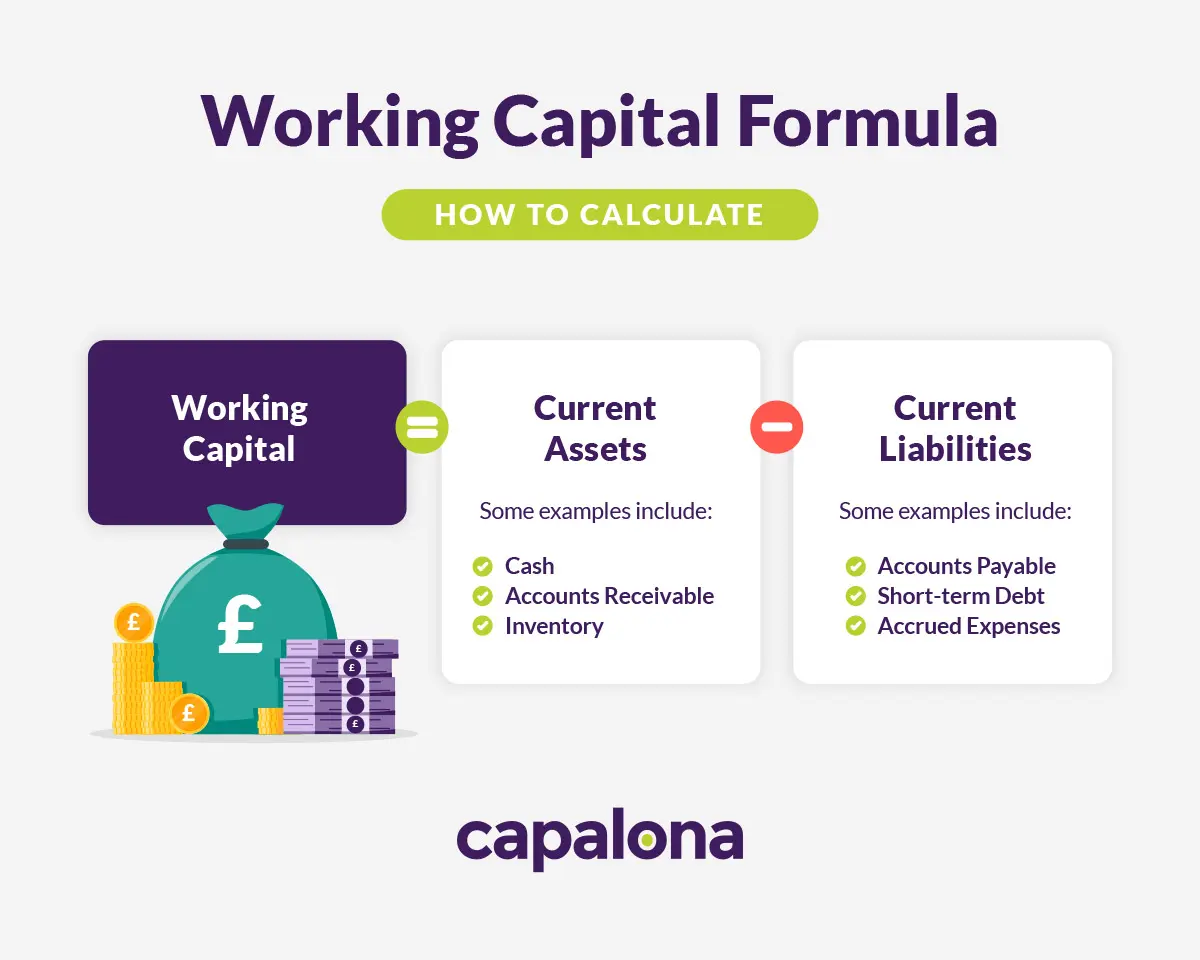
The working capital equation evaluates the financial buffer a company maintains to cover its short-term operational costs and debt obligations due within 12 months. Mathematically, Net Working Capital (NWC) is expressed as:
$$\text{Net Working Capital} = \text{Current Assets} - \text{Current Liabilities}$$
To understand how this formula functions in daily operations, you must examine the specific components on both sides of the balance sheet.
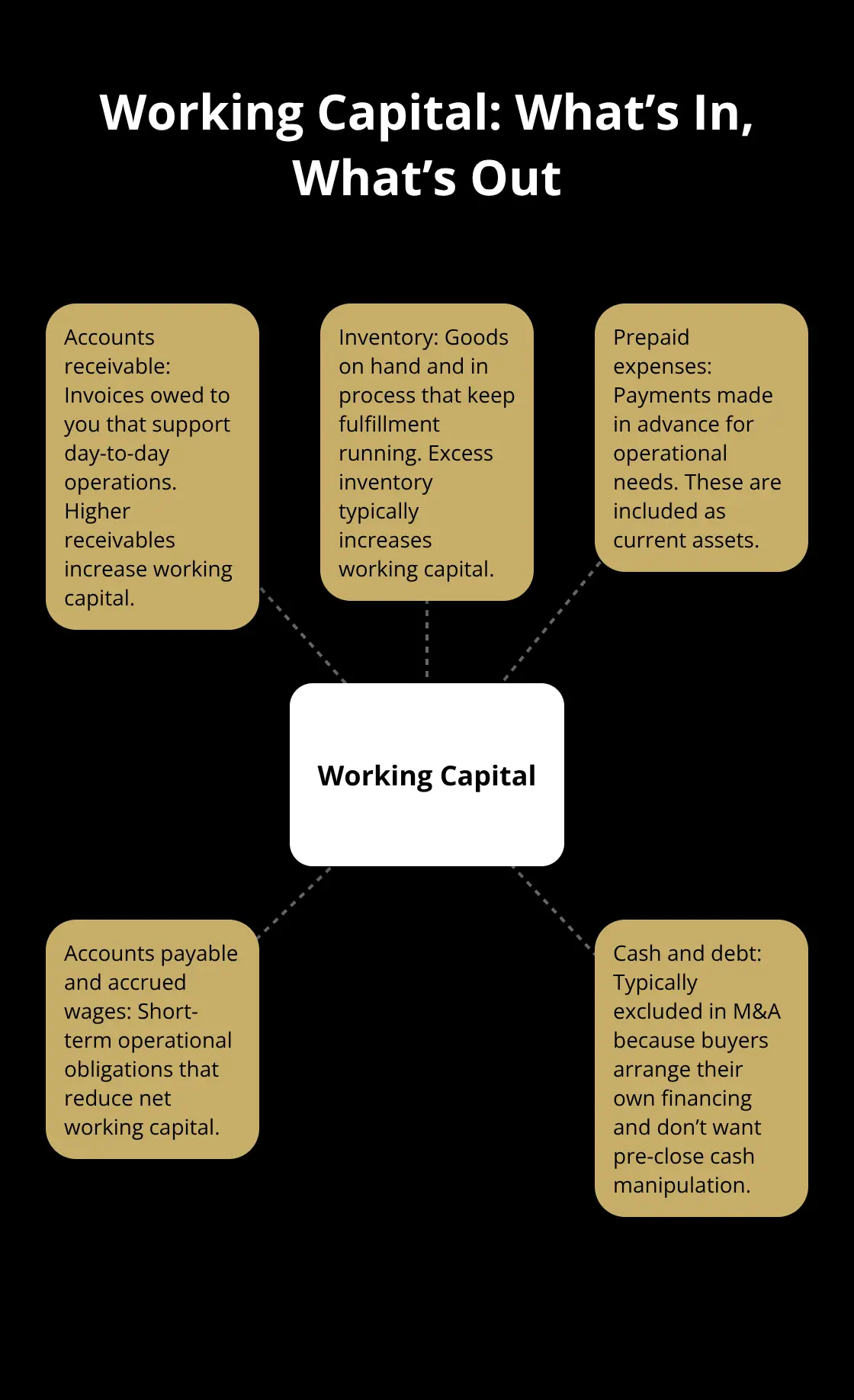
- CURRENT ASSETS
- Cash & Cash Equivalents
- Accounts Receivable
- Inventory (Raw, WIP, Finished)
- Prepaid Expenses & Short-Term Inv.
- CURRENT LIABILITIES
- Accounts Payable
- Accrued Expenses (Payroll, Tax)
- Short-Term Debt & Revolvers
- Current Portion of Long-Term Debt
- NET WORKING CAPITAL (NWC) METRIC
- Determines Short-Term Liquidity & Cash Reserves
Current Assets
Current assets represent liquid resources or assets expected to be converted into cash within one fiscal year or operating cycle. They include:
- Cash and Cash Equivalents: Checking balances, money market accounts, and liquid short-term investments.
- Accounts Receivable (A/R): Credit extended to customers that has not yet been collected.
- Inventory: Raw materials, work-in-progress (WIP), and finished goods held for sale.
- Prepaid Expenses: Advance payments for short-term obligations like commercial insurance, software licenses, or property leases.
Current Liabilities
Current liabilities represent all financial obligations and debts due within the standard 12-month operating window. They include:
- Accounts Payable (A/P): Outstanding invoices owed to suppliers, vendors, and service providers.
- Short-Term Debt: Credit card balances, line-of-credit draws, and merchant cash advances.
- Accrued Expenses: Unpaid obligations such as accumulated employee payroll, accrued taxes, and utility bills.
- Current Portion of Long-Term Debt (CPLTD): The principal debt payments on multi-year loans due within the next 12 months.
Net Working Capital vs. Current Ratio
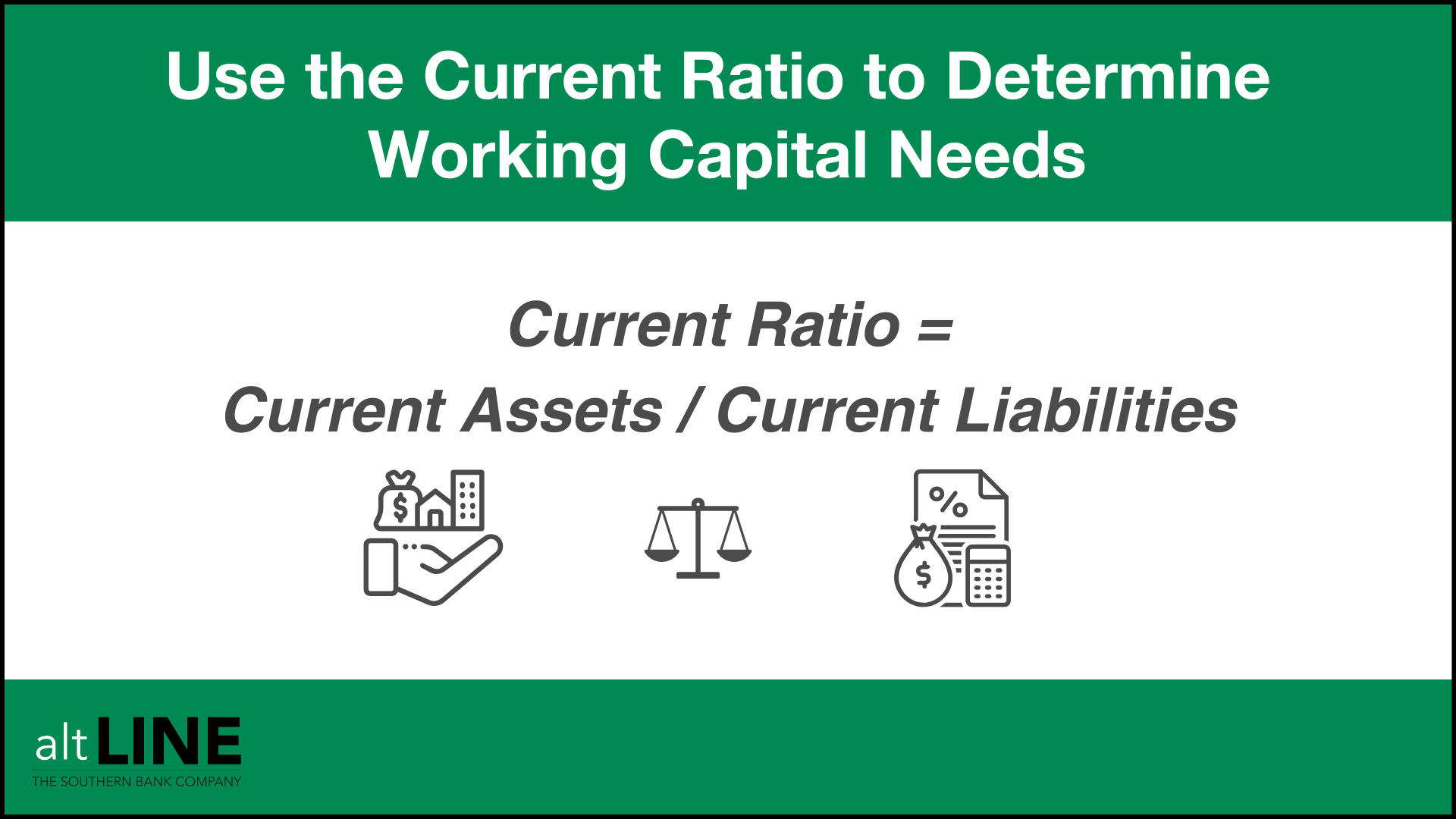
While Net Working Capital yields an absolute dollar amount showing your cash margin, financial analysts also track the Current Ratio, which measures liquidity relative to debt volume:
$$\text{Current Ratio} = \frac{\text{Current Assets}}{\text{Current Liabilities}}$$
A company with $500,000 in current assets and $250,000 in current liabilities has $250,000 in Net Working Capital and a Current Ratio of 2.0. A ratio between 1.5 and 2.0 generally indicates healthy liquidity, though ideal benchmarks vary by industry.
Direct Operational Impacts of Working Capital on Business Health
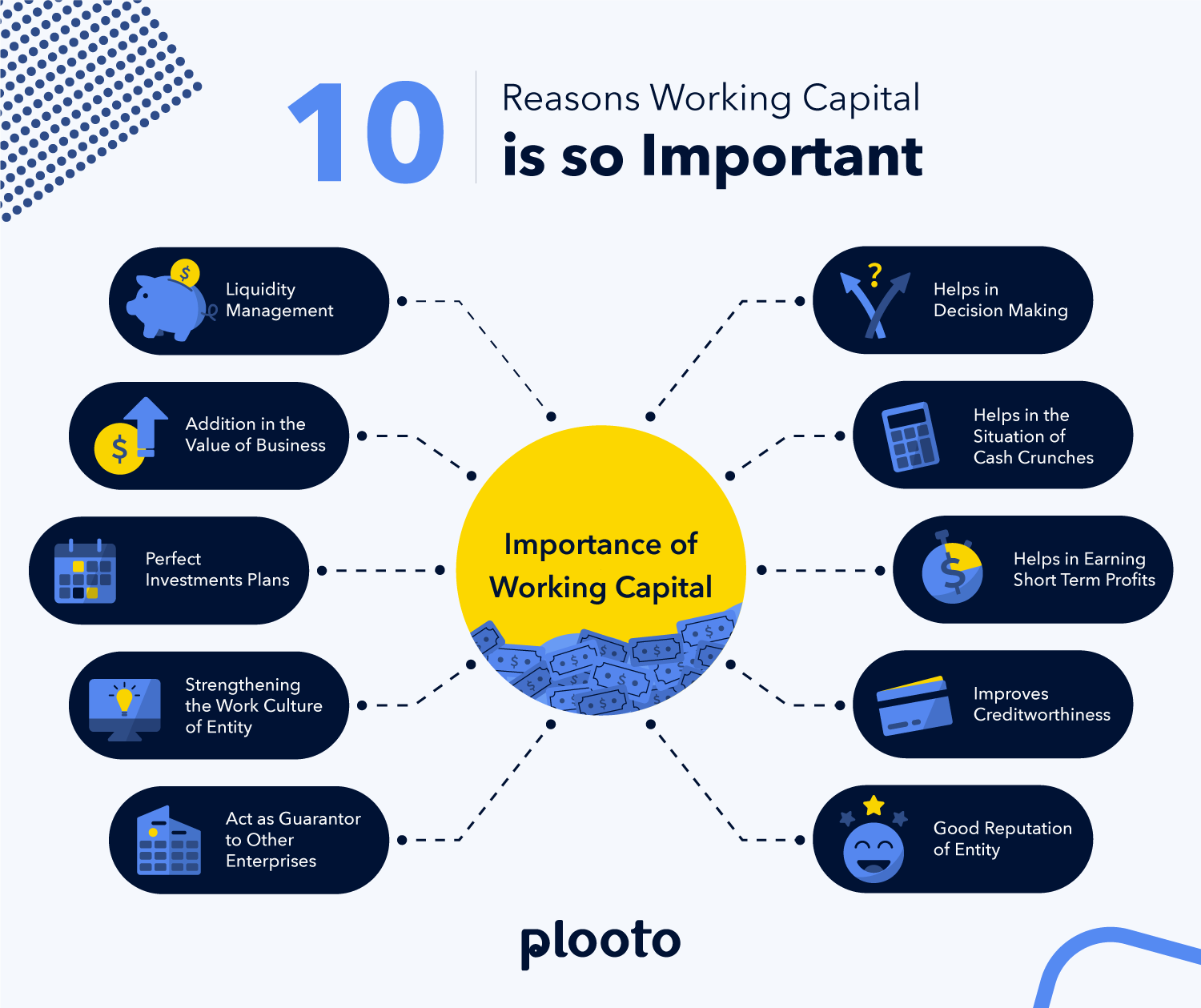
The output of the working capital equation is not merely an accounting entry; it dictates how your company operates every day.
1. Cash Flow and Insolvency Risk
A positive working capital balance ensures your business can pay suppliers, meet payroll, and settle utility bills on schedule. When working capital drops to zero or turns negative, your organization faces an immediate liquidity crunch.
Companies frequently face insolvency not because they lack revenue, but because their cash is trapped in uncollected receivables or unsold inventory while immediate payables fall due.
2. Supply Chain Stability and Purchasing Terms
Suppliers continuously monitor the working capital health of their corporate buyers. A robust working capital position allows a business to:
- Negotiate early payment discounts (such as 2/10 net 30, which offers a 2% discount if paid within 10 days).
- Secure extended payment terms during seasonal demand downturns.
- Avoid delivery disruptions, credit holds, or cash-on-delivery (COD) demands from key vendors.
3. Ability to Fund Growth and Capital Expenditures
Business expansion requires working capital. Launching a product line, opening a retail location, or hiring staff requires upfront cash investment before revenues materialize.
If your working capital equation yields a narrow margin, organic growth can drain cash balances faster than sales arrive—a phenomenon known as overtrading. Healthy working capital acts as self-generated capital to fund expansion without diluting equity or taking on high-interest loans.
4. Credit Ratings and Debt Financing Costs
Lenders and credit rating agencies evaluate working capital metrics when underwriting business loans or establishing lines of credit. Strong working capital demonstrates low default risk, helping businesses secure favorable interest rates, higher loan limits, and flexible debt covenants.
Conversely, weak working capital ratios often trigger covenant violations on bank loans, forcing mandatory debt repayments or higher interest rates.
Positive vs. Negative Working Capital: Operational Implications
Understanding the practical differences between working capital positions helps finance teams align operational management with business model demands.
| Metrics & Operational Drivers | Positive Working Capital | Neutral / Zero Working Capital | Negative Working Capital |
|---|---|---|---|
| Mathematical Condition | Current Assets > Current Liabilities | Current Assets = Current Liabilities | Current Assets < Current Liabilities |
| Current Ratio Benchmark | Above 1.0 (Ideal: 1.5 - 2.0) | Exactly 1.0 | Below 1.0 |
| Primary Financial Effect | Surplus short-term cash buffer; low insolvency risk. | Zero cash safety margin; elevated vulnerability to delays. | Cash shortfall; reliance on short-term debt or fast asset turn. |
| Capital Allocation Risk | Excess cash sitting idle in low-yield assets or tied up in inventory. | Operational bottleneck if customer payments are delayed. | Technical insolvency if cash conversion slows down. |
| Typical Industry Alignment | Manufacturing, B2B wholesale, distribution, construction. | Professional services, lean SaaS models. | Grocery chains, fast-food franchises, subscription e-commerce. |
When Positive Working Capital Signals Inefficiency
While positive working capital is generally desirable, an excessively high working capital ratio (e.g., above 3.0) can signal operational inefficiency.
It often means a company is holding excess cash in low-yield checking accounts, carrying obsolete inventory, or failing to collect receivables promptly. Capital tied up in these assets yields no return and might be better deployed toward debt paydown, product development, or shareholder distributions.
When Negative Working Capital Works
Negative working capital does not always mean financial failure. Companies operating high-velocity cash models—such as major retail chains, subscription services, and fast-food franchises—frequently operate with negative working capital.
These companies collect cash instantly from customers at the point of sale while maintaining 30- to 90-day payment terms with suppliers. They generate cash before their accounts payable come due, allowing them to reinvest operating cash flows into ongoing operations without needing high levels of current asset balances.
The Cash Conversion Cycle (CCC): Integrating Time into the Equation
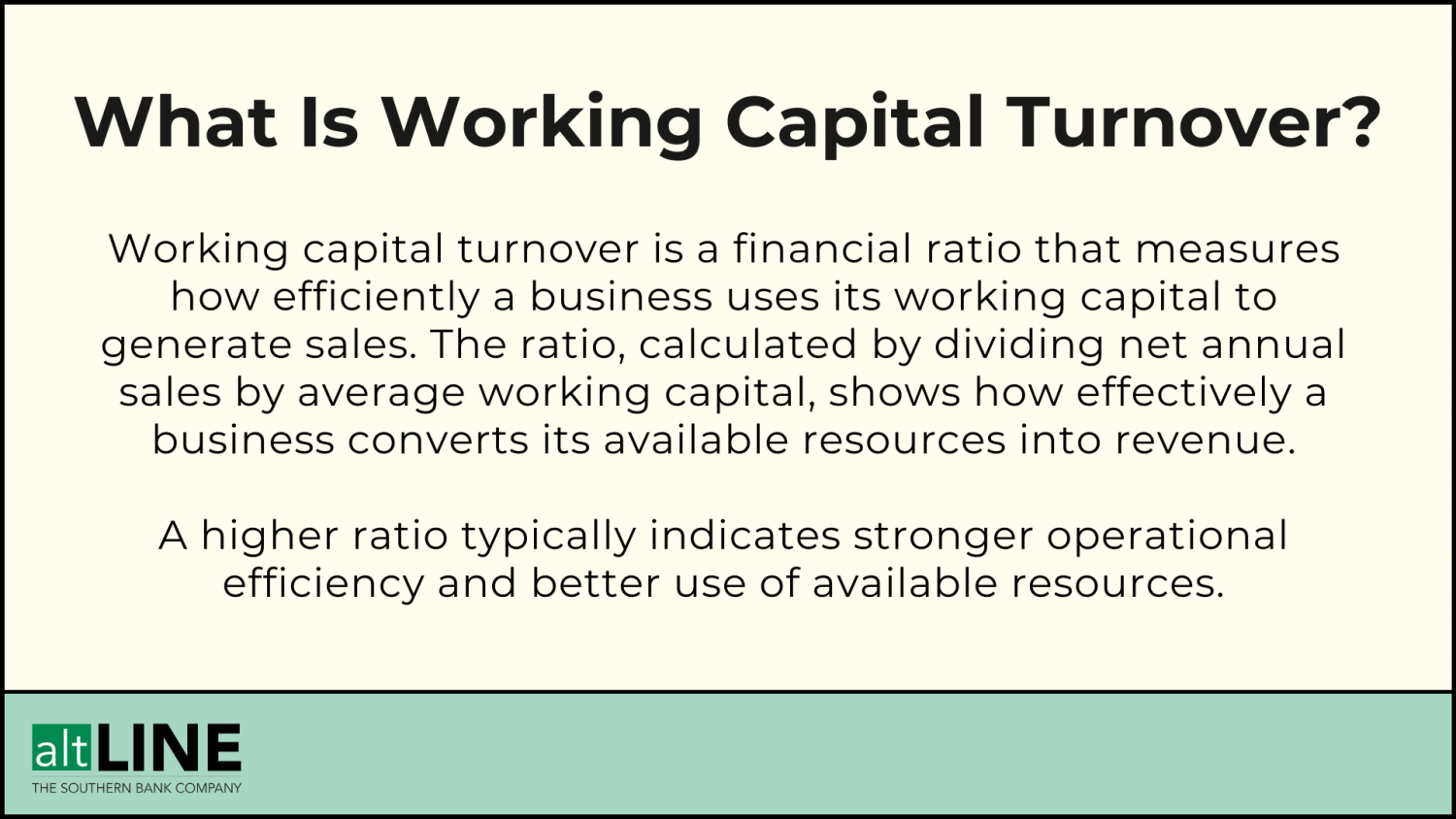
The standard working capital equation gives a snapshot of a business at a single point in time. To understand how cash moves over time, finance teams use the Cash Conversion Cycle (CCC). The CCC measures the number of days it takes for a dollar invested in inventory and operations to return to cash reserves.
$$\text{CCC} = \text{DIO} + \text{DSO} - \text{DPO}$$
- CASH CONVERSION CYCLE (CCC)
- Days Inventory Outstanding (DIO)
- Days Sales Outstanding (DSO)
- MINUS
- Days Payable Outstanding (DPO)
1. Days Inventory Outstanding (DIO)
DIO tracks how long inventory sits on shelves or in warehouses before being sold. High DIO increases holding costs and ties up working capital in physical stock.
$$\text{DIO} = \left( \frac{\text{Average Inventory}}{\text{Cost of Goods Sold}} \right) \times 365$$
2. Days Sales Outstanding (DSO)
DSO measures the average number of days required to collect payment from customers after a credit sale is completed. Lowering DSO directly boosts your working capital balance by converting receivables into cash faster.
$$\text{DSO} = \left( \frac{\text{Accounts Receivable}}{\text{Total Credit Sales}} \right) \times 365$$
3. Days Payable Outstanding (DPO)
DPO measures the average number of days your business takes to pay vendor invoices. Extending DPO keeps cash in your bank account longer, improving net working capital. However, extending it too far can strain supplier relationships and forfeit prompt-payment discounts.
$$\text{DPO} = \left( \frac{\text{Accounts Payable}}{\text{Cost of Goods Sold}} \right) \times 365$$
Practical Strategies to Optimize Your Working Capital Equation
Improving your working capital balance does not necessarily require raising outside capital or reducing staff. Finance managers can optimize cash flow by making operational adjustments to each component of the working capital equation.
- WORKING CAPITAL OPTIMIZATION ENGINE
- RECEIVABLES (A/R)
- Digital Invoicing
- Early Pay Discounts
- Strict Credit Checks
- PAYABLES (A/P)
- Maximize Terms
- Pay on Due Date
- Vendor Discounts
- INVENTORY (DIO)
- ABC Inventory
- JIT Management
- Liquidate Excess
- RECEIVABLES (A/R)
Optimize Accounts Receivable (A/R)
- Implement Electronic Invoicing: Issue invoices immediately upon product delivery or service completion rather than at month-end. Automated billing platforms reduce payment friction and lower DSO.
- Enforce Strict Credit Thresholds: Perform credit checks on new B2B clients before extending net-30 or net-60 terms. Establish clear payment terms, enforce late-fee policies, and halt shipments to overdue accounts.
- Offer Incentive Terms: Provide small cash discounts for early settlement (such as 1% 10 Net 30). The cost of the discount is often less than the interest cost on a business line of credit.
Optimize Accounts Payable (A/P)
- Utilize Full Payment Windows: Avoid paying supplier invoices weeks early unless an early-payment discount is offered. Schedule automated payments on the exact due date to retain cash in yield-bearing business accounts.
- Renegotiate Vendor Terms: Periodically review payment agreements with core suppliers. Requesting an extension from net-30 to net-45 or net-60 improves cash retention without increasing expenses.
- Audit Supplier Invoices: Check invoices against purchase orders and receiving slips to prevent overpayment, duplicate charges, or missed prompt-payment rebates.
Optimize Inventory Control
- Adopt ABC Inventory Classification: Categorize inventory by sales volume and value. Focus tight inventory controls on high-value items (Group A) while carrying smaller safety stocks of lower-value items (Groups B and C).
- Clear Slow-Moving and Obsolete Goods: Liquidate stagnant inventory through discounts, bundled offerings, or secondary markets. Holding obsolete inventory incurs warehouse costs and ties up working capital that could be deployed elsewhere.
- Adopt Just-In-Time (JIT) Inventory Systems: Align raw material orders closely with actual production schedules to minimize warehouse holding costs and lower your Days Inventory Outstanding (DIO).
Common Pitfalls and Working Capital Misconceptions
Managing working capital requires balancing short-term liquidity with long-term strategic goals. Avoid these common operational missteps:
1. Confusing Accrual Accounting Profitability with Liquidity
A company can report high net income on an income statement while facing a severe cash shortage. Revenue is recognized on an accrual basis when earned, not when cash hits the bank account. If your uncollected sales are tied up in accounts receivable while accounts payable fall due, your business can fail despite showing a net profit.
2. Financing Long-Term Fixed Assets with Short-Term Capital
Using short-term working capital or revolving credit lines to fund long-term assets—such as real estate, machinery, or corporate acquisitions—creates financial mismatch risk. Fixed assets generate returns over several years, while short-term obligations require immediate repayment. Long-term capital expenditures should generally be funded with equity or multi-year debt.
3. Failing to Account for Seasonality
Many businesses experience seasonal swings in sales volume. A retailer preparing for the holiday season must buy excess inventory and hire temporary staff months before revenues arrive, causing temporary dips in working capital. Companies must build cash reserves or secure seasonal lines of credit to manage these predictable swings.
Frequently Asked Questions
What is a healthy working capital ratio for a small-to-medium business?
A current ratio between 1.5 and 2.0 is generally considered healthy for most industries. A ratio below 1.0 indicates potential liquidity challenges, while a ratio above 3.0 may suggest the company is holding excess idle cash or carrying uncollected receivables and slow-moving inventory.
How does high inflation affect the working capital equation?
Inflation increases working capital requirements across operations. Higher input costs raise inventory expenses, while client payment delays can reduce the real purchasing power of uncollected receivables. Businesses in inflationary environments need larger cash reserves to maintain daily operations.
What is the difference between Gross Working Capital and Net Working Capital?
Gross Working Capital equals the sum of a company's current assets. Net Working Capital subtracts current liabilities from current assets, giving a clearer picture of short-term financial stability and available cash reserves.
Can a business have negative working capital and still remain operational?
Yes. Businesses with fast inventory turnover and immediate cash collection—such as retail grocery stores, subscription SaaS providers, and fast-food chains—often operate successfully with negative working capital. They collect cash from sales long before vendor payables come due.
How often should management review working capital metrics?
Finance teams should review working capital metrics, including Net Working Capital, DSO, DIO, and DPO, at least monthly. Fast-growing companies or businesses in volatile industries should monitor weekly cash flow forecasts to catch emerging liquidity gaps early.
Practical Next Steps for Finance Teams
To build a resilient balance sheet, transition working capital management from a quarterly accounting check into a routine operational priority.
- Calculate your current working capital position and Current Ratio using your most recent balance sheet.
- Determine your Cash Conversion Cycle by tracking DSO, DIO, and DPO over the past four quarters.
- Establish weekly collections reviews for B2B accounts receivable that extend beyond standard payment terms.
- Review your vendor roster to identify opportunities to extend payment windows or capture prompt-payment discounts.
- Set baseline working capital targets for your finance team to maintain adequate cash reserves through economic shifts and seasonal demand changes.
Disclaimer: This article provides general educational information on financial analysis and corporate accounting principles. It does not constitute formal legal, tax, financial, or accounting advice. For guidance on your specific business structure, consult a certified public accountant (CPA) or accredited corporate finance advisor.
Image Gallery