The Definitive Guide on When to Buy Flight Tickets
The best time to buy flight tickets typically depends on the route, season, and how far in advance you book, with domestic flights usually offering the best prices one to three months out, and international trips often requiring bookin...
The best time to buy flight tickets typically depends on the route, season, and how far in advance you book, with domestic flights usually offering the best prices one to three months out, and international trips often requiring booking four to six months ahead.
Contents
Navigating the airline ticketing landscape can feel like trying to hit a moving target. Prices fluctuate constantly based on algorithms, fuel costs, seasonal demand, and seat availability. For travelers looking to secure the best possible deal without compromising their preferred schedule, understanding the mechanics of airline pricing is essential. Securing affordable airfare is no longer a matter of luck or stumbling upon a hidden loophole; it requires a strategic approach grounded in data, timing, and flexibility.
Understanding Airline Pricing Dynamics and Yield Management
Airlines do not price tickets arbitrarily. Instead, they rely on complex computerized reservation systems driven by yield management principles. These systems attempt to maximize revenue by predicting consumer demand and adjusting ticket prices dynamically. When a flight is first listed—often up to 330 days in advance—airlines generally release a batch of seats at the highest or baseline flexibility fares to capture early, less price-sensitive business travelers.
As the departure date approaches, airlines monitor booking velocity. If a flight fills up faster than anticipated, prices for remaining seats automatically increase. Conversely, if demand lags, the system may trigger promotional sales or lower fares to stimulate interest. Understanding this ebb and flow helps demystify why a ticket price seen on Monday might double by Thursday.
Furthermore, fare classes dictate much of what a consumer pays. Each economy cabin is divided into multiple sub-categories or bucket codes, each representing a different price point. Once the cheapest bucket sells out, the system automatically rolls over to the next available, more expensive category. Knowing how these buckets work underscores the importance of not waiting too long, as the transition from a lower fare bucket to a higher one can happen abruptly.
The Optimal Booking Windows by Destination Type
While every route behaves uniquely, extensive historical data from major booking platforms and industry analysts reveals consistent booking windows. Generalizing airfare by broad categories allows travelers to establish a reliable timeline for their travel planning.
Domestic Flights
For domestic travel within the United States or within regional zones globally, the sweet spot for purchasing tickets generally falls between 1 to 3 months (30 to 90 days) prior to departure.
- The Early Bird Window (3 to 6 months out): Booking too early can sometimes result in paying a premium, as airlines have not yet adjusted their inventory to stimulate demand.
- The Prime Booking Window (30 to 90 days out): During this period, airlines have a clear picture of route performance and frequently drop prices or offer competitive sales to fill remaining capacity.
- The Last-Minute Penalty (Under 21 days out): Prices tend to spike steeply within three weeks of departure. Business travelers, who book late and are less price-sensitive, dominate this booking window, and airlines capitalize on their urgency.
International Flights
International travel involves higher operating costs, more complex routing, and longer lead times for consumer preparation. Consequently, the optimal booking window shifts outward.
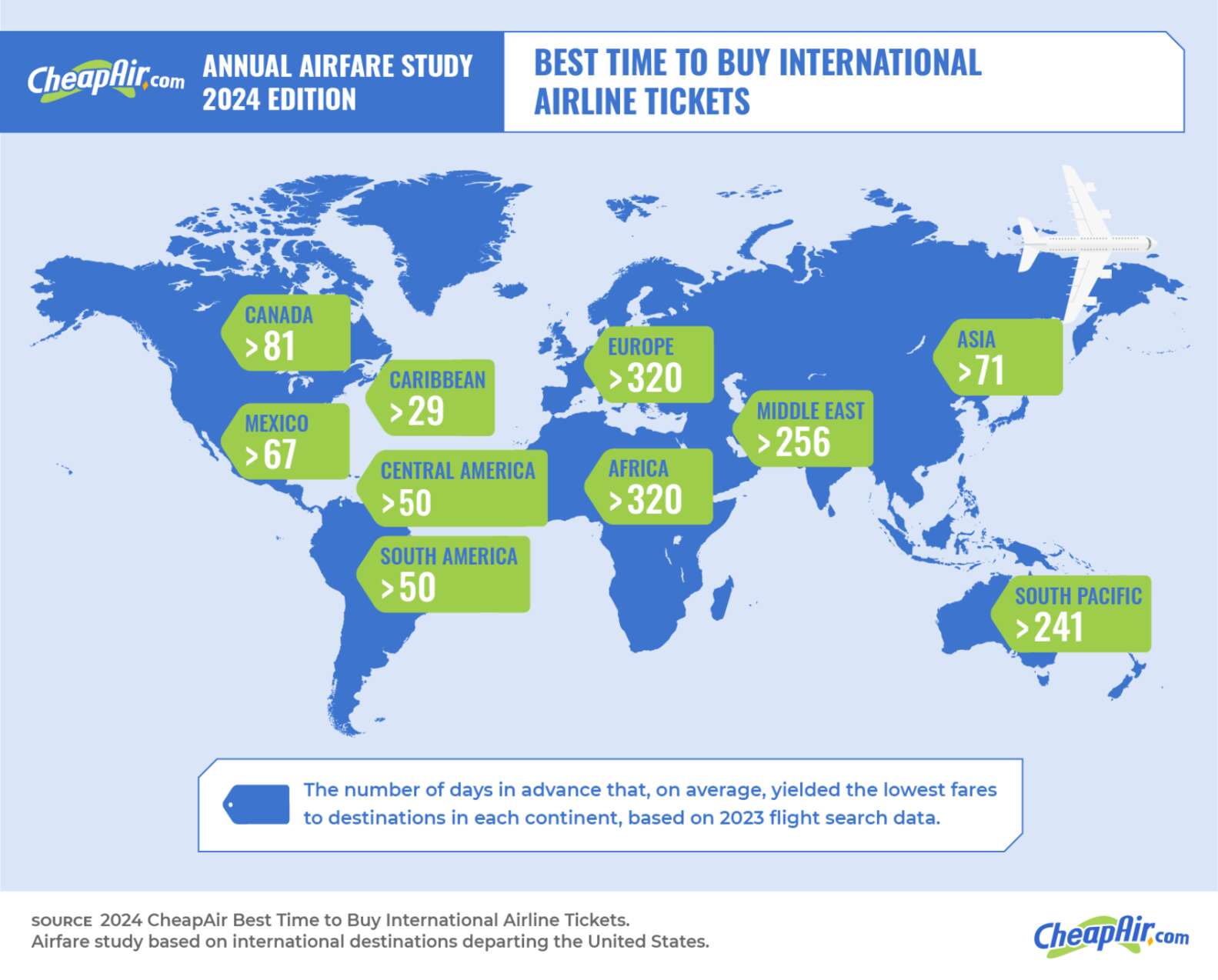
- The Sweet Spot (4 to 6 months out): For transatlantic or transpacific journeys, securing tickets four to six months in advance typically yields the most favorable rates.
- Peak Season Adjustments: If traveling during peak holiday periods (such as Christmas, New Year, or mid-summer), travelers should expand this window to 5 to 8 months out to account for high demand and limited seat inventory.
| Destination Type | Optimal Booking Window | Avoid Buying | Peak Premium Risk |
|---|---|---|---|
| Domestic Short-Haul | 1 to 3 months prior | > 6 months or < 21 days | Last 14 days before departure |
| International Long-Haul | 4 to 6 months prior | > 9 months or < 45 days | 30 days before departure |
| Regional Holidays / Peak Season | 5 to 8 months prior | < 3 months prior | 60+ days before holiday rush |
Seasonal Factors and Holiday Travel Strategies
Seasonality remains one of the most powerful drivers of airfare fluctuation. Holidays, school breaks, and regional events create massive surges in demand that override standard booking windows.
Navigating Major Holidays
For major holiday periods like Thanksgiving, Christmas, and New Year, standard booking rules break down. Because demand vastly outstrips supply, waiting for a last-minute deal is a high-risk strategy that rarely pays off.
- Thanksgiving and Christmas: Travelers should aim to book holiday flights by early October at the absolute latest. For summer holiday travel, purchasing tickets 3 to 5 months in advance helps mitigate severe price inflation.
- Day-of-Week Selection: Flying on the actual holiday (e.g., Thanksgiving Day or Christmas Day) or on adjacent off-peak days (like Tuesday or Wednesday before a Thursday holiday) can reduce ticket costs significantly compared to traveling on the peak travel days immediately preceding or following the holiday.
Shoulder Seasons
Smart travelers often target shoulder seasons—the transitional periods between peak tourist seasons and off-peak troughs. During shoulder seasons, weather is often favorable, crowds are smaller, and airlines lower fares to maintain load factors. Booking domestic or international flights during these windows allows for greater flexibility and access to lower baseline ticket prices without requiring strict adherence to narrow booking constraints.
Day-of-Week Myths and Realities
For decades, consumer folklore claimed that buying tickets on a specific day of the week—often cited as Tuesday at midnight—guaranteed the lowest price. Modern airline pricing algorithms have largely neutralized these static rules.
Airlines update their fare inventories continuously throughout the week, meaning price drops and hikes happen in real time rather than on a fixed weekly schedule. However, the day of the week you choose to fly matters much more than the day you actually click the purchase button.
- Higher-Cost Days: Fridays and Sundays traditionally command the highest fares due to heavy demand from business travelers and weekend leisure passengers.
- Lower-Cost Days: Tuesdays, Wednesdays, and Saturdays frequently offer lower baseline fares because demand on these days is typically softer. Adjusting a trip by a single day can often yield substantial savings.
Leveraging Technology and Price-Tracking Tools
Manually checking airline websites daily is inefficient and prone to missing sudden flash sales. Utilizing modern digital tools can automate the process and provide actionable insights into price trends.
- Price Alerts: Major aggregators and booking platforms allow users to set up price alerts for specific routes and dates. These tools notify travelers via email or push notification whenever fares drop or spike, enabling purchase decisions based on historical trend data.
- Flexible Date Grids: When searching for flights, using calendar views that display prices across an entire month helps identify the cheapest departure and return combinations instantly.
- Fare Prediction Features: Platforms powered by historical data can analyze current prices and output recommendations—such as "Buy now" or "Wait, prices may drop"—providing an extra layer of confidence before committing funds.
Common Mistakes to Avoid When Buying Flight Tickets
Even seasoned travelers occasionally fall into traps that inflate their travel budgets. Recognizing these pitfalls helps preserve travel funds and reduces stress.
- Waiting for the Mythical Last-Minute Deal: While last-minute deals occasionally exist for charter flights or deeply unpopular routes, scheduled commercial airlines almost always charge exorbitant rates for bookings made within two weeks of departure.
- Ignoring Baggage and Ancillary Fees: A cheap base fare can quickly become expensive when baggage selection, seat assignments, and carry-on restrictions are factored in. Always calculate the total cost of travel, including hidden fees, before declaring a ticket the best deal.
- Booking Non-Flexible Fares Without Insurance: Purchasing the absolute cheapest basic economy ticket can backfire if plans change. These tickets are typically non-refundable, non-changeable, and do not allow seat selection. Evaluate whether the savings justify the lack of flexibility.
Frequently Asked Questions
Is it really cheaper to buy tickets on Tuesdays?
No, the day of the week you purchase your ticket has a negligible impact on price. Modern airline algorithms adjust fares continuously in real time. However, the day you choose to fly (such as flying on a Tuesday instead of a Sunday) can significantly affect the cost of your ticket.
How far in advance should I book an international flight?
For international travel, the optimal booking window is generally four to six months in advance. If you are traveling during peak holiday seasons, such as mid-summer or late December, you should extend this window to five to eight months out to secure reasonable rates.
Do clear cookies affect airline ticket prices?
Extensive independent investigations by consumer advocacy groups and travel experts have found no evidence that airline booking sites or aggregators track your browser cookies to artificially raise prices based on your search history. Price fluctuations are driven entirely by seat inventory and automated yield management systems.
What is basic economy, and should I buy it?
Basic economy is a stripped-down fare class that offers the lowest base price but comes with severe restrictions. These typically include no seat selection, no changes or cancellations, boarding in the final group, and fees for carry-on or checked luggage. You should buy basic economy only if you are certain of your travel plans and travel light enough to avoid extra fees.
Should I book connecting flights or direct flights to save money?
Direct flights generally command a convenience premium, while connecting flights are often cheaper. When evaluating connecting flights, weigh the financial savings against the risk of missed connections, luggage mishandling, and extended travel times.
Can I get a refund if the ticket price drops after I buy?
Most standard tickets are non-refundable after the 24-hour booking window mandated by regulators in certain jurisdictions. However, some airlines have eliminated change fees for main cabin fares, allowing you to cancel for a flight credit if the price drops significantly, subject to the airline's specific fare rules.
Conclusion and Next Actions
Securing the best flight ticket requires balancing timing, destination specifics, and flexibility. Start tracking your route using reliable price aggregation tools at least four months before an international trip or two months before a domestic journey. Set up price alerts, remain open to mid-week departures, and purchase your tickets as soon as the fare enters its optimal historical booking window to avoid last-minute price surges.
Image Gallery