The Largest Alligator Gar Ever Recorded: World Records, Size, and History
The largest alligator gar ever recorded is a colossal specimen weighing 327 pounds (148 kg) and measuring 8 feet, 5.125 inches (2.57 meters) in length. Commercial fisherman Kenny Williams unintentionally caught this prehistoric giant i...
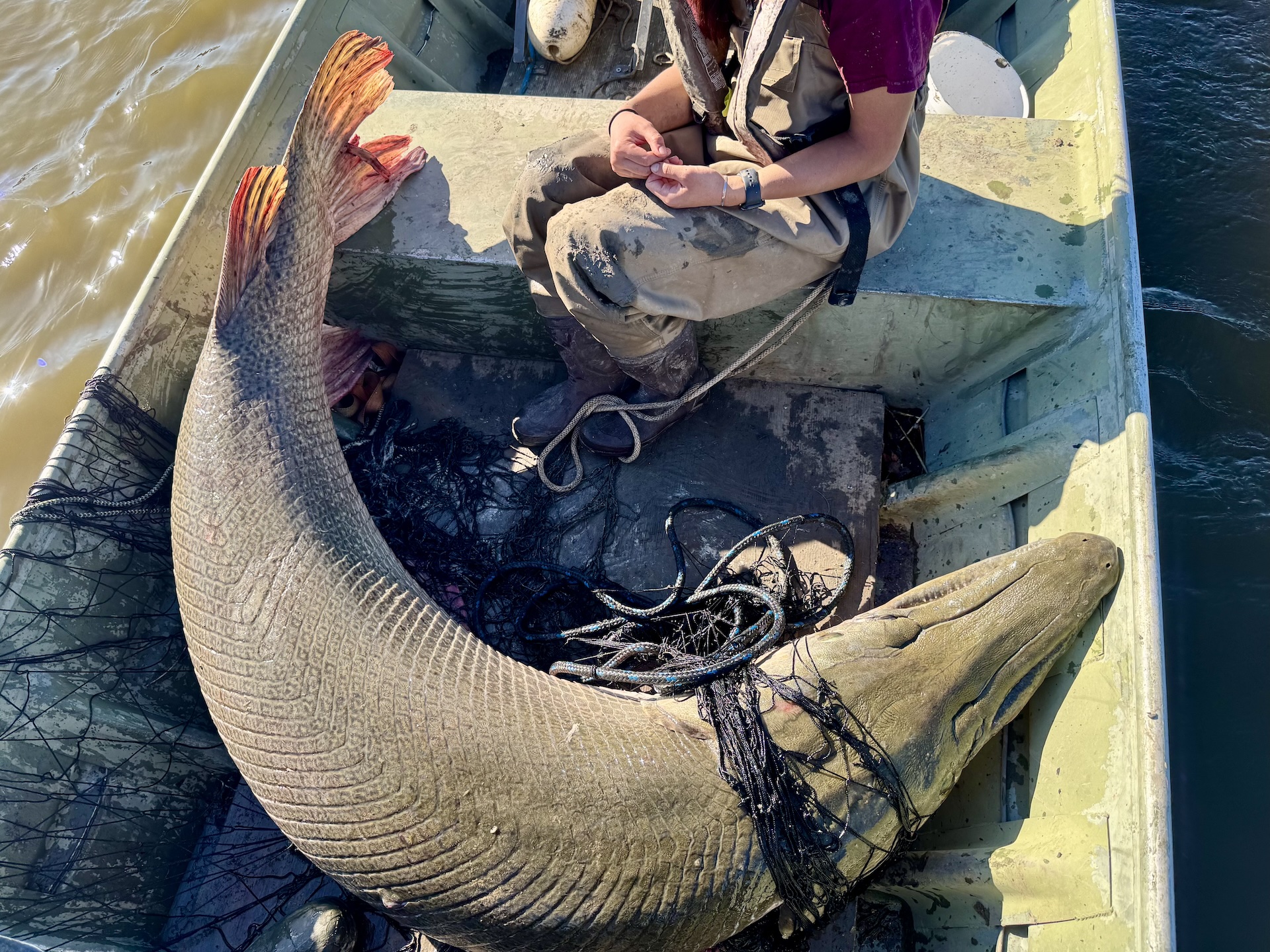
The largest alligator gar ever recorded is a colossal specimen weighing 327 pounds (148 kg) and measuring 8 feet, 5.125 inches (2.57 meters) in length. Commercial fisherman Kenny Williams unintentionally caught this prehistoric giant in Lake Chotard, Mississippi, in February 2011. Estimated to be between 70 and 95+ years old, this specimen represents the heaviest and longest officially verified alligator gar in modern history.
Contents
The Absolute Record-Holder: The 327-Pound Lake Chotard Specimen
On February 14, 2011, commercial fisherman Kenny Williams was pulling gill nets from Lake Chotard—an oxbow lake along the Mississippi River in Issaquena County, Mississippi—when he discovered an extraordinary catch entangled in his equipment. Williams initially thought his net was caught on a submerged log. Upon bringing the net to the surface, he realized he had snared a massive alligator gar (Atractosteus spatula) far larger than any previously documented specimen.
Because Williams held a legal commercial fishing permit, he brought the gar ashore to be officially weighed and measured by wildlife biologists. The official metrics recorded by biologists with the Mississippi Department of Wildlife, Fisheries, and Parks confirmed the record-breaking dimensions:
- Weight: 327 pounds (148.3 kg)
- Total Length: 8 feet, 5.125 inches (257 cm)
- Girth: 47 inches (119.3 cm)
| Metric | Specification |
|---|---|
| Length | 8 ft 5.125 in (257 cm) |
| Girth | 47 in (119.3 cm) |
| Weight | 327 lb (148.3 kg) |
| Estimated Age | 70–95+ Years |
| Location | Lake Chotard, Mississippi |
| Date Caught | February 14, 2011 |
Recognizing the biological significance of the creature, Williams donated the fish to the state of Mississippi. Conservation scientists analyzed the fish's otoliths (ear bones used to determine age in teleost and primitive fishes) and estimated that the gar was born in the early-to-mid 20th century, making it anywhere from 70 to over 95 years old. Today, a full-body taxidermy mount of this historic fish is on permanent public display at the Mississippi Museum of Natural Science in Jackson, Mississippi.
Historical and Category World Records for Alligator Gar
While the 327-pound Lake Chotard gar holds the overall record for absolute size and weight, sport fishing organizations like the International Game Fish Association (IGFA) track records based on capture methods, line strength, and gear types.
IGFA All-Tackle Angling Record
For over six decades, the IGFA all-tackle rod-and-reel record belonged to angler Bill Valverde. On December 2, 1951, Valverde landed a 279-pound (126.55 kg) alligator gar in the Rio Grande River near San Benito, Texas. Valverde used a hand-tied wire leader and a live bait setup to haul in the 7-foot, 9-inch predator, setting a sport fishing benchmark that stood unchallenged for over 70 years.
Line-Class World Records
In September 2023, angler Art Weston, alongside renowned gar guide Kirk Kirkland, set a landmark IGFA world record on Sam Rayburn Reservoir in East Texas. Fishing with just 6-pound test monofilament line, Weston landed a mammoth alligator gar weighing 283 pounds, 4 ounces (128.47 kg) with a length of 100 inches (8 feet, 4 inches) and a girth of 48 inches. Catching a freshwater megafauna of this magnitude on ultra-light tackle required nearly three hours of precise boat maneuvering and line management, establishing one of the most remarkable records in modern freshwater sport fishing history.
Bowfishing Records
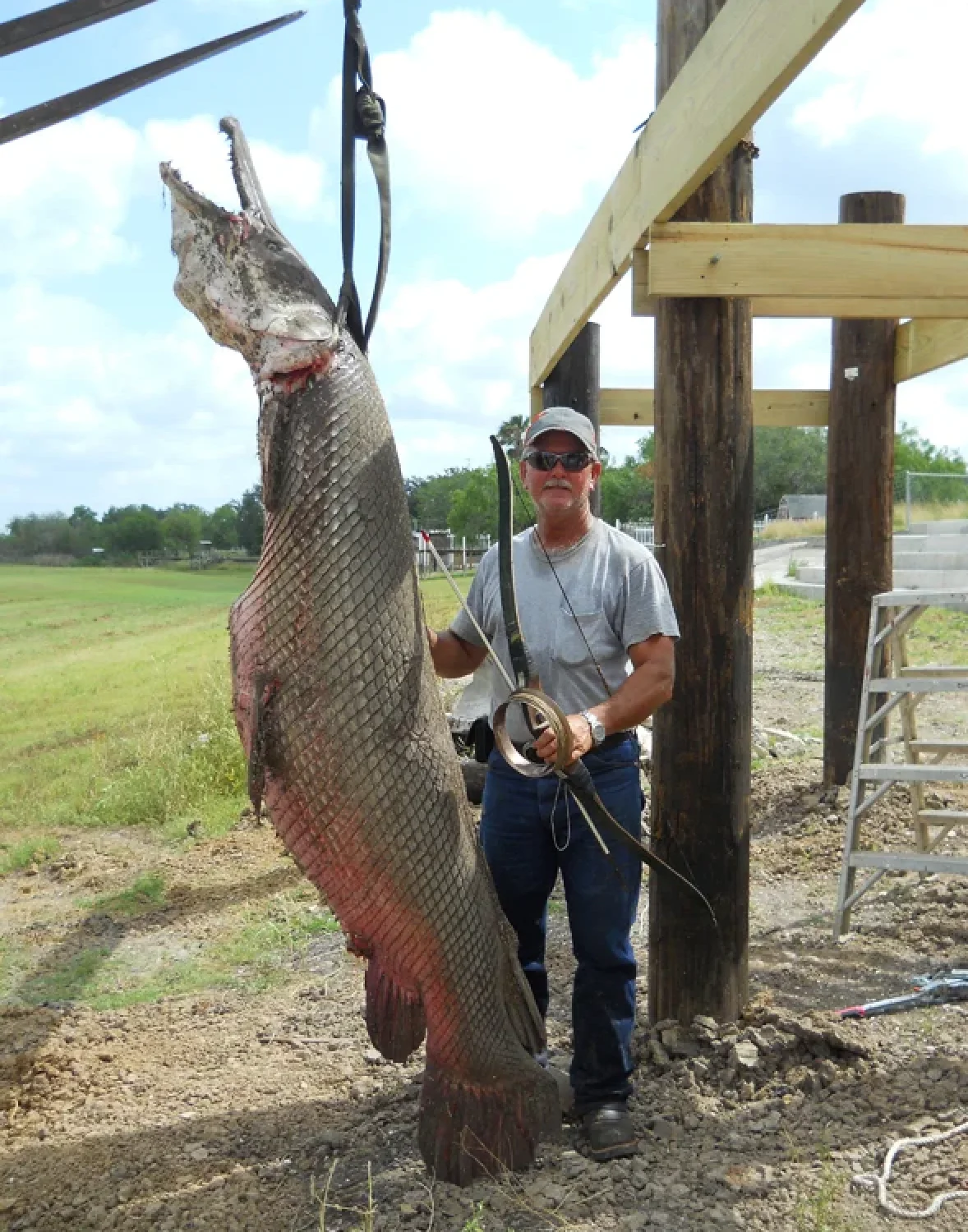
Bowfishing accounts for several of the largest documented alligator gar taken in North America. The official bowfishing world record for alligator gar is credited to Bryan Snodgrass, who shot a 290-pound (131.5 kg) gar at Trinity River, Texas, in 2004. Because bowfishing is a lethal take method, state management agencies strictly regulate bow harvests in high-pressure habitats to prevent the loss of ancient breeding females.
Official Record Breakdown: Comparing Historic Gar Catches
The following table summarizes the largest verified alligator gar specimens across different capture categories and jurisdictions:
| Category / Record Type | Weight | Length | Location | Angler / Individual | Year | Verification Body |
|---|---|---|---|---|---|---|
| All-Time Largest Specimen | 327 lbs (148.3 kg) | 8 ft 5.125 in | Lake Chotard, MS | Kenny Williams | 2011 | MDWFP / State Record |
| IGFA 6-lb Line-Class Record | 283 lbs 4 oz (128.5 kg) | 8 ft 4 in | Sam Rayburn Res., TX | Art Weston | 2023 | IGFA |
| Bowfishing World Record | 290 lbs (131.5 kg) | 7 ft 10 in | Trinity River, TX | Bryan Snodgrass | 2004 | Bowfishing Association of America |
| Historic All-Tackle Record | 279 lbs (126.5 kg) | 7 ft 9 in | Rio Grande River, TX | Bill Valverde | 1951 | IGFA |
| Texas State Native Record | 302 lbs (137.0 kg) | 7 ft 6 in | Nueces River, TX | T.C. Pierce | 1953 | Texas Parks and Wildlife |
Biological Factors That Allow Alligator Gar to Reach Record Sizes
Alligator gar (Atractosteus spatula) are among the largest freshwater fishes in North America, second only to the white sturgeon in total potential length. Their ability to grow to lengths exceeding 8 feet and weights over 300 pounds is driven by specific evolutionary adaptations, long life spans, and metabolic traits.
Ancient Lineage and Evolutionary Adaptations
Alligator gar belong to an ancient lineage of ray-finned fish that has remained largely unchanged for over 100 million years, often referred to as "living fossils." Key biological features include:
Ganoid Scales: Heavy, interlocking, diamond-shaped scales composed of a bone-like inner layer and an outer layer of ganoin. This armor provides near-impenetrable protection against natural predators once the gar reaches adulthood.
Vascularized Swim Bladder: Unlike most teleost fishes, alligator gar possess a modified swim bladder lined with vascular tissue that functions like a lung. This allows them to gulp surface air and survive in stagnant, low-oxygen water bodies (hypoxic environments) where other large predators cannot compete.
Ganoid Scale Structure
- Ganoin Outer Layer: Enamel-like hardness
- Isopedine Bone Layer: Flexible structural support
Sexual Dimorphism and Growth Rates
Extreme size in alligator gar is almost exclusively a female trait. Male alligator gar rarely exceed 5 to 6 feet in length or weigh more than 100 pounds. Females, by contrast, grow at a substantially faster rate and continue growing throughout their multi-decade lifespans.
- Male Alligator Gar
- Max Length: ~6 ft
- Max Weight: ~100 lb
- Lifespan: ~30-40 yr
- Female Alligator Gar
- Max Length: 8+ ft
- Max Weight: 300+ lbs
- Lifespan: 70-90+ yrs
Achieving a weight over 200 pounds requires ideal environmental conditions, abundant food supplies (such as gizzard shad, carp, and river carpsuckers), and decades of survival. Female gar do not reach sexual maturity until they are approximately 10 to 14 years old, making population recruitment vulnerable to overharvesting.
Distribution, Habitat, and Conservation
Historically, alligator gar ranged throughout the Mississippi River Valley, extending north into Illinois and Indiana, west into Texas, and east along the Gulf Coast into the Florida Panhandle. However, 20th-century habitat destruction, dam construction, and systematic eradication efforts severely reduced their historic footprint.
Threats and Misconceptions
For generations, alligator gar were mischaracterized as harmful "trash fish" or destructive nuisance predators that decimated game fish populations. As a result, state agencies historically encouraged deliberate culling programs. In reality, ecological studies conducted by the U.S. Fish and Wildlife Service demonstrate that alligator gar act as vital apex predators, regulating populations of invasive carp, forage fish, and secondary predators, thereby maintaining balanced aquatic ecosystems.
- River Ecosystem Trophic Pyramid
- Apex: Alligator Gar
- Carp, Buffalo, Gizzard Shad
- Macroinvertebrates & Plankton
Modern Conservation Practices
Today, wildlife management agencies, including the Texas Parks and Wildlife Department, enforce strict harvest limits to rebuild and protect giant gar populations.
- Bag Limits: Most states now restrict harvest to a single fish per day or mandate strict catch-and-release protocols for large specimens.
- Special Draw Permits: In high-value trophy waters like the Trinity River in Texas, specialized harvest permits are allocated via lottery systems to prevent overfishing of large breeding females.
- Restoration Projects: Federal and state hatcheries regularly reintroduce alligator gar into historic northern reaches of their range, such as Illinois and Tennessee tributaries, to restore native apex predator dynamics.
Regulations and Best Practices for Trophy Gar Anglers
Anglers targeting trophy alligator gar must observe state-specific conservation laws and handle these large, ancient creatures with care to ensure high post-release survival rates.
- Verify State Harvest Rules: Always consult state fishing regulations prior to targeting gar. States such as Texas, Louisiana, Mississippi, and Arkansas maintain distinct rules regarding daily limits, daytime-only bowfishing restrictions, and tagging requirements.
- Use Heavy Tackle and Barbless Hooks: When practicing catch-and-release, use heavy-duty braided line (80–100 lb test) and circle hooks or barbless treble hooks. Heavy tackle reduces fight times, preventing lactic acid buildup and metabolic fatigue in large gar.
- Proper Landings and Dehooking: Never hoist a giant gar out of the water solely by its snout or gills, as this can break its spinal cord or damage vital organs. Support the fish horizontally in shallow water, or use weighted, padded cradles designed for large megafauna.
- Report Trophy Sightings and Catches: Many state fisheries departments encourage anglers to log catches of gar exceeding 6 feet in length to assist biologists in tracking age structures, migration patterns, and overall population health.
Frequently Asked Questions
What is the largest alligator gar ever recorded?
The largest verified alligator gar ever recorded weighed 327 pounds (148 kg) and measured 8 feet, 5.125 inches long. Commercial fisherman Kenny Williams caught it in Lake Chotard, Mississippi, in February 2011.
How old do alligator gar get?
Alligator gar are among the longest-lived freshwater fish in North America. Females can live for 70 to more than 90 years. The 327-pound Lake Chotard specimen was estimated to be between 70 and 95+ years old based on otolith growth rings.
Are alligator gar dangerous to human swimmers?
Despite their formidable size and mouth full of sharp teeth, alligator gar do not target humans. There are no documented, verified attacks by alligator gar on human swimmers. Their diet consists primarily of fish, waterfowl, and small mammals.
Where are the largest alligator gar found today?
The premier trophy waters for giant alligator gar are located in the lower Mississippi River basin, the coastal rivers of Louisiana and Mississippi, and major river/reservoir networks in Texas, particularly the Trinity River and Sam Rayburn Reservoir.
What is the difference between an alligator gar and other gar species?
The alligator gar (Atractosteus spatula) is distinguishable from longnose, shortnose, and spotted gar by its broad, blunt snout (resembling an alligator's profile) and a double row of sharp teeth on its upper jaw. Other gar species have narrower snouts and only a single row of teeth on the upper jaw.
Recommended Next Actions for Anglers and Researchers
If you plan to target trophy alligator gar or participate in gar conservation efforts:
- Review state-specific harvest restrictions via official state wildlife agency portals (such as Texas Parks and Wildlife or Mississippi DWFP) before heading onto the water.
- Apply for specialized draw permits early in the season if you intend to fish designated managed rivers like the Trinity River.
- Equipping yourself with heavy, high-capacity reels, heavy wire leaders, landing cradles, and proper dehooking tools will help minimize stress on mature breeding females during catch-and-release fishing.
Image Gallery