Comprehensive Guide to OSHA Fall Protection Anchor Point Requirements
OSHA requires that non-certified anchor points for personal fall arrest systems support at least 5,000 pounds per person attached. Alternatively, anchors designed, installed, and used under the supervision of a qualified person must ma...
OSHA requires that non-certified anchor points for personal fall arrest systems support at least 5,000 pounds per person attached. Alternatively, anchors designed, installed, and used under the supervision of a qualified person must maintain a safety factor of at least two against the maximum intended impact force of a fall.
Contents
Fall protection is consistently among the most frequently cited OSHA violations. As of 2026, the structural integrity of the anchor point remains the foundation of any Personal Fall Arrest System (PFAS). Without a compliant anchor, the most sophisticated harness and lanyard combinations are rendered useless. Understanding the technical nuances between "certified" and "non-certified" anchors, as well as the jurisdictional differences between general industry and construction standards, is essential for workplace safety and regulatory compliance.
The Foundation of Anchor Strength: 5,000 Pounds vs. Certified Systems
The primary requirement for an anchor point is its ability to withstand the massive dynamic forces generated when a falling body is suddenly jerked to a stop. OSHA provides two distinct pathways for determining if an anchor point is compliant.
The Non-Certified Anchor (The 5,000-lb Rule)
Under OSHA 1926.502(d)(15) for construction and 1910.140(c)(13) for general industry, an anchor point that has not been specifically engineered by a professional must be capable of supporting 5,000 pounds (22.2 kN) per employee attached.
This 5,000-pound figure is often misunderstood. It is not based on the weight of the worker, but rather the potential energy converted into kinetic force during a fall. A 220-pound worker falling six feet can easily generate forces exceeding 3,000 pounds if the deceleration is abrupt. The 5,000-pound requirement provides a significant margin of safety to account for structural degradation, improper installation, or multiple fall events.
The Certified Anchor (The Factor of Two Rule)
In many modern facilities, it is difficult to find a structural member that a "competent person" can definitively say will hold 5,000 pounds without engineering data. In these cases, OSHA allows for a "certified" anchor. This is an anchor point designed, installed, and used under the supervision of a qualified person (typically a structural engineer).
A certified anchor must be able to support at least twice the "maximum intended impact force." For systems that limit the arresting force to 1,800 pounds (the standard limit for a person in a full-body harness), a certified anchor could theoretically be rated as low as 3,600 pounds. This pathway allows for greater flexibility in building design but requires rigorous documentation and professional oversight.
Distinguishing Between General Industry (1910) and Construction (1926)
While the physics of a fall remains the same, OSHA separates its requirements based on the nature of the work being performed. It is vital to identify which standard applies to your specific site in 2026.
General Industry: 29 CFR 1910
The Walking-Working Surfaces standard (1910.140) governs permanent facilities, such as warehouses, manufacturing plants, and telecommunications hubs. One of the most critical aspects of the 1910 standard is the requirement for building owners to provide written information to employers regarding the strength of the anchors. If a window cleaning crew or a HVAC contractor uses an anchor on a building, the building owner must inform them if the anchor meets the 5,000-pound or "factor of two" requirement.
Construction: 29 CFR 1926
Subpart M (1926.502) applies to any work that falls under the definition of construction, including alterations and large-scale repairs. The construction standard is often more focused on temporary anchors—such as those nailed into roof trusses or clamped onto steel I-beams. In construction, the "competent person" plays a more active daily role in verifying that these temporary anchors remain secure as the structure evolves.
The Critical Role of the Qualified Person vs. Competent Person
A common point of failure in fall protection programs is the confusion between a "Competent Person" and a "Qualified Person." OSHA defines these roles with specific legal implications for anchor point selection.
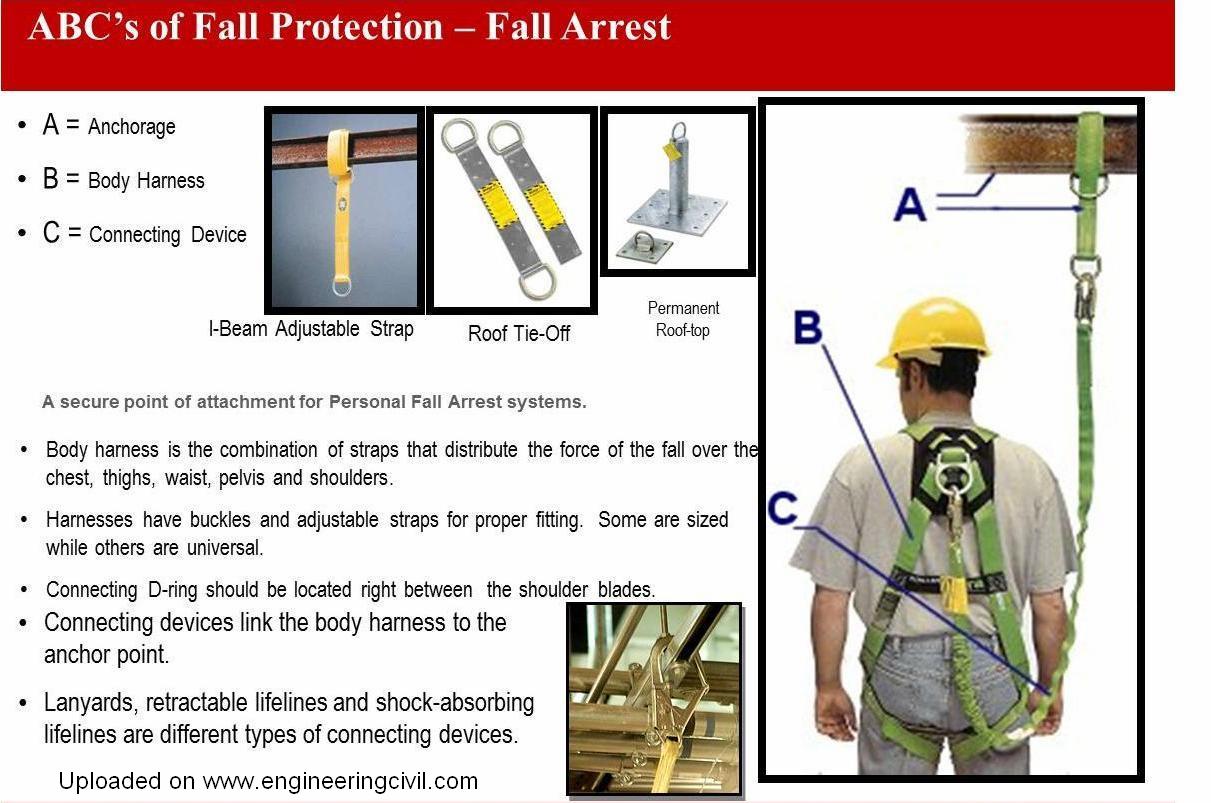
- Competent Person: This individual has the authority to identify existing and predictable hazards and the mandate to take prompt corrective measures. In the context of anchors, a competent person can inspect a 5,000-lb rated D-ring and ensure it is installed according to the manufacturer’s instructions. However, a competent person cannot certify an anchor point that lacks a 5,000-lb rating.
- Qualified Person: This individual possesses a recognized degree, certificate, or professional standing (like a P.E. license) and has extensive knowledge in the field. Only a qualified person can design a "certified" fall arrest system or determine the structural integrity of a building component used as an anchor if it doesn't meet the 5,000-lb rule-of-thumb.
By 2026, many insurance providers and site safety managers require that all permanent anchors be designed and signed off by a Qualified Person to mitigate liability, regardless of whether the 5,000-pound threshold is met.
Anchor Point Types and Application Requirements
Anchor points are categorized by their longevity and their intended use. Choosing the wrong type for the substrate (the material the anchor is attached to) can lead to catastrophic failure.
| Anchor Category | Typical Substrate | OSHA Requirement | Best Use Case |
|---|---|---|---|
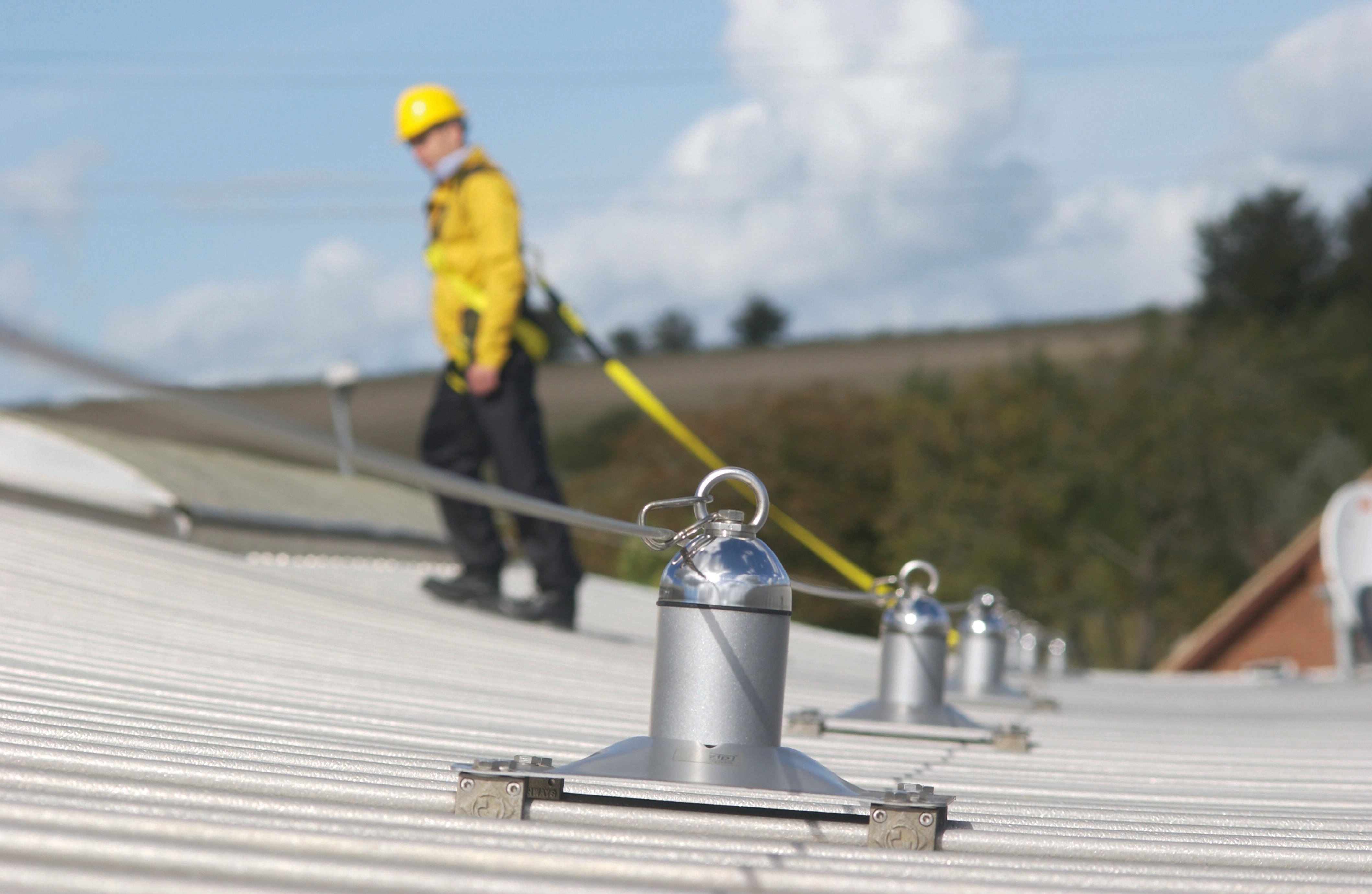
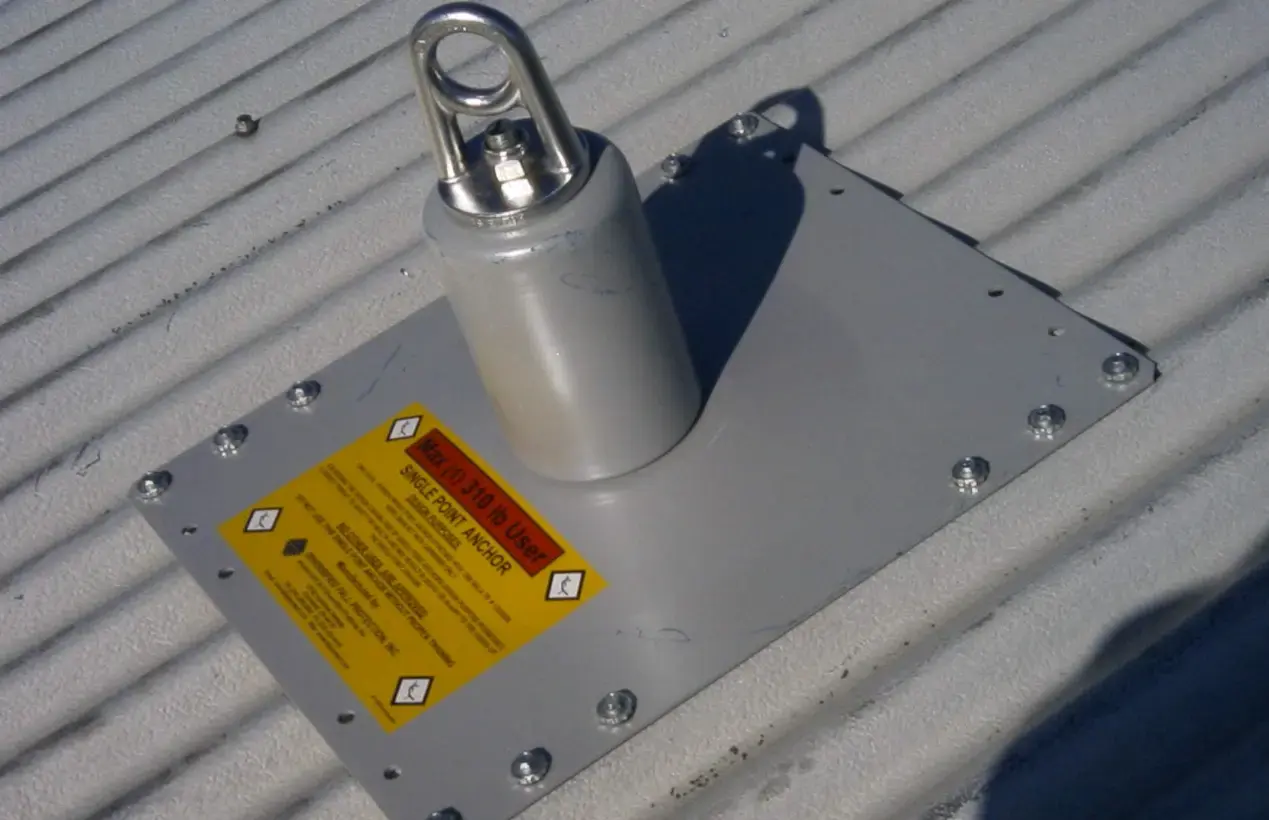
| Permanent Steel D-Ring | Structural Steel | 5,000 lbs or 2:1 Safety Factor | Routine roof maintenance, permanent workstations. |
| Concrete Wedge Anchor | Cured Concrete (3,000+ psi) | Must meet manufacturer torque specs | Retrofitting existing concrete structures. |
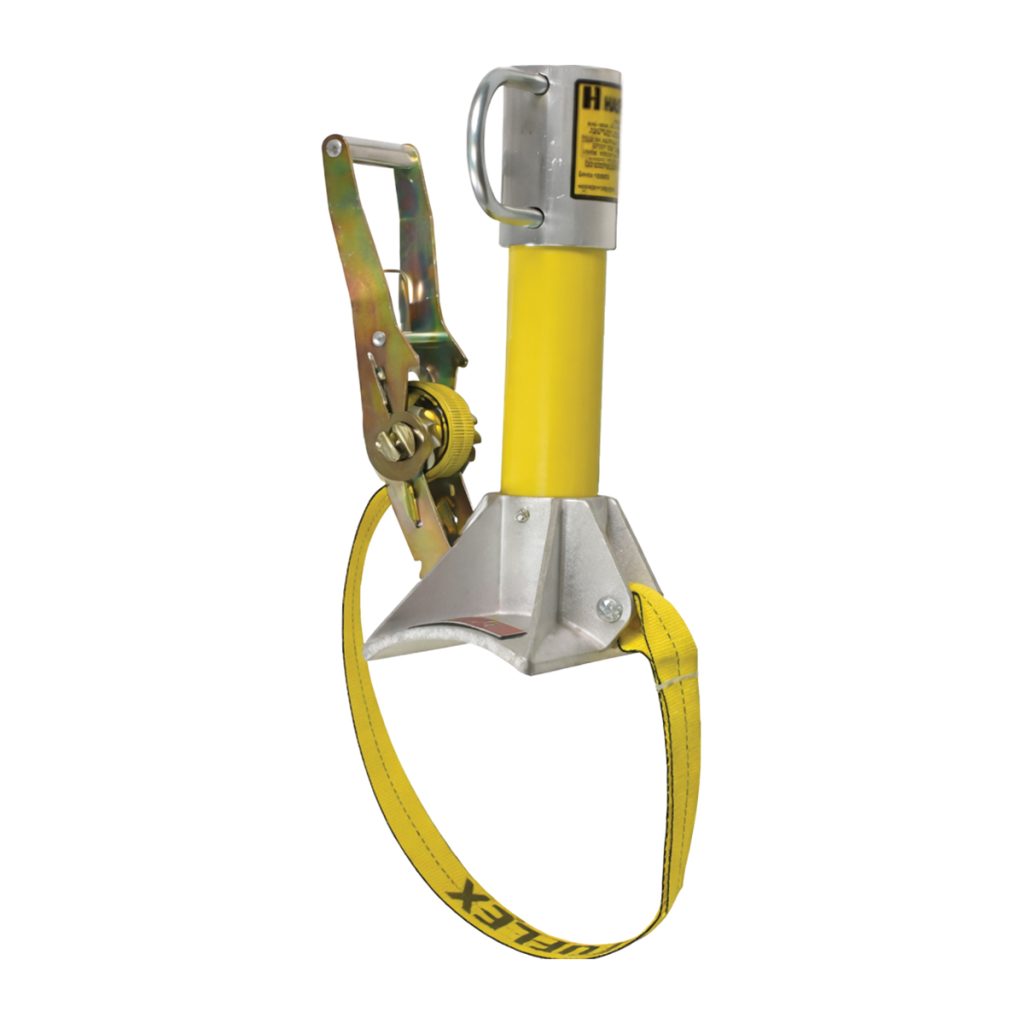
| Temporary Roof Anchor | Wood Trusses / Sheathing | Must be installed with specific fasteners | Residential roofing and light commercial framing. |
| Beam Clamps | I-Beams / H-Beams | Non-penetrating; 5,000 lbs | Construction sites where welding is prohibited. |
| Vacuum Anchors | Smooth, non-porous surfaces | Integrated force gauges required | Aircraft maintenance or glass installation. |
Positioning and Swing Fall Hazards
The requirement for an anchor point extends beyond its strength; its location is equally important. OSHA requires that anchors be positioned to prevent swing falls. A swing fall occurs when a worker is anchored at a horizontal distance from the work area. If they fall, they swing like a pendulum, potentially striking the structure or the ground.
To remain compliant, anchors should be located directly overhead whenever possible. If the worker must move laterally, the angle between the anchor and the worker should generally not exceed 30 degrees, or the fall clearance calculations must be adjusted to account for the swing radius.
Compatibility and Connection Requirements
An anchor point is only as strong as the connector used to join it to the rest of the PFAS. OSHA 1926.502(d)(6) mandates that snaphooks and carabiners must be compatible with the member to which they are connected to prevent "roll-out."
Roll-out occurs when a non-compatible connector is forced against the anchor in a way that puts pressure on the gate. Even a 5,000-pound anchor will fail to protect a worker if the carabiner gate breaks at 200 pounds of side-load pressure. To prevent this, all connectors used in 2026 must be self-closing and self-locking. Furthermore, workers must never "daisy-chain" two lanyards together or clip a snaphook back onto the lanyard itself unless the lanyard is specifically designed for "tie-back" use.
Inspection and Maintenance Protocols
OSHA requires that all fall protection equipment, including anchors, be inspected before each use by the employee. Additionally, a more formal inspection by a competent person is required at regular intervals (typically annually).
Criteria for Immediate Removal from Service:
- Deployment Forces: If an anchor has been subjected to the forces of an actual fall, it must be removed from service immediately and destroyed or re-certified by a manufacturer-authorized representative.
- Corrosion: Significant pitting or oxidation on metal anchors can compromise the molecular integrity of the steel.
- Deformation: Any bending, warping, or cracking in the anchor plate or D-ring indicates that the material has reached its yield point.
- Loose Fasteners: For temporary anchors, missing nails or screws, or signs of "backing out," require immediate re-installation.
- Substrate Integrity: If the wood is rotting or the concrete is spalling around the anchor, the anchor is no longer compliant, regardless of its own condition.
Common Mistakes in Anchor Compliance
Even with clear regulations, several errors frequently appear during OSHA inspections.
- Using Improper "Anchors of Opportunity": Workers often tie off to conduits, PVC piping, or small-diameter handrails. These structures are rarely rated for 5,000 pounds and will likely fail during a fall.
- Neglecting Fall Clearance: A compliant 5,000-pound anchor is useless if it is placed too low. If a worker uses a 6-foot lanyard with a 3.5-foot shock absorber, they need at least 18.5 feet of clearance (including a safety factor) from the anchor to the ground.
- Improper Fasteners: Using standard wood screws instead of the manufacturer-specified zinc-plated nails or lag bolts on a temporary roof anchor is a major violation that significantly reduces the anchor's load capacity.
Frequently Asked Questions
Can I use a guardrail as an anchor point?
Generally, no. OSHA requires guardrails to withstand a 200-pound force applied in any downward or outward direction. This is significantly less than the 5,000-pound requirement for a fall arrest anchor. You may only use a guardrail as an anchor if it has been specifically engineered and certified by a Qualified Person to meet fall arrest loads.
Does a 5,000-pound anchor need to be tested?
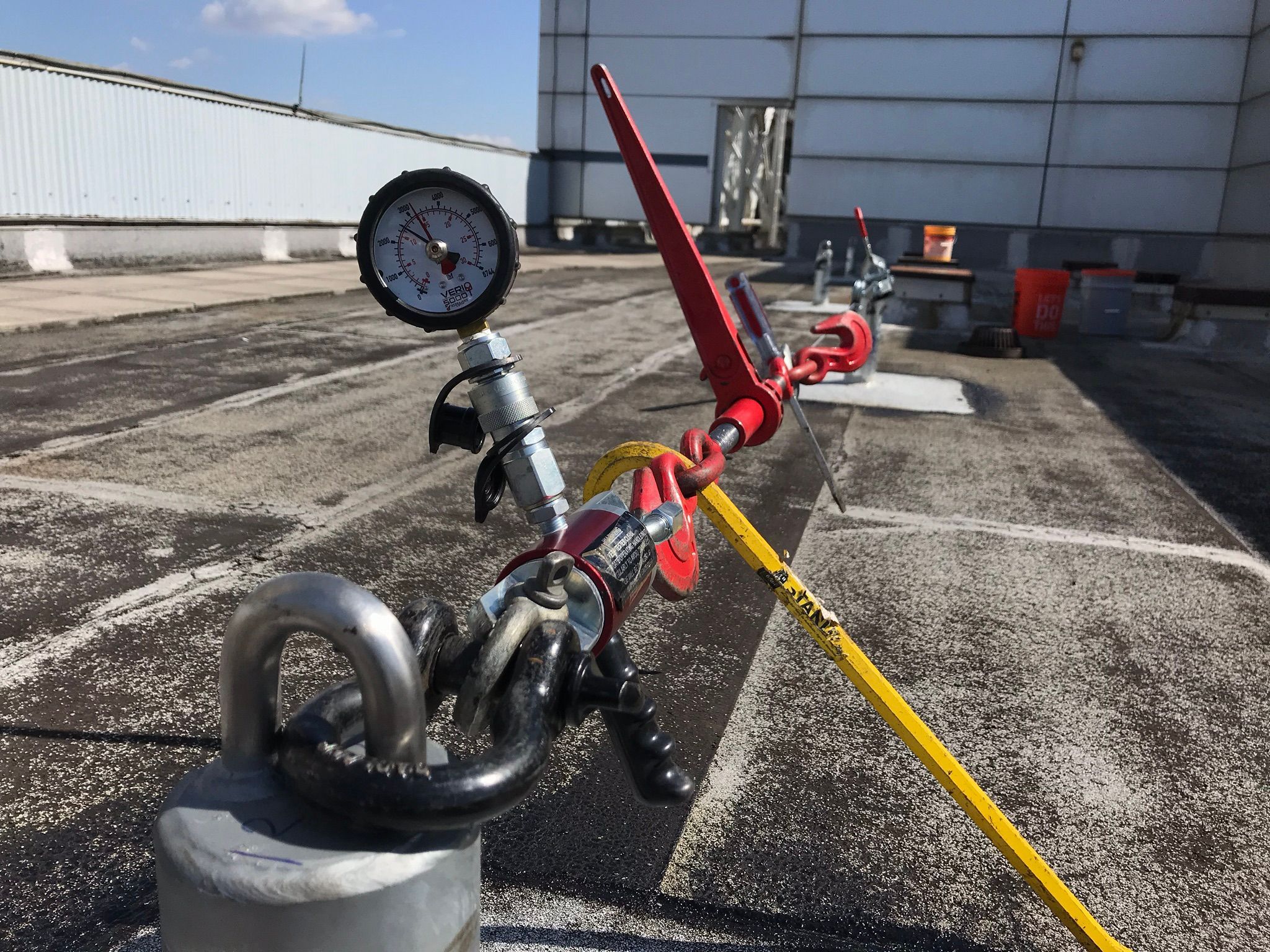
OSHA does not explicitly require "pull-testing" for every anchor. However, for "certified" anchors that rely on the 2:1 safety factor, the Qualified Person may require proof testing upon installation to verify that the substrate (like aged concrete) can actually handle the intended load.
How many people can tie off to a single 5,000-pound anchor?
Under the non-certified rule, a 5,000-pound anchor is rated for one person. If two people need to tie off to the same structural member, that member must be able to support 10,000 pounds, or the system must be designed by a Qualified Person as a multi-user system with a proper safety factor.
What is the difference between a fall arrest anchor and a restraint anchor?
A fall arrest anchor is designed to stop a fall in progress (5,000 lbs). A travel restraint system is designed to prevent a worker from ever reaching the edge. OSHA requirements for restraint anchors are lower (often 1,000 to 3,000 lbs depending on the application), but using a fall-arrest rated anchor for restraint is always the safer, more compliant choice.
Practical Recommendation for 2026
To ensure full compliance and maximum safety, organizations should move away from "anchors of opportunity" and toward a documented inventory of certified anchor points. Every anchor should be clearly labeled with its rating and the date of its last inspection. If your project involves a substrate where the structural capacity is unknown, do not guess; consult a structural engineer to certify the point. This proactive approach not only satisfies OSHA inspectors but, more importantly, ensures that the system will perform as intended during a life-threatening event.
Image Gallery