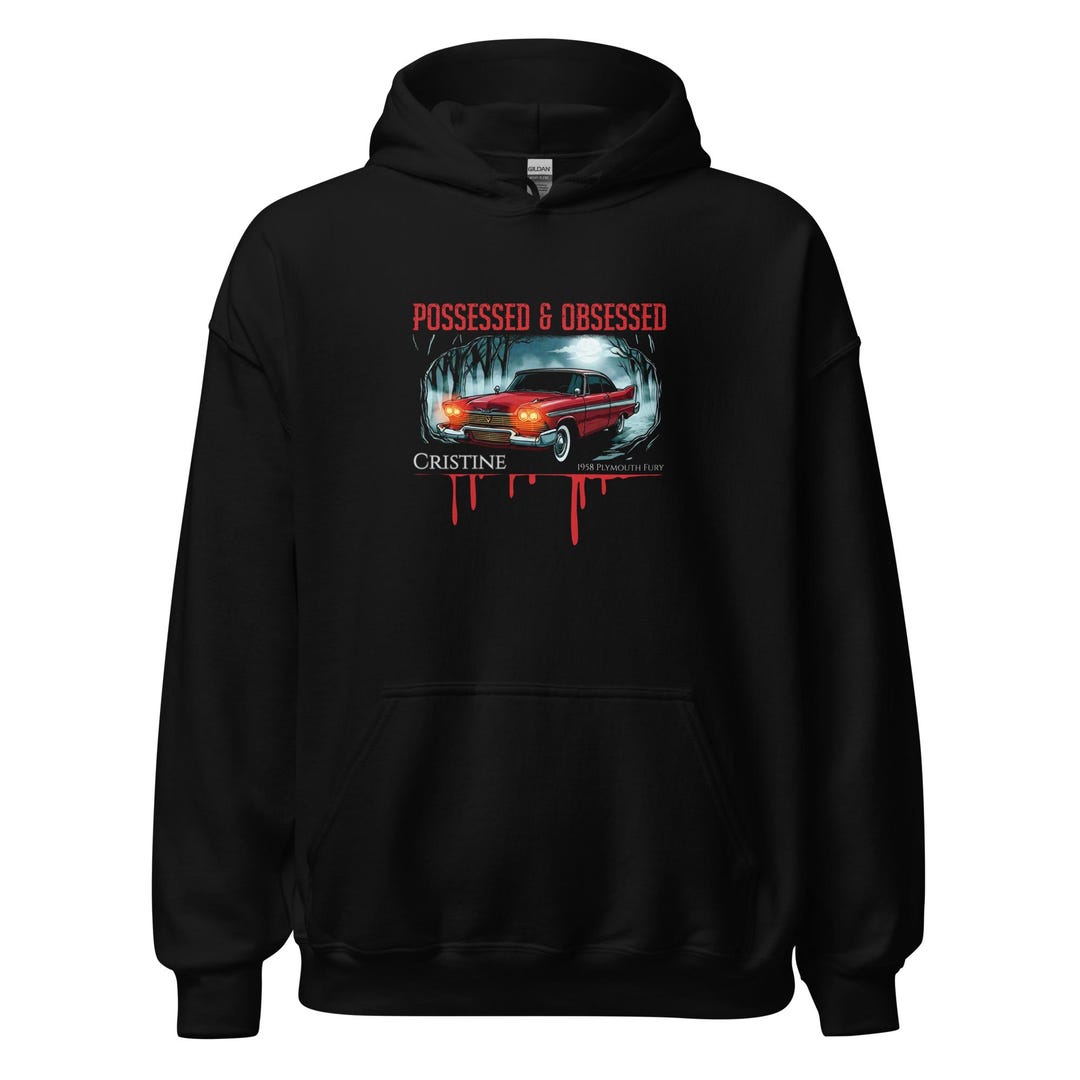
Why the Car Christine Was Possessed: Novel vs. Movie Lore Explained
In Stephen King's 1983 novel Christine, the 1958 Plymouth Fury is possessed by the malevolent spirit and obsessive hatred of its original owner, Roland D. LeBay. However, in John Carpenter's 1983 film adaptation, the car is portrayed a...
In Stephen King's 1983 novel Christine, the 1958 Plymouth Fury is possessed by the malevolent spirit and obsessive hatred of its original owner, Roland D. LeBay. However, in John Carpenter's 1983 film adaptation, the car is portrayed as inherently evil from the moment of manufacture, born malevolent right on the Detroit assembly line.
Contents
Understanding why Christine was possessed requires examining two distinct canons: Stephen King’s original supernatural horror novel and John Carpenter’s iconic cinematic adaptation. While both versions feature a bright red 1958 Plymouth Fury capable of self-repair and cold-blooded murder, their explanations for why the vehicle harbors evil stem from fundamentally different narrative origins.
The Origin of Evil: Spiritual Haunting vs. Inherent Malice
The divergence between the book and the movie is the primary source of confusion for fans exploring the lore of Christine. King grounded his narrative in spiritual haunting and psychological decay, whereas Carpenter streamlined the story into a visceral monster movie where the machine itself is a natural force of evil.
- Stephen King's Novel (1983)
- Roland D. LeBay's lingering hatred
- Obsessive spiritual possession
- Absorbs life force to regenerate
- John Carpenter's Film (1983)
- Manufactured evil on assembly line
- Autonomous, innate malice
- Self-repairing vehicle of doom
Stephen King’s Novel: The Spirit of Roland D. LeBay
In Stephen King’s 1983 novel, Christine is not inherently evil when she rolls off the assembly line. Instead, the vehicle becomes possessed through the intense, concentrated malice of her first owner, Roland D. LeBay.
LeBay is portrayed as a deeply hateful, misanthropic Army veteran who bought the Plymouth Fury brand new in 1957. Throughout his ownership, LeBay poured all of his rage, obsession, and bitterness into the car, viewing it as the only thing in the world worth loving. The vehicle became a psychic reservoir for his malevolence.
Several tragic events tethered dark energy to the car during LeBay's ownership:
- The Death of Rita LeBay: Roland’s young daughter choked to death on a hamburger in the backseat of the vehicle.
- The Death of Veronica LeBay: Roland’s wife, overcome by grief and driven despairing by Roland's cruelty, committed suicide in the front seat via carbon monoxide poisoning.
- LeBay's Obsessive Death: As LeBay aged, his physical health deteriorated, but his furious devotion to Christine never waned. When he died, his lingering spirit attached itself permanently to the automobile.
When high school student Arnie Cunningham discovers the dilapidated Plymouth sitting in George LeBay's driveway, Roland LeBay’s ghost is waiting. The possession in the novel operates as a spiritual infection: as Arnie restores the physical car, Roland LeBay’s ghost gradually takes over Arnie’s body and mind, using the vehicle as a physical weapon to strike down anyone who comes between them.
John Carpenter’s Film: Manufactured Evil
When director John Carpenter and screenwriter Bill Phillips adapted Christine for the screen in 1983, they deliberately removed the subplot involving Roland D. LeBay’s ghost possessing Arnie. Carpenter felt that depicting a teenager possessed by an old man's spirit would feel comical or overly convoluted on film.
Instead, the movie establishes in its iconic opening scene that Christine was born evil.
Set in Detroit, Michigan, in September 1957, the film opens inside a Chrysler assembly plant. As George Thorogood & The Destroyers' "Bad to the Bone" plays, the pristine red-and-white Fury displays autonomous malice before even leaving the factory floor:
- The hood slams down unprovoked, crushing the hand of an assembly worker who attempts to inspect the engine.
- An assembly line inspector drops cigar ash onto the car's front seat; shortly after, he is found dead inside the locked vehicle, suffocated by fumes.
In Carpenter’s cinematic universe, Christine requires no human catalyst or tragic backstory to explain her behavior. She is a supernatural anomaly—an entity born with a cold, jealous sentience that demands total devotion from whoever holds her keys.
Comparative Breakdown: Novel vs. Film Mechanics
To understand how the manifestation of evil alters the narrative across both formats, the following table details the key differences in how Christine's possession operates:
| Feature | Stephen King’s Novel (1983) | John Carpenter’s Film (1983) |
|---|---|---|
| Primary Source of Possession | Ghost of original owner, Roland D. LeBay | Inherent, unexplainable supernatural malice |
| Roland D. LeBay’s Presence | Active central antagonist; haunts Arnie directly | Completely omitted (only mentioned briefly as deceased) |
| Origin Point of Malice | Years of human hatred and tragic family deaths | The assembly line floor in Detroit (1957) |
| Mechanics of Arnie's Transformation | Spiritual takeover; Arnie acquires LeBay's limp, back pain, and vocabulary | Psychological corruption driven by obsession and power |
| Regeneration & Odometer | Odometer rolls backward as the car absorbs human life force | Physical metal bends back into shape autonomously |
| Primary Scent / Indicator | Phantom smell of cheap cigar smoke lingering in the air | 1950s rock-and-roll music playing over the radio |
| Fate of Arnie Cunningham | Dies in a highway crash while fighting LeBay's spirit inside a truck | Tragically killed by Christine during the garage battle |
How Christine’s Possession Works: The Mechanics of Corruption
Whether analyzing the novel's ghost theory or the film's innate demon theory, Christine's supernatural powers follow consistent, terrifying mechanics once she establishes a bond with her driver.
The Symbiotic Bond with Arnie Cunningham
Christine does not simply act as a driverless killer; she establishes a parasitic relationship with her owner. When Arnie Cunningham first sees the car, he is an unpopular, severely bullied teenager suffering from severe acne, poor eyesight, and low self-esteem.
As the bond deepens, a reciprocal exchange of vitality occurs:
Physical Restoration: Arnie’s acne clears up, his eyesight improves to the point where he no longer needs glasses, and he adopts a confident, aggressive posture. Simultaneously, Christine's rusted-out chassis, broken engine, and rotted interior magically heal.
Personality Erosion: In exchange for physical confidence, Arnie loses his empathy, humor, and moral compass. In the novel, this occurs because LeBay's misanthropic soul is overriding Arnie's consciousness. In the movie, it represents the corrupting nature of absolute power and obsessive devotion.
Vulnerable Host: Arnie
- Grants Youth & Vitality
Parasitic Vehicle: Christine
- Restores Chassis & Mental Control
Self-Repair and Autonomous Driving
Christine’s most famous supernatural trait is her ability to regenerate from severe structural damage.
In the novel, this repair mechanism is tied directly to her odometer. When Christine drives or kills, her odometer rolls backward, unwinding time and reverting her mechanical body to its pristine 1958 factory condition. The energy required for this restoration is drained from the people around her and the victims she destroys.
In the film, the self-repair is depicted visually through groundbreaking practical effects. When bullies smash Christine with sledgehammers in Will Darnell’s garage, she uses her inner supernatural force to pop dented metal back out, re-seat broken windshield glass, and smooth over scratched paint without human intervention.
Jealousy and Isolation
Christine operates like an abusive, possessive romantic partner. She tolerates no rivals for Arnie’s affection.
When Leigh Cabot begins dating Arnie, Christine attempts to kill her—first by choking her on a hamburger inside the cabin (mirroring the death of Roland LeBay’s daughter in the novel) and later through direct vehicular attack. Anyone who threatens Arnie, insults the car, or tries to come between them—such as high school bully Buddy Repperton or Arnie’s best friend Dennis Guilder—is targeted for destruction.
Deeper Themes: What the Possession Symbolizes
Beyond the supernatural mechanics, Stephen King used Christine's possession to explore broader American cultural themes during the late 20th century.
The Dark Side of 1950s Nostalgia
Published in 1983, King's novel arrived during a period of heavy cultural nostalgia for the 1950s—an era remembered for rock-and-roll, classic styling, and post-war industrial dominance. King subverted this nostalgia by turning a symbol of 1950s American prosperity into an unyielding killer.
Christine’s constant radio play of classic 1950s tracks (such as Dion and The Belmonts' "Teenager in Love" or Little Richard's "Keep A-Knockin'") serves as a constant reminder that the past can be cruel, unforgiving, and unwilling to let go of the present.
Obsession, Addiction, and Adolescent Isolation
Christine serves as a metaphor for addiction and toxic relationships. Arnie’s sudden transformation mirrors the behavioral shifts seen in individuals dealing with severe substance abuse or joining an abusive cult:
- He alienates his lifelong friend, Dennis.
- He cuts ties with his loving but overly controlling parents.
- He prioritizes spending money on parts and garage space over his education and future.
The possession illustrates how an vulnerable individual, seeking escape from social rejection and insecurity, can willingly surrender their identity to a destructive force that promises power and protection.
Frequently Asked Questions
Why was Christine painted red if standard 1958 Plymouth Furies were yellow?
In 1958, standard production Plymouth Furies were sold exclusively in a single color scheme: Buckskin Beige with gold anodized aluminum trim. In the introduction to the novel, Stephen King acknowledged that Christine was a special-order vehicle, painted custom Autumn Red and Off-White. John Carpenter retained this striking red aesthetic for the 1983 film because red visually reinforces danger, blood, and passion.
Did Roland LeBay possess Christine, or did Christine corrupt LeBay?
In Stephen King's novel, it is a two-way corruption. Roland LeBay was already an ill-tempered, hateful man before buying the car, but his obsession with Christine concentrated his anger. Over decades of ownership, his evil bled into the metal. After his death, his spirit bonded with the vehicle completely, making it impossible to separate LeBay's ghost from the car itself.
How does Christine's possession differ from other Stephen King vehicles?
Stephen King frequently explores possessed or sentient machinery, such as in Maximum Overdrive (based on his short story "Trucks") and From a Buick 8. However, while the trucks in "Trucks" are animated by extraterrestrial or unexplainable cosmic forces, and the car in From a Buick 8 is an interdimensional doorway disguised as a vehicle, Christine's possession is uniquely driven by human malice, soul transfer, and personal obsession.
Why did John Carpenter remove Roland LeBay's ghost from the movie?
John Carpenter and screenwriter Bill Phillips felt that showing a literal ghost driving a car or having Arnie visibly act like an old man on screen would diminish the cinematic tension. Carpenter wanted a streamlined narrative focused on the terrifying concept of an unstoppable machine with a mind of its own, prioritizing visual momentum over complex supernatural backstories.
Can Christine ever truly be destroyed?
In both the book and the movie, physical destruction is only temporary. At the end of the film, Christine is crushed into a compact cube of scrap metal by a junk crusher named "Darnell's Demolition," yet the final shot shows a piece of her chrome grill slowly twitching back into shape. In the novel, after Christine is destroyed by a transformed school bus named "Pink Category," Dennis Guilder reads a newspaper clipping years later detailing a car accident in California caused by a red-and-white Plymouth—hinting that her malevolent spirit lives on.
How to Explore the Lore Further
For readers and film enthusiasts looking to dive deeper into the story of Christine:
- Read Stephen King’s 1983 Novel: Experience the narrative as originally conceived, focusing on the character depth of Roland LeBay, the psychological breakdown of Arnie Cunningham, and the rich history of the Plymouth Fury.
- Watch John Carpenter’s 1983 Film Adaptation: Compare how Carpenter uses lighting, practical visual effects, and Keith Gordon's dramatic performance to convey machine obsession without relying on ghost sequences.
- Analyze the Practical Effects: Explore behind-the-scenes material on how special effects supervisor Roy Arbogast achieved Christine’s famous self-repair scenes using hidden hydraulic pumps, plastic panels, and rubber molds long before digital CGI was standard practice in filmmaking.
Image Gallery