Understanding the Harvard MBA Tuition and Total Cost
Pursuing a Master in Business Administration at Harvard Business School requires a comprehensive financial strategy that extends far beyond the basic tuition sticker price. Evaluating the complete investment involves accounting for man...
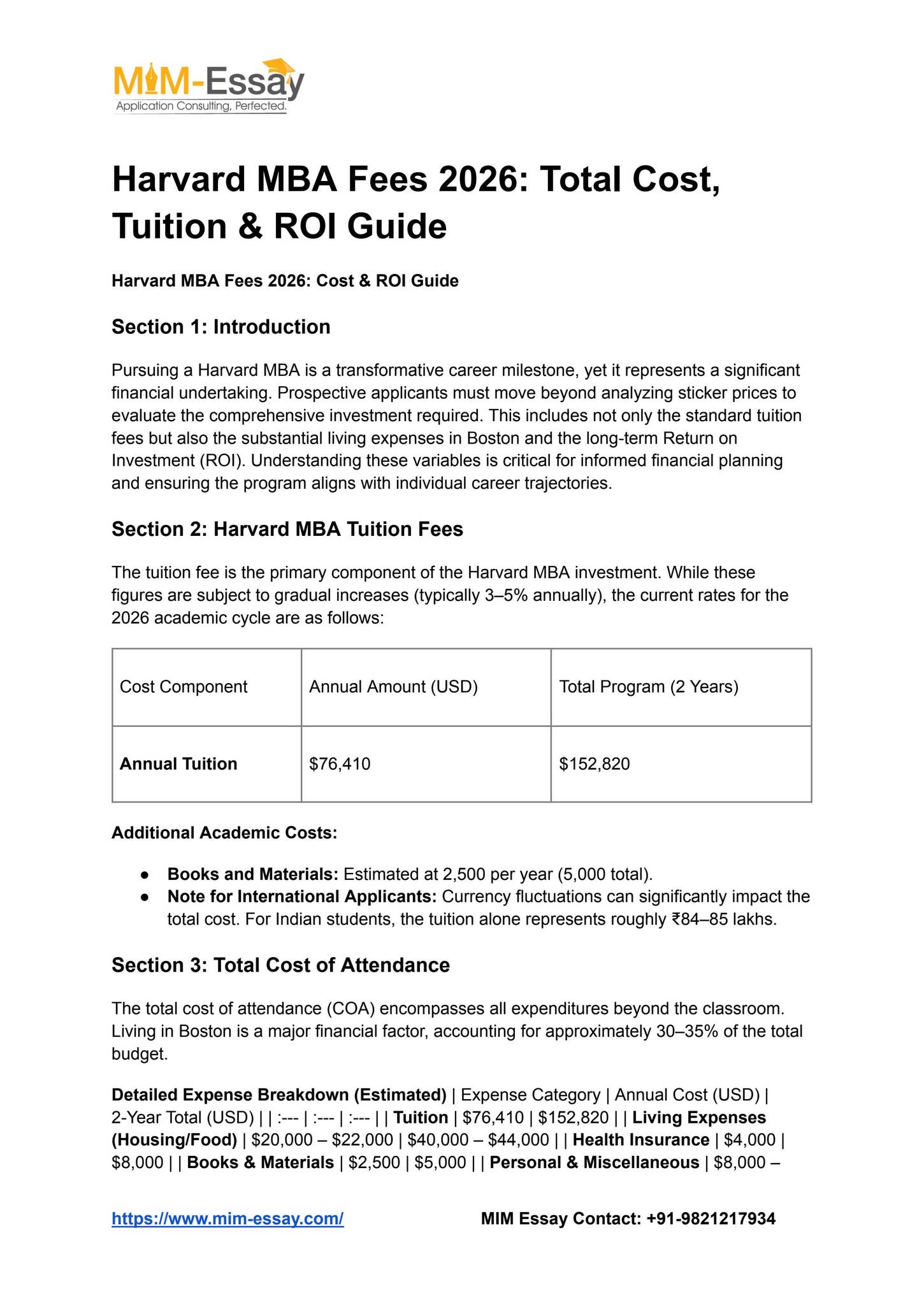
Pursuing a Master in Business Administration at Harvard Business School requires a comprehensive financial strategy that extends far beyond the basic tuition sticker price. Evaluating the complete investment involves accounting for mandatory fees, health insurance, housing, food, learning materials, and personal living expenses over a rigorous two-year timeline.
Contents
When planning for an MBA at Harvard, applicants must look past the initial tuition figures published by the financial aid office. While tuition represents the single largest expenditure, indirect costs such as Boston-area housing, utilities, transportation, and course materials significantly expand the overall capital requirement. Furthermore, because the program follows a full-time, residential format, students must factor in opportunity costs—specifically, the foregone salary from leaving the workforce for two academic years. Understanding the exact breakdown of direct institutional charges versus indirect living costs enables prospective students to build realistic budgets, navigate loan structures, and maximize institutional need-based grant opportunities.
Deconstructing the Direct Costs: Tuition and Mandatory Fees
The foundation of any financial assessment for Harvard Business School (HBS) begins with direct institutional charges. Tuition is billed directly by the university each academic year and covers the core delivery of the curriculum, faculty instruction, access to extensive research databases, and career advisory services.
In addition to base tuition, students encounter mandatory student fees. These fees typically encompass the University Health Services fee, student life fees, and specialized program technology charges. Unlike tuition, which remains fixed across the cohort, some fees may vary slightly depending on whether a student enrolls in the university-sponsored health insurance plan or waives it with comparable external coverage.
Direct costs are predictable and billed in standardized installments at the start of each semester. However, they represent only a portion of the actual out-of-pocket expenses required to complete the program. Reviewing these line items annually through the official HBS financial aid office ensures prospective applicants utilize the most current figures for their planning models.
Estimating Indirect Expenses: Living in the Boston Area
The total cost of attendance (COA) calculated by Harvard Business School incorporates a realistic allowance for indirect expenses. Because the MBA program is entirely residential and based in the high-cost Boston and Cambridge metropolitan area, living expenses constitute a substantial share of the overall budget.
Indirect expenses generally include:
- Housing and Utilities: Whether living on campus in the residentially integrated MBA dormitories or renting an apartment in Boston or Cambridge, rent and utilities form the largest component of indirect spending.
- Food and Groceries: Estimates account for meal plans, dining out, and grocery purchases for a single student living independently.
- Personal and Miscellaneous Expenses: Clothing, laundry, entertainment, and routine personal care items.
- Transportation: Public transit passes (MBTA), occasional travel, and local commuting costs.
While HBS provides standard baseline estimates for these indirect costs, individual spending habits vary. Students with families or dependents will experience significantly higher living expense adjustments, as the estimated cost of attendance scales to reflect partner and child living allowances.
Academic Materials and Case Study Fees
A defining feature of the Harvard MBA curriculum is the heavy reliance on the case method, which requires students to read, analyze, and discuss hundreds of real-world business scenarios. Consequently, academic materials represent a distinct line item in the total cost calculation.
Rather than traditional textbook purchases, HBS students acquire a steady stream of case studies, specialized simulation software, digital readings, and multimedia materials published by Harvard Business Publishing and other institutions. The university bundles or estimates these expenses within the standard course-materials allowance. While moderate compared to tuition, budgeting for these specialized academic tools prevents unexpected out-of-pocket strain during the high-intensity academic quarters.
Summary of Estimated Two-Year Budget Components
To visualize how direct and indirect expenses accumulate across the duration of the program, the following table outlines the primary categories evaluated in a standard Harvard Business School student budget.
| Expense Category | Nature of Cost | Description & Impact on Budget |
|---|---|---|
| Tuition | Direct | Base instructional fee billed per academic year by the university. |
| Mandatory Fees | Direct | University health, technology, and student activity fees. |
| Housing & Utilities | Indirect | On-campus or off-campus rent, electricity, internet, and heating. |
| Food & Groceries | Indirect | Dining hall plans, local eateries, and standard grocery provisioning. |
| Course Materials | Direct/Indirect | Case studies, textbooks, business simulations, and software licenses. |
| Personal Living | Indirect | Health insurance waivers, transportation, clothing, and miscellaneous items. |
Financial Aid, Grants, and Scholarship Opportunities
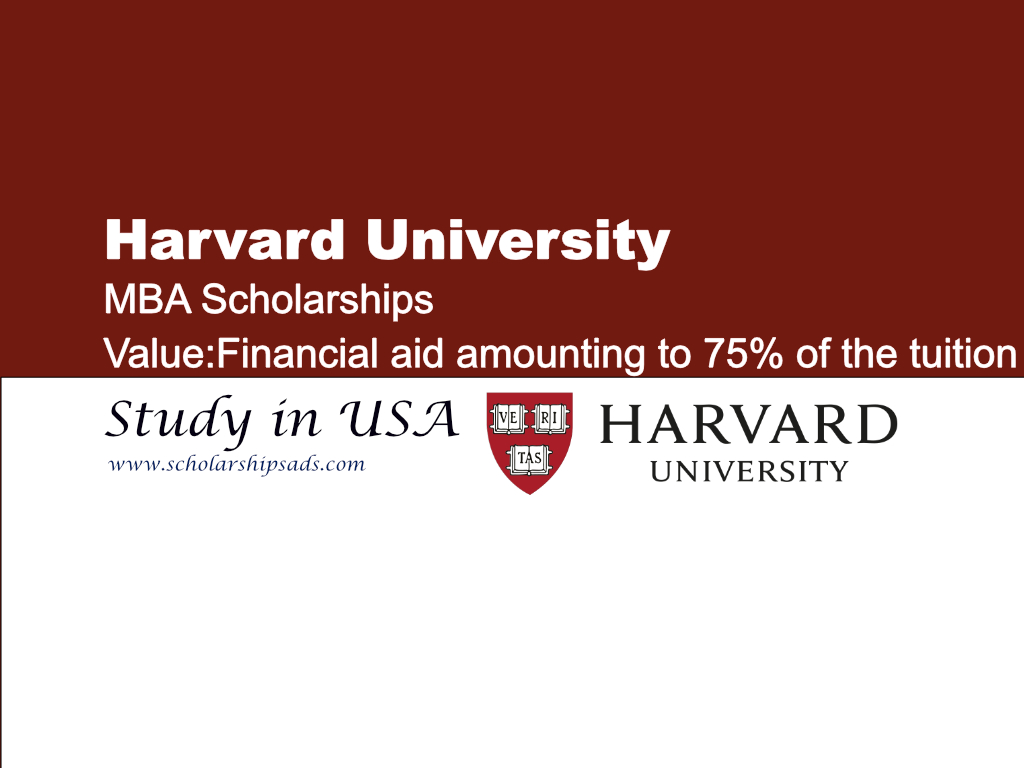
Recognizing the substantial financial commitment required, Harvard Business School maintains a robust, need-based financial aid program designed to make the MBA accessible to admitted candidates from diverse socioeconomic backgrounds. Unlike merit-based scholarship models found at some institutions, HBS allocates its scholarship funds entirely on demonstrated financial need.
The financial aid calculation evaluates a candidate's pre-MBA income, assets, and historical savings. By assessing these factors, HBS determines an expected student contribution, covering any remaining gap between that contribution and the total cost of attendance with a mix of institutional grants and need-based loans. This approach ensures that funding does not become an insurmountable barrier for admitted applicants, regardless of whether they come from private equity, non-profit sectors, government service, or entrepreneurship.
Exploring Loan Options and External Funding
For the portion of the cost of attendance not covered by institutional grants or personal savings, students typically utilize education loans. Both federal student loan programs and private lending options are available to domestic and international students.
- Federal Loans: Domestic students frequently utilize federal Direct Unsubsidized Loans and Grad PLUS loans, which offer fixed interest rates and income-driven repayment frameworks.
- Private Lenders: International students—who generally lack eligibility for standard U.S. federal loan programs—often rely on private educational lenders that offer international student loans, frequently with or without requiring a U.S.-based co-signer.
Financial planning for these loans requires careful modeling of post-MBA compensation against debt-service obligations. While average starting salaries for HBS graduates are historically high, individual career paths vary widely, making conservative debt management an essential practice during the program.
Frequently Asked Questions
Does Harvard Business School offer merit-based scholarships?
No. Harvard Business School does not award merit-based scholarships. All institutional fellowship and grant assistance is distributed strictly on the basis of demonstrated financial need, as calculated by the HBS Financial Aid Committee using standardized asset and income assessments.
Are living expenses included in the official cost of attendance?
Yes. The official cost of attendance calculated by HBS includes a comprehensive allowance for indirect costs, such as housing, food, local transportation, personal expenses, and health insurance, which forms the ceiling for financial aid awards and student loan borrowing.
How do international students finance their HBS MBA?
International students are eligible for need-based institutional grants from HBS on the exact same terms as domestic students. For the remaining cost, they generally utilize specialized private education loans designed for international borrowers, often working with lenders that do not mandate a U.S. co-signer.
Can working during the MBA offset tuition costs?
The Harvard MBA is an intensive, full-time, residential program designed to immerse students fully in coursework, recruiting, and section activities. Consequently, the rigorous academic schedule and institutional guidelines generally preclude working a part-time job during the academic year.
What is the opportunity cost of an HBS MBA?
Beyond direct tuition and living expenses, the primary opportunity cost consists of two years of foregone salary and career progression. Prospective students must factor their current annual earnings multiplied by two into their long-term return-on-investment calculations.
Next Steps for Prospective Applicants
Evaluating the true financial commitment of an MBA requires looking past headline tuition figures and constructing a personalized budget that accounts for local living expenses, partner or family needs, and potential financial aid eligibility. Prospective applicants should utilize the interactive Net Price Calculator and financial aid forecasting tools provided directly on the official Harvard Business School admissions portal to model their individual financial scenarios well in advance of application deadlines.
Image Gallery