Comprehensive Guide to Long Haired Dog Grooming Brushes: Selection, Types, and Techniques
Selecting the right long haired dog grooming brush depends on your dog's specific coat texture, density, and undercoat structure. High-density double coats require firm slicker brushes and undercoat rakes, while silky single coats bene...
Selecting the right long haired dog grooming brush depends on your dog's specific coat texture, density, and undercoat structure. High-density double coats require firm slicker brushes and undercoat rakes, while silky single coats benefit from long-pin brushes and detangling combs. Utilizing proper line-brushing techniques prevents painful matting, reduces shedding, and maintains overall coat health.
Contents
Understanding Long-Haired Dog Coat Types
Long-haired dogs possess vastly different coat structures, and using the wrong tool can lead to skin irritation, hair breakage, or severe matting. Before selecting a long haired dog grooming brush, you must identify your dog's coat classification.
- Long-Haired Dog Coat Types
- Double Coats (Dense Undercoat)
- Dense / Heavy
- Thick / Guard
- Single Coats (No Undercoat)
- Silky / Fine
- Curly / Wool
- Double Coats (Dense Undercoat)
Double-Coated Long-Haired Breeds
Breeds such as Golden Retrievers, Siberian Huskies, Samoyeds, Great Pyrenees, and Shetland Sheepdogs have two distinct layers: a soft, dense insulating undercoat beneath a protective topcoat of guard hairs.
- Grooming Need: Tools must reach deep into the undercoat to pull out dead, shed fur without damaging the topcoat. Soft surface brushes fail to penetrate this thick barrier, leading to hidden mats near the skin.
Single-Coated Long-Haired Breeds
Breeds including Yorkshire Terriers, Maltese, Shih Tzus, and Afghan Hounds lack a dense undercoat. Their coat consists of fine, long hair that continuously grows, similar to human hair.
- Grooming Need: These coats are susceptible to tangling, static, and split ends. Grooming tools must feature smooth, polished tines that gently glide through fine strands without snagging or pulling the delicate follicle.
Curly, Wave, and Drop-Coat Breeds
Poodle mixes (Doodles), Portuguese Water Dogs, and Old English Sheepdogs present dense, curly, or heavy drop coats that trap loose hairs inside the coat matrix. If unbrushed, trapped shed hair quickly felts into dense mats.
- Grooming Need: Long tines with flexible pads are required to break up loose clusters before they bind with adjacent hair shafts.
Essential Types of Brushes for Long-Haired Dogs
A single brush is rarely sufficient to maintain a long coat. Professional groomers rely on a combination of primary and specialized tools to manage different layers of fur.
| Primary Tools | De-Shedding Tools | Finishing Tools |
|---|---|---|
| Long-Pin Slicker BrushPin Brush | Undercoat RakesDematting Rakes | Boar-Bristle BrushesSteel Greyhound Combs |
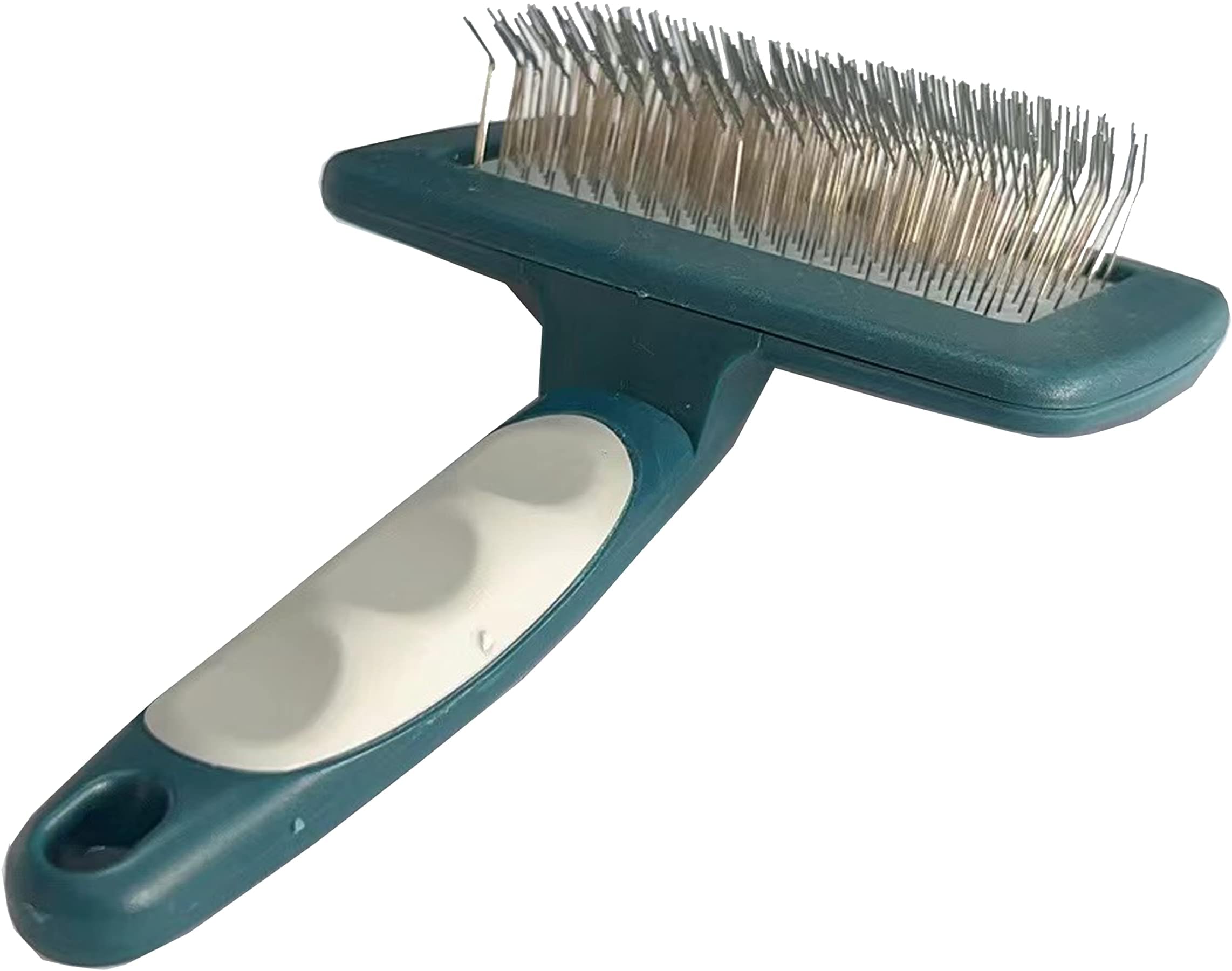
1. Long-Pin Slicker Brushes
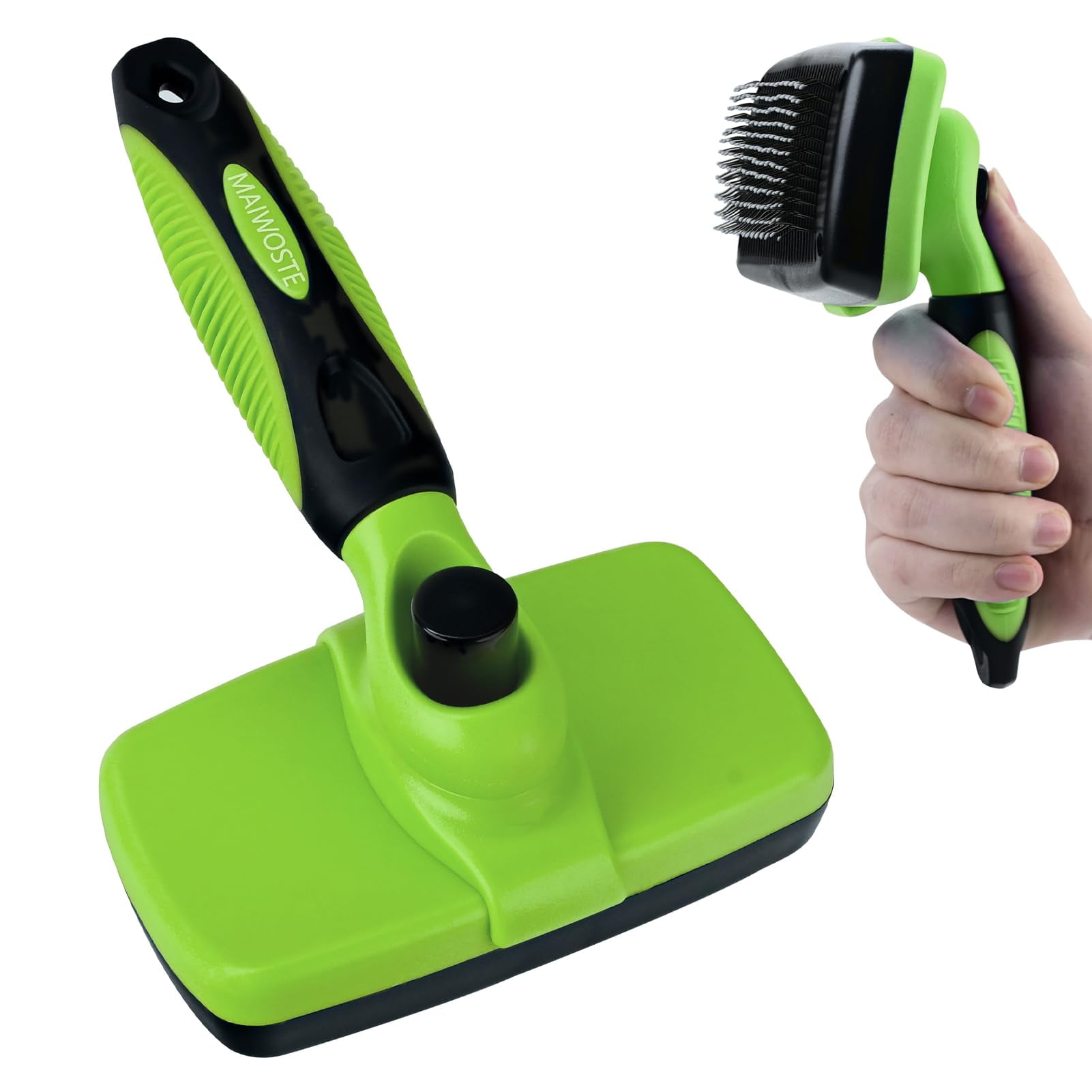
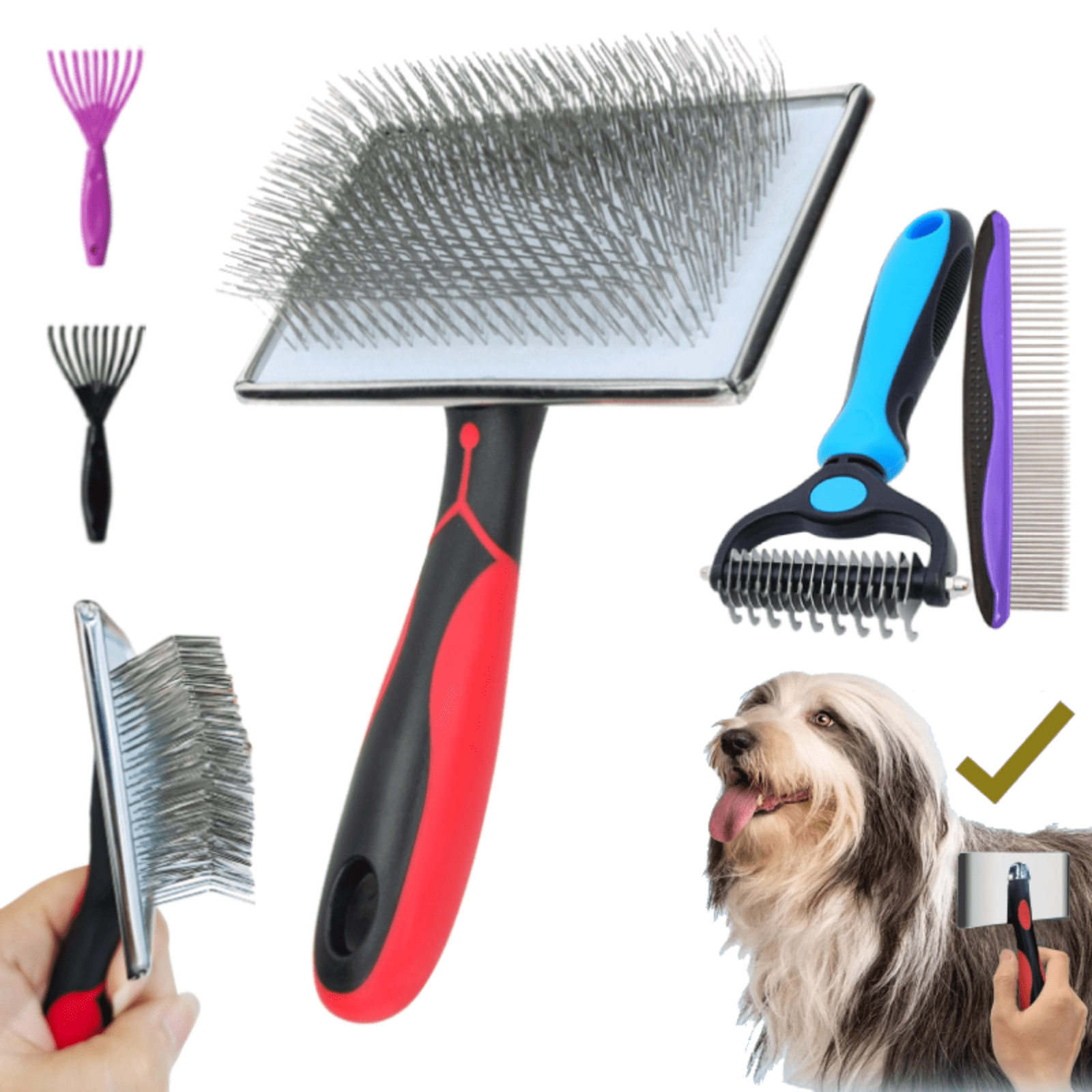
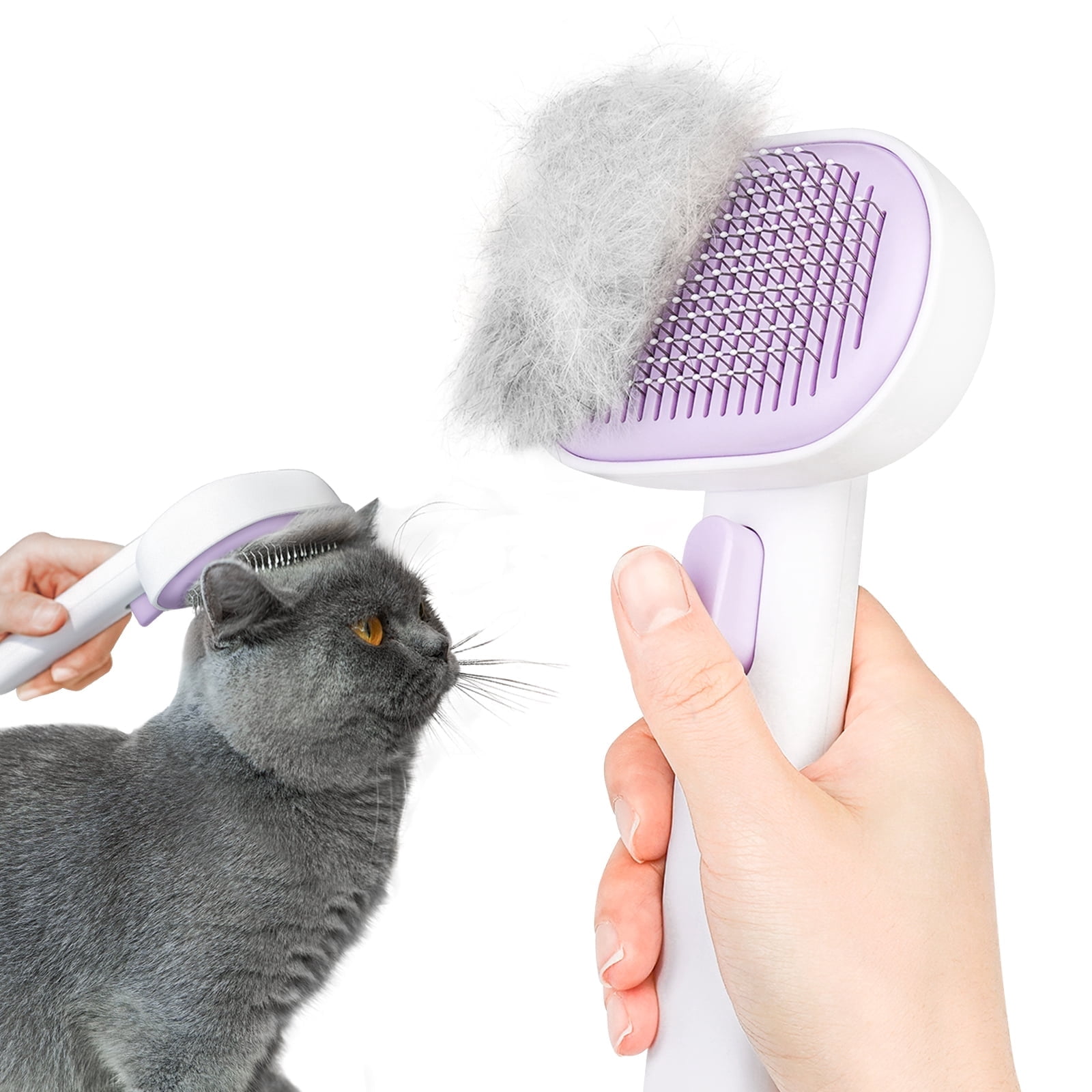
Slicker brushes feature dense rows of fine wire tines angled slightly at the tips, mounted on a rubber backing pad. For long-haired breeds, standard slickers are often inadequate; long-pin slickers (with tines measuring 15mm to 22mm) are necessary to penetrate deep coats.
- Best For: Dense double coats, curly coats, and breeds prone to dense undercoat buildup.
- Mechanism: The angled wires capture loose undercoat hair while breaking apart tiny tangles before they convert into hard mats.
- Selection Tip: Choose a flexible-backed slicker brush. A flexible brush head bends under pressure, reducing wrist strain and preventing skin abrasion (brush burn).
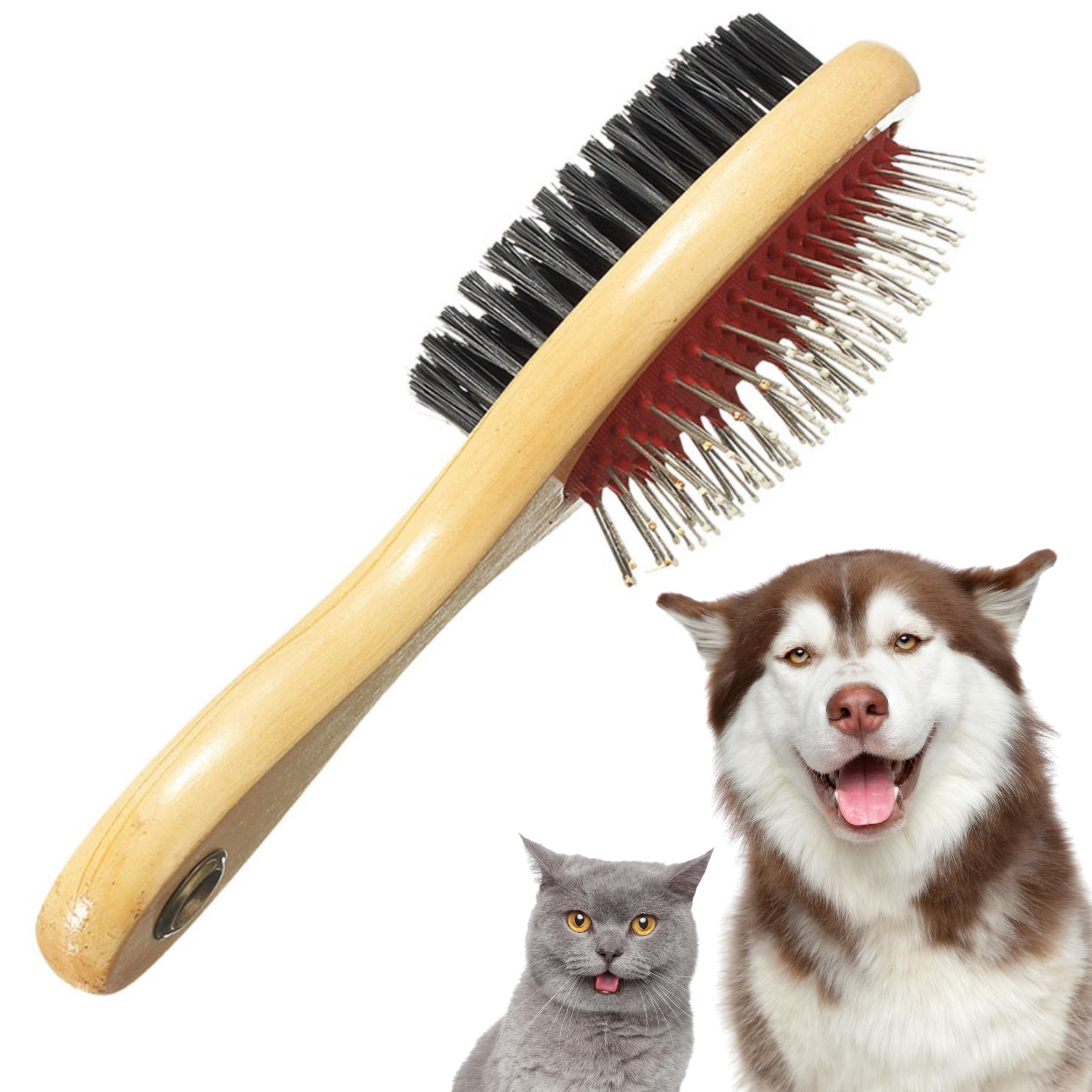
2. Pin Brushes
Pin brushes resemble standard human hairbrushes but feature straight, widely spaced metal pins anchored into a flexible cushion pad.
- Best For: Fine, silky single coats, long coats on sensitive dogs, and daily maintenance of long guard hairs.
- Mechanism: The pins pass through long topcoat strands without snagging, separating individual hairs while gently massaging the skin to stimulate natural sebum production.
- Selection Tip: Avoid cheap plastic-tipped pins for long, dense coats; the molded plastic balls can trap long hairs and tear them out at the root. Select un-tipped, polished stainless steel pins with rounded end-caps.
3. Undercoat Rakes
An undercoat rake consists of one or two rows of rigid, rounded metal tines mounted on a T-shaped handle, designed specifically for double-coated breeds.
- Best For: Heavy shedding seasons (coat blows) in double-coated long-haired dogs.
- Mechanism: The wide spacing between teeth lets the rake slide past outer guard hairs, pulling out trapped, dead undercoat fibers without pulling or cutting healthy hair.
- Selection Tip: Match tine length to coat depth. Dogs with extreme coats (such as Newfoundland dogs or Chow Chows) require long-tine rakes (1.5 inches), while medium-long coats require shorter tines (0.75 to 1 inch).
4. Dematting Rakes and Combs
Dematting tools feature sharpened, serrated curved blades positioned inside protective guards to safely slice through stubborn knots.
- Best For: Spot treatment of existing mats that cannot be untangled with a standard comb.
- Mechanism: The interior edge of the curved blade cuts through the core of the mat while the blunt outer edges protect the skin from sharp points.
- Selection Tip: Never use dematting rakes as general brushing tools. They remove bulk by cutting hair shafts and should only be applied to localized mats.
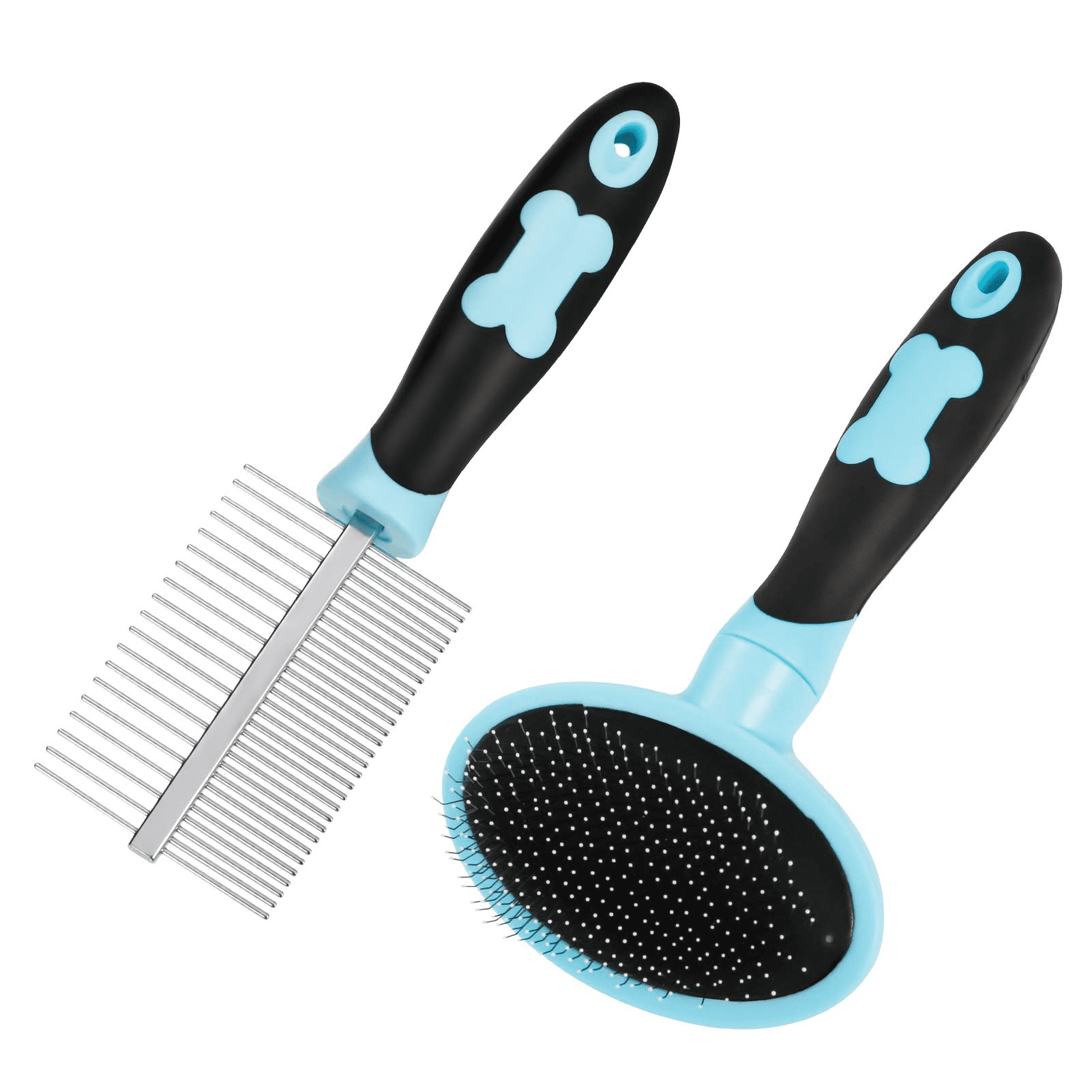
5. Metal Greyhound Combs (Butter Combs)
While technically a comb rather than a brush, a solid metal comb is essential for long-coated dog care.
- Best For: Verifying that a brush has cleared all mats down to the skin level.
- Mechanism: Solid metal teeth do not flex, instantly stopping when encountering a hidden knot or mat that flexible slicker pins might glide over.
Comparison Matrix: Long Haired Dog Grooming Brushes
The table below outlines how primary brush types align with specific coat conditions and operational safety guidelines:
| Brush Type | Primary Ideal Coat Type | Target Hair Layer | Key Advantage | Pin / Blade Configuration | Safety & Application Tip |
|---|---|---|---|---|---|
| Long-Pin Slicker | Double coats, Curly, Doodles | Undercoat & Topcoat | Breaks up micro-tangles; removes deep shed | Fine, angled wire pins (15–22mm) | Use light pressure; avoid dragging flat against exposed skin. |
| Pin Brush (Un-tipped) | Silky single coats, Drop coats | Topcoat / Guard Hairs | Glides through hair without tearing hair shafts | Straight polished stainless steel pins | Ideal for daily brushing and distribution of skin oils. |
| Undercoat Rake | Heavy Double Coats (Golden, Husky) | Undercoat only | Pulls massive amounts of loose undercoat during shedding | Rigid, widely spaced metal tines | Drag gently along line of hair growth; do not push downward into skin. |
| Dematting Rake | Matted coats (All long-haired breeds) | Localized mats | Cuts dense core of tight mats without shaving skin | Serrated, curved safety-shielded blades | Work inward from hair tips toward skin; use short, gentle picking strokes. |
| Soft Bristle Brush | Short-to-medium long coats, Fine coats | Surface Topcoat | Enhances shine; smooths surface hair | Boar bristle or synthetic fibers | Use as a final finishing step after thorough deep combing. |
| Metal Greyhound Comb | All long-haired breeds | Skin-to-tip verification | Detects hidden knots left behind by brushes | Dual-spaced smooth steel teeth | Pull through coat with minimal force; stop immediately if tooth catches a mat. |
Step-by-Step Line Brushing Technique for Long Coats
Surface brushing—gliding a brush over the outer layer of long hair—is the most common cause of severe matting. Hair near the skin remains untouched, felting into thick mats while the top layer appears neat. The line brushing technique ensures complete skin-to-tip hair management.
Line Brushing Sequence:
- Section Hair
- Spray Conditioning Agent
- Brush Layer Down to Skin
- Verify with Metal Comb
Step 1: Prepare the Coat with Conditioning Spray
Never brush a dry long coat. Brushing dry hair creates static electricity, damages the hair cuticle, and causes splitting, making future mats more frequent.
- Lightly mist the section you plan to brush with a leave-in canine conditioning spray or detangling mist.
- Ensure the spray lightly coats the outer layers without soaking the skin.
Step 2: Part the Hair into a Clean Line
- Using your non-dominant hand, lift a section of coat upward against the natural direction of growth.
- Hold the lifted hair firmly so you can clearly see a clean line of exposed skin along the coat base.
Step 3: Brush Small Layers Downward
- Using your long-pin slicker or pin brush, grab a tiny line of hair from the hand you are holding up.
- Gently stroke the brush downward, pulling that small layer of hair away from the main section, starting right at the skin line.
- Ensure the tines lightly touch the skin surface without scratching, pulling the hair outward to the tips.
- Repeat this process line by line, moving systematically across the dog's body.
Step 4: Verify Skin-to-Tip Smoothness with a Comb
- Once a section has been line-brushed, take a metal greyhound comb.
- Place the comb teeth parallel to the skin and glide outward through the brushed hair section.
- If the comb glides freely without resistance, the section is completely clear. If the comb catches, resume line brushing with your slicker on that specific knot.
High-Friction Hazard Zones
Pay detailed attention to areas prone to severe friction matting:
- Behind the ears: Fine hair felts rapidly here due to head movements.
- Armpits and groin: High-friction areas where skin folds rub together.
- Tail base and "pants/breeches": Long feathering captures dirt and mats easily during movement and sitting.
- Under the collar/harness area: Constant mechanical rubbing from nylon or leather straps creates dense mat strips.
Common Grooming Mistakes to Avoid
Proper grooming requires appropriate technique as well as the right equipment. Improper brush usage can cause pain, coat degradation, or skin trauma.
| Technique Errors | Material Errors | Tool Selection |
|---|---|---|
| Surface-only brushingExcessive force/burn | Brushing dry coatIgnoring friction zones (armpits/ears) | Plastic-tipped pins on long coatMisusing blades |
Surface-Only Brushing
Brushing only the top layer leaves the dense base near the skin unbrushed. Over time, moisture and movement pack the base into a solid mat (pelted coat), which often requires complete shaving by a professional groomer. Always inspect your work down to the skin level using a steel comb.
Applying Excessive Downward Pressure (Brush Burn)
Wire slicker pins can cause microscopic scratches on the skin surface if pressed too firmly. Known as brush burn, this causes reddened, inflamed skin, leading to scratching, biting, and secondary skin infections. Keep your wrist loose and let the weight of the brush head do the work.
Misusing De-Shedding Blades on Single-Coated Breeds
De-shedding tools with tightly packed, razor-like teeth (such as strip blades) are intended exclusively for double-coated breeds during active coat-blowing phases. Using these blades on silky single coats (like Maltese or Yorkie hair) cuts and shatters topcoat shafts, ruining the coat's natural length and luster.
Bathing a Matted Dog
Water worsens existing mats. When hair fibers get wet, the shaft swells, and as it dries, the fibers contract and bind tighter together. Bathing a dog with active mats locks those knots into dense felting that is nearly impossible to brush out. Always remove all tangles and mats before getting the coat wet.
Cleaning, Maintenance, and Tool Care
Maintaining your grooming brushes ensures sanitary application and prolongs tool life.
- Hair Extraction: Remove trapped hair from slickers, pin brushes, and rakes after every grooming session. Use a small comb or cleaning rake to lift packed hair out from the base pad. Leftover hair harbors skin oils and dander, creating a breeding ground for bacteria.
- Washing Pin Pads: Periodically wash rubber pin pads and wire bristles in warm water mixed with a mild antibacterial soap or dog shampoo. Do not submerge wooden-handled brushes completely in water, as water penetration can warp the wood and loosen metal pin sockets.
- Inspecting for Bent Pins: Regularly examine slicker wires and metal pins. Bent, damaged, or misaligned pins can poke the dog’s skin, causing pain during brushing. Replace tools immediately if pins are damaged or broken.
Frequently Asked Questions
How often should I brush a long-haired dog?
Long-haired dogs should be brushed at least three to four times a week. Single-coated breeds with long, silky coats or breeds prone to severe matting (such as Doodle mixes and Shih Tzus) benefit from daily brushing sessions. Frequent, brief sessions (10 to 15 minutes) prevent small tangles from solidifying into dense mats.
Is a slicker brush safe for dogs with sensitive skin?
Yes, provided you choose a slicker brush with a soft rubber cushion pad and long, flexible pins. When using a slicker brush on sensitive skin, hold the brush handle lightly, keep the pin tips parallel to the skin surface, and avoid pushing the pins vertically down into the skin.
Should I wet my dog's long hair before brushing?
You should never brush long hair completely dry, nor should you submerge it in water before brushing. Lightly misting the coat with a leave-in conditioner or detangling spray adds slip, reduces friction, prevents static electricity, and protects hair shafts from split ends during brushing.
What is the difference between an undercoat rake and a de-shedding tool?
An undercoat rake uses smooth, widely spaced round pins designed to slide into the undercoat to pull out dead, loose fur without cutting healthy guard hair. A de-shedding blade features tight, sharpened micro-teeth that cut through dense undercoat hairs to strip bulk. Undercoat rakes preserve natural coat structure, whereas de-shedding blades trim away excess density.
How do I remove a stubborn mat without shaving my dog?
To untangle a mat safely, apply a dedicated coat-detangling liquid directly to the knot and work it in with your fingers. Hold the base of the hair cluster near the skin with your fingers to prevent tension on the skin, then use the end tooth of a steel greyhound comb or a long-pin slicker to pick apart the outer edges of the knot bit by bit. If the mat is extremely dense, use a safety-guarded dematting rake to slice through the knot core vertically before gently combing it out. Never attempt to cut mats out with home scissors, as it is very easy to slice fold-in skin concealed inside the mat base.
Practical Action Plan
To establish an effective grooming routine for your long-haired dog, follow these concrete next steps:
- Assess Coat Architecture: Determine whether your dog features a dense double coat, a fine single coat, or a curly drop coat.
- Assemble the Primary Tool Suite: Acquire a dedicated long-pin slicker brush (15mm+ pin length), an un-tipped stainless steel pin brush, a double-spaced steel greyhound comb, and a canine leave-in detangling spray.
- Execute Line Brushing Regularly: Establish a weekly schedule using the line-brushing method—moving section by section, starting at the lower limbs and working up the body.
- Inspect Friction Points Daily: Use your metal greyhound comb every day to check high-friction areas behind the ears, armpits, and under collar straps to eliminate micro-tangles before mats form.
Image Gallery