Production Control System Overview: Core Functions and Architecture
A production control system is a centralized manufacturing management framework that coordinates scheduling, routing, dispatching, and inventory monitoring to ensure efficient shop-floor operations. By integrating material requirements...
A production control system is a centralized manufacturing management framework that coordinates scheduling, routing, dispatching, and inventory monitoring to ensure efficient shop-floor operations. By integrating material requirements with capacity constraints, these systems minimize bottlenecks, reduce lead times, and align manufacturing output with customer demand.
Contents
Modern manufacturing environments rely on continuous optimization to maintain profitability and meet strict delivery schedules. As supply chains grow increasingly complex, understanding how a production control system operates becomes essential for plant managers, industrial engineers, and operations executives. This overview examines the core mechanics, functional modules, implementation prerequisites, and operational impacts of deploying an effective production control infrastructure.
Understanding Production Control Systems
At its core, a production control system acts as the nervous system of a manufacturing facility. It bridges the gap between high-level enterprise resource planning and daily execution on the shop floor. While planning answers what needs to be made and when, production control executes those plans by monitoring progress, allocating resources dynamically, and resolving disruptions in real time.
The primary objective is to maintain a smooth, uninterrupted workflow from raw material intake to final product delivery. To achieve this, the system continuously tracks three critical variables: time, cost, and quality. By maintaining tight oversight of these parameters, facilities can minimize work-in-process inventory, reduce machine idle time, and eliminate redundant handling.
Evolution from Manual Tracking to Automated Control
Historically, production scheduling relied on manual whiteboards, paper routing sheets, and physical ledger books. While these methods worked for low-volume, craft-based production, they introduce severe limitations in modern high-speed environments. Manual tracking frequently leads to delayed data propagation, calculation errors, and an inability to adapt to sudden supply chain disruptions or machine breakdowns.
The advent of computerized manufacturing brought about Material Requirements Planning and Manufacturing Resource Planning systems, which automated bill-of-materials calculations and capacity planning. Today’s production control systems integrate deeply with Internet of Things sensors, automated guided vehicles, and cloud-hosted analytics platforms, enabling predictive scheduling and real-time visibility across global manufacturing networks.
Core Functional Components
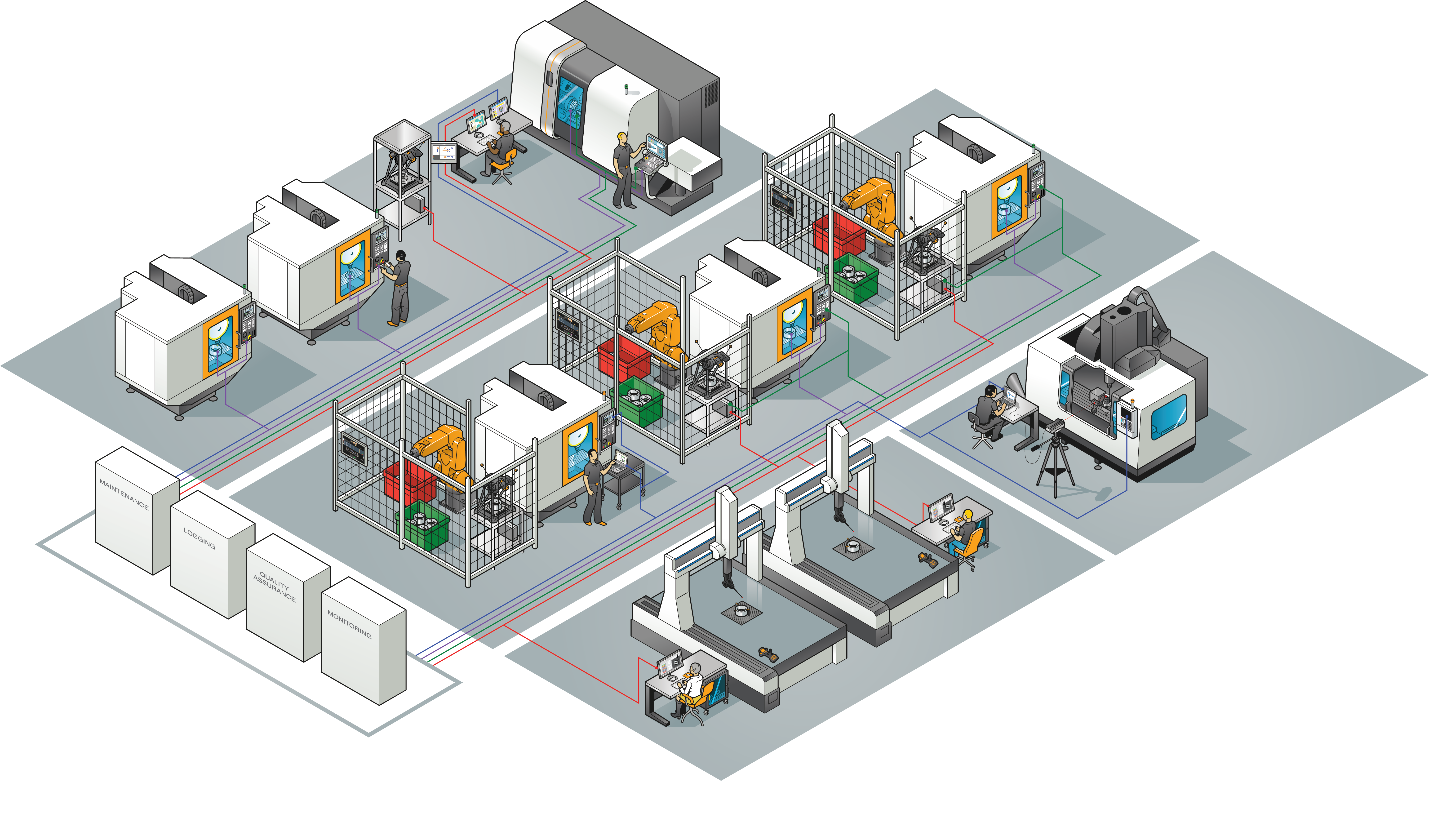
A comprehensive production control system comprises several interconnected modules. Each module addresses a specific phase of the manufacturing lifecycle, ensuring that materials, labor, and machinery align seamlessly.
- Enterprise Resource Planning
- Routing & Planning
- Scheduling & Dispatching
- Inventory Control
- Progress Monitoring & QC
- Shop Floor Output
Routing and Process Planning
Routing establishes the exact path a product must take through the manufacturing facility. It defines the sequence of operations, the specific machinery required, tooling specifications, and standard time allowances for each step.
Effective routing ensures that work centers are utilized efficiently and that parts move logically through the facility without backtracking. Advanced systems dynamically adjust routing pathways based on real-time machine availability, rerouting jobs around maintenance bottlenecks automatically.
Scheduling and Dispatching
Scheduling assigns specific start and completion times to each operation along the established routing path. It balances finite capacity constraints—such as labor availability, machine limits, and power supply—with due dates.
Dispatching is the execution phase of scheduling. It involves issuing formal work orders, tool requisitions, and material movement instructions to specific work centers. Proper dispatching eliminates operator guesswork and ensures that the right materials arrive at the workstation precisely when needed.
Inventory and Materials Control
Balancing inventory levels is a delicate operational challenge. Excess inventory ties up working capital and consumes valuable floor space, while insufficient inventory causes production line stoppages.
A production control system monitors raw components, subassemblies, and finished goods continuously. It uses automated reorder triggers and safety stock thresholds to maintain optimal inventory buffers without inflating holding costs.
Progress Monitoring and Quality Control
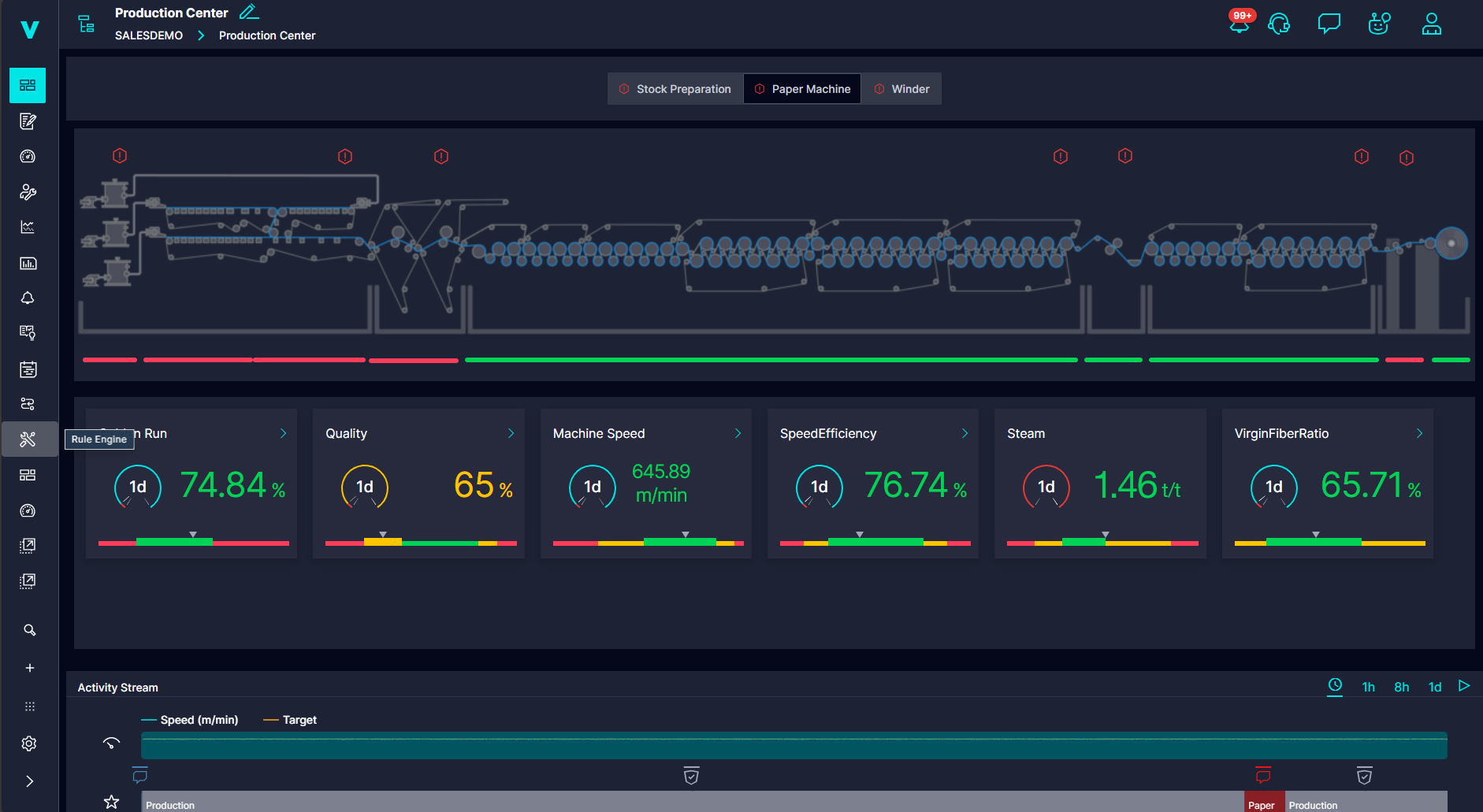
Monitoring tracks actual shop-floor output against the production schedule. Operators or automated sensors log completion milestones, scrap rates, and machine status updates.
When deviations occur—such as an unexpected machine failure or a batch of substandard raw materials—the system flags the discrepancy immediately. This visibility allows supervisors to implement corrective actions before minor issues cascade into major delivery delays.
Production Control Methods and Approaches
Different manufacturing environments require distinct control philosophies. Selecting the appropriate approach depends heavily on product variety, production volume, and demand predictability.
| Control Method | Operating Principle | Best Suited For | Primary Advantage |
|---|---|---|---|
| Flow Control | Dedicated, continuous pathways for standardized products. | High-volume, repetitive manufacturing (e.g., automotive assembly). | Maximum throughput, minimal work-in-process. |
| Order Control | Job-specific routing and scheduling for discrete batches. | Custom, low-volume, or make-to-order manufacturing. | High flexibility, adaptability to custom specifications. |
| Block Control | Releasing batches in fixed time blocks to synchronize assembly. | Apparel, electronics sub-assembly, and phased production. | Simplified tracking, synchronized multi-part assembly. |
| Load Control | Releasing work only when downstream capacity is verified. | Complex machine shops and bottleneck-heavy operations. | Prevents shop-floor congestion, stabilizes lead times. |
Push versus Pull Systems
Traditional manufacturing often relies on a push system, where production is scheduled based on anticipated demand forecasts. Work is pushed to the next workstation regardless of whether that station is ready to process it, frequently resulting in large piles of work-in-process inventory.
Conversely, pull systems—exemplified by lean manufacturing and Kanban methodologies—only initiate production when a downstream workstation signals a direct demand for parts. This approach drastically reduces inventory holding costs and exposes hidden operational inefficiencies. Modern production control systems can support hybrid push-pull models, combining forecast-driven long-lead components with demand-driven final assembly.
Implementation Prerequisites and System Integration
Deploying a production control system requires thorough preparation, accurate master data, and cross-functional alignment. Rushing implementation without adequate groundwork frequently leads to user resistance and inaccurate output data.
Master Data Accuracy
The reliability of any production control system depends directly on the quality of its input data. Facilities must audit and verify several core databases prior to deployment:
- Bill of Materials: Complete, multi-level component breakdowns for every manufactured item.
- Routing Sheets: Verified operational sequences, setup times, and cycle durations.
- Work Center Capacities: Accurate machine uptime ratings, labor shift schedules, and maintenance windows.
- Inventory Records: Physical stock counts reconciled with digital ledger balances.
Integration with Enterprise Architecture
A production control system cannot operate in a vacuum. It must integrate smoothly with existing enterprise software, including Enterprise Resource Planning platforms, warehouse management systems, and computerized maintenance management systems.
Application programming interfaces and middleware facilitate seamless data exchange between the shop floor and administrative offices. This connectivity ensures that sales teams, procurement officers, and plant managers operate from a single, unified source of truth.
Operational Benefits and Challenges
Implementing a robust production control framework yields substantial operational improvements, though organizations must navigate notable implementation hurdles.
Key Advantages
- Reduced Lead Times: Streamlining routing and eliminating shop-floor bottlenecks accelerates order fulfillment.
- Lower Operating Costs: Minimizing excess inventory and reducing machine idle time preserves capital.
- Enhanced On-Time Delivery: Accurate scheduling and real-time progress monitoring ensure commitments to customers are consistently met.
- Data-Driven Decision Making: Comprehensive performance analytics enable continuous process improvement and accurate capacity planning.
Common Implementation Challenges
- High Initial Investment: Software licensing, hardware upgrades, and professional services demand substantial capital expenditure.
- Organizational Resistance: Workers and floor supervisors accustomed to legacy habits often resist new software workflows.
- Data Maintenance Overhead: Inaccurate master data quickly degrades system utility, requiring dedicated administrative oversight.
- Integration Complexity: Connecting legacy machinery with modern cloud platforms can present severe technical hurdles.
Best Practices for Effective Production Control Management
To maximize return on investment and ensure long-term operational success, manufacturing organizations should adhere to proven management practices:
- Establish Clear Key Performance Indicators: Track metrics such as Overall Equipment Effectiveness, schedule adherence, scrap rates, and inventory turnover.
- Invest in Continuous Training: Provide comprehensive, role-specific training for machine operators, planners, and plant managers.
- Perform Regular Data Audits: Periodically review bills of materials, routing sheets, and inventory balances to prevent data drift.
- Adopt a Phased Rollout: Implement modules incrementally—starting with inventory and routing before moving to advanced finite scheduling—to minimize operational disruption.
Frequently Asked Questions
What is the difference between an ERP system and a production control system?
An Enterprise Resource Planning system manages enterprise-wide business functions, including finance, human resources, procurement, and high-level sales forecasting. A production control system operates at a granular, tactical level, focusing specifically on shop-floor scheduling, routing, machine dispatching, and real-time inventory tracking.
How does finite capacity scheduling improve manufacturing performance?
Finite capacity scheduling accounts for actual machine limitations, labor availability, and maintenance windows when building production schedules. Unlike infinite scheduling, which assumes resources are limitless, finite scheduling prevents work-in-process pileups and provides realistic delivery dates to customers.
What causes production control systems to fail during implementation?
The most common causes of failure include inaccurate master data, lack of executive sponsorship, insufficient employee training, and attempting to customize off-the-shelf software excessively without aligning internal processes first.
How do modern systems handle unexpected machine breakdowns?
Modern production control systems integrate with Internet of Things sensors and shop-floor terminals. When a machine faults, the system instantly alerts maintenance personnel and automatically recalculates remaining downstream schedules, suggesting alternative routing pathways to minimize disruption.
Conclusion and Next Actions
Deploying a structured production control system transforms chaotic shop floors into synchronized, efficient manufacturing environments. By centralizing scheduling, routing, and inventory oversight, organizations achieve superior visibility and operational resilience. Plant managers and engineering leads should begin by conducting a comprehensive audit of current master data accuracy, mapping existing workflow bottlenecks, and evaluating software solutions that align with their specific production volume and product complexity.
Image Gallery