Navigating MetLife Whole Life Insurance Cash Value Mechanics
MetLife whole life insurance cash value represents the guaranteed savings component that accumulates tax-deferred within a permanent policy over time, funded by a portion of level premium payments and insurer dividends. Policyholders c...
MetLife whole life insurance cash value represents the guaranteed savings component that accumulates tax-deferred within a permanent policy over time, funded by a portion of level premium payments and insurer dividends. Policyholders can access these accumulated funds through policy loans or withdrawals to supplement retirement income, cover emergencies, or pay future premiums.
Contents
Understanding how permanent life insurance works requires looking past the death benefit to examine the financial engine running underneath. While MetLife transitioned much of its domestic retail life insurance operations to Brighthouse Financial, legacy whole life policies and institutional products remain active, carrying specific rules regarding how equity builds, compounds, and gets deployed.
Examining the mechanics of this cash accumulation provides policyholders with actionable insights on maximizing policy value, managing loans, and avoiding unintended tax consequences or policy lapses.
Evolution and Corporate Context of MetLife Whole Life Policies
Metropolitan Life Insurance Company (MetLife) has a rich history spanning over a century, during which it issued millions of permanent life insurance contracts, including whole life, universal life, and variable life.
The Separation and Legacy Administration
In 2017, MetLife separated a large portion of its U.S. retail business—including a substantial block of life insurance and annuity products—into a separate publicly traded company called Brighthouse Financial. However, certain legacy whole life blocks, corporate-owned life insurance (COLI) arrangements, and policies issued through specific broker-dealer or direct channels retained distinct servicing arrangements.
Policyholders must examine their original contract documentation or current billing statements to confirm whether their policy is serviced directly by MetLife entities or through Brighthouse Financial administrators. Despite corporate restructuring, the foundational mathematics governing whole life insurance cash value remain anchored in the original policy contract terms, guaranteed interest rates, and historical dividend scales.
Defining Permanent Life Insurance Components
Whole life insurance is a type of permanent protection designed to remain in force for the insured's entire life, provided required premiums are paid. It features two primary structural components:
- The Death Benefit: A guaranteed income-tax-free payout distributed to designated beneficiaries upon the insured's passing.
- The Cash Value Account: An internal savings component that grows over time on a tax-deferred basis, serving as an asset that the policyholder can access while living.
Unlike term insurance, which only provides temporary coverage without accumulating equity, whole life premiums are initially higher because a portion of early payments is funneled into the cash value reserve to offset rising mortality costs in later decades.
Mechanics of Whole Life Cash Value Accumulation
The cash value of a MetLife whole life insurance policy does not grow at random; it follows a strict, mathematically calculated schedule outlined in the policy contract at the time of purchase.
- Premium Payment
- Insurance Operating Costs & Fees
- Guaranteed Cash Value + Annual Dividends (if declared)
- Total Accessible Equity
- Guaranteed Cash Value + Annual Dividends (if declared)
- Insurance Operating Costs & Fees
Guaranteed Growth and the Non-Forfeiture Table
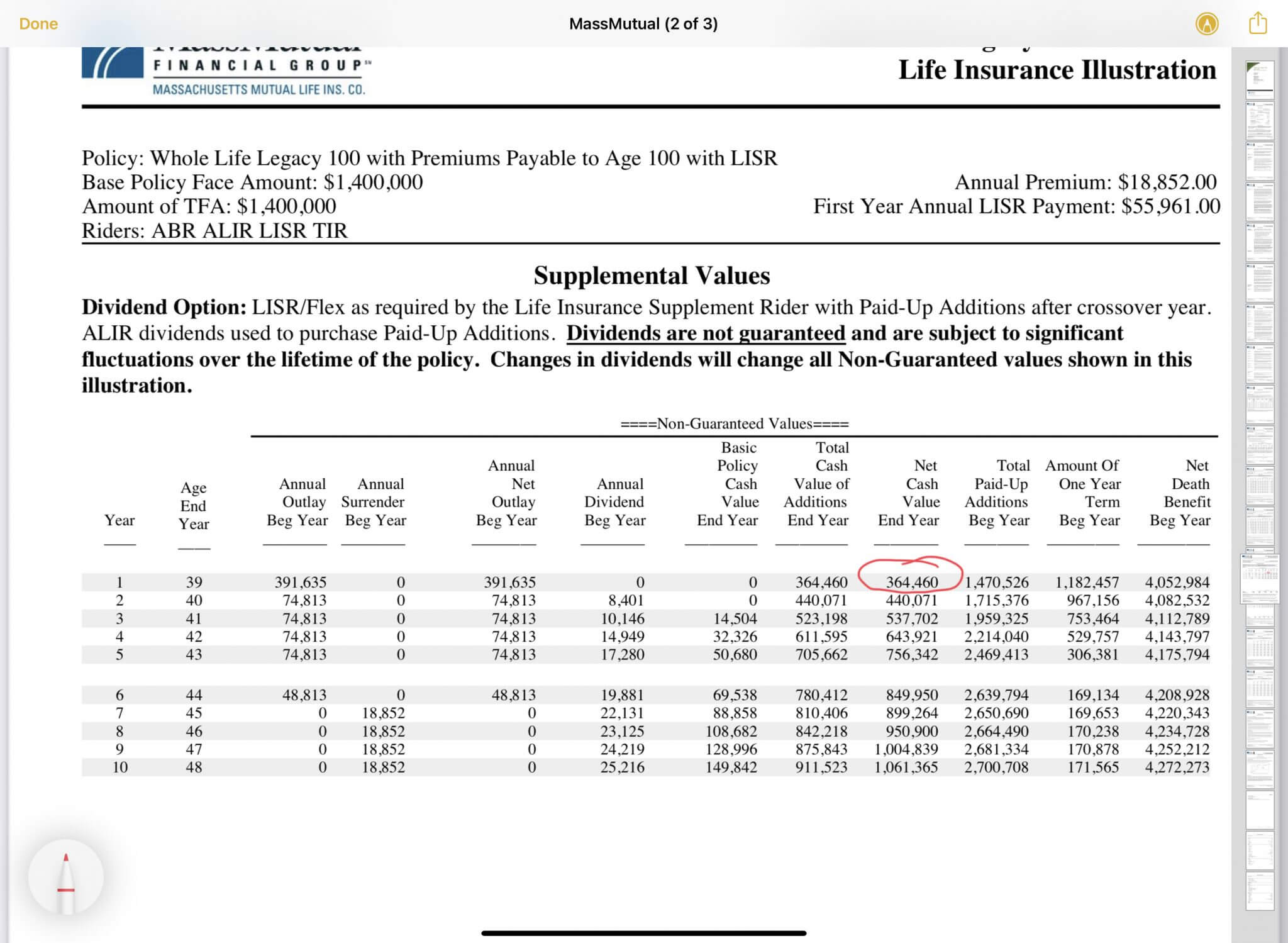
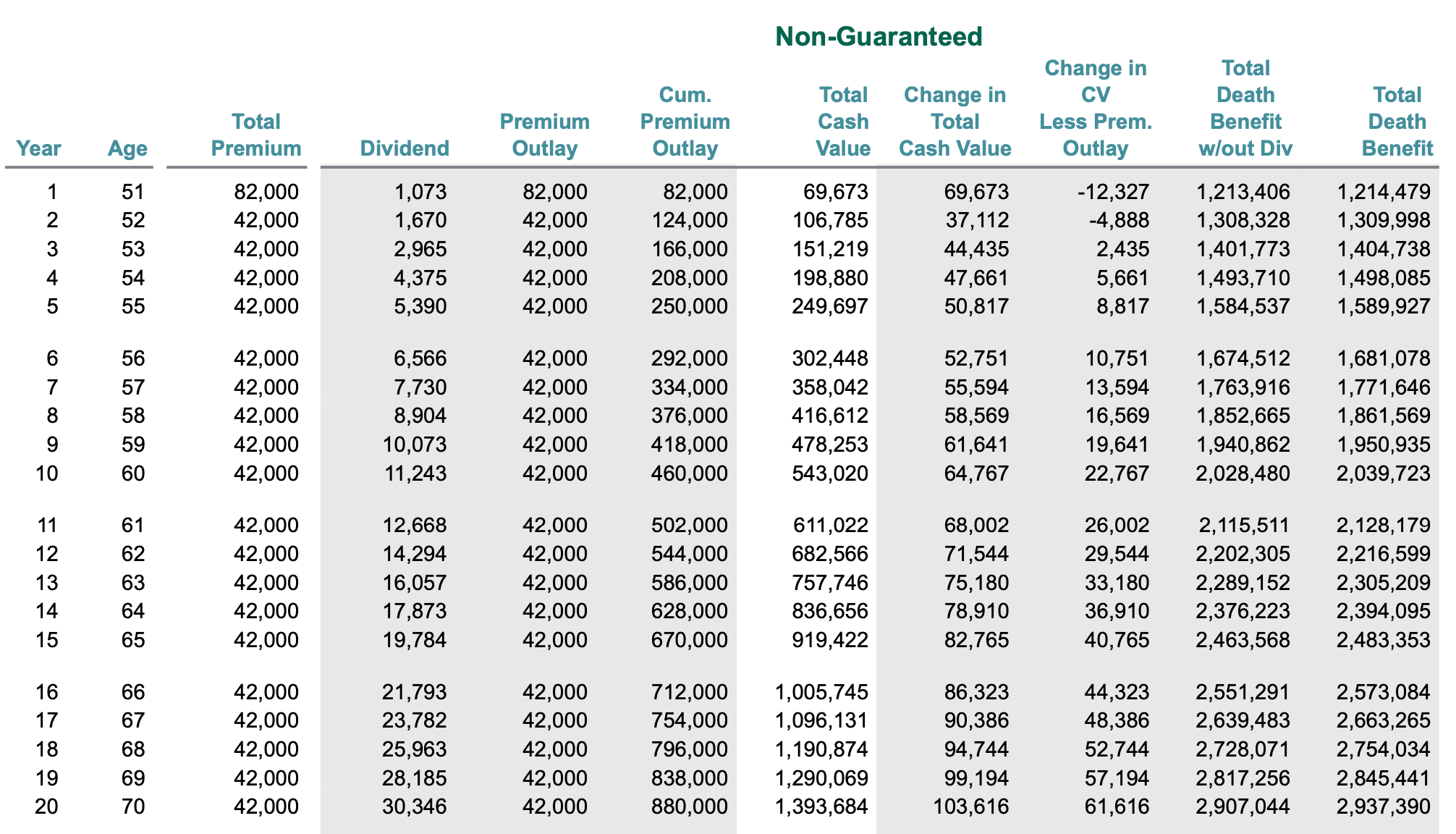
Every whole life contract contains a table of guaranteed cash values. This table projects the exact minimum cash value the policy will attain at the end of each policy year, assuming all premiums are paid on schedule.
- Guaranteed Interest: Insurers invest premium reserves into conservative fixed-income assets, such as high-grade corporate and government bonds, securing a minimum guaranteed interest rate (typically ranging between 2% and 4% in older legacy contracts).
- Zero Market Risk: Unlike variable life insurance, where cash values fluctuate based on underlying sub-account equity and bond market performance, whole life cash value is protected from direct market downturns. The guaranteed portion cannot decrease due to external economic shocks.
The Role of Dividends in Participating Policies
Many traditional MetLife whole life policies are structured as "participating" contracts. This means the policyholder is eligible to receive annual dividends if the company's actual experience—concerning mortality rates, investment returns, and operational expenses—is more favorable than anticipated.
While dividends are never guaranteed, MetLife has a long historical track record of dividend distribution on participating policies. Policyholders typically choose from several dividend options:
- Cash: Receive the dividend payout via check or direct deposit.
- Premium Reduction: Apply the dividend toward paying the next scheduled premium.
- Paid-Up Additions (PUAs): Use the dividend to purchase small blocks of paid-up permanent insurance, which simultaneously increases both the overall death benefit and the underlying cash value growth potential.
- Accumulation at Interest: Leave the dividend with the insurer to earn a declared interest rate.
Methods of Accessing MetLife Cash Value
One of the primary benefits of accumulating equity in a permanent insurance contract is living access. Policyholders do not necessarily have to surrender the policy to utilize accumulated funds.
Policy Loans
Policyholders can borrow against the cash value of their MetLife whole life policy by taking a policy loan.
- Collateralized Borrowing: The loan is issued by the insurance company using the policy's cash value as collateral. Because the insurer holds the collateral, formal credit checks and underwriting approvals are typically unnecessary.
- Interest Rates: Insurance companies charge interest on policy loans. However, many participating policies feature "direct recognition" or "non-direct recognition" loan provisions that dictate whether borrowed cash value continues to earn full dividends.
- Repayment Flexibility: There is usually no mandatory monthly payment schedule for policy loans. Interest simply accrues to the loan balance.
Critical Risk Warning: If the total loan balance—including accumulated unpaid interest—exceeds the total cash value, the policy will lapse. A policy lapse can trigger a severe, unexpected tax liability if the policy's cash surrender value was previously leveraged close to its maximum limit.
Policy Withdrawals (Surrenders)
Unlike universal life insurance, traditional whole life policies often restrict partial withdrawals unless the policy is explicitly structured with a flexible rider. In many cases, accessing cash directly requires a partial surrender of paid-up additions or a full surrender of the contract.
- Cost Basis Recovery: Withdrawals up to the policy's cost basis (the total amount of premiums paid minus any prior tax-free distributions) are generally treated as a return of principal and are income-tax-free.
- Taxable Gains: Any withdrawal amount exceeding the cost basis is treated as ordinary income under "last-in, first-out" (LIFO) tax rules.
Surrendering the Entire Policy
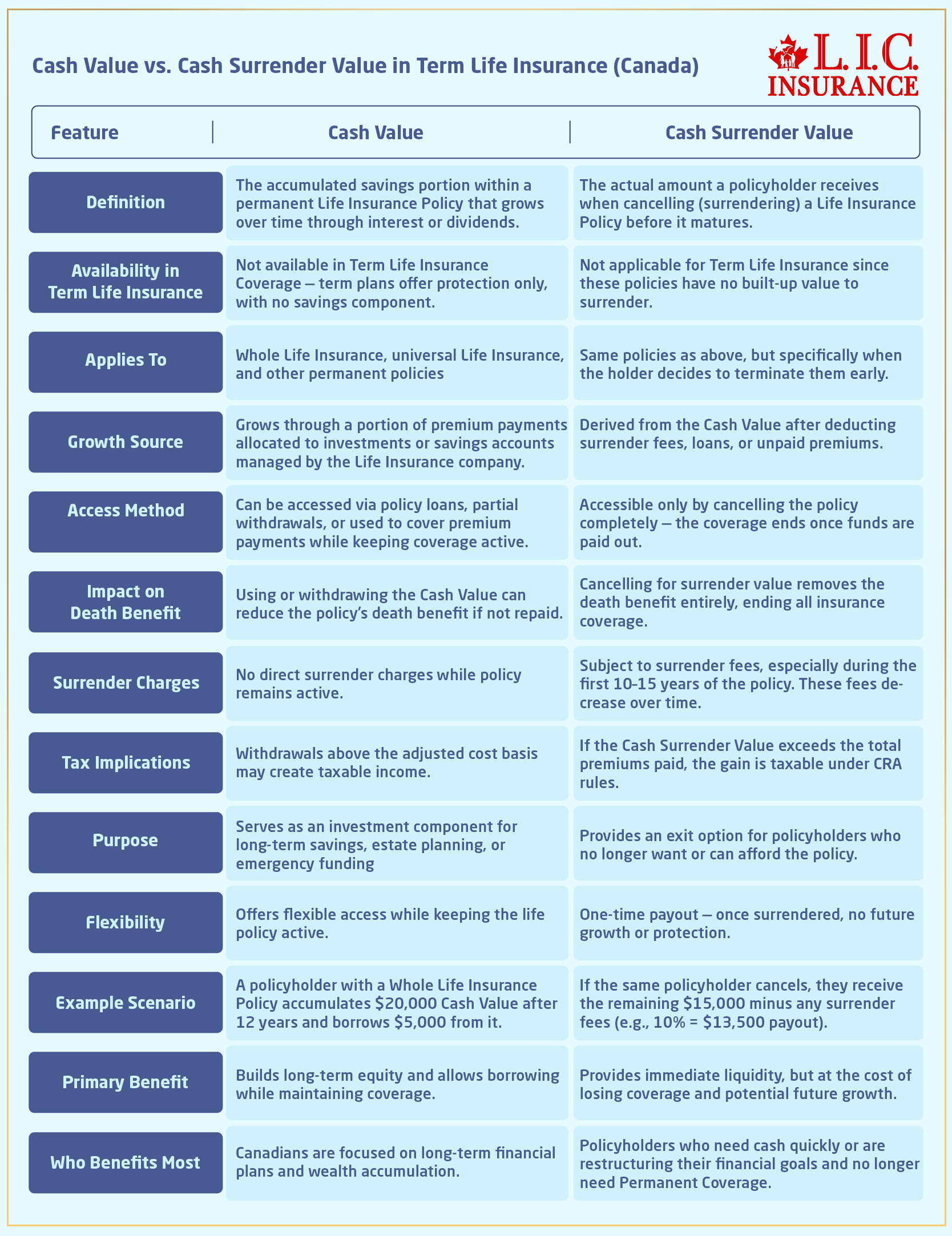
If an individual decides they no longer need life insurance protection, they can surrender the policy entirely for its Cash Surrender Value.
- The cash surrender value is calculated as the total cash value minus any applicable surrender charges (which typically phase out over a 10- to 20-year schedule) and minus any outstanding policy loans.
- Receiving a lump sum triggers ordinary income taxation on the extent to which the payout exceeds the cumulative premium payments made.
Comparative Analysis of Cash Value Access Strategies
Evaluating how to deploy accumulated cash value requires balancing immediate liquidity needs against long-term financial security and death benefit protection.
| Access Method | Mechanics | Tax Implications | Impact on Death Benefit | Primary Risk |
|---|---|---|---|---|
| Policy Loan | Borrowing against cash value with the insurer as lender. | Generally tax-free if the policy remains active. | Reduces death benefit dollar-for-dollar by the outstanding loan balance upon death. | Risk of policy lapse if loan balance exceeds cash value. |
| Paid-Up Addition Surrender | Cashing out accumulated dividend-purchased riders. | Tax-free up to cost basis; taxable gains thereafter. | Permanently reduces the total death benefit. | Diminishes future dividend-earning potential. |
| Full Policy Surrender | Terminating the contract entirely for accumulated equity. | Taxable on gains exceeding total premiums paid. | Terminates the death benefit completely. | Loss of lifelong coverage; potential surrender fees. |
Tax Treatment and Regulatory Considerations
The Internal Revenue Code (IRC) provides favorable tax treatment for cash-value life insurance, provided the contract meets specific federal definitions.
Tax-Deferred Growth
As long as the policy remains in force and does not violate federal classification tests, the internal growth of the cash value is not subject to annual income taxation. Policyholders do not report yearly interest or dividend earnings on personal tax returns, allowing the capital to compound at an accelerated rate compared to taxable brokerage accounts.
The Modified Endowment Contract (MEC) Limit
To prevent individuals from using life insurance primarily as a tax-sheltered investment vehicle rather than a protection product, Congress established the 7-Pay Test under IRC Section 7702.
- If total cumulative premiums paid during the first seven years exceed the net level premiums required to provide a guaranteed death benefit, the policy is classified as a Modified Endowment Contract (MEC).
- Once a policy becomes an MEC, its tax-advantaged status for distributions is permanently altered. Withdrawals and loans are subject to LIFO (Last-In, First-Out) taxation rules and may incur a 10% IRS penalty tax on distributions taken before age 59½.
- MetLife underwriting systems track premium limits closely to alert policyholders before a proposed payment triggers MEC status, unless the client explicitly requests an MEC configuration.
Common Misconceptions Regarding Whole Life Cash Value
Navigating permanent insurance requires separating marketing promises from contractual reality.
- Misconception 1: "Cash value is available immediately upon policy purchase."
- Reality: In the early years of a whole life policy, premium payments are largely absorbed by acquisition expenses, underwriting costs, and initial mortality charges. Cash value typically accumulates slowly or remains negligible during the first one to three years.
- Misconception 2: "Policy loans do not need to be repaid because it's your own money."
- Reality: While you are technically borrowing from the insurer using your equity as collateral, unpaid loan interest compounds against the policy. If ignored, it can destroy the cash value and cause the policy to lapse, turning an untaxed loan into a taxable event.
- Misconception 3: "Dividends are guaranteed earnings."
- Reality: Dividends depend on insurer performance and are declared annually by the board of directors. They can fluctuate or be reduced based on economic conditions, interest rate environments, and mortality experience.
Practical Steps to Verify and Manage Your MetLife Cash Value
Policyholders seeking to review, verify, or utilize their MetLife or Brighthouse whole life cash value should follow a structured verification process:
- Locate Policy Documentation: Retrieve the original policy contract, annual statement, or most recent billing notice to confirm the exact administrative servicing entity (MetLife vs. Brighthouse Financial).
- Request an In-Force Illustration: Contact customer service or log into the official policyholder portal to request a current in-force ledger or illustration. This document projects future cash value growth, current dividend scales, and loan balance thresholds.
- Verify Loan Payoff Figures: If considering a policy loan, request an official loan quote specifying the current interest rate, whether the rate is fixed or variable, and the direct recognition status.
- Consult a Financial Professional: Because permanent insurance withdrawals and loans carry long-term tax and estate implications, consult a fee-only financial planner, certified public accountant (CPA), or tax attorney before executing large surrenders or loans.
Frequently Asked Questions
Can I withdraw cash from my MetLife whole life insurance policy without paying taxes?
Yes, up to your cost basis (the total amount of premiums you have paid into the policy minus any prior tax-free withdrawals). Withdrawals representing equity gains above your cost basis are taxed as ordinary income under LIFO rules. Alternatively, taking a policy loan is generally tax-free, provided the policy remains in force.
What happens to my cash value if I stop paying premiums?
If you stop paying premiums, you have several non-forfeiture options built into the contract. You can use the accumulated cash value to purchase a reduced paid-up policy (where coverage continues for a lower face amount with no further premiums), elect extended term insurance, or surrender the policy entirely for its net cash surrender value.
Are MetLife whole life cash values protected from creditors?
Asset protection laws regarding life insurance cash values vary significantly by state jurisdiction. In many states, life insurance cash values and death benefits are partially or fully exempt from creditor claims, bankruptcy proceedings, and legal judgments, though specific statutory caps and look-back periods apply.
Why is my cash value so low during the first few years of the policy?
Whole life insurance front-loads administrative expenses, agent commissions, and initial underwriting costs. A significant portion of your early premium payments goes toward establishing the policy and covering mortality expenses, leaving a smaller portion to build the cash reserve. Cash value growth typically accelerates exponentially in later policy decades.
How do I know if my policy is serviced by MetLife or Brighthouse Financial?
You can identify your servicing entity by examining your most recent annual statement header, premium billing notice, or the customer service contact number listed on your policy contract. Policies spun off in the 2017 corporate restructuring are administered by Brighthouse Financial, while certain corporate or specialty blocks remain under MetLife.
Image Gallery