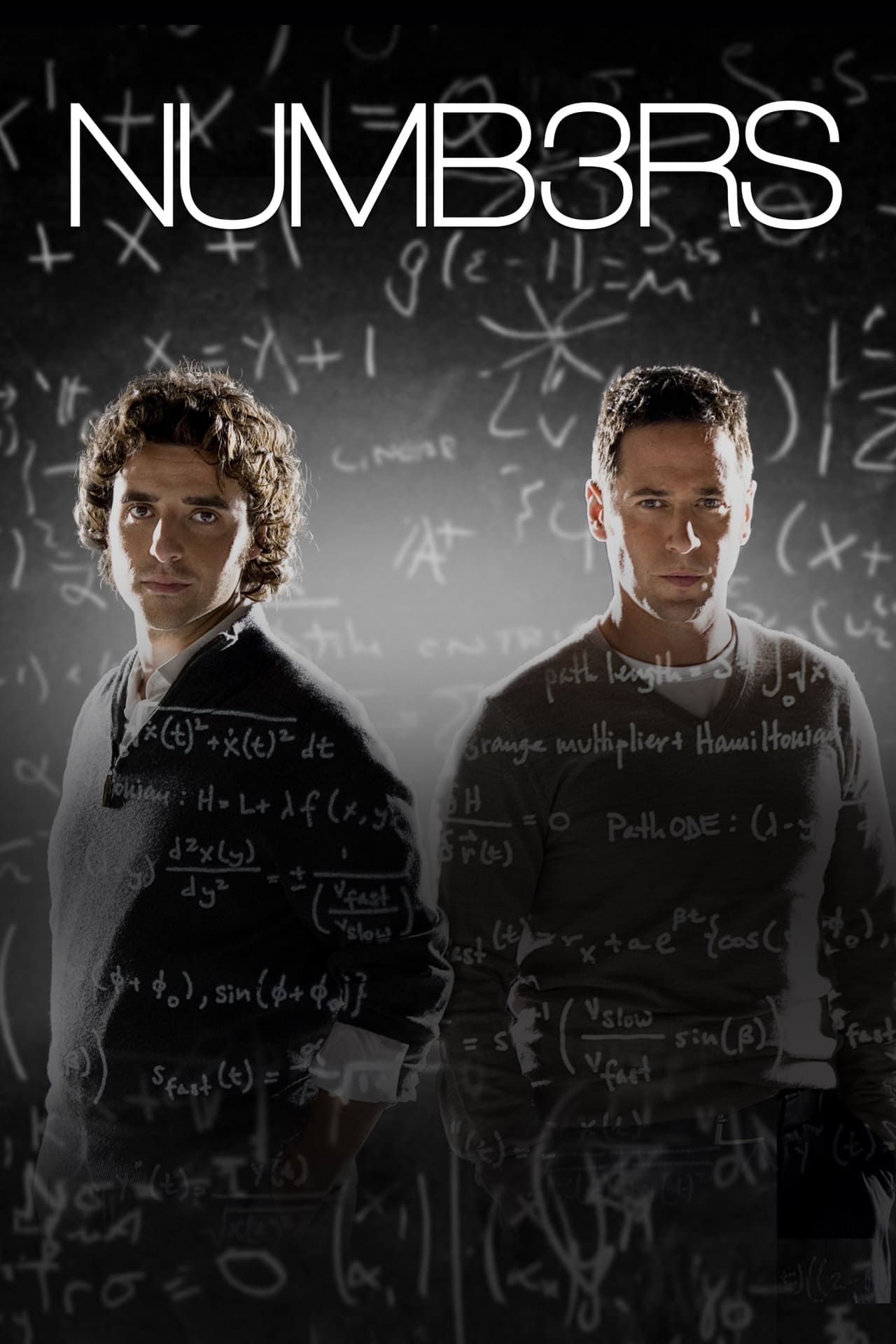
David Krumholtz on Numb3rs: The Legacy of Charlie Eppes
David Krumholtz starred as Charlie Eppes, a mathematical genius who consulted for the FBI, in the hit CBS series Numb3rs from 2005 to 2010. His portrayal redefined the "procedural genius" trope by blending high-level academic theory wi...
David Krumholtz starred as Charlie Eppes, a mathematical genius who consulted for the FBI, in the hit CBS series Numb3rs from 2005 to 2010. His portrayal redefined the "procedural genius" trope by blending high-level academic theory with deep emotional vulnerability, cementing the show’s place as a cornerstone of mid-2000s television.
Contents
The Genesis of Charlie Eppes: A New Kind of Hero
When Numb3rs premiered in January 2005, the landscape of television procedurals was dominated by forensic scientists and gritty detectives. David Krumholtz introduced a different kind of protagonist: Charlie Eppes, a world-class mathematician and professor at the fictional California Institute of Science (CalSci). Unlike the detached, almost robotic geniuses often depicted in media, Krumholtz played Charlie with a frantic, nervous energy that felt grounded in reality.
The core premise of the show—that mathematics can be used to solve crimes—relied entirely on Krumholtz’s ability to make complex equations feel urgent and accessible. As Charlie, Krumholtz utilized "cognitive submersion," a state of deep focus where he would visualize mathematical patterns in the world around him. This wasn't just a stylistic choice; it was a character-driven necessity. Krumholtz’s performance highlighted the mental toll of being a "prodigy," showing Charlie’s struggles with social cues, his obsessive nature, and the heavy burden of using his gifts to catch killers.
By the time the series concluded in 2010, Krumholtz had appeared in 118 episodes, evolving the character from a sheltered academic into a seasoned consultant who understood the darker nuances of law enforcement. His portrayal remains a gold standard for how to humanize intellectual characters without sacrificing their brilliance.
The Eppes Family Dynamic: Chemistry Beyond the Equation
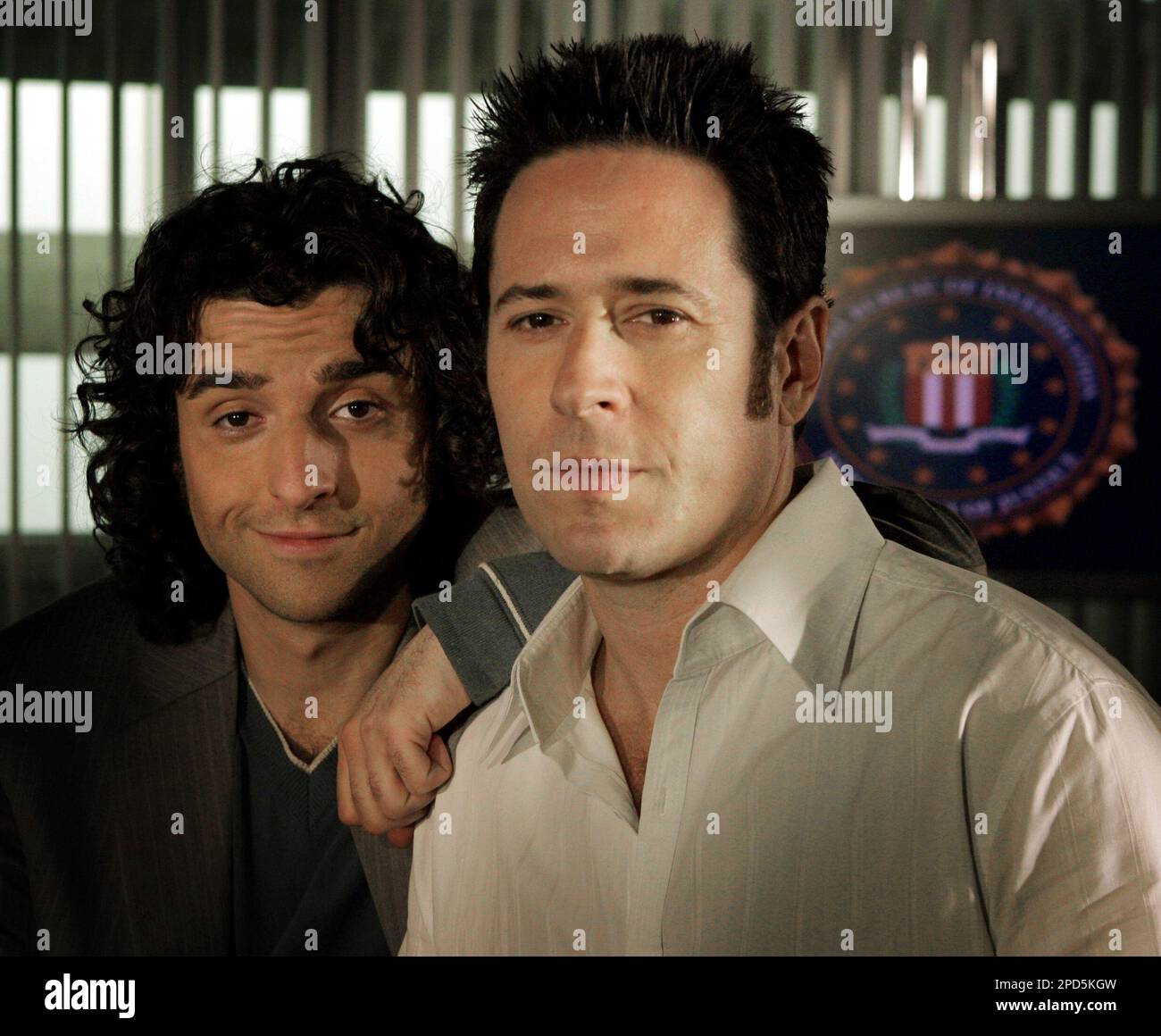
While the "math of the week" provided the show’s hook, the heart of Numb3rs was the relationship between the Eppes men. David Krumholtz’s chemistry with Rob Morrow (who played his FBI agent brother, Don Eppes) and Judd Hirsch (who played their father, Alan Eppes) was the series' most significant asset.
The tension between Charlie and Don served as the primary narrative engine. Don was the man of action—pragmatic, cynical, and grounded in the physical world. Charlie was the theorist—idealistic, sensitive, and grounded in the abstract. Krumholtz played the "younger brother" role with a mix of reverence and defiance. He sought Don's approval but often felt sidelined by the brutal reality of Don’s work. This sibling rivalry was balanced by Judd Hirsch’s Alan, who acted as the emotional anchor, often using his background in city planning to help Charlie translate complex math into human behavior.
This familial foundation allowed Krumholtz to explore Charlie’s growth. Throughout the six seasons, we saw Charlie deal with the grief of losing his mother, the pressure of maintaining his status at CalSci, and eventually, the transition of his relationship with Don from one of protector and protected to one of mutual peers.
Bridging the Gap: How Krumholtz Humanized Mathematics
One of the greatest challenges Krumholtz faced was the "Clear Board" sequences. In almost every episode, Charlie would stand before a glass chalkboard, scrawling equations while explaining a concept like Bayesian inference, set theory, or projectile motion.
Krumholtz did not merely recite lines; he worked to understand the rhythm of the logic. Even though he was not a mathematician in real life, he possessed a unique talent for "performance pedagogy." He used his hands, his pacing, and his vocal inflections to mirror the excitement of a discovery. To the audience, it didn't matter if they understood the calculus; they understood Charlie’s passion.
This performance was crucial because it prevented the show from becoming a dry lecture. Krumholtz made the math feel like a superpower, yet one that came with a human cost. When Charlie failed to find the right algorithm, Krumholtz portrayed a visceral sense of defeat that made the eventual breakthrough feel earned rather than scripted.
Technical Accuracy and the Wolfram Connection
The production of Numb3rs was notable for its commitment to mathematical accuracy, a feat that would have been impossible without the cooperation of the scientific community and the lead actor's willingness to engage with the material. The show employed several consultants, most notably Eric W. Weisstein, the creator of MathWorld and a prominent figure at Wolfram Research.
Every equation seen on Charlie’s boards was a real mathematical principle applied to the specific logic of the episode's crime. Wolfram Research even maintained a dedicated website during the show's run that explained the "Math behind Numb3rs." Krumholtz’s role was to be the face of this accuracy. He had to handle the jargon—terms like "P vs. NP" or "the Riemann Hypothesis"—with the casual confidence of someone who lived and breathed these concepts.
This dedication to the craft earned the show and Krumholtz accolades from the National Science Foundation and the National Council of Teachers of Mathematics. Krumholtz became an accidental ambassador for STEM education, proving that a character defined by his intellect could be the lead of a primetime drama.
Behind the Scenes: Health Challenges and Production Realities
During the latter seasons of Numb3rs, David Krumholtz faced significant personal and health challenges that many fans noticed on screen. Though he was not formally diagnosed with thyroid cancer until shortly after the series ended in 2011, he began experiencing symptoms and physical changes during the final years of production.
Fans noted fluctuations in his weight and energy levels during Seasons 5 and 6. Krumholtz later spoke candidly about his journey with Graves' disease and his subsequent cancer diagnosis, which required the removal of his thyroid and radioactive iodine treatment. His ability to maintain a demanding filming schedule while dealing with an undiagnosed illness speaks to his professionalism and commitment to the character of Charlie Eppes.
Furthermore, the show’s cancellation in 2010 came as a surprise to many. While ratings remained respectable, CBS was moving toward a different procedural slate. Krumholtz and the cast were able to film a series finale, "The Buck Stops Here," which provided a sense of closure, showing Charlie accepting a guest professorship at Cambridge and Don moving into a new role within the FBI.
The Cultural Impact on STEM Education
The "Numb3rs Effect" is a recognized phenomenon in academic circles. By portraying a mathematician as a hero—someone who saves lives and works alongside the FBI—David Krumholtz helped shift the public perception of mathematics from a boring classroom chore to a powerful tool for justice.
Programs like "We All Use Math Every Day," a joint venture between Texas Instruments, CBS, and the National Council of Teachers of Mathematics, utilized clips and themes from Krumholtz’s performances to create classroom activities. For a generation of students in the mid-2000s, Charlie Eppes was the reason they considered careers in data science, cryptography, or theoretical physics.
Comparative Analysis: The Eppes Brothers
The following table highlights the contrasting archetypes that David Krumholtz and Rob Morrow portrayed, which created the essential balance of the series.
| Feature | Charlie Eppes (David Krumholtz) | Don Eppes (Rob Morrow) |
|---|---|---|
| Primary Tool | Mathematics and Logic | Law Enforcement and Intuition |
| Environment | CalSci (Academic/Theoretical) | FBI Field Office (Practical/Tactical) |
| Personality | Neurotic, Idealistic, Empathic | Stoic, Cynical, Authoritative |
| Approach | Patterns and Probability | Evidence and Suspect Psychology |
| Role in Family | The "Golden Child" / Prodigy | The "Protector" / Elder Son |
Post-Numb3rs: Krumholtz’s Career Evolution
Following the conclusion of Numb3rs in 2010, David Krumholtz successfully transitioned back into a versatile character actor, shedding the "math genius" persona that had defined him for half a decade. While many actors struggle to move past such an iconic role, Krumholtz’s work in the 2010s and 2020s—including his acclaimed performance in Oppenheimer (2023) as Isidor Isaac Rabi—showcased his range.
In Oppenheimer, Krumholtz ironically returned to the world of high-level science, but this time as the moral conscience of the scientific community. This role felt like a spiritual successor to Charlie Eppes, utilizing Krumholtz’s unique ability to portray deeply intelligent men who are burdened by the consequences of their knowledge. As of 2026, he remains one of the most respected actors in the industry, often cited for his ability to bring humanity to complex, intellectual roles.
Frequently Asked Questions
Did David Krumholtz actually do the math on Numb3rs?
While David Krumholtz is not a mathematician, he was responsible for writing many of the equations on the "Clear Boards" himself. He would study the equations provided by the show's consultants (including experts from Caltech and Wolfram Research) to ensure his hand movements and pacing looked authentic to a professional academic.
Why did Numb3rs get canceled?
Despite a loyal fanbase, Numb3rs was canceled by CBS in 2010 after six seasons due to a slight decline in viewership and the network's desire to make room for new programming. The show’s Friday night "death slot" eventually saw a ratings dip that made it difficult for the network to justify the production costs of a veteran drama.
What happened to David Krumholtz's health during the show?
Toward the end of the series, Krumholtz began suffering from symptoms of Graves' disease. Shortly after the show ended, he was diagnosed with thyroid cancer. He underwent a successful thyroidectomy and radioactive iodine treatment. He has been cancer-free for over a decade and frequently advocates for thyroid health awareness.
Is CalSci a real school?
No, the California Institute of Science (CalSci) is a fictional institution created for the show. However, it was heavily based on the California Institute of Technology (Caltech) in Pasadena. Many scenes were filmed on or near the Caltech campus, and the school’s real-world prestige added a layer of authenticity to Charlie Eppes' academic background.
Where can I watch David Krumholtz in Numb3rs today?
As of 2026, Numb3rs is frequently available on major streaming platforms such as Paramount+ and Pluto TV. It also remains a staple of syndicated television, often airing on networks focused on procedural dramas.
Final Recommendation
For those looking to revisit David Krumholtz's work on Numb3rs, it is best to approach the series as a character study rather than a standard crime procedural. Pay close attention to the evolution of Charlie Eppes in Season 4, which many critics consider the peak of Krumholtz’s performance. During this arc, Charlie deals with the loss of his security clearance, forcing him to reconcile his identity outside of his work with the FBI. This remains one of the most poignant explorations of an intellectual's ego ever captured on television.
Image Gallery