Understanding Kairos and Chronos Time: Balancing the Clock with the Moment
Understanding kairos and chronos time involves distinguishing between quantitative, linear duration and qualitative, opportune moments. Chronos is the chronological time measured by clocks and calendars, focusing on "how much." Kairos...
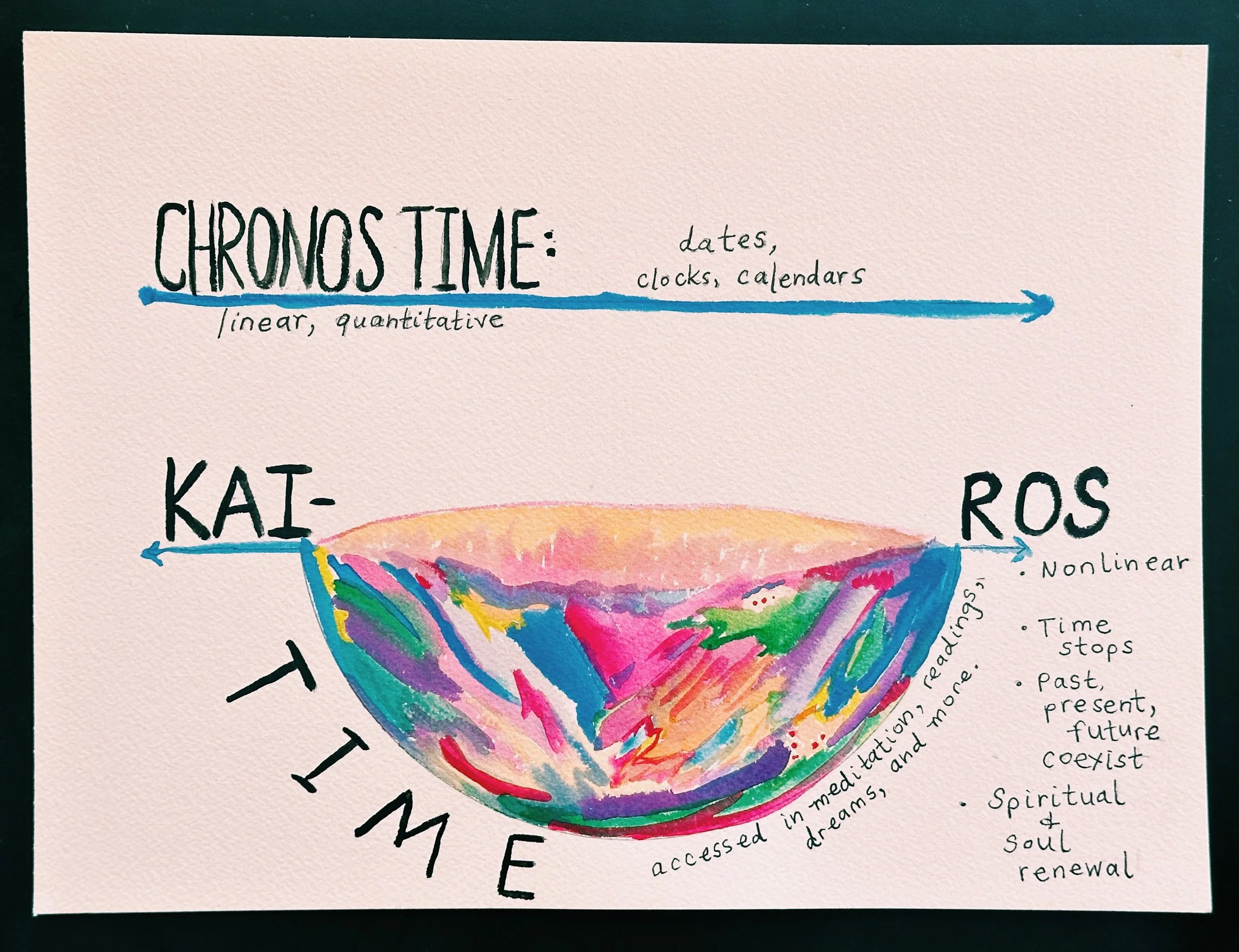
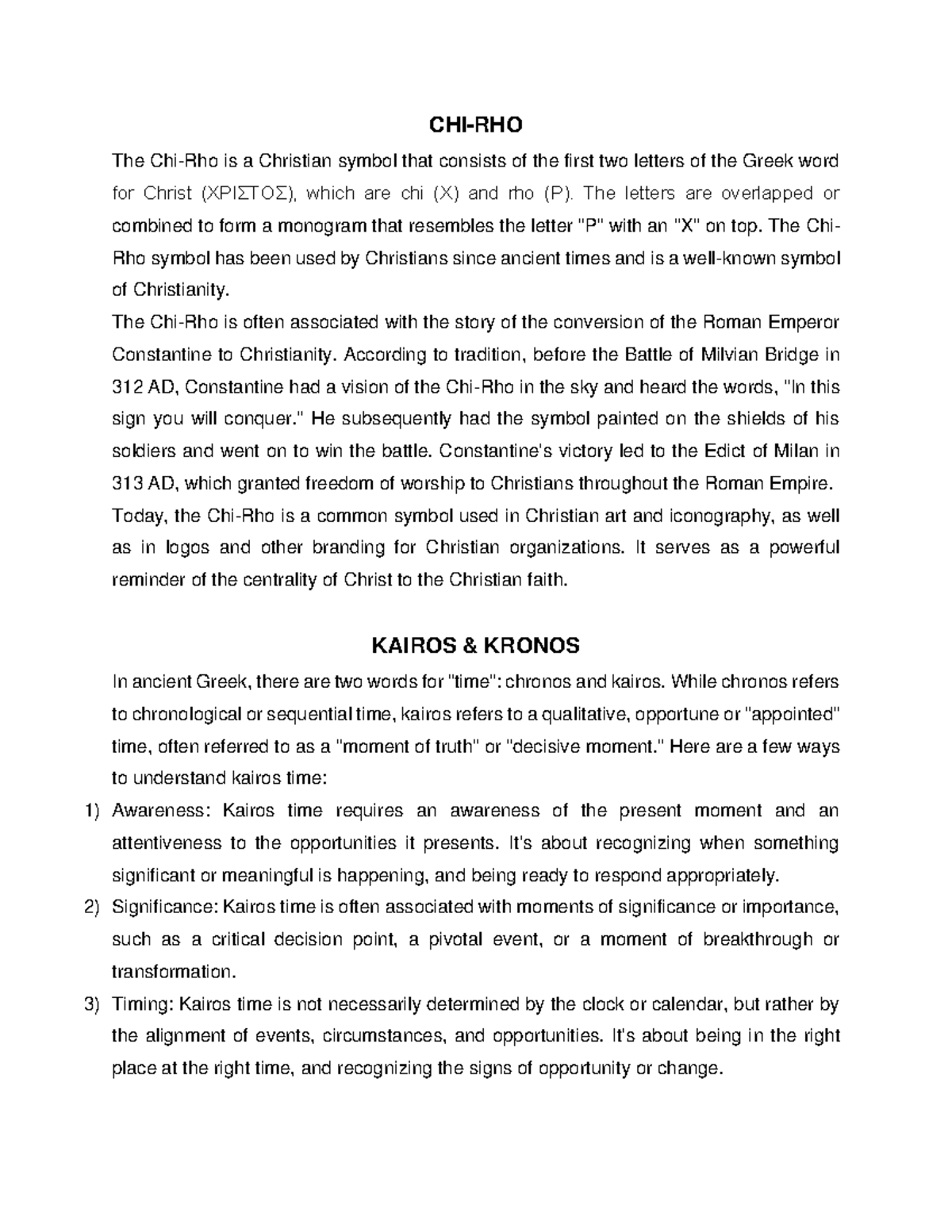
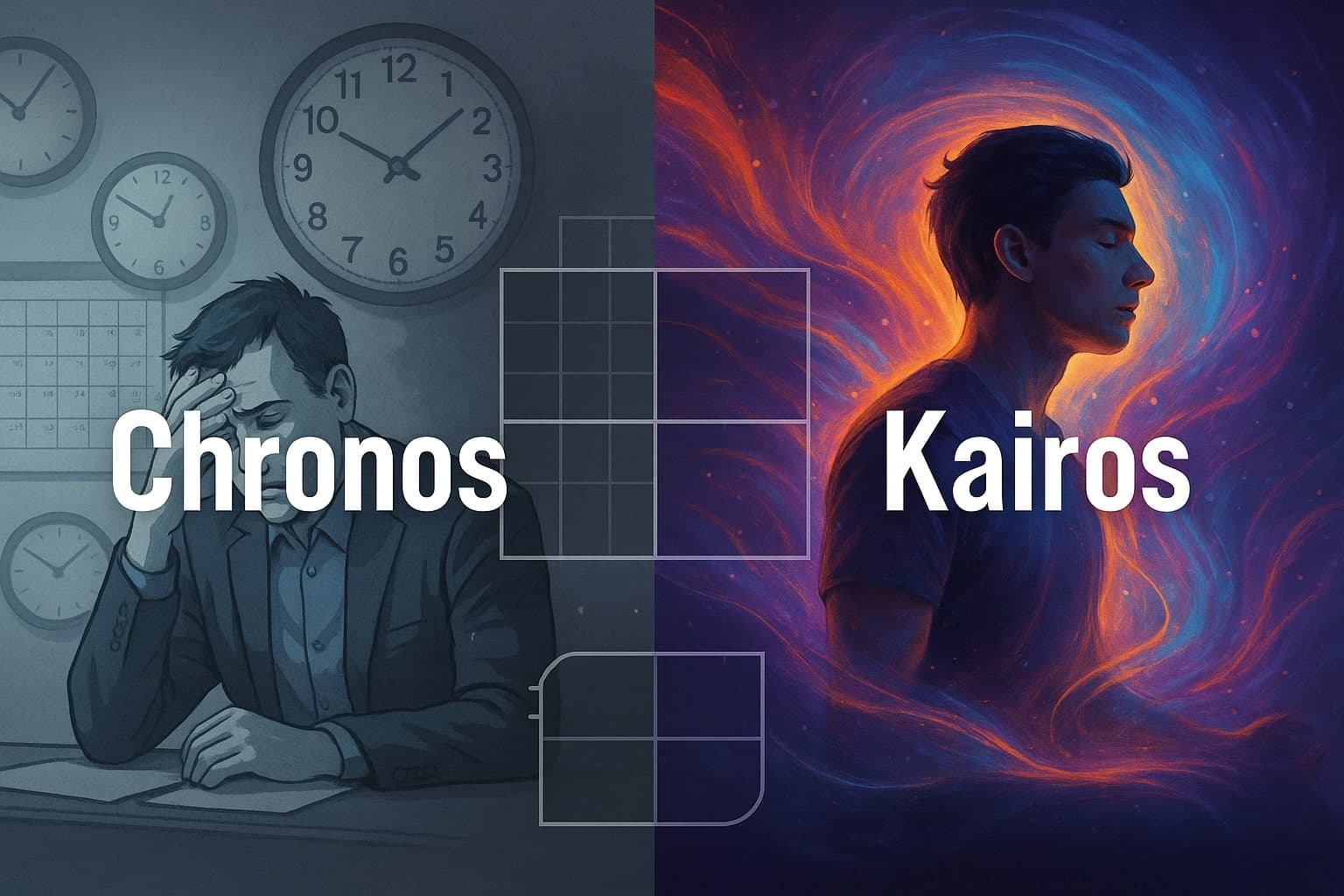
Understanding kairos and chronos time involves distinguishing between quantitative, linear duration and qualitative, opportune moments. Chronos is the chronological time measured by clocks and calendars, focusing on "how much." Kairos is the ancient Greek concept of the "right" or "opportune" moment, focusing on the significance and timing of an action.
Contents
Human experience is often a tug-of-war between these two perceptions of time. We live in a world governed by the relentless ticking of the clock, yet our most meaningful memories and breakthroughs occur in moments that feel "timeless." As we navigate the professional and personal landscapes of 2026, the ability to balance these two dimensions has become a critical skill for leadership, creativity, and mental health.
The Foundations of Chronos: The Quantitative Dimension
Chronos is the root of the English word "chronology." In Greek mythology, Chronos (or Khronos) was the personification of time—often depicted as an elderly man turning a wheel or carrying a scythe. This represents time as a linear, unstoppable force that consumes all things. In a modern context, Chronos is the objective time that we all agree upon to function as a society.
The Mechanics of Linear Time
Chronos is measurable and divisible. It is the time of seconds, minutes, hours, days, and years. It is the framework upon which we build our civilizations. Without Chronos, we could not coordinate global logistics, schedule international flights, or synchronize digital networks. It is the time of the "deadline"—a word that poignantly suggests the terminal nature of linear progression.
In the workplace, Chronos is the metric of efficiency. It asks:
- How many units were produced per hour?
- How long did the meeting last?
- What is the project’s estimated time of completion?
The Psychological Impact of Chronos
While essential, a life lived strictly according to Chronos can be draining. The "ticking clock" creates a sense of scarcity. When we view time only as a finite resource to be spent, we often fall into the trap of "time anxiety." This is the feeling that we are constantly falling behind, regardless of how much we accomplish. In 2026, despite advancements in automated scheduling and AI-driven productivity, the pressure of Chronos remains a leading cause of burnout in high-performance environments.
The Essence of Kairos: The Qualitative Dimension
If Chronos is about the quantity of time, Kairos is about the quality of time. The ancient Greeks defined Kairos as the "right time," the "opportune moment," or "the season." It is not measured by a watch but by the alignment of circumstances. In Greek art, Kairos was often depicted as a young, fleeting figure with a lock of hair on his forehead but bald on the back of his head—symbolizing that you must seize the moment as it approaches, for once it passes, it cannot be grasped.
Identifying the Opportune Moment
Kairos is the time of "the now." It is the moment a comedian delivers a punchline, the moment an investor decides to buy a stock, or the moment a leader chooses to deliver a speech that shifts the culture of an organization. These moments are not significant because of how long they last, but because of what happens within them.
In a professional setting, Kairos manifests as:
- The Pivot: Knowing when to abandon a failing strategy, regardless of the "Chronos" time already invested.
- The Connection: A five-minute conversation that builds more trust than ten hours of formal meetings.
- The Breakthrough: That sudden "Aha!" moment that occurs when the mind is relaxed, often referred to as a "flow state."
Kairos and the Flow State
Modern psychology often links Kairos to the concept of "flow," a term popularized by Mihaly Csikszentmihalyi. When an individual is in a state of flow, their perception of Chronos disappears. Hours may feel like minutes because the person is so deeply immersed in the quality of the task. Cultivating Kairos involves creating the conditions where these moments are more likely to occur, rather than simply trying to "schedule" them.
Chronos vs. Kairos: A Comparative Analysis
To better understand how these two concepts interact, it is helpful to compare their attributes directly. While they are often viewed as opposites, they are actually complementary.
| Feature | Chronos (Quantitative) | Kairos (Qualitative) |
|---|---|---|
| Primary Question | "What time is it?" | "Is it the right time?" |
| Measurement | Clocks, Calendars, Stopwatches | Intuition, Opportunity, Impact |
| Perception | Linear, Sequential, Finite | Nonlinear, Ethereal, Infinite |
| Focus | Efficiency and Consistency | Effectiveness and Meaning |
| Ancient Symbol | The Old Man with a Scythe | The Fleeting Youth with a Forelock |
| Modern Example | A 9-to-5 workday schedule | The moment a "viral" trend begins |
| Risk | Burnout and Rigidity | Missed opportunities and Chaos |
The Tension Between Efficiency and Effectiveness
The struggle many face in 2026 is an over-reliance on Chronos at the expense of Kairos. We have become masters of the calendar, but we often miss the "season."
The Chronos Trap
When we prioritize Chronos, we focus on filling every minute with activity. This is the hallmark of "busyness." However, being busy is not the same as being productive. A manager might spend eight hours (Chronos) answering emails but fail to recognize the one moment (Kairos) where a team member needed a word of encouragement to prevent them from quitting. The email was efficient; the encouragement would have been effective.
The Power of "Margin"
To experience Kairos, one must have "margin"—unstructured Chronos time. If every minute of your day is scheduled, there is no room for the unexpected opportunity. Research in cognitive science suggests that the brain requires periods of "default mode network" activity (essentially daydreaming or downtime) to synthesize information and recognize patterns. By intentionally leaving gaps in our Chronos-based schedules, we invite Kairos to enter.
Practical Applications in Leadership and Life
Understanding these concepts is not merely a philosophical exercise; it has practical implications for how we lead organizations and manage our personal lives.
Kairos in Leadership
Great leaders are masters of Kairos. They understand that a message delivered at the wrong time—even if the content is correct—will fail. For example, announcing a major corporate restructuring during a period of high employee grief or stress (wrong Kairos) can lead to disaster, even if the "Chronos" of the fiscal year demands it.
Key Leadership Actions:
- Read the Room: Before acting, assess the emotional and cultural "season" of your team.
- Wait for the Gap: Sometimes the most productive action is to wait for the opportune moment rather than forcing a result through sheer Chronos-based effort.
- Prioritize Presence: In meetings, focus on the quality of the interaction rather than just checking off agenda items.
Managing Personal Time
On a personal level, we can improve our well-being by shifting our focus from "managing time" to "managing energy and opportunity." Instead of asking "How can I fit more into my day?" (a Chronos question), ask "What is the most meaningful thing I can do right now?" (a Kairos question).
Strategies for Personal Balance:
- Time Blocking for Deep Work: Use Chronos to protect Kairos. Set aside three-hour blocks of time for uninterrupted, focused work where you can lose track of the clock.
- The "Sunset" Rule: At the end of the workday, transition from Chronos (schedules) to Kairos (family, rest, and spontaneity).
- Mindfulness Practice: Mindfulness is essentially the practice of living in Kairos. It trains the brain to focus on the present moment rather than worrying about the linear past or future.
The Role of Technology in 2026
As of 2026, technology has become a dual-edged sword in the realm of time perception. On one hand, AI-integrated calendars have perfected the management of Chronos. They can optimize our travel routes, predict our meeting lengths, and automate our reminders with terrifying precision.
On the other hand, this hyper-optimization of Chronos can stifle Kairos. If an algorithm dictates every second of our lives, the "opportune moment" is often filtered out because it is seen as an "inefficiency." The challenge for the modern individual is to use technology to handle the burdens of Chronos so that the human mind is free to inhabit Kairos. We must ensure that our tools serve our timing, rather than our timing serving our tools.
Frequently Asked Questions
Is Kairos a religious concept?
While the term originated in ancient Greek philosophy, it was heavily adopted by early Christian theologians to describe "God’s time" or a "time of grace." In this context, it refers to a moment when the eternal breaks into the linear. However, in modern usage, it is widely used in secular rhetoric, psychology, and business to describe opportune timing and qualitative experience.
Can you measure Kairos?
No, Kairos cannot be measured by standard instruments. It is subjective and felt. While you can measure the duration of a "Kairos moment" using a clock (which turns it back into Chronos), you cannot measure its significance, impact, or "rightness" through quantitative means. It is recognized through intuition and hindsight.
Why is Chronos often associated with stress?
Chronos is associated with stress because it is finite and external. It creates a sense of "running out of time." Because we cannot stop the clock, we often feel a loss of control. Kairos, conversely, is often associated with peace or excitement because it is focused on the present moment, where we have the most agency.
How can I improve my sense of Kairos?
Improving your sense of Kairos requires developing "situational awareness." This involves being present in the moment and observing the emotional, social, and environmental cues around you. Practicing mindfulness, reducing digital distractions, and allowing for "unstructured time" in your schedule are the most effective ways to heighten this sensitivity.
Is one type of time better than the other?
Neither is inherently better; they are both necessary. Without Chronos, life would be chaotic and uncoordinated. Without Kairos, life would be a robotic, meaningless march toward an end date. The goal is "rhythmic living"—using Chronos to provide structure and Kairos to provide meaning.
Embracing a Rhythmic Approach to Time
To truly master the art of living, one must stop viewing time solely as a resource to be "spent" or "saved." Instead, view it as a landscape to be inhabited. By understanding the distinction between Chronos and Kairos, you can navigate the demands of the modern world without losing your sense of purpose.
Your next action should be to audit your upcoming week. Look at your calendar—the realm of Chronos—and identify at least two "white space" blocks of at least two hours each. Label these as "Kairos Windows." During these times, turn off your notifications and allow yourself to engage in deep work, creative thinking, or meaningful conversation without the pressure of the ticking clock. By intentionally protecting the quantitative, you create the necessary space for the qualitative to flourish.
Image Gallery