Brosnan’s Bond: The Legacy of a British Icon
Pierce Brosnan’s legacy as James Bond is defined by his successful modernization of the character following a six-year franchise hiatus. Between 1995 and 2002, he bridged the gap between Cold War tropes and the high-tech, fast-paced ac...
Pierce Brosnan’s legacy as James Bond is defined by his successful modernization of the character following a six-year franchise hiatus. Between 1995 and 2002, he bridged the gap between Cold War tropes and the high-tech, fast-paced action of the late 20th century, securing 007’s cultural relevance for the new millennium.
Contents
The Rebirth of 007: From Hiatus to GoldenEye
In the early 1990s, the future of the James Bond franchise was far from certain. Following the release of Licence to Kill in 1989, a series of complex legal battles between Eon Productions and MGM/UA stalled the series. By the time the dust settled, Timothy Dalton had stepped down, and the world had changed. The Berlin Wall had fallen, and critics questioned whether a "sexist, misogynist dinosaur"—as Judi Dench’s M would later describe him—still had a place in a post-Cold War landscape.
Pierce Brosnan, who had famously lost the role in 1986 due to his contract with the television series Remington Steele, was finally cast as the fifth James Bond. His debut in 1995’s GoldenEye was more than just a film release; it was a cultural reboot. Directed by Martin Campbell, the film balanced the sophisticated charm associated with Sean Connery and Roger Moore with a modern, athletic edge. It grossed over $350 million worldwide, proving that James Bond was still a massive commercial force.
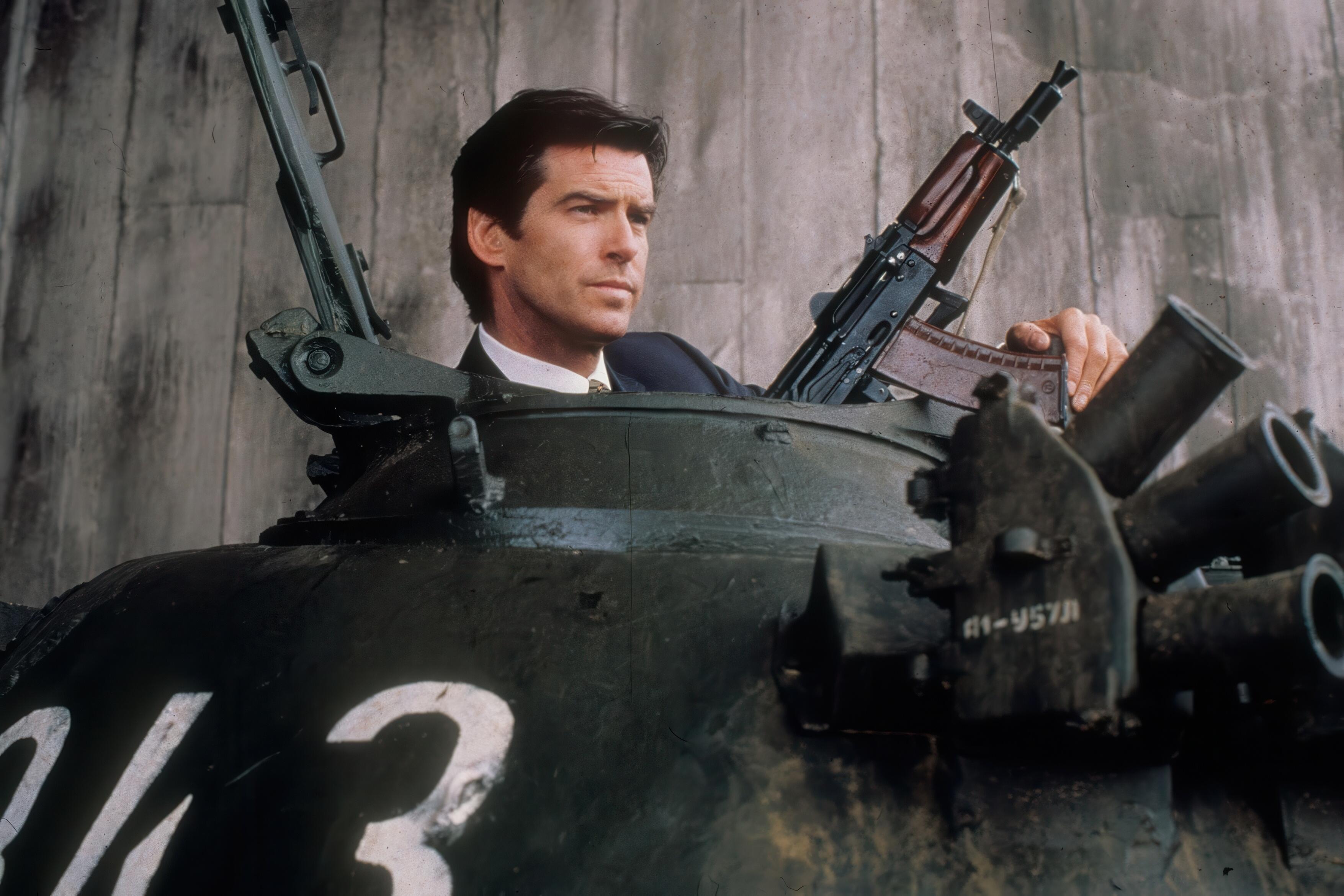
Brosnan’s arrival signaled a shift in tone. He managed to portray a Bond who was vulnerable yet lethal, a man who could feel the weight of his kills while adjusting his silk tie in a crashing tank. This duality became the hallmark of his four-film tenure, allowing the franchise to transition from the gritty realism of the late 80s to the high-gloss spectacle of the late 90s.
Defining the 90s Aesthetic: Sophistication and Technology
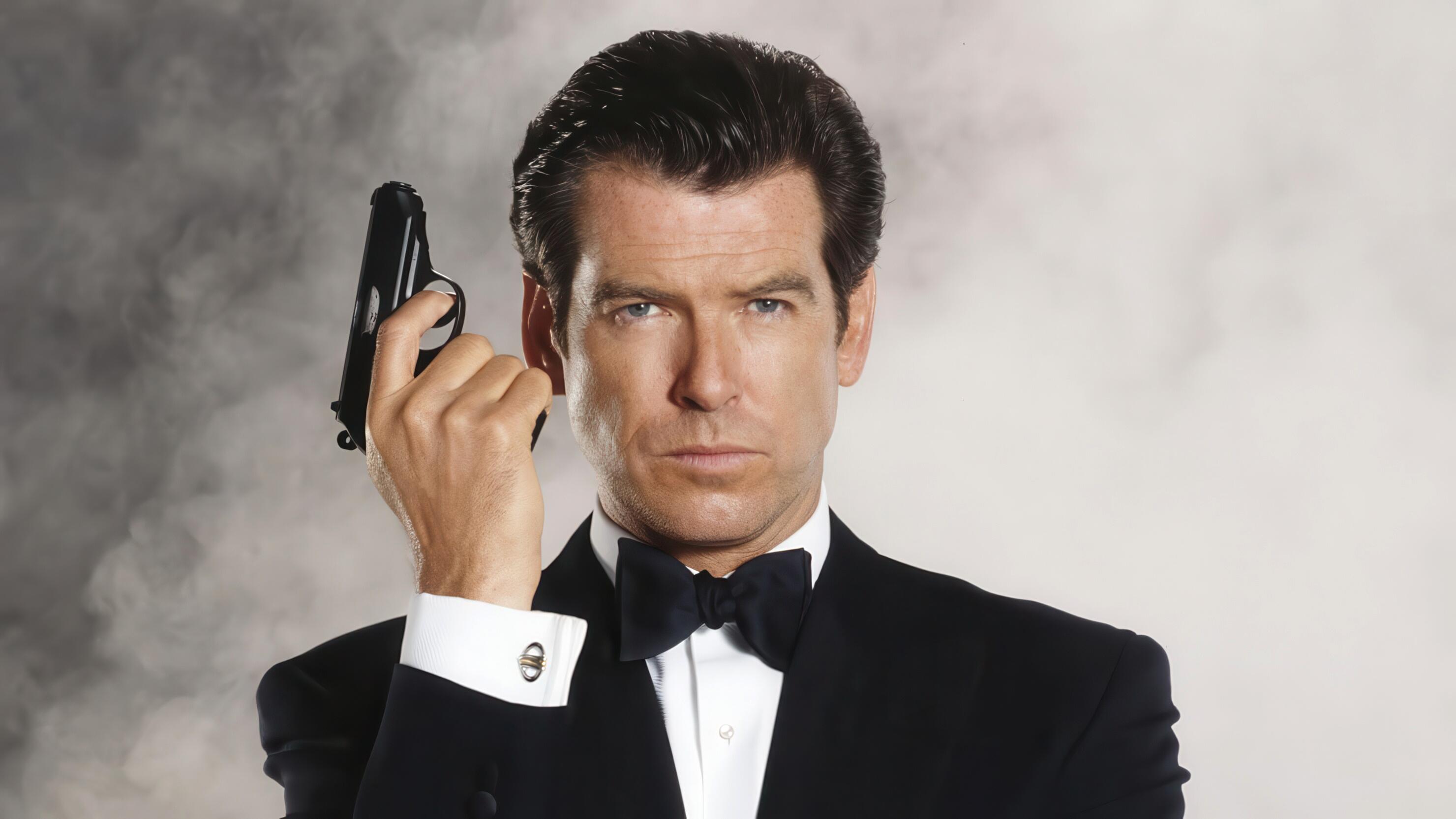
Brosnan’s era is often characterized by its visual polish and the significant integration of high-end brands, which redefined the "Bond Look" for a generation. While previous Bonds had used various tailors, Brosnan’s Bond was synonymous with Brioni suits. This partnership helped establish a silhouette that was sharp, structured, and quintessentially professional, moving away from the looser cuts of the 80s.
The Gadgetry and Vehicle Evolution
The Brosnan era saw a controversial but commercially successful shift in Bond’s choice of vehicles. A three-picture deal with BMW saw 007 driving the Z3, the 750iL, and the Z8. While some traditionalists missed the Aston Martin, these vehicles were symbols of the era’s technological optimism.
Gadgets also returned to the forefront of the storytelling. Under the guidance of Desmond Llewelyn’s Q, the gadgets in Brosnan’s films became increasingly imaginative:
- The Parker Jotter Pen: A class-4 grenade disguised as a common writing instrument (GoldenEye).
- The Remote-Control BMW: Driven via a touchpad on an Ericsson cellular phone (Tomorrow Never Dies).
- X-Ray Glasses: Used to detect concealed weapons beneath clothing (The World Is Not Enough).
These elements were not merely gimmicks; they reflected the rapid digitization of society in the late 90s. Brosnan’s Bond was the first to truly navigate a world of satellite surveillance, global media manipulation, and cyber-terrorism.
Analysis of the Brosnan Filmography (1995–2002)
To understand the legacy of this icon, one must examine the progression of his four official outings. Each film attempted to address a different aspect of the character’s psyche and his role in a changing world.
GoldenEye (1995)
Often cited as one of the best films in the entire franchise, GoldenEye succeeded by pitting Bond against a mirror image of himself: Alec Trevelyan (006). It explored themes of betrayal and the obsolescence of secret agents in the digital age.
Tomorrow Never Dies (1997)
This film was remarkably prescient in its exploration of "fake news" and media moguls who manufacture crises to drive ratings. It also introduced Michelle Yeoh as Wai Lin, one of the most capable and independent "Bond Girls" in history, signaling a shift in how female characters were utilized in the series.
The World Is Not Enough (1999)
While mixed in its reception, this film attempted a bold narrative twist by featuring the primary female lead, Elektra King (Sophie Marceau), as the central antagonist. It showcased Brosnan’s range as he portrayed a Bond who was emotionally manipulated and physically compromised.
Die Another Day (2002)
The 40th-anniversary film was a massive commercial hit but faced criticism for its heavy reliance on CGI and outlandish plots, such as the "invisible" car and a sun-powered space laser. Despite the criticism, it remains a significant milestone that celebrated the franchise's history while pushing it to its absolute stylistic limits.
| Film Title | Release Year | Primary Villain | Primary Vehicle | Box Office (Original USD) |
|---|---|---|---|---|
| GoldenEye | 1995 | Alec Trevelyan | BMW Z3 / Aston Martin DB5 | $356 Million |
| Tomorrow Never Dies | 1997 | Elliot Carver | BMW 750iL | $339 Million |
| The World Is Not Enough | 1999 | Elektra King | BMW Z8 | $361 Million |
| Die Another Day | 2002 | Gustav Graves | Aston Martin V12 Vanquish | $431 Million |
The Lasting Impact on the Franchise
As of 2026, the influence of the Brosnan era remains evident in how Eon Productions approaches the series. Brosnan was the first Bond to exist in a world where M was a woman, a casting choice that fundamentally changed the power dynamics of the MI6 office. Judi Dench’s performance was so impactful that she was the only major cast member to transition into the Daniel Craig era, maintaining continuity through the 2006 reboot.
Furthermore, Brosnan’s tenure coincided with the rise of the "Bond Game." The release of GoldenEye 007 on the Nintendo 64 in 1997 revolutionized the first-person shooter genre. For many fans, Brosnan isn't just the Bond they saw in theaters; he is the Bond they "were" in their living rooms. This cross-media success cemented his face as the definitive 007 for Millennials and late Gen Xers.
Brosnan also navigated the franchise through its most significant commercial expansion. He was the face of the brand when it became a truly global multi-billion-dollar entity, integrating product placement and international marketing in ways that set the template for modern blockbuster cinema.
Critical Evaluation and the "Bridge" Theory
Film historians often refer to Brosnan as the "Bridge Bond." He had the task of connecting the classic, formulaic elements of the Connery/Moore years with the gritty, serialized storytelling that would define the 21st century.
Strengths of the Legacy:
- Consistency: Brosnan never gave a "poor" performance; he remained impeccably professional and dedicated to the role throughout.
- Physicality: He introduced a more kinetic, stunt-heavy style of action that prepared audiences for the high-octane sequences of the Jason Bourne and Daniel Craig era.
- Global Appeal: His films were massive hits in international markets, expanding the brand's reach in Asia and Eastern Europe.
Limitations of the Era:
- Tonal Imbalance: At times, the films struggled to decide if they were serious spy thrillers or over-the-top action spectacles.
- Reliance on Formula: While GoldenEye subverted tropes, later films occasionally leaned too heavily on established 007 clichés, leading to the eventually necessary "grounding" of the series in Casino Royale.
FAQs About Pierce Brosnan’s James Bond
Why did Pierce Brosnan stop playing James Bond?
Brosnan’s departure was largely due to a desire by the producers to "reboot" the series with a younger, more gritty approach following the 95th anniversary of the character. While Brosnan was open to a fifth film, negotiations eventually led to a clean break, allowing Daniel Craig to take over in 2006.
Is Pierce Brosnan considered the "best" James Bond?
While "best" is subjective, Brosnan is frequently ranked in the top three by fans. He is often praised for being the most "balanced" Bond—possessing Connery’s coolness, Moore’s wit, and a hint of Dalton’s edge. For a generation that grew up in the 90s, he remains the definitive version of the character.
Which Brosnan film is most important to the 007 legacy?
GoldenEye is undeniably the most significant. It proved that Bond could survive without the Soviet Union as a primary antagonist and demonstrated that the franchise could thrive in the modern blockbuster era. It saved the series from potential permanent retirement.
Did Pierce Brosnan do his own stunts?
Brosnan performed many of his own stunts, including several of the high-speed driving sequences and hand-to-hand combat scenes. However, for more dangerous feats—such as the famous dam jump in GoldenEye—professional stunt performers like Wayne Michaels were utilized to ensure safety and precision.
How did the GoldenEye video game affect his legacy?
The video game is a pillar of his legacy. It sold over 8 million copies and is credited with popularizing console-based multiplayer shooters. Because players "controlled" Brosnan's Bond, they developed a much deeper personal connection to his version of the character than to any other.
Recommendation for Fans and Researchers
To truly appreciate "Brosnan's Bond," viewers should watch the films in chronological order while paying close attention to the evolution of the MI6 office dynamics. Start with the Official James Bond Website to view archival behind-the-scenes footage. For those interested in the technical and fashion-related aspects of his tenure, resources like the British Film Institute (BFI) provide excellent academic retrospectives on how his era influenced British cinema marketing and global brand identity.
Whether viewed as a nostalgic icon of the 90s or a sophisticated modernization of a literary legend, Pierce Brosnan’s contribution to the James Bond mythos is undeniable. He carried the franchise on his shoulders during a period of immense cultural change, ensuring that 007 remained the world's premier secret agent.
Image Gallery