Understanding the Maryland Regulated Firearms List and Purchase Requirements for 2026
Navigating the Maryland regulated firearms list requires a clear understanding of state definitions, Firearm Qualification License (FQL) prerequisites, and the specific categories of handguns and assault weapons restricted under Maryla...
Navigating the Maryland regulated firearms list requires a clear understanding of state definitions, Firearm Qualification License (FQL) prerequisites, and the specific categories of handguns and assault weapons restricted under Maryland law. This guide provides a comprehensive breakdown of statutory classifications, purchasing protocols, and compliance standards enforced by the Maryland State Police.
Contents
Defining Regulated Firearms in Maryland State Law
Under Maryland Public Safety Article Code, the classification of a regulated firearm historically encompasses all handguns and a specific enumerated list of semi-automatic rifles and shotguns. While the Firearm Safety Act of 2013 fundamentally reshaped the landscape by banning the sale of dozens of specific assault-style long guns, the term "regulated firearm" continues to govern the transfer, purchase, and possession tracking of handguns within the state.
The Maryland State Police (MSP) Licensing Division maintains oversight of these transactions. Understanding what separates a regulated firearm from a standard rifle or shotgun is essential for legal compliance. The legal framework establishes distinct operational thresholds based on mechanical action, overall length, and specific model designations.
- Handguns: Any pistol, revolver, or firearm designed, made, or remade to expel a projectile by the action of an explosive with one hand, regardless of barrel length.
- Assault Long Guns: Specific semi-automatic centerfire rifles and shotguns enumerated by name under Maryland law, or copies and duplicates of those enumerated models featuring specific tactical characteristics.
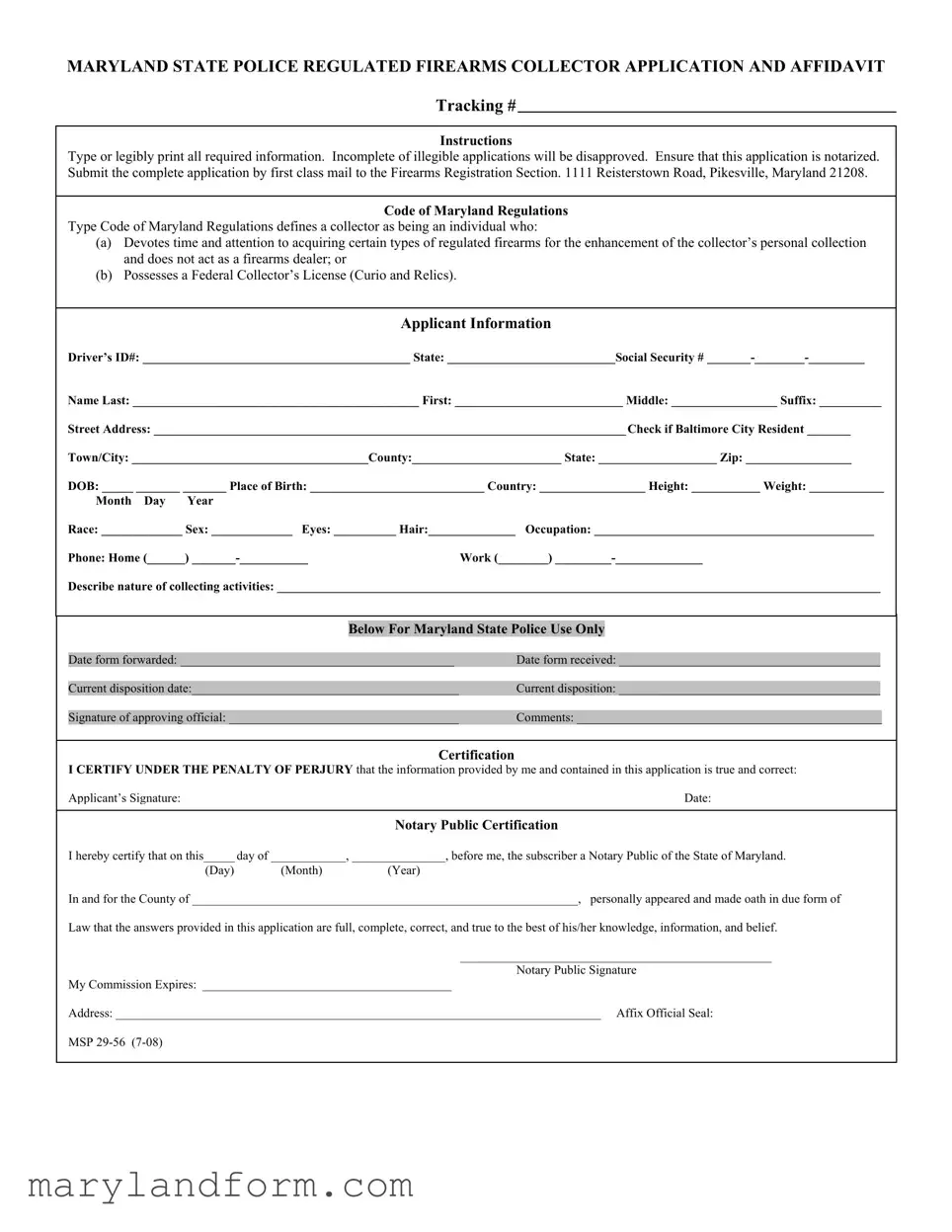
- Collector Status: Individuals designated as regulated firearms collectors are exempt from the standard one-handgun-per-month purchase limitation, provided they meet specific background and application criteria.
The Firearm Qualification License (FQL) Mandate
Before an individual can purchase, rent, or receive a regulated firearm in Maryland, they must possess a valid Firearm Qualification License (FQL) issued by the Maryland State Police, unless exempt. Enacted to ensure basic competency and background verification, the FQL process requires specific steps that must be completed prior to initiating a Form 77R (Application to Purchase a Regulated Firearm).
The application process is managed electronically through the Maryland State Police MyLicense portal. Applicants must account for processing times, background fees, and mandatory training components.
- Fingerprinting: Complete fingerprinting through an authorized Livescan provider registered with the Maryland Department of Public Safety and Correctional Services.
- Training Completion: Attend and successfully complete a minimum of four hours of instruction conducted by a Qualified Handgun Instructor. This must include classroom instruction and a live-fire component.
- Online Application: Submit the electronic FQL application via the MSP portal, attaching the Livescan tracking number (TSN) and training certificate.
- MSP Review: The Maryland State Police conducts a comprehensive background check. By law, the MSP has up to 30 days to process the application upon receipt of the completed packet.
Exemptions from the FQL Requirement
Certain individuals are legally exempt from obtaining a Firearm Qualification License to acquire a regulated firearm in Maryland. These exemptions recognize professional training, law enforcement status, or pre-existing military qualifications. However, exempt individuals must still undergo the standard background check and complete the Application to Purchase (Form 77R) for every transaction.
- Active law enforcement officers of the United States, Maryland, or any local law enforcement agency in the state.
- Retired law enforcement officers from a law enforcement agency in the United States or Maryland.
- Active members of the United States Armed Forces or the National Guard who possess a military identification card.
- Honorably discharged members of the United States Armed Forces or the National Guard.
- Licensed firearms dealers and manufacturers.
Prohibited Persons and Disqualifying Factors
State and federal laws strictly prohibit certain individuals from purchasing, owning, possessing, or carrying regulated firearms in Maryland. A comprehensive background check is performed during every FQL application and subsequent Form 77R submission to screen for these disqualifying criteria.
| Disqualifying Category | Statutory or Regulatory Basis | Details & Exceptions |
|---|---|---|
| Felony Convictions | Public Safety Art. § 5-133 | Conviction of any crime punishable by imprisonment exceeding one year. |
| Domestic Violence | 18 U.S.C. § 922(g)(9) / State Law | Conviction of a qualifying crime of domestic violence or active protective orders. |
| Substance Abuse | Public Safety Art. § 5-133 | Being an unlawful user of or addicted to any controlled dangerous substance. |
| Mental Health Adjudication | Health-General Art. § 10-503 | Involuntary commitment to a mental health facility for 30 consecutive days or more, or adjudication as mentally incompetent. |
| Age Restrictions | Public Safety Art. § 5-134 | Individuals under 21 years of age are prohibited from purchasing handguns or regulated firearms (with narrow military exceptions). |
Step-by-Step Purchase and Transfer Process
Acquiring a regulated firearm in Maryland follows a strict statutory workflow. Skipping a step or failing to adhere to the mandatory waiting periods results in transaction cancellation and potential legal liability.
- Step 1: Obtain FQL (if not exempt)
- Step 2: Select Firearm from a Licensed Dealer (FFL)
- Step 3: Complete MSP Form 77R Online
- Step 4: Observe Mandatory 7-Day Waiting Period
- Step 5: Finalize Background Check & NICS Approval
- Step 6: Take Physical Possession of Firearm
Initiating the Form 77R
Once the buyer selects a firearm at a Federal Firearms License (FFL) dealer, the dealer initiates the electronic Application to Purchase (Form 77R) through the Maryland State Police portal. The buyer then logs into their personal MSP account to review, sign, and pay the state processing fee.
The Waiting Period and Disapproval Window
Maryland enforces a mandatory waiting period for all regulated firearm transfers. The statutory clock begins the moment the MSP receives the completed and signed Form 77R. The dealer cannot legally transfer the firearm until the MSP issues a "Not Disapproved" status and the mandatory waiting period has elapsed. If the MSP does not issue a disapproval within the designated statutory window, the transfer may proceed under federal guidelines, though state policy typically requires clear written authorization.
Pros and Cons of Maryland's Regulated Firearm Framework
Evaluating the regulatory environment reveals distinct structural advantages and administrative challenges for firearms owners, collectors, and licensed dealers operating within the state.
Advantages
- Standardized Vetting: The FQL and Form 77R systems establish a uniform background verification baseline for all handgun transactions, reducing illegal private-party transfers.
- Clear Collector Pathways: Designated collectors enjoy relief from the one-handgun-per-month purchase restriction, facilitating lawful acquisition for hobbyists and historical preservationists.
- Comprehensive Tracking: Serialized registry alignment provides law enforcement with clear ownership chains in cases of lost, stolen, or recovered firearms.
Disadvantages
- Administrative Delays: Processing backlogs at the Maryland State Police Licensing Division can extend FQL approvals and Form 77R reviews beyond standard timeframes.
- Complex Compliance Burdens: The intersection of federal definitions, state-ban lists on specific assault long guns, and local ordinances creates continuous compliance hurdles for FFL dealers.
- Financial Costs: Mandatory fingerprinting, FQL application fees, and training course expenses increase the total cost barrier for lawful self-defense acquisition.
Troubleshooting Common Application and Transfer Issues
Applicants frequently encounter specific administrative hurdles during the FQL or Form 77R submission process. Addressing these proactively prevents prolonged delays.
- Mismatched Personal Information: Ensure that the name, address, and date of birth on your driver's license, FQL application, and Form 77R match character-for-character. Discrepancies between a residential address and a mailing address must be formally updated with the Motor Vehicle Administration (MVA) beforehand.
- Livescan Tracking Number (TSN) Errors: Entering an incorrect TSN or submitting prints through an unauthorized vendor will cause the MSP system to automatically reject the FQL background packet.
- Delay in NICS Response: While the state-level review may return "Not Disapproved," the federal National Instant Criminal Background Check System (NICS) can occasionally enter a delayed status. Dealers cannot transfer the firearm until the NICS proceed status is officially registered.
Frequently Asked Questions
What is considered a regulated firearm in Maryland?
In Maryland, all handguns are classified as regulated firearms, alongside specific semi-automatic rifles and shotguns enumerated under state law. Every transfer of these items requires specific state reporting through the Maryland State Police.
Do I need an FQL if I already possess a concealed carry permit?
Yes, while obtaining a Maryland Wear and Carry Permit requires extensive training and fingerprinting, possessing an active permit does not automatically substitute for an FQL when purchasing a regulated long gun, though permit holders are exempt from certain training renewals depending on active status guidelines.
How long is a Maryland Firearm Qualification License valid?
A Maryland Firearm Qualification License is valid for 10 years from the date of issuance. Cardholders must renew the license prior to expiration to continue purchasing or acquiring regulated firearms.
Can out-of-state residents purchase regulated firearms in Maryland?
Generally, non-residents cannot purchase handguns or regulated firearms in Maryland unless they are active-duty military personnel stationed within the state or possess dual residency documentation that satisfies federal and state FFL transfer rules.
What is the current waiting period for a regulated firearm transfer in Maryland?
Maryland enforces a mandatory 7-day waiting period, which begins immediately upon the electronic submission and receipt of the completed Form 77R by the Maryland State Police.
How do I apply to become a designated regulated firearms collector in Maryland?
To apply for collector status, individuals must submit an application directly to the Maryland State Police Licensing Division, certifying that they collect firearms for historical, educational, or investment purposes. Upon approval, the one-handgun-per-month restriction is lifted.
Conclusion and Next Steps
Securing a regulated firearm in Maryland demands strict adherence to state licensing prerequisites, background checks, and administrative waiting periods. To begin the process, ensure your identification documents are current, locate an authorized Livescan provider for fingerprinting, and register an account on the official Maryland State Police licensing portal to submit your initial FQL or consult with a licensed local FFL dealer for transaction support.
Image Gallery