Statcast AI Overview: The Evolution of Baseball Analytics and Machine Learning
Statcast AI is the high-speed, automated toolset used by Major League Baseball (MLB) to analyze player movements and ball flight with unprecedented precision. By 2026, this system has evolved from a simple tracking utility into a sophi...
Statcast AI is the high-speed, automated toolset used by Major League Baseball (MLB) to analyze player movements and ball flight with unprecedented precision. By 2026, this system has evolved from a simple tracking utility into a sophisticated artificial intelligence ecosystem that powers scouting, broadcasting, and real-time player development.
Contents
Statcast AI functions by integrating high-frame-rate optical tracking cameras with cloud-based machine learning models. As of the 2026 season, the system utilizes a 12-camera Hawk-Eye array in every stadium, processing petabytes of data on Google Cloud to provide metrics such as exit velocity, catch probability, and detailed skeletal biomechanics. This technology has shifted baseball from a game of subjective observation to one of objective, data-driven certainty.
The Technical Infrastructure of Statcast AI
The foundation of Statcast AI is a sophisticated hardware-software hybrid. Before the implementation of the current AI-driven models, baseball relied on radar-based systems (Trackman) which, while accurate for ball tracking, struggled with player movement and complex environment variables.
Optical Tracking and Sensor Fusion
The current iteration of Statcast, powered by Hawk-Eye Innovations and Google Cloud, uses a 12-camera system. Five of these cameras operate at high frame rates to track the ball, while the remaining seven focus on player movement. These cameras are synchronized to create a three-dimensional recreation of the field.
In 2026, the primary advancement lies in pose estimation. Rather than tracking a player as a single point (a "blob"), Statcast AI identifies 18 distinct points on a player's body. This allows the system to measure joint angles, torso rotation, and the efficiency of a pitcher’s kinetic chain. This data is processed in real-time, requiring massive computational power that only distributed cloud environments can provide.
Cloud Integration and Machine Learning
Google Cloud serves as the backbone for Statcast AI’s analytical capabilities. Raw video data is uploaded and processed using Google's Vertex AI and BigQuery. The machine learning models are trained on millions of historical plays, allowing the system to "understand" the context of a game. For example, when a ball is hit into the gap, the AI doesn't just measure the distance; it compares the ball's trajectory against every similar hit since 2015 to calculate a "Catch Probability" in less than a second.
Key Metrics and AI-Generated Insights
To understand the full scope of a Statcast AI overview, one must look at the specific metrics that have redefined how fans and professionals view the game. These metrics are generally divided into three categories: hitting, pitching, and fielding/baserunning.
Advanced Hitting Metrics
AI has moved beyond the "Triple Crown" stats (Average, HRs, RBIs) to focus on the quality of contact.
- Exit Velocity: The speed of the ball off the bat. AI helps filter out "mishits" and identifies "Barrels"—a classification where the combination of exit velocity and launch angle leads to a minimum .500 batting average and 1.500 slugging percentage.
- Bat Tracking: A major addition in recent years, Statcast now measures the speed of the bat itself and the length of the swing. AI models correlate bat speed with "Expected" outcomes, helping scouts identify players with elite physical tools regardless of their current box-score results.
- Expected Statistics (xBA, xSLG, xwOBA): These are purely AI-driven. By stripping away the defense's performance and the stadium's dimensions, the AI calculates what a player’s stats should be based on the quality of their contact.
Pitching and Ball Movement
Statcast AI has revolutionized "Pitch Design." By tracking the seams of the ball, the system calculates:
- Spin Rate and Active Spin: Measured in revolutions per minute (RPM), AI determines how much of that spin actually contributes to the ball's movement (break).
- Extension: AI measures the exact point of release. A pitcher who releases the ball closer to home plate makes a 95-mph fastball "perceive" as 97-mph to the batter.
- Pitch Tunneling: Machine learning models analyze how long a fastball and a slider look identical to a hitter before their paths diverge.
Fielding and Baserunning
This is where AI poses the most significant advantage over human observation.
- Outs Above Average (OAA): This range-based metric evaluates how many outs a fielder saves compared to an average player. The AI accounts for the fielder's starting position, the distance they had to run, and the time they had to get there.
- Sprint Speed: By tracking the player's 18 skeletal points, the AI identifies their "Bolt" (individual runs at 30 feet per second or faster) and their average competitive speed.
| Metric Category | Legacy Metric | Statcast AI Equivalent | Primary AI Function |
|---|---|---|---|
| Hitting | Batting Average | Expected BA (xBA) | Removes luck/defense variables |
| Pitching | Velocity (Radar) | Perceived Velocity | Factors in release point/extension |
| Fielding | Fielding Percentage | Outs Above Average (OAA) | Accounts for difficulty/range |
| Baserunning | Stolen Bases | Sprint Speed / Lead Distance | Measures raw physical output |
| General | Eye Test | Catch Probability | Statistical comparison to historical data |
The Impact of Statcast AI on the Professional Game
The integration of AI has fundamentally changed three core areas of Major League Baseball: player development, broadcast storytelling, and officiating.
Player Development and Scouting
By 2026, every MLB team has a dedicated department of "R&D" (Research and Development) analysts who live in the Statcast data. Coaches use the pose estimation data to prevent injuries. If the AI detects a 3-degree shift in a pitcher’s elbow angle over three starts, it flags a potential ulnar collateral ligament (UCL) strain before the player even feels pain.
Scouting has also moved away from traditional "tools" to "Statcast profiles." A minor league player with a high "Hard Hit Rate" but a low batting average is now a high-value trade target because AI suggests their luck will eventually normalize, leading to a breakout performance.
Broadcasting and Fan Engagement
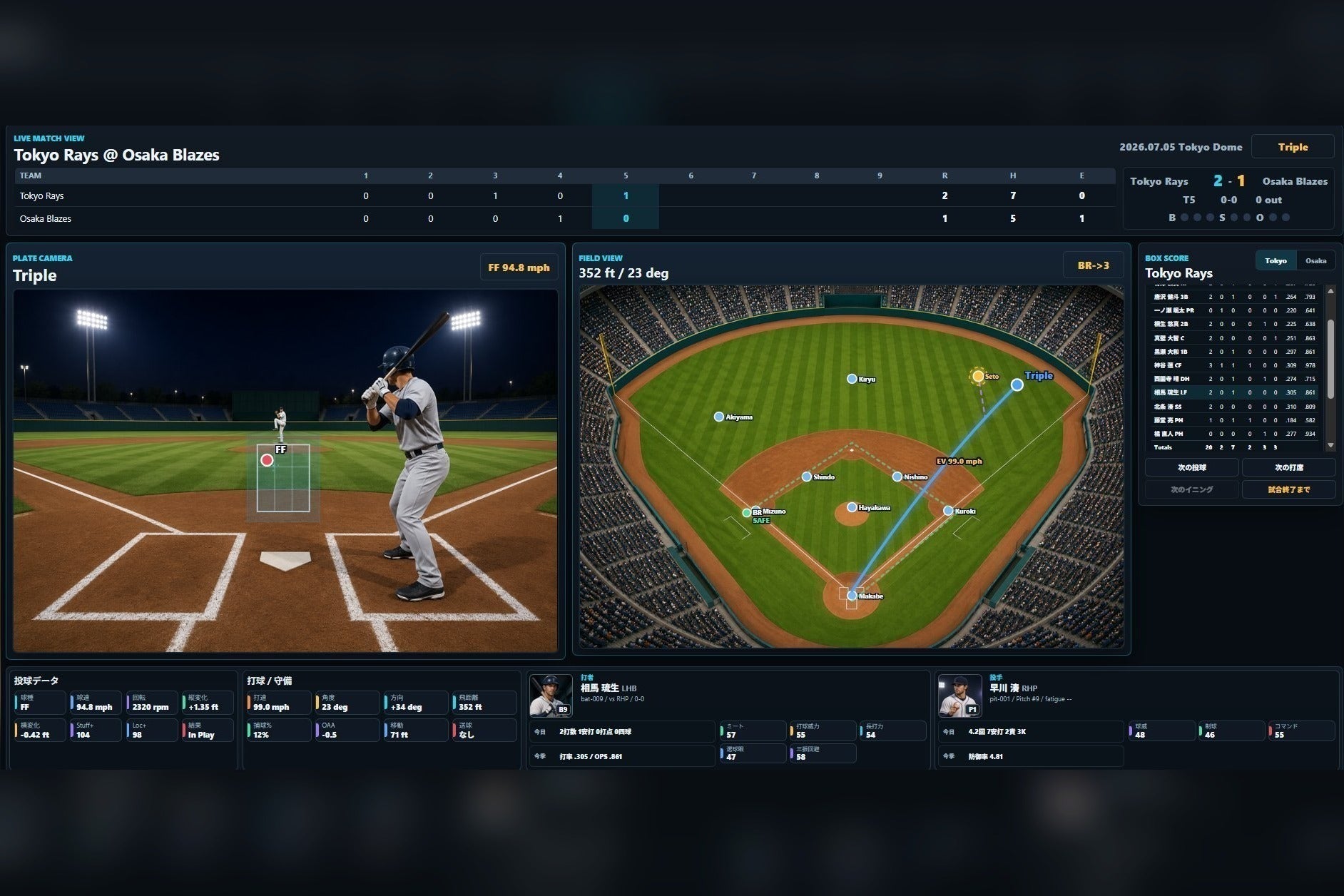
Broadcasters use Statcast AI to provide "instant context." During a live play, an overlay might show a "9% Catch Probability" as a center fielder sprints toward the wall. This heightens the drama by quantifying exactly how difficult a play is. In 2026, augmented reality (AR) apps allow fans in the stadium to point their phones at the field and see real-time Statcast "trails" behind every pitch and hit.
The Path to Automated Officiating
While Statcast is primarily an analytical tool, its high-accuracy ball tracking is the engine behind the Automated Ball-Strike (ABS) system. By 2026, the AI's ability to define a three-dimensional strike zone customized to each batter's height and stance has led to the widespread implementation of the "Challenge System" in MLB, where pitchers and hitters can appeal a human umpire's call to the AI.
Technical Requirements and Data Access
Accessing Statcast AI data depends on the user's role. For the general public, MLB provides a platform called Baseball Savant. This portal offers:
- Statcast Search: A tool to filter every pitch thrown in the MLB by velocity, movement, or result.
- Leaderboards: Rankings of players by AI-driven metrics like OAA or Barrel percentage.
- Illustrator Tools: Visual representations of "Spray Charts" and "Pitch Heat Maps."
For professional teams, the access is more granular. Teams receive raw CSV and JSON feeds via Google Cloud, containing thousands of data points per second. This "raw feed" includes the XYZ coordinates of the ball and every player on the field, 100 times per second.
Potential Limitations and Challenges
Despite its dominance, Statcast AI is not without its hurdles. One primary challenge is environmental interference. Heavy rain or thick fog can occasionally disrupt optical sensors, though the 2026 system uses multi-spectral imaging to mitigate these effects.
Another limitation is the "Context Gap." AI is excellent at measuring what happened and how fast it happened, but it still struggles to quantify the "why." Mental pressure, late-game fatigue that doesn't manifest in physical slowdowns, and clubhouse chemistry remain outside the reach of machine learning models. There is also an ongoing debate regarding data privacy, as players express concern over their biomechanical "fingerprints" being used against them in contract negotiations.
Frequently Asked Questions
What is the difference between Statcast and Sabermetrics?
Sabermetrics is the general study of baseball through statistics (like OPS or WHIP), often using box-score data. Statcast AI is the specific technology that collects high-frequency movement data. While Sabermetrics tells you a player got a hit, Statcast tells you the ball was hit at 108 mph at a 22-degree angle.
How accurate is Statcast AI in 2026?
The system is accurate to within a fraction of an inch for ball location and within centimeters for player positioning. The 12-camera Hawk-Eye array provides significantly higher fidelity than the older radar-only systems used prior to 2020.
Can Statcast predict future player performance?
Statcast is highly effective at identifying "Regression" or "Progression." If a player has a high Batting Average but a very low "Expected Batting Average" (xBA), the AI predicts their performance will likely drop soon. Conversely, it can identify "unlucky" players who are hitting the ball hard but directly at defenders.
Is Statcast data available for amateur or youth baseball?
Currently, the full Statcast AI suite is exclusive to MLB and certain high-level collegiate stadiums due to the cost of the 12-camera infrastructure. However, consumer-grade technology like Rapsodo and Blast Motion provides "Statcast-lite" metrics (Exit Velocity, Spin Rate) for amateur players.
Does Statcast track every player on the field simultaneously?
Yes. The AI identifies and tracks all nine defensive players, the batter, the runners, and the umpires. This allows for the calculation of team-wide metrics, such as "Defensive Efficiency" and "Relay Throw Speed."
Final Recommendations for Utilizing Statcast AI
For fans and analysts looking to leverage Statcast AI, the best starting point is Baseball Savant. Focus on "Expected" metrics (xBA, xwOBA) rather than traditional stats to get a truer sense of a player's skill level. For those interested in the technical side, exploring the "Statcast Search" functionality allows for deep dives into specific matchups and historical trends.
As we progress through the 2026 season, expect Statcast AI to continue its integration into the "Automated Ball-Strike" system and provide even deeper insights into player health through refined biomechanical pose estimation.
Image Gallery