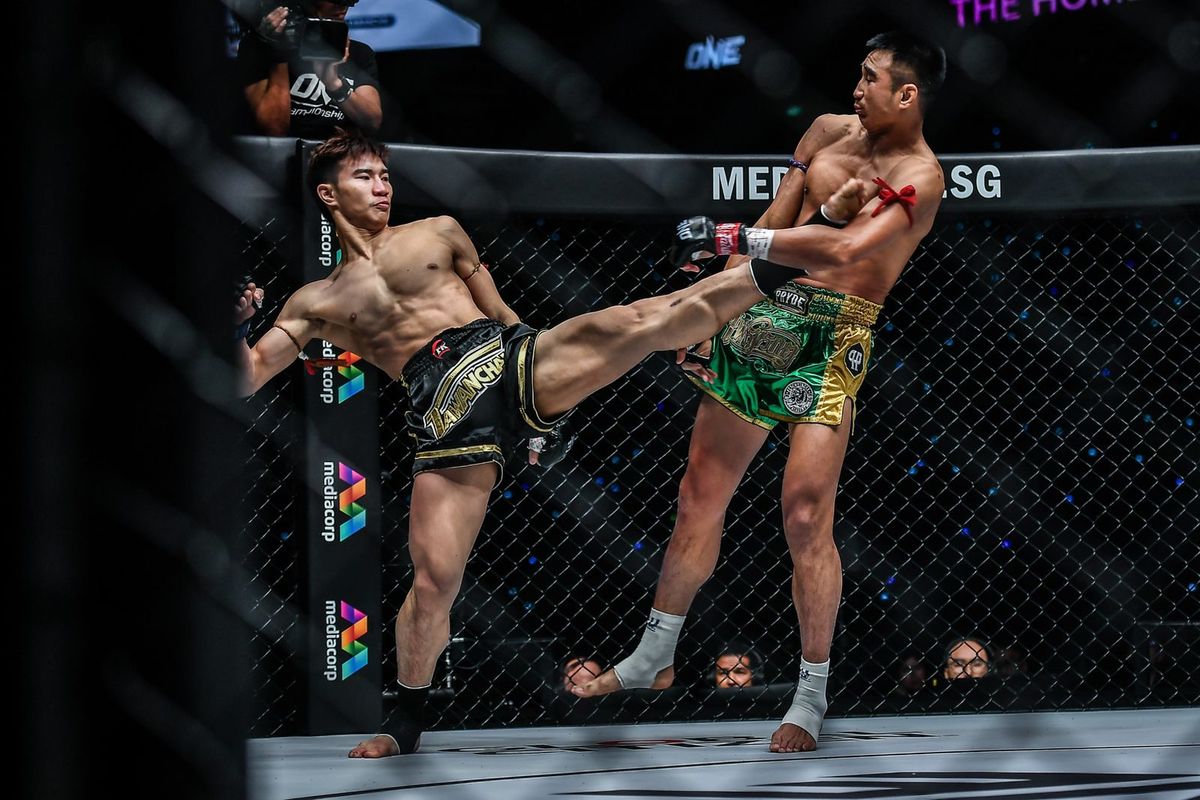
Why Tawanchai PK.Saenchai Dominates Modern Muay Thai
Tawanchai PK.Saenchai dominates modern Muay Thai through an unmatched combination of classic Muay Femur technique and modern tactical adaptation. His dominance relies on a lethal southpaw left teep, razor-sharp distance control, lightn...
Tawanchai PK.Saenchai dominates modern Muay Thai through an unmatched combination of classic Muay Femur technique and modern tactical adaptation. His dominance relies on a lethal southpaw left teep, razor-sharp distance control, lightning-fast middle kicks, and a seamless transition from traditional stadium scoring to the fast-paced, 4-ounce glove environment of international promotions like ONE Championship.
Contents
The Evolution of Tawanchai: From Stadium Prodigy to Global Superstar
To understand why Tawanchai PK.Saenchai stands at the pinnacle of modern striking, one must examine his roots in Thailand’s traditional stadium system. Born PK Saenchai (Anuwat Chattree) in Pattaya, Thailand, Tawanchai rose through the elite ranks of Lumpinee and Rajadamnern stadiums. In 2018, he was awarded the prestigious Sports Authority of Thailand Fighter of the Year, cementing his status as a generational talent within the traditional sport.
However, the transition from classic Thai stadium Muay Thai to global combat sports platforms presented a hurdle that many traditional champions failed to cross. Traditional stadium fights emphasize a slow-starting five-round structure where early rounds are used for feeling out opponents and gambling, culminating in intense third and fourth rounds dominated by clinch work (Muay Khao).
When Tawanchai made his debut on the international stage with ONE Championship, he adapted his fighting style to fit a three-round, highly aggressive, small-glove format. Rather than getting stuck in outdated habits, Tawanchai streamlined his arsenal. He preserved the artistic nuance of the technical wizard (Muay Femur) while developing punch-heavy blitzes and instantaneous finishing power required for modern global audiences.
Technical Anatomy of Tawanchai’s Dominance
Tawanchai’s dominance is not simply a product of physical athleticism; it is rooted in mechanical precision and distance control. As a southpaw, his positional geometry creates immediate problems for orthodox opponents, but his technical execution sets him apart from other elite strikers.
The Left Teep as a Weapon of Absolute Control
The front push kick, or teep, is often described as the jab of Muay Thai. Tawanchai possesses what is widely considered the most effective left teep in combat sports today.
- Speed and Hidden Mechanics: Tawanchai throws his teep with minimal telegraphing. He elevates his knee quickly within his tight stance, making it difficult for opponents to discern whether he is launching a push kick, a low kick, or a high left roundhouse.
- Force Generation and Interruption: Rather than using the teep merely to push opponents away, Tawanchai drives his foot directly into his opponent's solar plexus, chest, or hips. This neutralizes incoming blitzes before they start, off-balancing aggressors and forcing them to reset their feet.
- Distance Maintenance: By constantly maintaining a foot-and-a-half buffer zone with his teep, Tawanchai prevents aggressive boxers and clinch fighters from entering their effective striking ranges.
- Opponent Steps Forward to Blitz
- Tawanchai Identifies Hip Weight Shift
- Instantaneous Left Teep to Chest/Solar Plexus
- Opponent Off-Balanced & Drive Cancelled
- Tawanchai Resets or Fires Left Middle Kick
The Whip-Like Left Middle Kick
If the left teep is Tawanchai’s shield, his left roundhouse kick is his sword. Thrown from the rear southpaw leg, his middle kick targets the open right side of orthodox opponents, smashing into their ribs and arms.
Unlike heavier kickers who swing their hip wildly and sacrifice recovery speed, Tawanchai utilizes a whip-like technique. His kick snaps out and returns to his stance almost instantly, making it virtually impossible for opponents to catch his leg and execute takedowns or sweeps. Over the course of a fight, the sheer volume and velocity of these left kicks deaden the opponent's lead arm, stripping them of power in their main lead jab and left hook.
Southpaw Spatial Geometry and Footwork
Tawanchai is a master of outside foot position. In an orthodox vs. southpaw matchup, winning the battle of the lead foot (placing one's front foot outside the opponent's front foot) opens up dominant angles for rear-side strikes. Tawanchai consistently wins this spatial battle through subtle lateral stepping. When opponents attempt to cut off his lead foot, he uses pivoting check-steps to reset the angle, leaving his opponents striking air while opening up clear paths for his left straight punch and rear kick.
Adapting Traditional Muay Femur to Modern Rulesets
The modern era of striking demands versatility. The introduction of 4-ounce MMA gloves in promotions like ONE Championship drastically altered the defensive landscape of Muay Thai. Big 10-ounce boxing gloves allow fighters to hide behind a traditional high block; 4-ounce gloves do not.
| Traditional Stadium Rules (10oz Gloves) | Modern Global Rules (4oz Gloves) |
|---|---|
| • Slow start (Rounds 1-2 setting pace) | • Immediate high-paced action from Round 1 |
| • High, stationary shell block effective | • Small gloves bypass standard high blocks |
| • Deep, extended clinch & knee exchanges | • Quick referee breaks in non-action clinch |
| • Scoring heavily favors rounds 3 & 4 | • Punching damage & knockdowns scored high |
Tawanchai adjusted to these rule changes by refining his defensive and offensive systems:
Transitioning from the High Guard to Framed Evasion
Recognizing that 4-ounce gloves easily penetrate traditional high guards, Tawanchai shifted to a defense based on distance management, head movement, and hand framing. He uses a long guard—extending his lead arm to control his opponent's vision and shoulder movement—while keeping his head off the centerline. This allows him to lean back from incoming hooks (ti-lan) and counter immediately with sharp counters.
Integration of Western Boxing Combinations
Historically, classic Thai fighters relied predominantly on kicks, knees, and elbows, using punches primarily to setup kicks. Tawanchai developed crisp, high-speed Western boxing mechanics. His left straight punch is thrown with pinpoint accuracy down the pipe, and his short right hook serves as an effective counter-weapon when opponents try to press inside his kicking range.
Modern Conditioning and Pacing
In traditional stadiums, fighters often conserve energy for explosive third and fourth rounds. Global promotions score every round equally and penalize inactivity. Tawanchai’s strength and conditioning program at PK.Saenchai Muaythai Gym emphasizes high-cardio output from the opening bell, allowing him to throw heavy power kicks for three to five full rounds without his speed degrading.
Technical Breakdown of Tawanchai's Tactical Skillset
| Skill / Attribute | Primary Technical Execution | Strategic Purpose in Fight | Counter-Measure Against Opponents |
|---|---|---|---|
| Lead Teep (Front Kick) | Rapid piston motion targeting sternum or hips | Establishes distance, breaks momentum | Nullifies heavy punchers and aggressive forward pressure |
| Rear Left Roundhouse | Snapping whip motion with full hip torque | Bludgeons right flank, damages arm/ribs | Deactivates opponent's lead hook and destabilizes guard |
| Long Guard Defense | Extended lead hand controlling opponent frame | Smothers incoming strikes, blinds vision | Prevents close-range boxing combinations in small gloves |
| Rear Straight Punch | Direct southpaw left hand down the center | Capitalizes on gaps created by kick threats | Punishes opponents over-committing to kick checks |
| Pull-Counter Timing | Micro-step back followed by high kick/punch | Exploits opponent overextension | Punishes missed jabs and linear blitzes |
Key Victories That Defined His Era
Tawanchai’s position at the top of the sport is backed by victories against world-class opposition across multiple striking disciplines.
Victory over Petchmorakot Petchyindee (September 2022)
In the fight that crowned him the ONE Featherweight Muay Thai World Champion, Tawanchai dethroned long-time dominant champion Petchmorakot Petchyindee. Petchmorakot was widely considered an imposing long-range and clinch specialist. Tawanchai out-maneuvered the champion over five technical rounds by systematically out-kicking Petchmorakot, using lateral footwork to escape the clinch, and landing precise punch combinations. This match demonstrated Tawanchai's ability to beat elite, seasoned champions at their own game.
Destruction of Jamal Yusupov (February 2023)
In his first title defense, Tawanchai faced dangerous Russian striker Jamal Yusupov. The fight lasted just 49 seconds. Tawanchai landed a single, perfectly aimed left low kick directly into Yusupov's leg muscles, rendering Yusupov unable to stand and scoring an immediate knockout. This highlight demonstrated the lethal power hidden within his refined technique.
Tactical Masterclass Against Superbon Singha Mawynn (December 2023)
Facing kickboxing icon Superbon Singha Mawynn, Tawanchai took on one of the most technical strikers of his generation. In a five-round war, Tawanchai utilized his superior hand speed and heavy rear kicks to out-point Superbon. He continually disrupted Superbon’s signature head kicks by catching him on the entry with stiff left teeps and heavy straight left hands, proving his dominance over world-class technicians.
Training Environment: The PK.Saenchai Gym Advantage
A major factor behind Tawanchai’s dominance is the elite training ecosystem at PK.Saenchai Muaythai Gym in Bangkok. Home to numerous world champions, the gym is renowned for blending traditional Thai training methods with modern sports science and high-intensity sparring.
- PK.Saenchai Gym Ecosystem
- Traditional Mastery
- Technical Sparring
- Clinch Endurance
- Elite Pad Work
- Modern Sports Science
- Advanced Cardio Pacing
- Strength & Power Training
- Small-Glove Defense Drills
- Traditional Mastery
At PK.Saenchai, Tawanchai spars daily with elite fighters across various weight classes and fighting styles. Saenchai himself—widely regarded as one of the greatest Muay Thai fighters in history—serves as a mentor, passing down advanced evasive footwork, deceptive feints, and trick kicks that Tawanchai incorporates into his fundamental style.
Frequently Asked Questions
What style of Muay Thai does Tawanchai fight?
Tawanchai is primarily a Muay Femur, which translates to a technical, evasive, and highly intelligent style of fighter. However, unlike traditional Muay Femur fighters who rely heavily on counter-striking from a defensive distance, Tawanchai combines technical mastery with explosive power and modern boxing combinations suited for global promotions.
How does Tawanchai handle aggressive pressure fighters?
Tawanchai uses his left teep and long guard to handle forward pressure. When aggressive fighters attempt to close the distance, he uses the teep to push them back and off-balance them. If they break through his teep, he steps laterally off the centerline and fires sharp pull-counters or left roundhouse kicks as they enter his striking zone.
Why is Tawanchai's left kick so difficult to block?
His left kick is difficult to block because of his foot speed, minimal setup telegraphing, and posture alignment. His stance and hips look identical whether he is throwing a teep, a low kick, or a middle kick. Opponents are forced to guess which level the attack is targeting, often delaying their block reaction time.
How did Tawanchai adjust from 10-ounce to 4-ounce gloves?
Tawanchai adjusted by changing his defensive stance. He relies less on a stationary high shell guard and more on head movement, distance management, and active framing with his long guard. He also improved his hand speed and integrated tighter Western boxing combinations to threaten opponents inside small-glove range.
Can Tawanchai compete successfully in pure kickboxing rules?
Yes, Tawanchai has successfully competed under official kickboxing rules. While kickboxing bans elbows and limits clinch catching, Tawanchai’s core strengths—boxing combinations, fast roundhouse kicks, and distance control—translate effectively into kickboxing matches.
Key Takeaways for Martial Artists and Analysts
Tawanchai PK.Saenchai's modern dominance offers practical lessons for striking analysts, coaches, and practitioners:
- Master the Lead Offense: Developing an instantaneous lead push kick or jab allows a striker to dictate the distance, rhythm, and pacing of the fight.
- Prioritize Position Over Power: Power is maximized when launched from dominant angles. Tawanchai wins the lead-foot battle first, opening up clear paths for his strikes.
- Evolve Defensive Paradigms: Strikers transitioning to small gloves must replace static blocking guards with active framing, distance control, and spatial awareness.
- Blend Technique with Modern Athletics: Elite technical knowledge must be paired with high-volume cardio conditioning and explosive strength to succeed in high-paced, modern combat sports formats.
Image Gallery