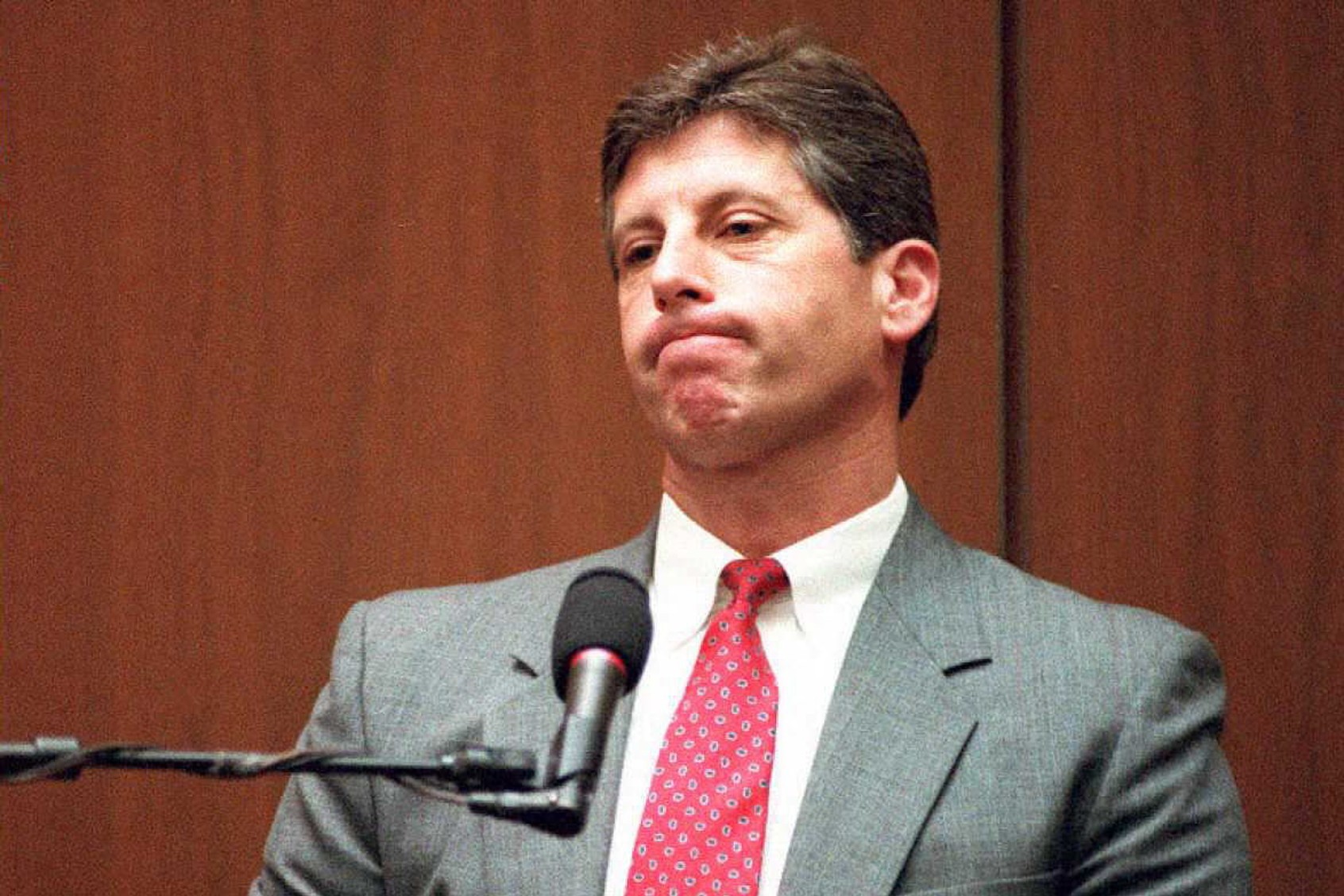
Mark Fuhrman’s Life and Legacy in California: A Definitive History
Mark Fuhrman lived in California for the majority of his professional life, most notably residing in the Los Angeles metropolitan area and Redondo Beach during his tenure with the Los Angeles Police Department (LAPD). His residency and...
Mark Fuhrman lived in California for the majority of his professional life, most notably residing in the Los Angeles metropolitan area and Redondo Beach during his tenure with the Los Angeles Police Department (LAPD). His residency and career in the state became a focal point of international attention during the 1995 O.J. Simpson murder trial, ultimately leading to his relocation to Idaho following his retirement and a high-profile perjury conviction.
Contents
The LAPD Years: Professional Residency in California
Mark Fuhrman’s association with California began in earnest when he joined the Los Angeles Police Department in 1975. After serving in the United States Marine Corps, Fuhrman transitioned into law enforcement, a career path that would keep him in the Southern California region for twenty years. During his time with the LAPD, Fuhrman was primarily stationed in the West Los Angeles Division, an area that encompasses some of the city's most affluent neighborhoods, including Brentwood, Bel Air, and Westwood.
As a detective, Fuhrman’s life was deeply rooted in the geography of the South Bay and Westside. He was known among his peers as a highly capable and aggressive investigator, eventually earning a promotion to Detective II. His residency in California was not merely a matter of employment; he was a fixture in the local law enforcement community during one of the most volatile eras in the history of the LAPD. The late 1980s and early 1990s in California were defined by shifting policing strategies and increasing racial tensions, factors that would later become inseparable from Fuhrman’s personal and professional narrative.
Before the events of 1994, Fuhrman’s life in California was that of a typical, high-achieving detective. He resided for a time in Redondo Beach, a coastal city in the South Bay region of Los Angeles County. This area provided a suburban retreat from the high-pressure environment of the West LA division. However, his professional conduct during this period—including a 1983 request for disability pension based on claims of stress and racial animosity—foreshadowed the legal battles that would eventually force him to leave the state.
The O.J. Simpson Trial: California as a Legal Battlefield
The primary reason Mark Fuhrman remains a subject of intense interest in California history is his role in the "Trial of the Century." On the night of June 12, 1994, Fuhrman was one of the first detectives to arrive at the crime scene at 875 South Bundy Drive in Brentwood, where Nicole Brown Simpson and Ron Goldman had been murdered. His actions over the subsequent 24 hours would change the course of California legal history.
Fuhrman was responsible for several key discoveries that the prosecution used to build its case against O.J. Simpson. Most famously, he claimed to have found a blood-stained leather glove on the grounds of Simpson’s estate on Rockingham Avenue. Because he had climbed over the estate's perimeter wall without a warrant—citing "exigent circumstances" and concern for the safety of those inside—his actions became the subject of intense Fourth Amendment scrutiny in the California court system.
The defense team, led by Johnnie Cochran, focused heavily on Fuhrman’s history in California. They portrayed him as a rogue officer who had planted evidence to frame a Black celebrity. This strategy was bolstered by the discovery of the "Fuhrman Tapes," recorded by screenwriter Laura Hart McKinny. The tapes contained numerous racial slurs and descriptions of police misconduct, contradicting Fuhrman’s sworn testimony that he had not used such language in the previous ten years. This revelation not only damaged the prosecution's case but also ignited a firestorm of public outrage across California, particularly in minority communities that had long complained of LAPD bias.
Legal Consequences and the Perjury Conviction
The legal fallout of Fuhrman’s time in California culminated in a landmark perjury case. In 1996, Fuhrman was charged with perjury by the California Attorney General’s office for his false testimony during the Simpson trial regarding his use of racial epithets. This was a rare instance of a police officer facing felony charges related to testimony given during a high-profile trial.
Under the advice of his legal counsel, Fuhrman entered a plea of nolo contendere (no contest) to the felony perjury charge. This plea resulted in a sentence of three years' probation and a $200 fine. More significantly, it meant that Fuhrman could no longer serve as a police officer in the state of California. The conviction served as a formal end to his twenty-year career and effectively made him persona non grata in the state’s law enforcement circles.
The perjury conviction also had broader implications for the California justice system. It led to various reforms in how police testimony is vetted and how internal affairs investigations are conducted. For many residents of California, Fuhrman became a symbol of the systemic issues within the LAPD that had been simmering since the 1992 Los Angeles riots. His legal battles highlighted the critical importance of officer credibility in the pursuit of justice.
Why Mark Fuhrman Left California for Idaho
By the conclusion of the Simpson trial in late 1995, Mark Fuhrman’s life in California had become untenable. He faced constant media harassment, death threats, and the looming threat of criminal prosecution. The intense public scrutiny made it impossible for him to maintain a private life in Redondo Beach or anywhere else in the Los Angeles area.
In 1995, Fuhrman retired from the LAPD and relocated to Sandpoint, Idaho. This move was a deliberate attempt to seek anonymity and a fresh start far from the reach of the California media cycle. Idaho offered a vastly different lifestyle—rural, politically conservative, and geographically isolated. In Sandpoint, he transitioned from a pariah of the California legal system to a successful author and media commentator.
Despite his move, the state of California continued to play a role in his life. He wrote several books, including Murder in Greenwich, which established him as a true-crime investigator. His insights into the California legal system and his firsthand experiences with the LAPD made him a frequent contributor to national news networks, often providing commentary on high-profile California criminal cases. As of 2026, Fuhrman remains a resident of the Idaho Panhandle, though his legacy is forever tied to the streets of Los Angeles.
Comparison: Life in California vs. Post-California Career
The following table outlines the stark differences between Fuhrman’s years as a California law enforcement officer and his subsequent career as a private citizen and media figure in Idaho.
| Feature | California Period (1975–1995) | Idaho/Media Period (1995–2026) |
|---|---|---|
| Primary Occupation | LAPD Detective (West LA Division) | Author, Private Investigator, Media Consultant |
| Residency | Redondo Beach / Los Angeles | Sandpoint, Idaho |
| Legal Status | Active Duty Officer / Felony Defendant | Retired / Convicted Felon (Record Expunged potential) |
| Public Perception | Controversial Figure / "Rogue Cop" | True Crime Expert / Conservative Commentator |
| Key Contribution | Evidence collection in the Simpson Case | Bestselling books (Murder in Greenwich) |
| Media Role | Subject of investigative reporting | Frequent guest on Fox News and other outlets |
The Enduring Impact on California Law Enforcement
The "Mark Fuhrman era" in California prompted significant shifts in how the state handles police misconduct and racial bias. Following his testimony and the subsequent civil trial of O.J. Simpson, the LAPD underwent a series of federal oversight measures, known as a Consent Decree, which aimed to reform the department's culture.
One of the most lasting impacts was the implementation of more rigorous background checks and psychological evaluations for officer recruits. California law enforcement agencies began to place a higher premium on "cultural competency" and community policing. The Fuhrman case demonstrated that the credibility of a single officer could jeopardize the integrity of an entire prosecution, leading to the "Brady List" protocols becoming more strictly enforced. A "Brady List" is a record of officers who have a history of being untruthful, which prosecutors must disclose to defense counsel in criminal cases.
Furthermore, the California State Legislature introduced various bills over the decades to increase transparency in police personnel records. While Fuhrman himself has not lived in the state for over thirty years, his name is still frequently cited in California courtrooms when discussing the impeachment of witnesses or the history of police-community relations in Los Angeles.
Frequently Asked Questions
Did Mark Fuhrman ever return to live in California?
No. Since his relocation to Idaho in 1995, there is no public record of Mark Fuhrman establishing a permanent residence in California. While he may have visited for legal proceedings or media engagements, he has remained a resident of the Pacific Northwest for three decades.
What was Mark Fuhrman's rank when he left the LAPD?
Fuhrman held the rank of Detective II when he retired from the Los Angeles Police Department. This is a mid-level investigative rank that typically involves handling complex felony cases and supervising junior officers.
Where exactly in California did Mark Fuhrman live during the O.J. trial?
During the height of the 1994-1995 trial, Mark Fuhrman lived in Redondo Beach, a city in the South Bay area of Los Angeles County. His home there became a site for media stakeouts and protests during the trial's most controversial moments.
Can Mark Fuhrman still work as a detective in California?
No. Because Fuhrman pleaded no contest to a felony perjury charge in California, he is legally barred from serving as a peace officer in the state. California law prohibits individuals with felony convictions from holding positions of public trust in law enforcement.
Is Mark Fuhrman still active in the media as of 2026?
Yes. Mark Fuhrman continues to appear as a consultant and guest on various news platforms, particularly those focusing on true crime and legal analysis. His expertise is often sought for "cold cases" and modern criminal investigations, despite the controversies of his past.
Practical Recommendation for Researchers
If you are researching the impact of Mark Fuhrman’s time in California on modern law enforcement, it is recommended to review the 1996 LAPD Internal Affairs reports and the transcripts of the California Senate Judiciary Committee hearings from the late 1990s. These documents provide the most objective view of how the state’s legal infrastructure adapted to the challenges raised during the Simpson trial. Additionally, for a detailed account of his California years from his own perspective, his 1997 memoir Murder in Brentwood serves as a primary source for his movements and actions during the investigation.
Image Gallery