Complete Guide to Rent-to-Own Homes: How Lease-Option Contracts Work in 2026
A rent-to-own agreement is a legal contract that allows a tenant to lease a residential property for a specified period (typically 1 to 3 years) with the right or obligation to purchase the home at or before the end of the lease. A por...
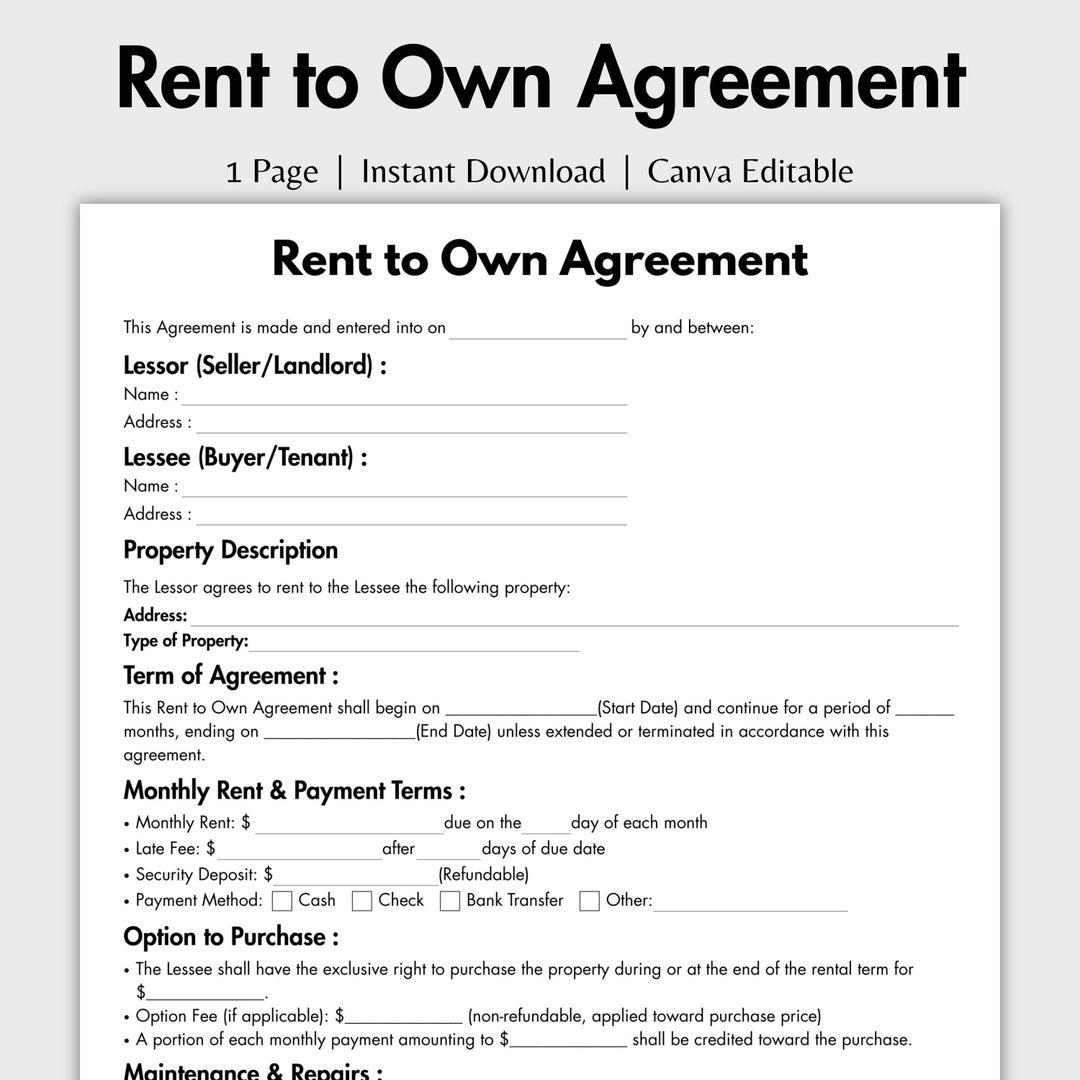
A rent-to-own agreement is a legal contract that allows a tenant to lease a residential property for a specified period (typically 1 to 3 years) with the right or obligation to purchase the home at or before the end of the lease. A portion of the upfront option fee and monthly rent payments may be credited toward the final purchase price.
Contents
Understanding Rent-to-Own: Core Concepts and Contract Structures
Rent-to-own transactions provide an alternative pathway to homeownership for individuals who currently lack the credit score or down payment required for traditional mortgage financing, yet possess the income capacity to handle ongoing housing payments. However, the term "rent-to-own" encompasses two distinct contractual frameworks, each carrying fundamentally different legal and financial obligations.
(Note: Ensure no backticks are used in output. Double check clean markdown.)
Lease-Option Agreements
A Lease-Option contract grants the tenant the exclusive right, but not the legal obligation, to buy the home when the lease agreement expires.
- Option Fee: The tenant pays an upfront, non-refundable sum known as option consideration (typically 1% to 5% of the purchase price).
- Flexibility: If the tenant chooses not to exercise the option at the end of the term—whether due to falling property values, inability to secure a mortgage, or personal preference—the contract simply terminates.
- Financial Risk: The tenant forfeits the initial option fee and any accumulated rent credits, but the seller cannot sue the tenant for failure to complete the purchase.
Lease-Purchase Agreements
A Lease-Purchase contract legally obligates the tenant to purchase the home at the conclusion of the lease period.
- Binding Commitment: Both parties are contractually bound to execute the purchase and sale transaction.
- Legal Consequences: If the tenant fails to obtain mortgage financing or defaults at the end of the term, the seller may take legal action for breach of contract, seek specific performance, or retain all upfront funds and accumulated credits as liquidated damages.
- Underwriting Caution: Prospective buyers should avoid executing a lease-purchase contract unless they have pre-qualification or written assurance from a mortgage lender indicating they will meet underwriting standards by the target date.
Key Financial Terminology
To navigate a rent-to-own transaction safely, buyers must understand three critical terms that define how money flows through the contract:
- Option Consideration (Option Fee): An upfront payment made by the buyer to the seller in exchange for the exclusive right to purchase the home within a specified window. This fee is almost universally non-refundable, though it is usually applied toward the purchase price at closing.
- Locked-In Purchase Price: The predetermined selling price of the property agreed upon at contract signing. Alternatively, some contracts specify that the home will be sold at fair market value determined by a licensed appraiser at the time the option is exercised.
- Rent Premium and Rent Credits: A monthly surcharge added on top of fair market rent. For example, if fair market rent is $2,000 per month, the seller might charge $2,450, allocating the $450 premium into an escrow account as an "equity credit" applied to the home buyer's down payment at settlement.
The Financial Mechanics: How Rent Credits and Option Fees Accumulate
The financial structure of a rent-to-own property involves balancing monthly operational costs with long-term equity accumulation. Understanding how funds flow from tenant to seller—and how mortgage underwriters treat those funds—is vital before signing any paperwork.
Practical Financial Breakdown
Consider a property valued at $350,000 under a 24-month lease-option agreement:
- Agreed Purchase Price: $350,000
- Upfront Option Fee (3%): $10,500 (Applied to final purchase price)
- Fair Market Monthly Rent: $2,200
- Total Monthly Payment: $2,600
- Monthly Rent Credit: $400 ($2,600 total rent - $2,200 market rent)
- Total Rent Credits over 24 months: $9,600 ($400 × 24 months)
- Total Credit Toward Purchase at Closing: $20,100 ($10,500 option fee + $9,600 rent credits)
- Remaining Purchase Balance Required at Settlement: $329,900
Important Financing Note on Rent Credits: The Federal Housing Administration (FHA) and conventional mortgage guidelines established by Fannie Mae and Freddie Mac enforce strict rules regarding rent credits. Mortgage underwriters will only allow rent credits to count toward a down payment if the lease agreement explicitly establishes that the monthly rent charged was above market rate and supported by an independent appraisal performed retroactively or at the time of lease inception. If rent is set at fair market value, any "credit" promised by the seller will be treated as a seller concession or price reduction rather than true buyer equity.
Comparative Analysis of Home Acquisition Pathways
| Feature | Rent-to-Own (Lease-Option) | Rent-to-Own (Lease-Purchase) | Traditional Home Purchase | Standard Residential Rental |
|---|---|---|---|---|
| Legal Obligation to Buy | Optional (Tenant's Choice) | Mandatory (Legally Binding) | Mandatory at Closing | None |
| Upfront Capital Required | 1% to 5% (Option Fee) + 1st Month Rent | 1% to 5% (Option Fee) + Security Deposit | 3% to 20% Down Payment + Closing Costs | Security Deposit + 1st/Last Month Rent |
| Monthly Cost Structure | Market Rent + Rent Premium | Market Rent + Rent Premium | Mortgage P&I + Taxes + Insurance + HOA | Base Market Rent Only |
| Price Protection | Price Locked at Inception | Price Locked at Inception | Market Value at Offer Time | None (Subject to Rent Increases) |
| Maintenance Duty | Negotiable (Often Tenant handles minor repairs) | Negotiable (Often Tenant handles maintenance) | 100% Homeowner Responsibility | 100% Landlord Responsibility |
| Default Consequence | Forfeit Fee & Credits; Vacate Property | Legal Suit for Breach / Liquidated Damages | Foreclosure / Loss of Equity | Eviction / Security Deposit Loss |
Step-by-Step Process to Securing a Rent-to-Own Home
Executing a rent-to-own strategy successfully requires treating the process as a mortgage pre-planning phase rather than a standard tenant application.
(Note: Standard clean lists are used below.)
Financial Assessment and Lender Consultation Before looking at homes, meet with a licensed mortgage loan originator to review your credit reports, debt-to-income (DTI) ratio, and income history. Identify the precise steps required—such as paying down revolving debt or fixing errors on credit reports—to ensure mortgage qualification within 12 to 36 months.
Property and Seller Selection Identify suitable properties listed specifically for lease-option or negotiate directly with sellers of standard listings who may accept terms. Verify that the seller owns the property outright or has sufficient equity so that an existing mortgage will not lead to foreclosure during your lease term.
Independent Property Appraisal and Inspection Order an independent home inspection and professional appraisal. Discovering structural issues, roof damage, or plumbing defects prior to contract execution prevents committing upfront capital to a distressed asset. The appraisal verifies whether the agreed purchase price aligns with real market conditions.
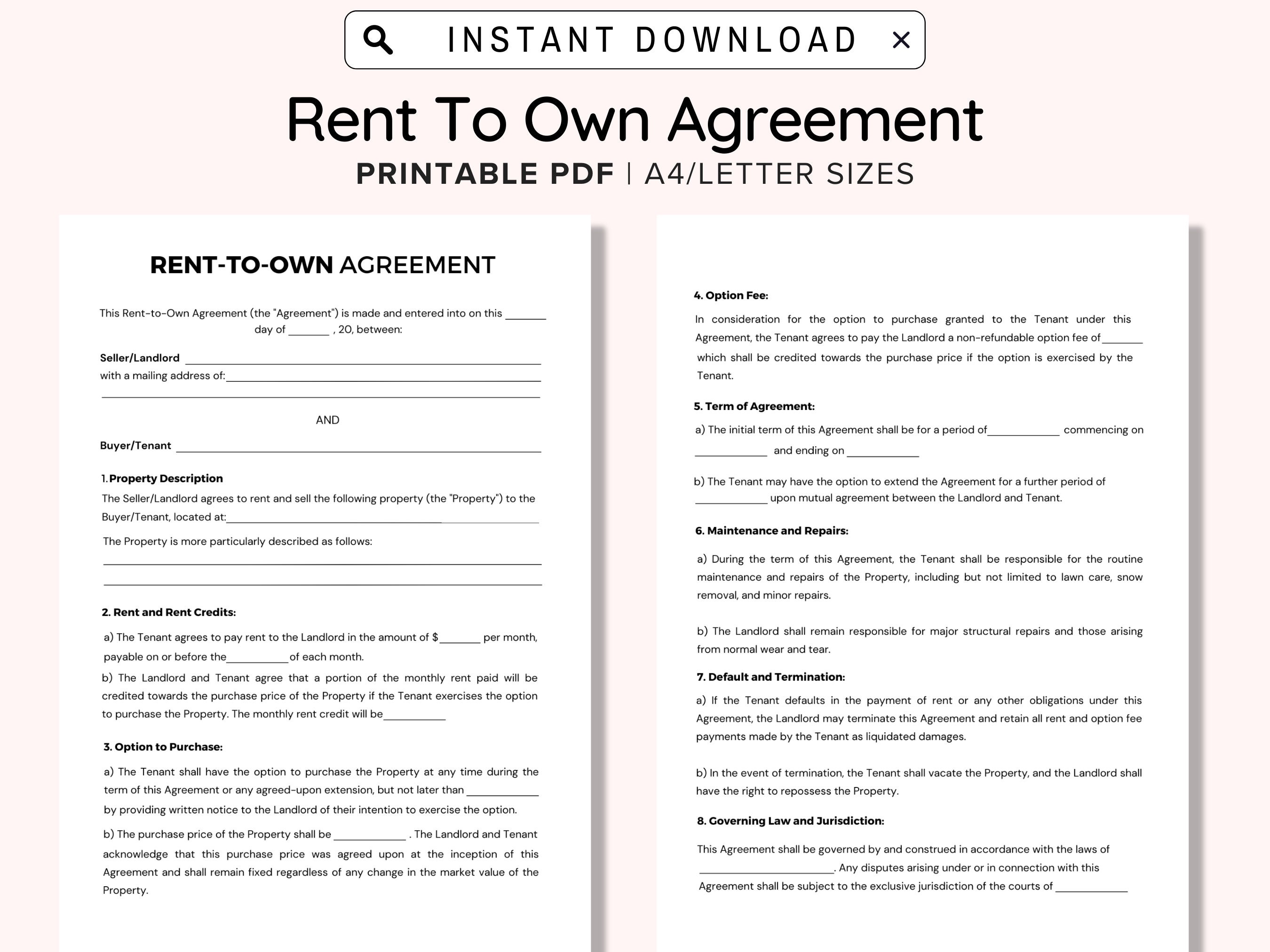
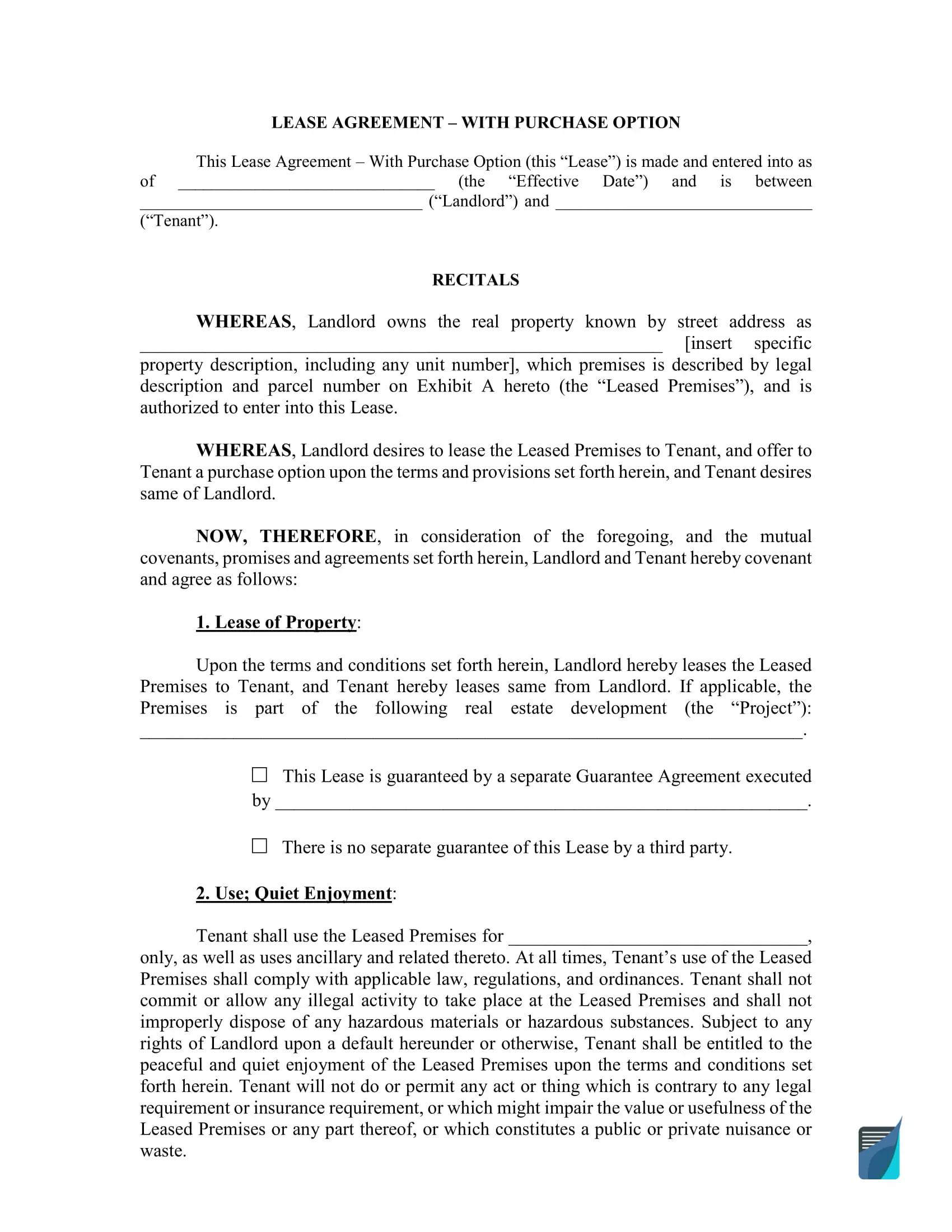
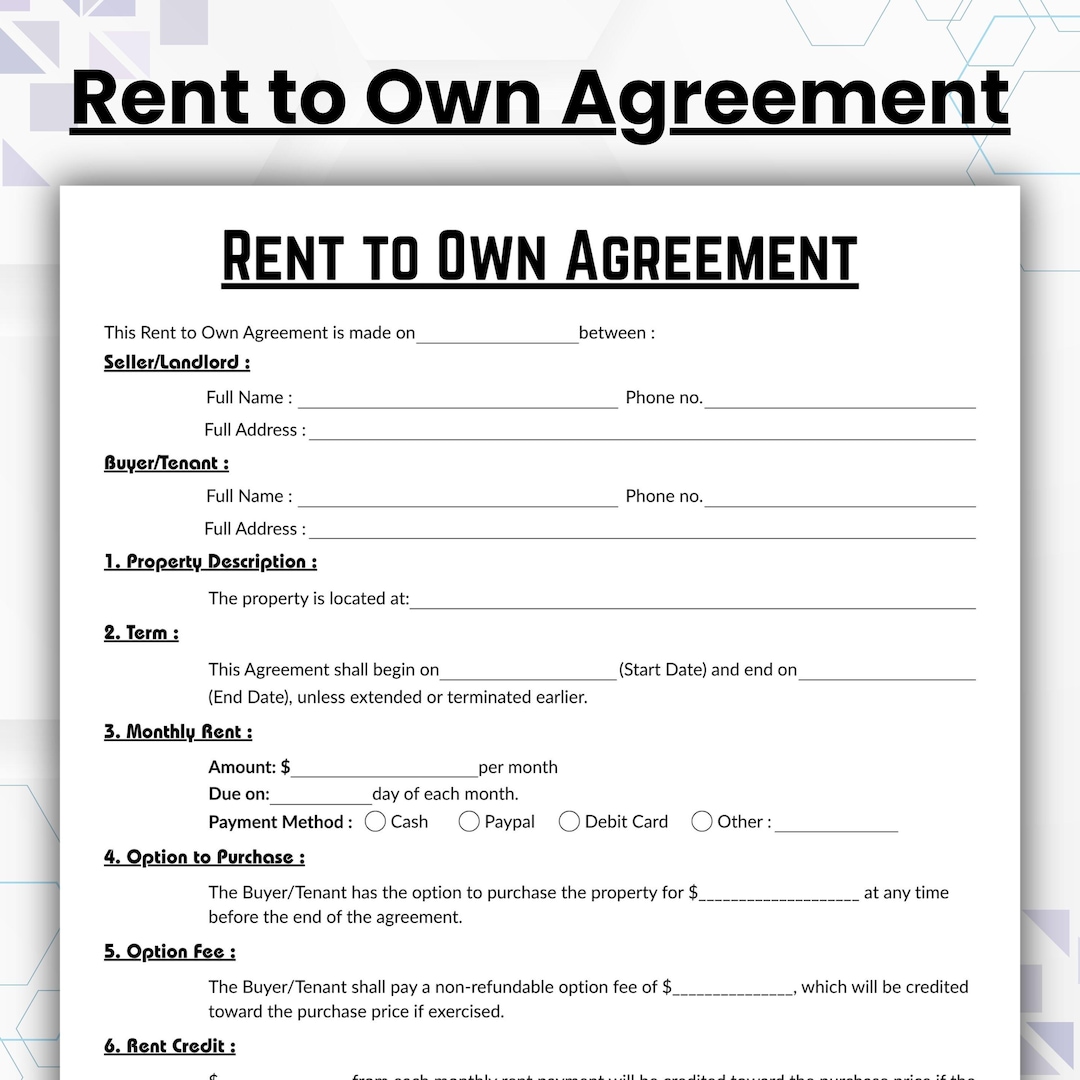
Structuring and Negotiating Contract Terms Draft two separate legal instruments or a combined agreement overseen by a qualified real estate attorney:
- A Standard Residential Lease Agreement covering tenancy rights, monthly rent, and maintenance allocations.
- An Option to Purchase Agreement covering option fees, purchase price, exercise deadlines, and rent credit provisions.
Executing the Leasing Phase and Monitoring Compliance Pay all rent payments on time via traceable methods (such as bank transfers or canceled checks). Mortgage lenders require clean proof of monthly rental payments over the preceding 12 to 24 months to verify creditworthiness and approve down payment credits.
Securing Mortgage Financing and Closing Approximately 60 to 90 days before the option window expires, submit a formal home loan application to a mortgage lender. The lender appraises the home, completes underwriting, applies accredited option fees and rent credits toward down payment or closing costs, and funds the purchase mortgage to complete the transfer of title.
Critical Contract Clauses, Risks, and Consumer Protections
Rent-to-own agreements are not standardized in the same manner as standard residential real estate transactions. Consequently, buyers face several legal and financial risks that require explicit contract safeguards.
Legal Advisory on Contract Structure: Rent-to-own contracts should always be reviewed by an independent real estate attorney licensed in the property's state. Contracts written solely by sellers often contain one-sided forfeiture language that strips buyers of accumulated equity for minor administrative slip-ups.
Key Risk Factors and Protective Countermeasures
- Seller Foreclosure Risk: If the seller fails to make their mortgage payments during your lease term, the bank may foreclose on the home, wiping out your purchase option and equity credits.
- Protective Countermeasure: Insert a clause requiring proof of mortgage payment from the seller monthly, or utilize a third-party loan servicing company to receive your lease payments, pay the primary lender directly, and escrow the remaining balance.
- Title Encumbrances and Pre-Existing Liens: Mechanics' liens, tax liens, or second mortgages against the seller can cloud the title, preventing a clean transfer at closing.
- Protective Countermeasure: Require a professional title search and title insurance commitment before paying any non-refundable option fees.
- Maintenance and Repair Responsibilities: Sellers often attempt to transfer all maintenance duties—including major systems like HVAC, roofing, and foundation repairs—to the rent-to-own buyer.
- Protective Countermeasure: Limit buyer maintenance obligations to routine upkeep (e.g., lawn care, filter changes, minor repairs under $250). Structural elements, major mechanical systems, and code compliance must remain the legal duty of the property owner until title transfer.
- Default and Late Payment Forfeiture Clauses: Draconian contracts may state that a single late rent payment voids the purchase option and forfeits all accumulated rent credits.
- Protective Countermeasure: Ensure the agreement includes a mandatory cure period (e.g., 15 days) allowing the buyer to remedy late payments without forfeiting accrued financial credits or purchase rights.
Pros and Cons for Buyers and Sellers
Evaluating a rent-to-own setup requires analyzing both sides of the transaction to understand counterparty motivations and potential points of friction.
The Buyer Perspective
Advantages
- Time to Build Credit and Capital: Provides a structured window to repair credit scores, lower DTI ratios, and build equity credits while occupying the target home.
- Price Protection in Rising Markets: Locking in a purchase price upfront shields the buyer from market appreciation during the lease term.
- Test-Driving the Home and Neighborhood: Allows buyers to experience the physical house, local school district, and neighborhood amenities before making a permanent commitment.
Disadvantages
- Risk of Capital Loss: If mortgage approval falls through or market dynamics shift, non-refundable option fees and premium rent credits are lost.
- Above-Market Monthly Housing Costs: Paying rent premiums increases monthly overhead compared to standard leasing agreements.
- Market Depreciation Risk: If local real estate values decline during the lease term, the buyer remains locked into an above-market purchase price (or must forfeit their option fees to walk away).
The Seller Perspective
Advantages
- Upfront Liquidity and Higher Yield: Receives immediate non-refundable option consideration alongside premium monthly rental income.
- Higher Tenant Quality: Tenants with an equity stake typically maintain the property far better than standard short-term renters.
- Built-in Buyer Pool: Eliminates ongoing marketing expenses and vacant property overhead.
Disadvantages
- Illiquidity and Tied-Up Capital: The seller cannot market the home to higher third-party offers during the option period.
- Risk of Failed Closing: If the buyer cannot secure mortgage financing, the seller must re-list the property and restart the sales cycle.
- Deferred Sales Proceeds: Capital gains and full home equity release are delayed until the buyer exercises the option and closes the transaction.
Financing the Final Purchase: Preparing for Mortgage Approval
Transitioning from tenant to owner requires satisfying standard mortgage underwriting requirements established by federal guidelines and primary loan programs (FHA, VA, USDA, and Conventional Fannie Mae/Freddie Mac).
(Note: Clean layout for guidelines.)
Mortgage Underwriting Guidelines for Rent Credit Verification
To ensure that rent-to-own credits count toward your mortgage down payment, lenders enforce strict documentation guidelines published in official lending handbooks (such as HUD Single Family Housing Policy Handbook 4000.1):
- Formal Written Lease-Option Agreement: A fully executed copy of the original agreement clearly stating the total rent, the portion designated as credit, and the purchase price must be provided to the underwriter.
- Proof of Fair Market Rent (FMR): The underwriter compares the total monthly rent paid against an appraisal report determining the fair market rent for the property at the time the lease was signed. Only amounts paid in excess of FMR are accepted as valid credit.
- Canceled Checks or Bank Statements: Lenders require 12 to 24 consecutive months of bank statements or canceled checks proving every rental payment was made on time and in full. Cash receipts are generally rejected for underwriting verification.
Target Financial Benchmarks for Final Closing
Prior to executing the option window, buyers should aim to hit the following underwriting targets:
- Minimum Credit Scores: Aim for a score of 620 for Conventional loans, 580 for FHA 3.5% down-payment loans, or 640+ for competitive interest rate tiers.
- Debt-to-Income (DTI) Ratio: Maintain total monthly debt obligations (including prospective mortgage principal, interest, taxes, insurance, and HOA fees) at or below 43% of gross monthly income.
- Documented Reserves: Save additional cash reserves beyond the accumulated option credit to cover lender origination fees, title charges, home insurance premiums, and property tax escrows due at closing.
Frequently Asked Questions About Rent-to-Own
What happens to my money if I decide not to buy the house?
If you hold a Lease-Option agreement and decide not to purchase, you forfeit your upfront option fee and all accumulated rent credits. However, you face no further legal penalties and can move out at the end of the lease. If you signed a Lease-Purchase contract, the seller can sue you for breach of contract or demand monetary damages.
Can the seller raise the purchase price during the lease term?
No, provided the purchase price was explicitly locked in within the signed Option to Purchase contract. Neither party can unilaterally change the purchase price during the option window unless a specific escalation clause was written into the initial legal agreement.
Who is responsible for fixing major appliances and structural issues during the lease?
Under standard state landlord-tenant laws, structural elements, major plumbing, roof integrity, and primary heating systems remain the legal responsibility of the landlord (seller). However, contracts can be drafted to assign routine maintenance or minor repairs under a specific dollar threshold to the tenant. Ensure these terms are clearly defined in your agreement.
How do lenders calculate fair market rent for credit verification?
Lenders order an appraisal (typically using Fannie Mae Form 1007 or equivalent) where a licensed appraiser analyzes comparable rentals in the immediate neighborhood during the period your lease began. If the appraiser determines fair market rent was $2,000, and you paid $2,400, the maximum allowable monthly down-payment credit is capped at $400.
Is an option fee applied toward the down payment?
Yes, in almost all properly drafted lease-option contracts, 100% of the initial option consideration fee is credited directly toward the purchase price or closing costs at settlement. Ensure this credit is explicitly written into both the option agreement and the closing instructions provided to the title company.
Strategic Next Steps for Prospective Buyers
Navigating a rent-to-own transaction requires balancing immediate housing needs with long-term financial discipline. If you are considering entering a lease-option agreement, follow these practical steps to protect your financial interest:
- Schedule an Early Underwriting Consultation: Meet with a licensed mortgage loan officer to review your financial profile and build a step-by-step credit repair and savings roadmap mapped to your option period.
- Order Independent Title and Inspection Services: Conduct a thorough property inspection and retain a title company to run a full search for back taxes, mechanics' liens, or secondary mortgages against the property owner.
- Retain Independent Legal Counsel: Do not sign standardized forms provided by sellers or third-party marketing companies without an independent review by a qualified real estate attorney.
By establishing realistic mortgage targets, verifying contract compliance, and ensuring all rent credits meet strict federal underwriting standards, a rent-to-own structure can serve as a effective bridge to permanent homeownership.
Image Gallery