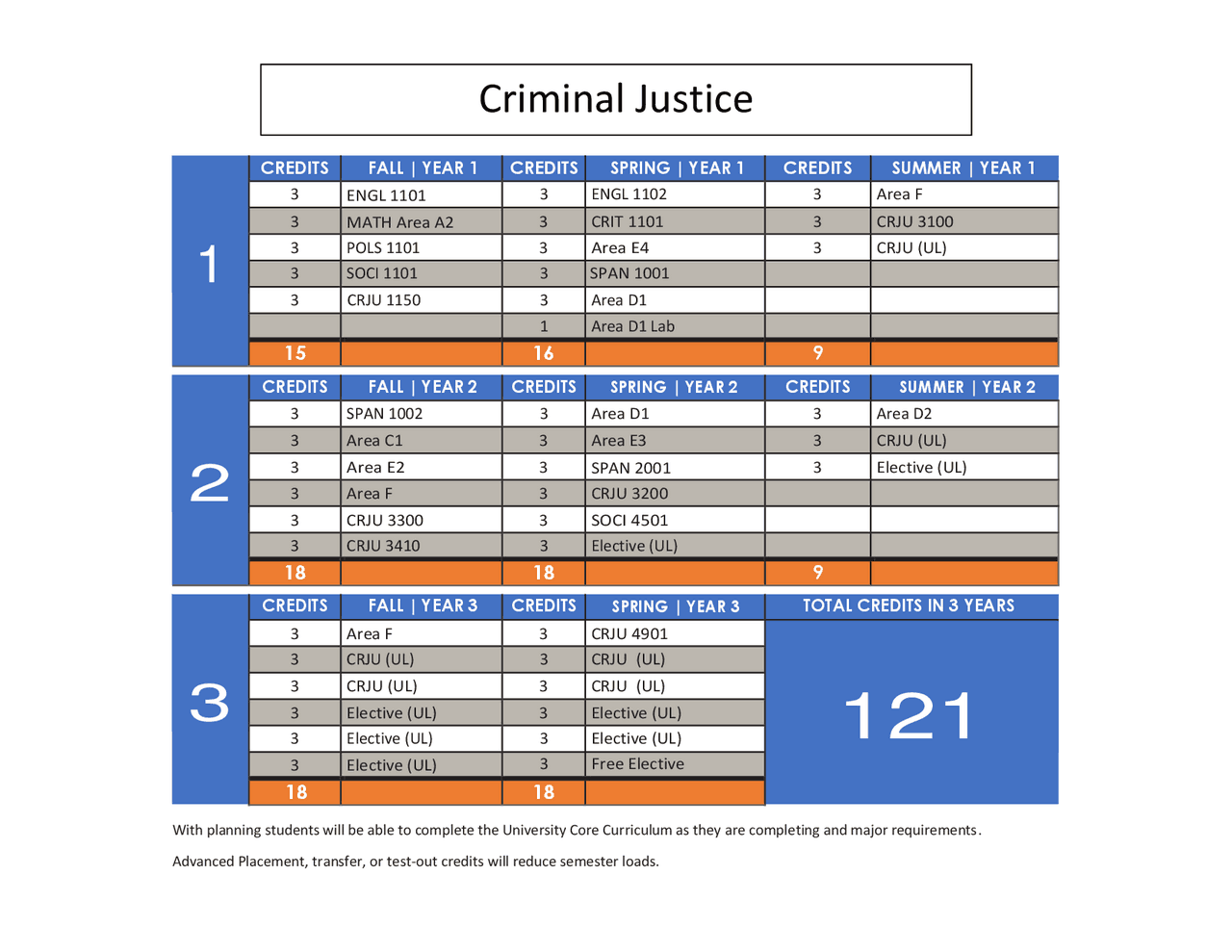
Navigating the Meaning Behind Criminal Justice Major Requirements
The requirements for a criminal justice major extend beyond simple academic credit accumulation; they represent a rigorous blend of theoretical criminology, constitutional law, and empirical social science designed to prepare students...
The requirements for a criminal justice major extend beyond simple academic credit accumulation; they represent a rigorous blend of theoretical criminology, constitutional law, and empirical social science designed to prepare students for the complexities of modern public safety and legal systems. To succeed, students must interpret these requirements as the foundational scaffolding for professional ethics, analytical proficiency, and systemic understanding required in contemporary law enforcement, court, and corrections environments.
Contents
Dissecting the Academic Core
Most criminal justice programs are structured around a "core" curriculum that serves as the bedrock of the degree. These requirements are not merely classes to be passed; they are disciplinary pillars. When a program demands coursework in Criminological Theory, it is asking students to move beyond the surface-level observation of crime and into the sociological and psychological drivers of deviance.
Students often misunderstand these requirements as a checklist for graduation rather than a toolkit for application. For example, a requirement in "Constitutional Law" is not just a survey of historical Supreme Court cases; it is a critical training ground for understanding the boundaries of state power, individual rights, and the admissibility of evidence. Mastering these concepts is essential for anyone intending to operate within a legal framework where procedural errors can result in the loss of evidence or civil rights violations.
Quantitative Requirements and Evidence-Based Practice
One of the most commonly underestimated requirements is the inclusion of statistics and research methods. In 2026, the field of criminal justice is increasingly data-driven, relying on predictive policing models, recidivism analysis, and outcome-based corrections. When a degree program mandates a sequence in social science research, it is preparing the student to perform "evidence-based" work.
The requirement usually encompasses:
- Research Design: Understanding how to formulate hypotheses regarding crime trends.
- Data Collection: Managing sensitive datasets while maintaining ethics and anonymity.
- Statistical Analysis: Interpreting software outputs (such as SPSS or R) to support policy decisions.
Ignoring the rigor of these courses is a strategic error. Employers in state and federal agencies increasingly prioritize candidates who can interpret quantitative reports, as these skills are directly transferable to intelligence analysis and program evaluation roles.
The Professionalism and Ethics Component
Requirements regarding "Ethics in Criminal Justice" are frequently perceived as abstract, yet they constitute the most practical part of the major. These requirements are designed to simulate the moral dilemmas inherent in the justice system. The "meaning" behind these requirements is to foster a professional identity that balances the mandate of public order with the obligation of due process.
This section of the degree requirements often involves:
- Case Studies: Examining past instances of systemic corruption or professional misconduct.
- Code of Conduct Analysis: Reviewing the specific standards set by organizations such as the International Association of Chiefs of Police (IACP).
- Role-Playing and Simulation: Engaging in scenarios where the "legal" option may conflict with the "ethical" option.
Field Experience and Internship Mandates
Many institutions now require an internship or a field placement as a graduation requirement. This is the bridge between theory and practice. When a department mandates an internship, they are effectively requiring the student to validate their interest in the field under real-world conditions.
This requirement often involves:
- Security Clearances: Understanding that professional entry requires background checks, a concept introduced during the internship phase.
- Organizational Hierarchy: Navigating the chain of command in a police department, court clerk’s office, or probation division.
- Performance Assessment: Learning that the standards of the workplace—punctuality, report accuracy, and interpersonal communication—are just as critical as academic GPA.
Comparative Academic Focus
| Degree Focus | Core Requirement Emphasis | Primary Skill Outcome |
|---|---|---|
| Law Enforcement | Police Operations & Constitutional Law | Tactical compliance & investigative rigor |
| Corrections | Criminological Theory & Ethics | Rehabilitation strategies & crisis management |
| Legal/Pre-Law | Jurisprudence & Criminal Procedure | Legal reasoning & documentation |
| Policy Analysis | Statistics & Research Methods | Data interpretation & systems evaluation |
Common Mistakes in Fulfilling Degree Requirements
Students often treat elective requirements as a way to "pad" their schedule rather than a chance to specialize. A criminal justice degree is versatile, but its utility is maximized when the student treats their elective credits as a "minor" specialization.
For instance, students aiming for federal investigation roles often fail to realize that foreign language proficiency or cybersecurity electives—while not always explicitly labeled as "criminal justice" requirements—are often "recommended" or "strongly preferred" prerequisites for competitive hiring.
Another common mistake is the failure to track state-specific licensure requirements. For students intending to enter social work or specialized counseling roles within the prison system, the degree requirements may need to be supplemented by specific psychology or sociology electives to satisfy state board credentials. Always cross-reference your academic advisor’s guidance with the actual hiring requirements of the agencies you intend to apply to in 2026.
Frequently Asked Questions
Is a criminal justice degree required for all law enforcement jobs?
No. Many agencies accept degrees in various fields, such as accounting (for white-collar crime investigation) or psychology. However, a criminal justice degree specifically satisfies the academic prerequisite for most local, state, and federal promotional pathways and entry-level exams.
How do statistics requirements help in a non-research career?
Statistics requirements train the brain to identify patterns and biases. In a career like parole or probation, understanding the statistical probability of recidivism based on verified factors is essential for effective case management and resource allocation.
Do internship requirements guarantee a job after graduation?
They do not guarantee employment, but they serve as a critical networking platform. Most agencies view the internship as a "long-term interview," providing an opportunity to prove professional reliability and aptitude before an official hiring cycle begins.
Why does my program require so much writing?
Writing is the primary mode of evidence transmission in the legal system. Whether it is an incident report, a warrant affidavit, or a sentencing memorandum, the ability to synthesize complex facts into clear, objective prose is the most highly valued skill by supervisors in the field.
Should I take electives outside of the criminal justice department?
Yes. Integrating knowledge from disciplines like public administration, sociology, or information technology provides a competitive edge. A student who understands how to manage a budget (Public Administration) or protect digital networks (IT) is often more valuable than a student who only understands basic criminal theory.
Next Steps for Success
To maximize the value of your criminal justice major, you must transition from a passive student to an active professional. Begin by auditing your degree requirements against the specific job descriptions of your target agency. If an agency requires knowledge of a specific state statute, seek out an elective that covers that area of law. Use your internship to gain a "insider" view of the culture, and focus your final capstone projects on current issues, such as the implementation of new community policing technologies or restorative justice initiatives. Treat every requirement as a building block for your future portfolio.
Image Gallery