What Is a Stay-at-Home Mom Worth? Economic Value and Financial Calculations
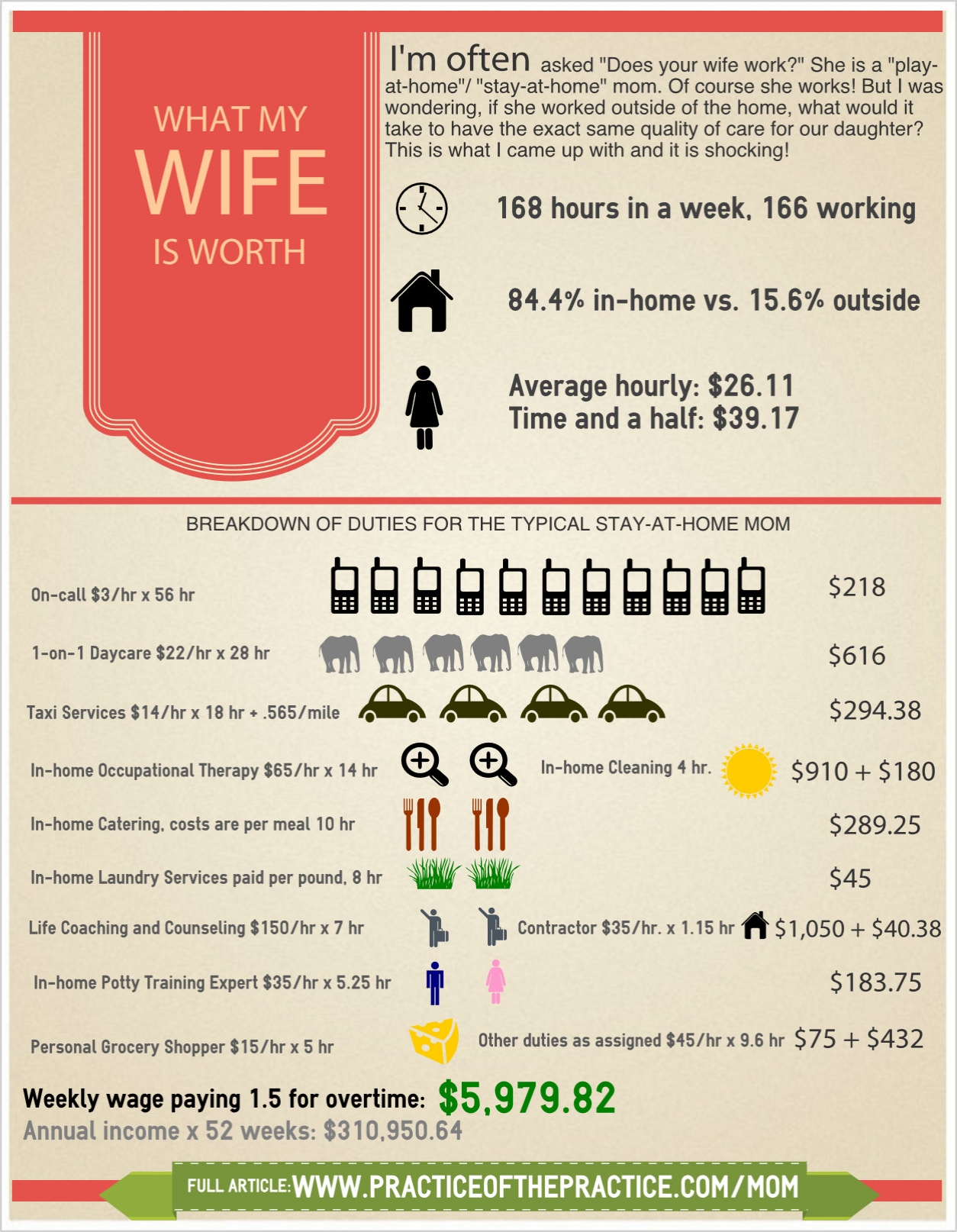
Calculating the monetary worth of a stay-at-home mom involves translating unpaid domestic labor, childcare, and household management into equivalent market wages. Annual estimates by financial firms and insurance companies routinely va...
Calculating the monetary worth of a stay-at-home mom involves translating unpaid domestic labor, childcare, and household management into equivalent market wages. Annual estimates by financial firms and insurance companies routinely value these combined services between $120,000 and $180,000, depending on geographic location, family size, and the specific mix of professional roles performed daily.
Contents
Evaluating the economic footprint of a stay-at-home parent requires moving past traditional definitions of employment and looking closely at how modern households function. When an individual manages a household full-time, they act simultaneously as a childcare provider, cook, cleaner, financial manager, educator, and driver. To understand the true financial magnitude of this contribution, researchers break down these roles and apply real-world market rates to every hour worked.
Understanding the Methodology Behind the Valuation
Quantifying domestic labor is not a modern invention; economists have studied household production for decades. The primary method used to determine a stay-at-home mom's financial worth involves the "replacement cost approach." This economic framework asks a straightforward question: How much would a family have to pay out of pocket to hire outside professionals to perform every single task currently handled by the stay-at-home parent?
To arrive at an accurate figure, researchers look at national labor statistics, such as those provided by the Bureau of Labor Statistics (BLS). They isolate specific job titles that map directly onto household chores and parental duties. By tracking the median hourly or annual wages for these positions and multiplying them by the estimated number of hours spent on each task per week, analysts construct a comprehensive financial profile.
This approach treats domestic work as genuine economic activity, even though it generates no taxable income. It acknowledges that unpaid labor contributes directly to the gross domestic product by freeing up other household members to participate in the formal workforce and by investing human capital into the next generation.
Breaking Down the Core Roles and Market Equivalents
A typical stay-at-home parent cycles through multiple distinct professions before noon. Examining these roles individually clarifies how the final multi-digit valuation accumulates.
Childcare Worker and Educator
The most significant component of domestic economic value is childcare. Professional daycare centers, private nannies, and early childhood educators command substantial hourly wages. A stay-at-home mom caring for toddlers and infants provides round-the-clock supervision, developmental stimulation, and early education. When compared against the median wages of professional child care workers or preschool teachers, this category alone accounts for a major portion of the total financial calculation.
Chef and Meal Planner
Preparing three meals a day, plus snacks, while accommodating various dietary restrictions, food allergies, and nutritional needs mirrors the responsibilities of a professional line cook or private chef. Families relying on restaurant delivery, meal kit services, or personal chefs quickly realize how expensive daily culinary labor is. Factoring in meal planning, grocery shopping, inventory management, food preparation, and kitchen sanitation adds a significant financial layer to the household economy.
Housekeeper and Facilities Manager
Maintaining a clean, safe, and organized living environment requires considerable physical labor and time. Professional residential cleaning services charge substantial hourly fees or flat rates per visit. Beyond basic cleaning, a stay-at-home parent handles laundry, ironing, textile care, minor maintenance coordination, waste management, and organization. These tasks align with the job descriptions of residential housekeepers and property caretakers.
Personal Financial Manager and Administrator
Managing a household budget, paying bills on time, organizing tax documents, scheduling family appointments, coordinating vehicle maintenance, and planning family logistics require administrative competence. In a corporate environment, these duties fall under office managers, bookkeepers, or executive assistants. The meticulous coordination required to keep a family's calendar synchronized has a distinct market value.
Driver and Logistics Coordinator
Transporting children to school, medical appointments, sports practices, and social engagements involves significant hours behind the wheel. When evaluating this role, analysts look at the wages of professional drivers, couriers, and transport specialists, alongside vehicle operation and maintenance costs.
Annual Salary Comparison by Household Role
To illustrate how various domestic responsibilities translate into market equivalents, the following table outlines common household tasks, their closest professional job titles, and median wage benchmarks based on general labor market data.
| Household Duty | Professional Job Equivalent | Estimated Median Hourly Rate | Weekly Hours (Average) | Estimated Annual Value |
|---|---|---|---|---|
| Childcare & Supervision | Childcare Worker / Nanny | $16.50 - $22.00 | 40 | $34,320 - $45,760 |
| Meal Preparation & Planning | Cook / Dietary Assistant | $17.00 - $21.00 | 14 | $12,376 - $15,288 |
| Housekeeping & Sanitation | Residential Cleaner | $18.00 - $24.00 | 15 | $14,040 - $18,720 |
| Family Logistics & Driving | Delivery / Transport Driver | $19.00 - $25.00 | 10 | $9,880 - $13,000 |
| Administration & Budgeting | General Office Clerk | $20.00 - $26.00 | 5 | $5,200 - $6,760 |
| Total Combined Value | Multiple Occupations | Blended Average | 84 Hours | $75,816 - $99,528+ |
Note: Calculations reflect baseline hourly wages across standard market conditions. Higher cost-of-living regions and families with multiple infants or children with special needs routinely see total valuations exceeding $150,000 annually.
Annual Industry Valuations and Trends
Major financial institutions and insurance providers regularly publish updated studies examining the economic output of stay-at-home parents. For instance, annual Mother’s Day economic indexes compiled by companies like Salary.com and Insure.com utilize extensive polling data to track the shifting hours and market rates of domestic work.
Over recent years, these studies have consistently shown upward adjustments in stay-at-home parent valuations. This growth is driven by two main factors:
- Rising Labor Costs: General increases in minimum wages and specialized professional service rates directly inflate the replacement cost of domestic tasks.
- Expanded Expectations: Modern parenting expectations often involve higher levels of enrichment activities, structured learning, home-cooked organic meal preparation, and detailed household management than in previous decades.
These reports serve a practical purpose beyond interesting headlines. They are frequently used by financial planners, estate attorneys, and insurance professionals to help families understand why securing adequate financial protection—such as term life insurance policies for stay-at-home parents—is just as critical as insuring the primary wage earner.
Hidden Financial Trade-Offs and Long-Term Considerations
While calculating a stay-at-home mom's annual replacement value provides clear insight into daily economic contributions, it represents only one side of a complex financial ledger. Choosing to step away from the formal workforce carries distinct long-term financial consequences that families must navigate carefully.
Career Interruption and Lost Earnings
The most apparent long-term cost is the suspension of wage growth. Stepping out of the workforce for several years often results in a "motherhood penalty"—a recognized economic phenomenon where women who re-enter the labor market face lower starting salaries and slower career progression than their peers who remained continuously employed. Over a lifetime, this cumulative loss in earnings, retirement contributions, and Social Security benefits can be substantial.
Opportunity Costs in Specialized Fields
For women in high-earning, fast-moving industries such as technology, medicine, law, or corporate finance, the opportunity cost of pausing a career is significantly higher than the baseline replacement cost of domestic labor. Financial advisors often encourage couples to run comprehensive multi-year financial projections that weigh the immediate savings of avoiding professional childcare against the long-term impact on lifetime earning potential and pension accrual.
Practical Steps for Families Evaluating Domestic Value
Understanding these economic dynamics helps couples make informed, collaborative decisions about family labor division and financial planning.
- Conduct an Open Family Audit: Sit down together to list every household task, who currently performs it, and how many hours it consumes weekly. This prevents misunderstandings about the division of labor.
- Review Insurance Coverage: Consult with an insurance professional to ensure the stay-at-home parent holds a sufficient term life insurance policy. If a stay-at-home parent were to pass away unexpectedly, the surviving spouse would immediately need to pay out of pocket for childcare, housekeeping, and administrative support.
- Protect Individual Retirement Accounts (IRAs): Spouses without earned income can still contribute to a Spousal IRA, ensuring they continue building independent retirement savings and maintaining long-term financial security.
- Maintain Professional Networks: For parents planning a future return to the workforce, maintaining certifications, attending industry webinars, or engaging in part-time freelance work helps mitigate the long-term impacts of career gaps.
Frequently Asked Questions
How do researchers calculate the economic worth of a stay-at-home mom?
Researchers use the replacement cost method by matching daily household tasks—such as cooking, cleaning, driving, and childcare—to equivalent professional job titles. They then multiply the hours spent on those tasks by current median market wages.
Why is calculating this value important for financial planning?
It provides a realistic baseline for determining life insurance needs. If a stay-at-home parent is no longer able to provide unpaid labor, the surviving family faces immediate out-of-pocket expenses to replace those essential services.
Do these valuations account for geographic location?
Yes. Labor rates vary significantly by region. Stay-at-home parents living in metropolitan areas with high costs of living typically have higher calculated economic values than those residing in rural areas with lower prevailing wage rates.
How does career interruption impact a stay-at-home parent's long-term finances?
Stepping away from the workforce leads to lost wages, diminished retirement account contributions, reduced future Social Security benefits, and potential career reentry hurdles that can lower lifetime earnings.
Can stay-at-home parents contribute to retirement accounts?
Yes. Under current tax rules, a working spouse can fund a Spousal IRA on behalf of a non-working spouse, allowing families to save for retirement despite having only one income earner in the formal labor market.
Conclusion
A stay-at-home mom provides immense economic value that forms the bedrock of household stability and child development. While this contribution is rarely reflected on a formal pay stub, its financial reality is undeniable when measured against professional market rates. Recognizing this worth allows families to make empowered choices regarding insurance, financial security, and long-term planning, ensuring that all forms of labor—paid and unpaid—are properly valued and protected.
Image Gallery