Treasury vs Corporate Bonds: Understanding the Core Differences for Investors
When comparing Treasury and corporate bonds, the primary distinction lies in the issuer: U.S. government debt is backed by the full faith and credit of the federal government, while corporate debt is issued by private companies seeking...
When comparing Treasury and corporate bonds, the primary distinction lies in the issuer: U.S. government debt is backed by the full faith and credit of the federal government, while corporate debt is issued by private companies seeking capital, meaning investors must weigh maximum sovereign safety against higher yields from private enterprises.
Contents
Choosing between fixed-income instruments requires a careful evaluation of risk, yield, tax treatment, and liquidity. Both options form the backbone of many diversified portfolios, but they serve very different strategic purposes depending on an investor's time horizon, risk tolerance, and income needs. Understanding the mechanics of these two asset classes helps investors construct portfolios aligned with their specific financial goals.
Fundamental Definitions and Issuance Mechanics
To understand the mechanics of fixed-income investing, one must first examine how these securities are created and what backs them. Bonds are essentially debt instruments: an investor lends money to an issuer for a defined period in exchange for periodic interest payments and the return of principal at maturity.
U.S. Treasury Securities
U.S. Treasury securities are debt obligations issued by the U.S. Department of the Treasury through the Bureau of the Fiscal Service. Because they are backed by the United States government, they are widely considered the benchmark for "risk-free" assets in global finance. This categorization means the risk of default is practically negligible, as the federal government has the authority to tax or print currency to meet its debt obligations.
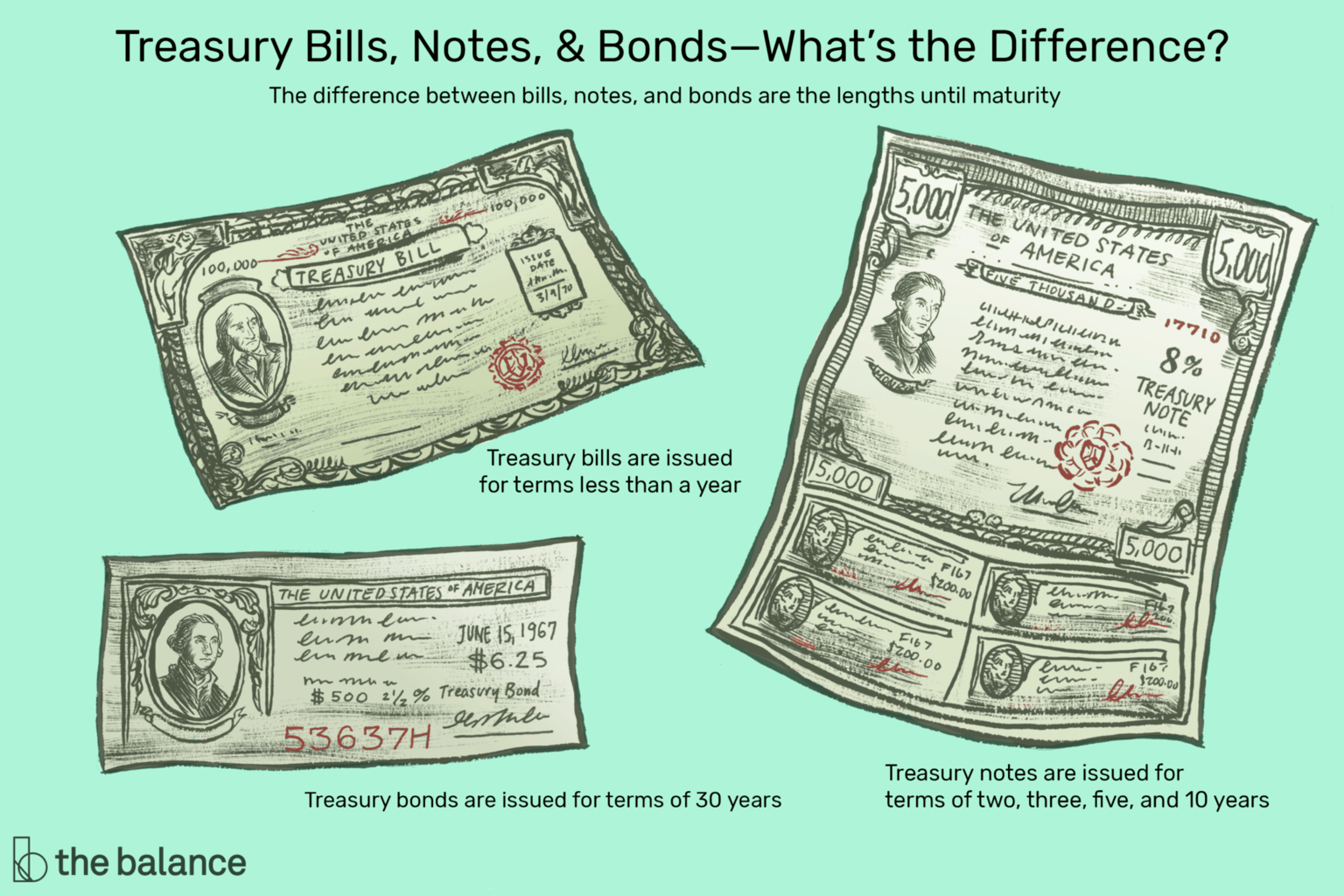
Treasuries are categorized by their maturity lengths:
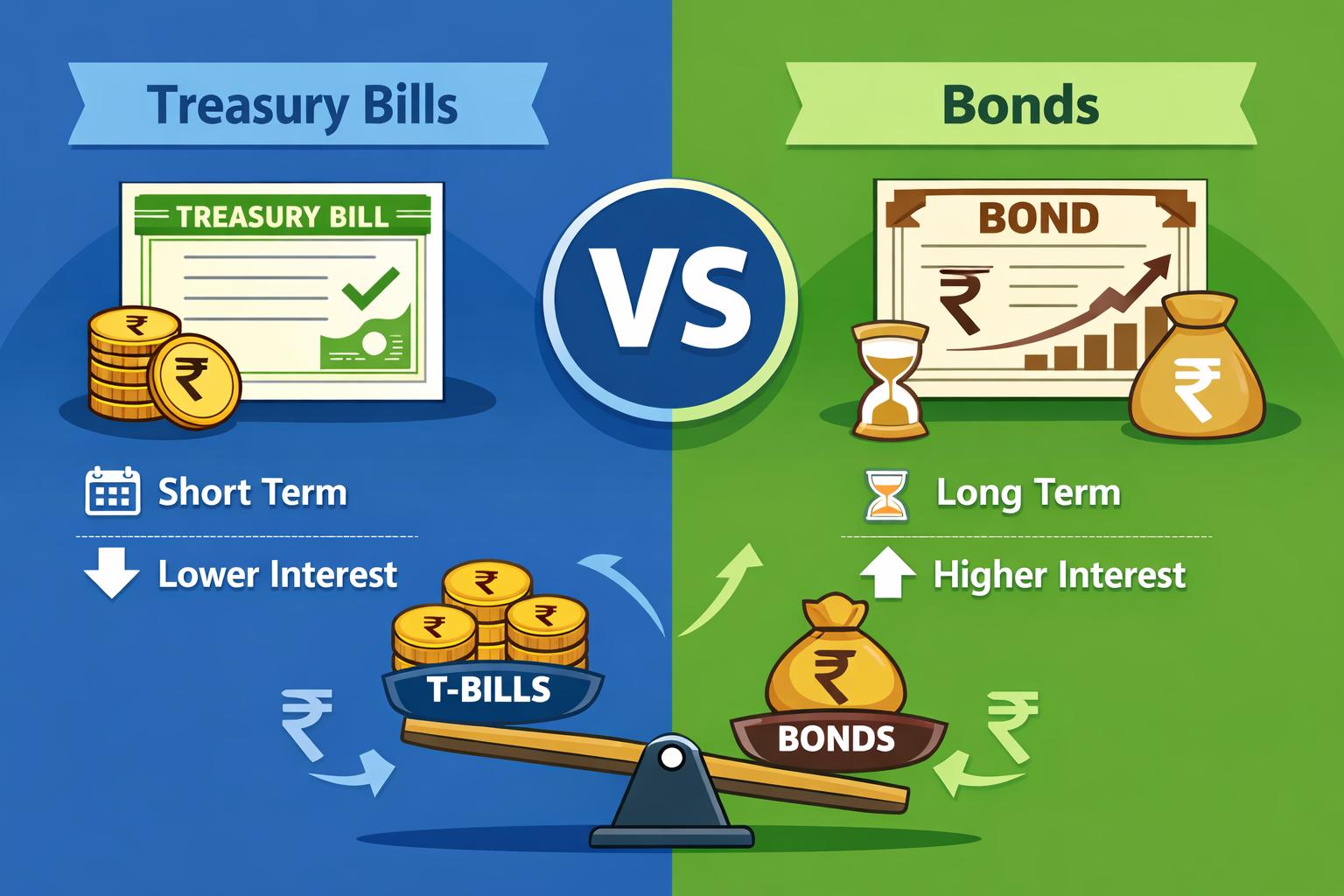
- Treasury Bills (T-Bills): Short-term instruments maturing in one year or less. They do not pay regular coupon interest; instead, they are sold at a discount to their face value, and the investor receives the full face value at maturity.
- Treasury Notes (T-Notes): Medium-term instruments with maturities of 2, 3, 5, 7, or 10 years. They pay semi-annual interest coupons.
- Treasury Bonds (T-Bonds): Long-term debt instruments that mature in 20 or 30 years, also paying semi-annual coupons.
Corporate Bonds
Corporate bonds are debt securities issued by private and public companies to raise capital for expansion, research and development, mergers, or general corporate operations. Unlike government debt, corporate bonds are backed solely by the earning power and financial health of the issuing corporation.
Because businesses carry a risk of insolvency or bankruptcy, corporate bonds carry credit risk. To compensate investors for taking on this default risk, corporations typically offer higher yields than U.S. Treasuries of comparable maturities. Corporations issue these bonds through investment banks, which then sell them to institutional and retail investors in the primary and secondary markets.
Risk and Safety Profiles
The risk profile is the most pronounced differentiator between Treasury and corporate bonds. Evaluating risk involves looking at credit ratings, macroeconomic sensitivities, and default probabilities.
Credit Risk and Default Probability
Treasury securities carry virtually zero credit risk. An investor buying a 10-year Treasury note can be virtually certain that the government will make every interest payment and return the principal upon maturity.
Corporate bonds, however, are subject to credit ratings assigned by independent agencies such as Standard & Poor’s, Moody's, and Fitch. These ratings divide corporate debt into two primary categories:
- Investment-Grade Bonds: Issued by financially stable companies with high credit ratings (typically BBB-/Baa3 or higher). These carry lower default risks and offer moderate yields.
- High-Yield (Junk) Bonds: Issued by companies with lower credit ratings, indicating a higher risk of default. To compensate investors for this elevated risk, these bonds offer substantially higher interest rates.
Interest Rate Risk
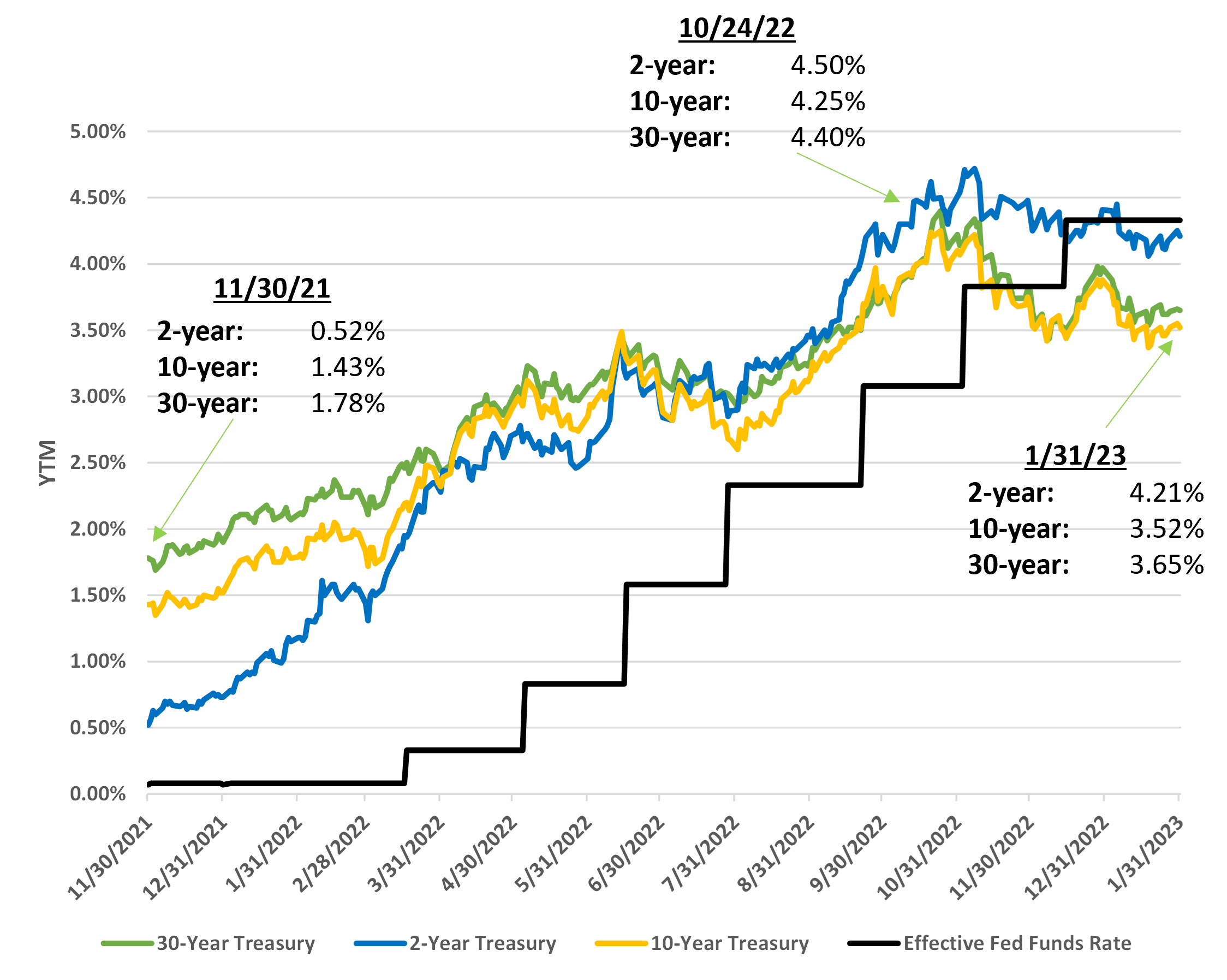
Both asset classes are sensitive to interest rate fluctuations, a dynamic known as interest rate risk. When prevailing market interest rates rise, existing bond prices fall because newly issued bonds offer more attractive payouts. Conversely, when market rates drop, existing bond prices rise.
Longer-term bonds—whether Treasury or corporate—experience greater price volatility when interest rates change than short-term instruments. An investor who must sell a 30-year bond before maturity in a rising-rate environment will face a capital loss, regardless of whether the issuer is the U.S. government or a Fortune 500 company.
Comparative Overview of Key Characteristics
Evaluating the structural differences between these two investment types helps clarify how they perform within a portfolio.
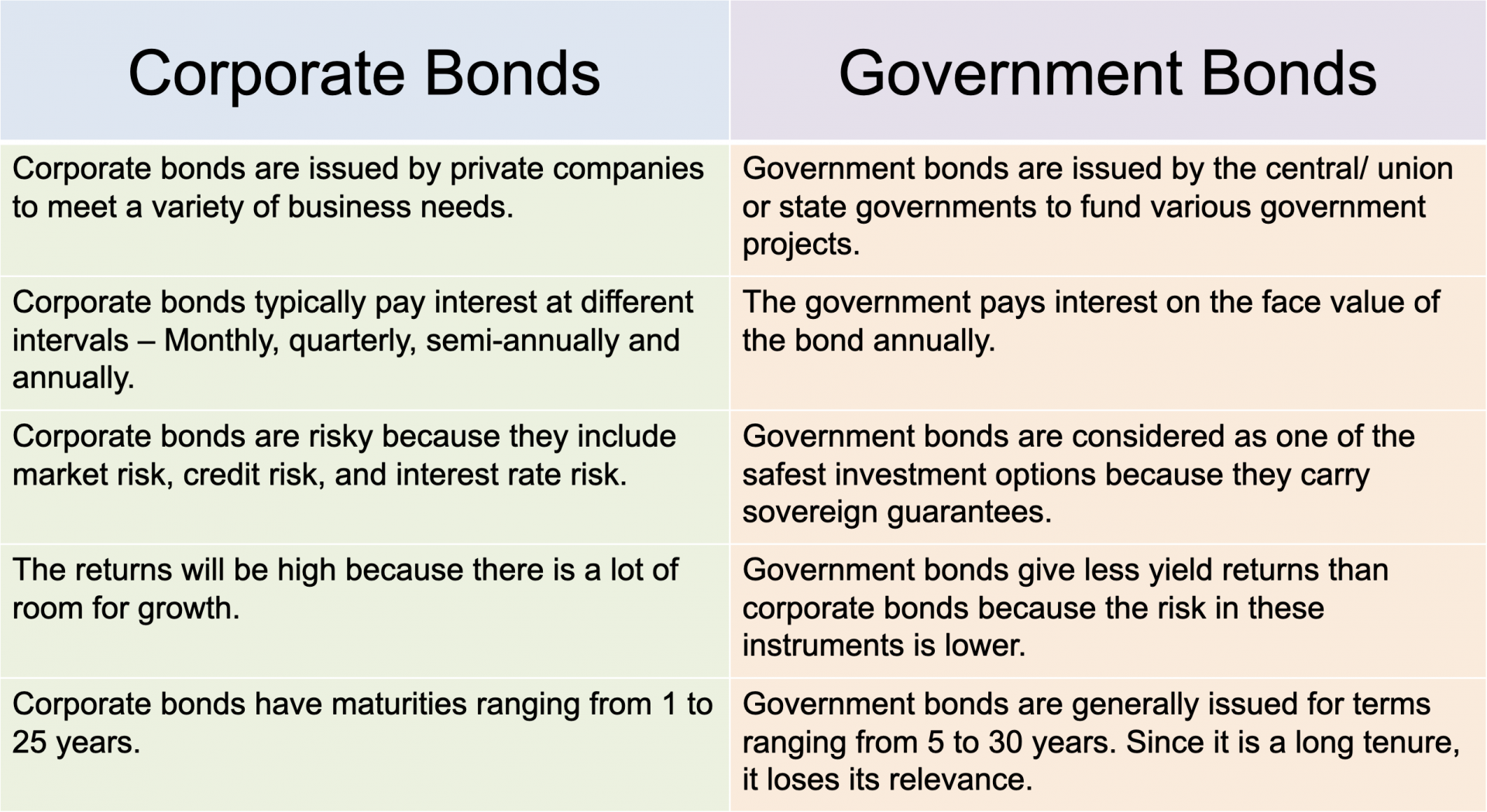
| Feature | U.S. Treasury Bonds | Corporate Bonds |
|---|---|---|
| Issuer | U.S. Federal Government | Private or Public Corporations |
| Default Risk | Negligible (Sovereign backing) | Variable (Based on company creditworthiness) |
| Yield Potential | Generally lower | Higher (To compensate for credit risk) |
| Tax Treatment | Exempt from state and local taxes; subject to federal tax | Subject to federal, state, and local taxes |
| Liquidity | Extremely high (deepest market globally) | Varies; high for large issuers, lower for smaller issues |
| Denominations | Often available in increments of $100 | Typically issued in $1,000 increments |
Tax Implications and Net Yields
Nominal yield is only part of the equation; after-tax yield determines the actual return an investor keeps. The tax treatment of Treasuries and corporate bonds differs significantly, which can alter the comparative attractiveness of their yields.
Tax Treatment of U.S. Treasuries
Interest income earned from U.S. Treasury securities is subject to federal income tax. However, it is entirely exempt from state and local income taxes. For investors residing in high-tax states such as California, New York, or New Jersey, this tax exemption provides a significant advantage, effectively raising the security's net equivalent yield when compared to investments taxed at all levels.
Tax Treatment of Corporate Bonds
Interest earned from corporate bonds is fully taxable at all levels: federal, state, and local income tax rates apply. Consequently, investors in high-tax brackets must calculate the tax-equivalent yield of corporate bonds to determine whether the higher pre-tax yield truly outperforms a Treasury security after all taxes are deducted.
Liquidity and Market Access
Market liquidity determines how easily an investor can buy or sell a security without causing a drastic change in its price.
The market for U.S. Treasury securities is the largest, most liquid financial market in the world. Buying or selling millions of dollars of Treasuries can be executed rapidly with minimal transaction costs (tight bid-ask spreads).
Corporate bond liquidity varies widely. While large, liquid issues from major multinational corporations trade frequently, many corporate bonds trade in over-the-counter (OTC) markets where liquidity is thinner. Smaller issues or lower-rated high-yield bonds can be difficult to sell quickly without accepting a discount on the price.
Strategic Portfolio Allocation
Most balanced investment strategies incorporate both asset classes to achieve distinct portfolio objectives:
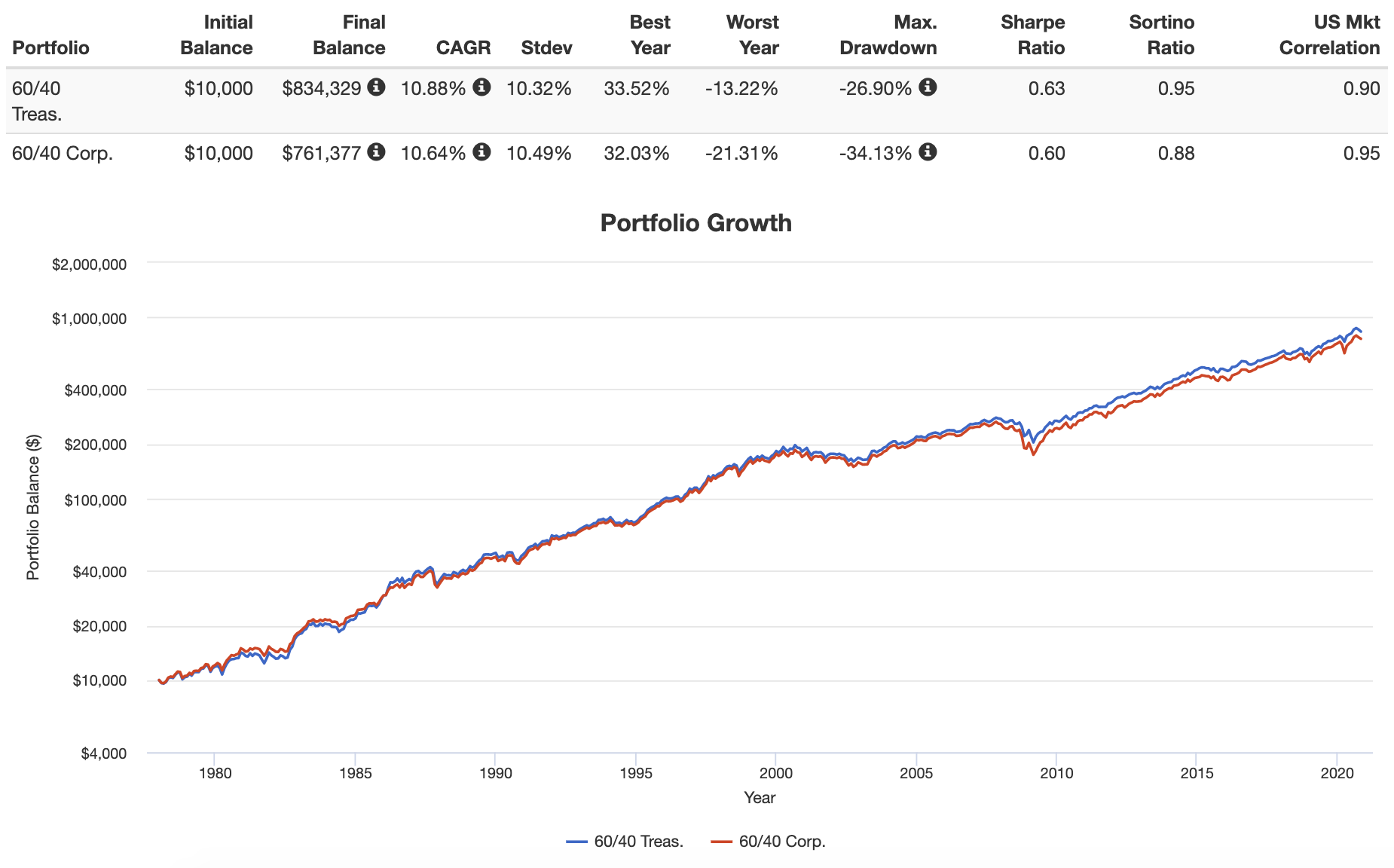
- Capital Preservation and Defensiveness: Treasuries are frequently used as a safe haven during periods of economic uncertainty, stock market corrections, or recessions. They provide a reliable income stream and help stabilize portfolio value.
- Income Generation and Growth: Corporate bonds, particularly investment-grade and select high-yield issues, are utilized to boost the overall income generation of a portfolio, helping investors outpace inflation over long periods.
Frequently Asked Questions
Are U.S. Treasury bonds completely risk-free?
While Treasuries are considered free of credit risk because the U.S. government can print money to pay its debts, they are still exposed to interest rate risk and inflation risk. If an investor sells a Treasury bond before maturity during a period of rising interest rates, they may suffer a capital loss. Additionally, inflation can erode the purchasing power of the fixed interest payments.
Why would an investor choose corporate bonds over Treasuries if corporate bonds carry default risk?
Investors choose corporate bonds primarily for higher yields. Corporations must pay higher interest rates than the U.S. government to attract investors. For individuals seeking higher regular income and willing to accept a calculated level of credit risk, corporate bonds offer a higher return potential than government debt of the same maturity.
How are corporate bond credit ratings determined?
Credit ratings are assigned by independent credit rating agencies such as Standard & Poor's, Moody's, and Fitch. These agencies evaluate the issuing company's financial statements, debt-to-equity ratio, cash flow stability, business model, and overall economic outlook to assess its ability to meet debt obligations.
Do corporate bonds offer state tax exemptions like Treasuries?
No. Interest earned from corporate bonds is subject to federal, state, and local income taxes. In contrast, U.S. Treasury interest is exempt from state and local income taxes, which can make Treasuries more tax-efficient for investors living in high-tax jurisdictions.
What is the minimum investment required to buy these bonds?
U.S. Treasury securities can be purchased directly through the TreasuryDirect website in minimum increments of $100. Corporate bonds are typically issued with a face value of $1,000, though purchasing them on the secondary market through a brokerage account may require meeting specific platform minimums or trading fees.
Image Gallery