Why the Suicide Clause Matters for Supplemental Employee Life Insurance
The suicide clause in supplemental employee life insurance determines whether a death benefit is paid if the insured dies by suicide within a specific timeframe—typically the first two years of coverage. Unlike basic life insurance, wh...
The suicide clause in supplemental employee life insurance determines whether a death benefit is paid if the insured dies by suicide within a specific timeframe—typically the first two years of coverage. Unlike basic life insurance, which often waives this restriction, supplemental plans use the clause to mitigate "adverse selection" financial risks.
Contents
When employees evaluate their workplace benefits, they often view supplemental life insurance as a simple extension of their basic coverage. However, the contractual differences between employer-paid basic life and employee-paid supplemental life are significant. The suicide clause is one of the most critical, yet frequently overlooked, provisions in these policies. In 2026, as mental health awareness and financial planning intersect more deeply, understanding the mechanics of this clause is essential for ensuring family protection and avoiding catastrophic claim denials.
The Mechanics of the Suicide Clause in 2026
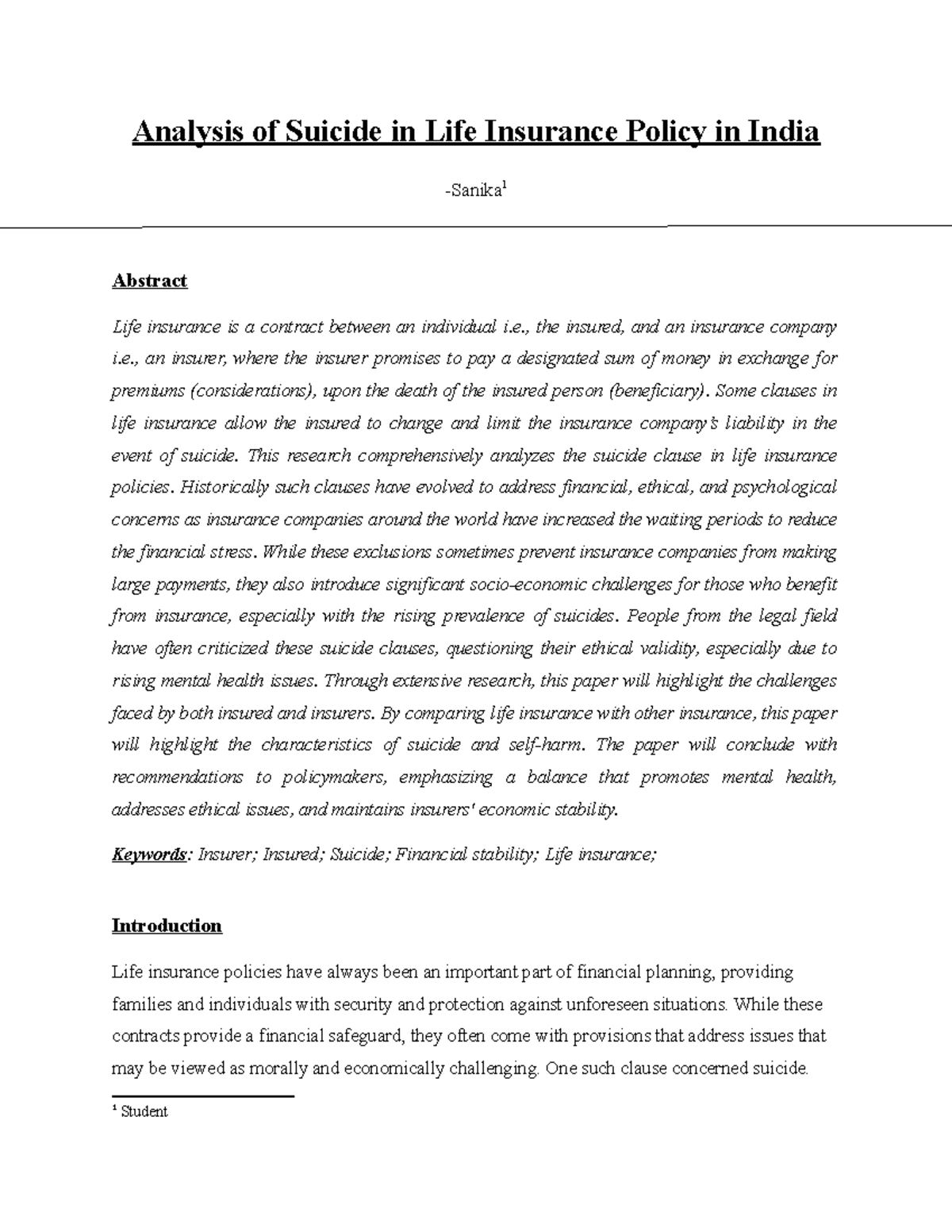
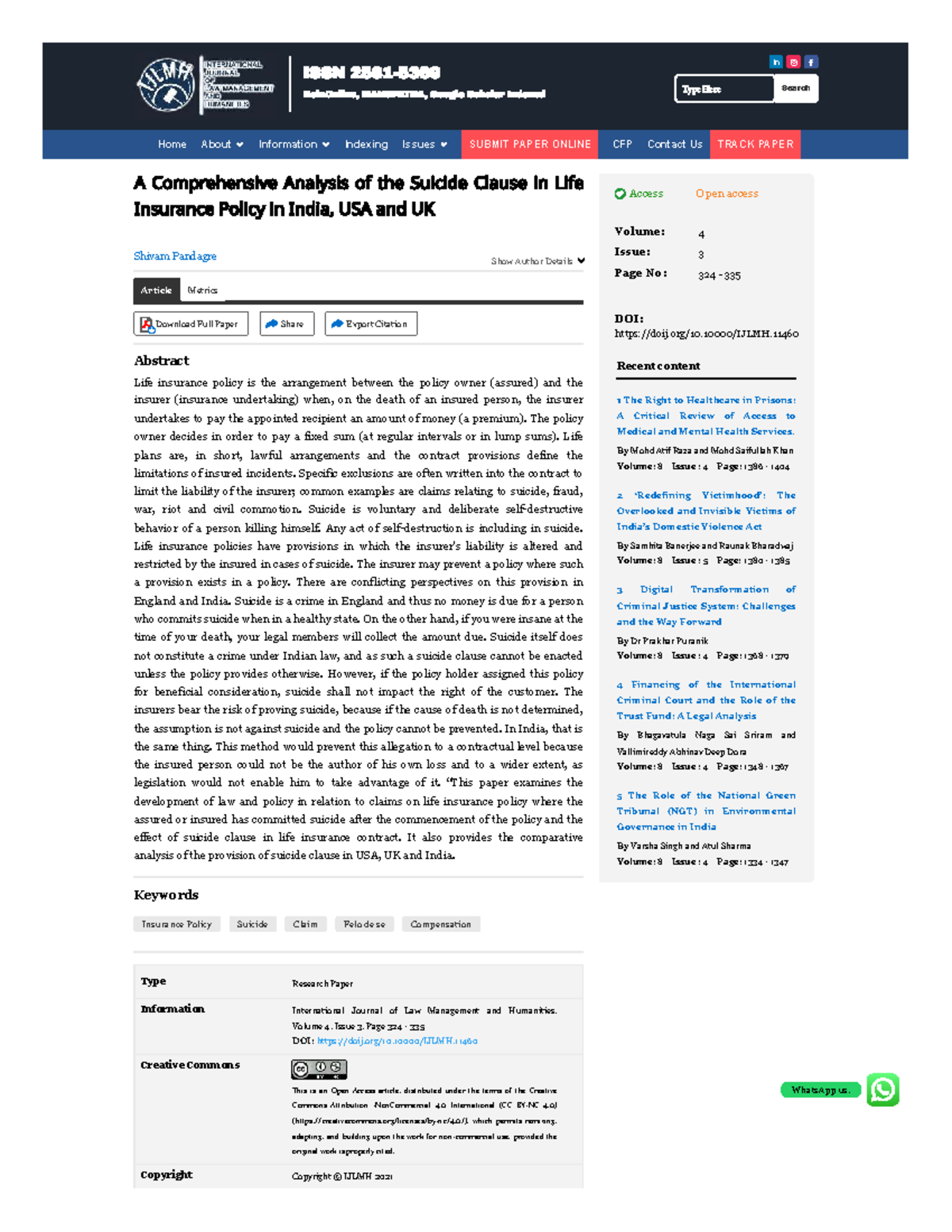
A suicide clause is a standard provision in individual and voluntary group life insurance contracts. It states that the insurance company will not pay the death benefit if the insured person commits suicide within a predetermined period after the policy becomes effective.
In most jurisdictions and standard contracts as of 2026, this period is two years, though some states like North Dakota have historically limited this to one year. If a death occurs by suicide within this window, the insurer's liability is generally limited to a refund of the premiums paid, sometimes with a small amount of interest, rather than the full face value of the policy.
The Two-Year Clock and "New" Coverage
A common misconception is that the "clock" only starts once. In the context of supplemental employee life insurance, the suicide clause period often resets or applies independently to different "layers" of coverage. For example, if an employee has $50,000 in coverage and decides during an open enrollment period in 2026 to increase it to $150,000, the new $100,000 increment may be subject to a fresh two-year suicide clause, even if the original $50,000 has already passed its exclusionary period.
The Incontestability Clause vs. the Suicide Clause
It is important to distinguish the suicide clause from the incontestability clause. While both typically involve a two-year window, they serve different purposes. The incontestability clause prevents the insurer from voiding the policy due to misstatements on the application (such as failing to disclose a medical condition) after the policy has been in force for two years. The suicide clause, however, is a specific exclusion based on the cause of death. Even if a policy has become "incontestable," a suicide clause may still prevent a payout if the death occurs within the specific timeframe defined in the suicide provision.
Why Supplemental Insurance Differs from Basic Life Insurance
Most employees receive a "Basic Life" policy as a standard benefit, often equal to one times their annual salary. In many corporate group plans, the suicide clause is waived for basic coverage. This is because basic life insurance is a "non-contributory" benefit—meaning the employer pays for it and every eligible employee is automatically enrolled.
Because everyone is in the risk pool, the insurance company does not fear adverse selection. Adverse selection occurs when individuals who know they are at a higher risk of loss are the ones most likely to purchase or increase insurance coverage.
Supplemental life insurance is "contributory" or "voluntary." Because the employee chooses to buy it and pays the premiums out of pocket, insurers view this as a higher risk. They include the suicide clause to prevent individuals from purchasing large amounts of coverage with the immediate intention of ending their lives to provide a financial windfall for their beneficiaries.
Comparison: Basic vs. Supplemental Life Insurance Provisions
| Feature | Basic Life Insurance (Employer-Paid) | Supplemental Life Insurance (Employee-Paid) |
|---|---|---|
| Suicide Clause | Often Waived or Not Applicable | Almost Always Included (Standard 2-year) |
| Evidence of Insurability (EOI) | Usually Not Required | Often Required for High Limits |
| Premium Source | Employer-Funded | Employee-Funded (Payroll Deduction) |
| Portability | Limited; Often requires conversion | Generally Portable to an Individual Policy |
| Coverage Increases | Tied to Salary Increases | Choice-Based During Open Enrollment |
The Impact of Portability and Job Changes
In 2026, the average professional changes jobs more frequently than in previous decades. This mobility introduces a significant risk regarding the suicide clause. When an employee leaves a company and moves their supplemental life insurance to a new employer’s plan, they are technically entering into a new contract with a new insurance carrier.
Unless the new policy specifically includes a "continuity of coverage" or "prior acts" provision, the two-year suicide clause clock usually resets. This means a person who had supplemental life insurance for ten years at "Company A" could lose their suicide-related protection for the first two years at "Company B."
Conversion to Individual Policies
If an employee leaves a job and "converts" their group supplemental life insurance into an individual permanent policy, the treatment of the suicide clause depends on state law and the specific language of the conversion privilege. In many cases, if the conversion is a right guaranteed by the original group contract, the time spent under the group policy may count toward the suicide clause of the new individual policy. However, this is not universal and must be verified in the Summary Plan Description (SPD) provided by the employer.
Evidence of Insurability (EOI) and the Suicide Clause
Supplemental life insurance often requires Evidence of Insurability (EOI), particularly if the employee is requesting an amount above a "guaranteed issue" limit (e.g., any amount over $200,000). The EOI process involves a medical questionnaire and sometimes a physical exam.
There is a technical intersection between EOI and the suicide clause. If an employee is approved for a coverage increase based on EOI, the insurance company typically issues a "Statement of Additional Coverage." The suicide clause for that specific increase begins on the date the increase becomes effective. This creates a staggered protection model where different portions of the total death benefit are "cleared" of the suicide exclusion at different times.
Legal and Regulatory Context in 2026
The regulation of life insurance, including suicide clauses, is primarily handled at the state level in the United States. However, group life insurance provided by private-sector employers is also governed by the Employee Retirement Income Security Act (ERISA).
State Variations
While the two-year standard is dominant, state insurance commissioners have the authority to mandate different terms. For instance, some states require that the insurer prove the insured intended to commit suicide at the time of application for the clause to remain valid after the first year. Other states have rigorous definitions of what constitutes "suicide" in the context of mental illness, sometimes requiring the insurer to pay if it can be proven the insured was "insane" (a legal, not medical, term) and therefore lacked the capacity for intent.
The Burden of Proof
The burden of proof typically rests on the insurance company. If a death is ruled "undetermined" or "accidental" by a medical examiner, the insurer must provide clear and convincing evidence that the death was a suicide to invoke the clause. In 2026, legal precedents continue to favor beneficiaries in cases of ambiguity, but a clear ruling of suicide within the first 24 months of a supplemental policy remains a valid reason for claim denial under most NAIC (National Association of Insurance Commissioners) model regulations.
Why This Matters for Financial Planning
The suicide clause is not merely a legal technicality; it is a foundational element of a family's financial safety net. If a family relies on a $500,000 supplemental policy to cover a mortgage and education costs, a claim denial due to the suicide clause can lead to immediate financial ruin during an already traumatic time.
The "Reset" Trap for Long-Term Employees
Long-term employees are often at risk when they make incremental changes to their benefits. In 2026, many benefits platforms make it easy to "click to increase" coverage by $10,000 or $25,000 during every annual enrollment. Each of these increments may carry its own suicide clause. If an employee is experiencing a mental health crisis, they—and their family—may be unaware that recent "upgrades" to their insurance are essentially "uninsured" for the first two years regarding self-inflicted death.
Common Mistakes and How to Avoid Them
- Assuming Supplemental is the Same as Basic: Never assume the rules for your free basic life insurance apply to the coverage you pay for. Read the specific "Exclusions" section of the supplemental policy certificate.
- Ignoring the "Effective Date": The two-year clock starts on the Effective Date of the coverage, not the date you signed the enrollment form. If you signed up in November 2025 for coverage starting January 1, 2026, the clause is active until January 1, 2028.
- Failing to Check Portability Rules: If you are porting coverage after a layoff or job change, ask the new carrier in writing if they "waive the suicide exclusion for ported amounts."
- Misunderstanding Incremental Increases: If you have $100,000 in coverage for five years and add $100,000 this year, only the first $100,000 is typically "safe" from the suicide exclusion.
Frequently Asked Questions
Does the suicide clause apply if the insured has a mental health diagnosis?
Generally, yes. In most states, the suicide clause applies regardless of the insured's mental state unless the policy specifically includes a mental health rider or state law provides an exception for "insane" acts. The clause focuses on the act of self-destruction within the timeframe, rather than the underlying cause of that act.
If a claim is denied due to the suicide clause, what happens to the premiums?
The insurance company is legally required to refund the premiums paid for the portion of the coverage being denied. For supplemental insurance, this means the total amount deducted from the employee's paycheck for that specific policy (plus any interest required by state law) is returned to the named beneficiary or the estate.
Does the suicide clause apply to Accidental Death and Dismemberment (AD&D)?
AD&D insurance is distinct from life insurance. AD&D policies almost always have a permanent exclusion for suicide and self-inflicted injuries. Unlike supplemental life insurance, which pays out for suicide after the two-year period, an AD&D policy will never pay out for a death ruled as suicide, regardless of how long the policy has been in force.
What happens if I move from one supplemental plan to another within the same company?
If your employer changes insurance carriers (e.g., moving from MetLife to Prudential), there is usually a "No Loss/No Gain" provision or a "Continuity of Coverage" agreement. This ensures that employees do not have to restart their two-year suicide clause clock simply because the employer switched vendors.
Can a suicide clause be longer than two years?
In the United States, most state laws limit the suicide exclusion period to a maximum of two years. It is rare to find a policy with a longer duration, as it would likely not be approved for sale by state insurance regulators.
Recommendation for Employees
When managing your supplemental employee life insurance in 2026, treat the policy as a legal contract rather than a simple HR benefit. Every time you increase your coverage or change employers, explicitly verify the status of the suicide clause.
If you or someone you know is struggling with mental health, insurance clauses should be the last thing on your mind; please contact the 988 Suicide & Crisis Lifeline (in the U.S.) or your local emergency services immediately. For financial planning purposes, always ensure your "core" coverage (that which has passed the two-year mark) is sufficient to handle your family’s most immediate needs, and treat any newly added supplemental coverage as a secondary layer of protection until the exclusionary period has expired.
Image Gallery