How to Get the New York Exemption from Workers' Compensation Form
Securing a New York workers’ compensation exemption requires filing an Application for Certificate of Attestation of Exemption (Form CE-200) through the New York State Workers’ Compensation Board’s online portal. This certificate confi...
Securing a New York workers’ compensation exemption requires filing an Application for Certificate of Attestation of Exemption (Form CE-200) through the New York State Workers’ Compensation Board’s online portal. This certificate confirms that an entity, such as a business owner or an executive officer, is not required to carry workers’ compensation insurance under state law because they have no employees or meet specific eligibility criteria.
Contents
Understanding the Workers’ Compensation Exemption in New York
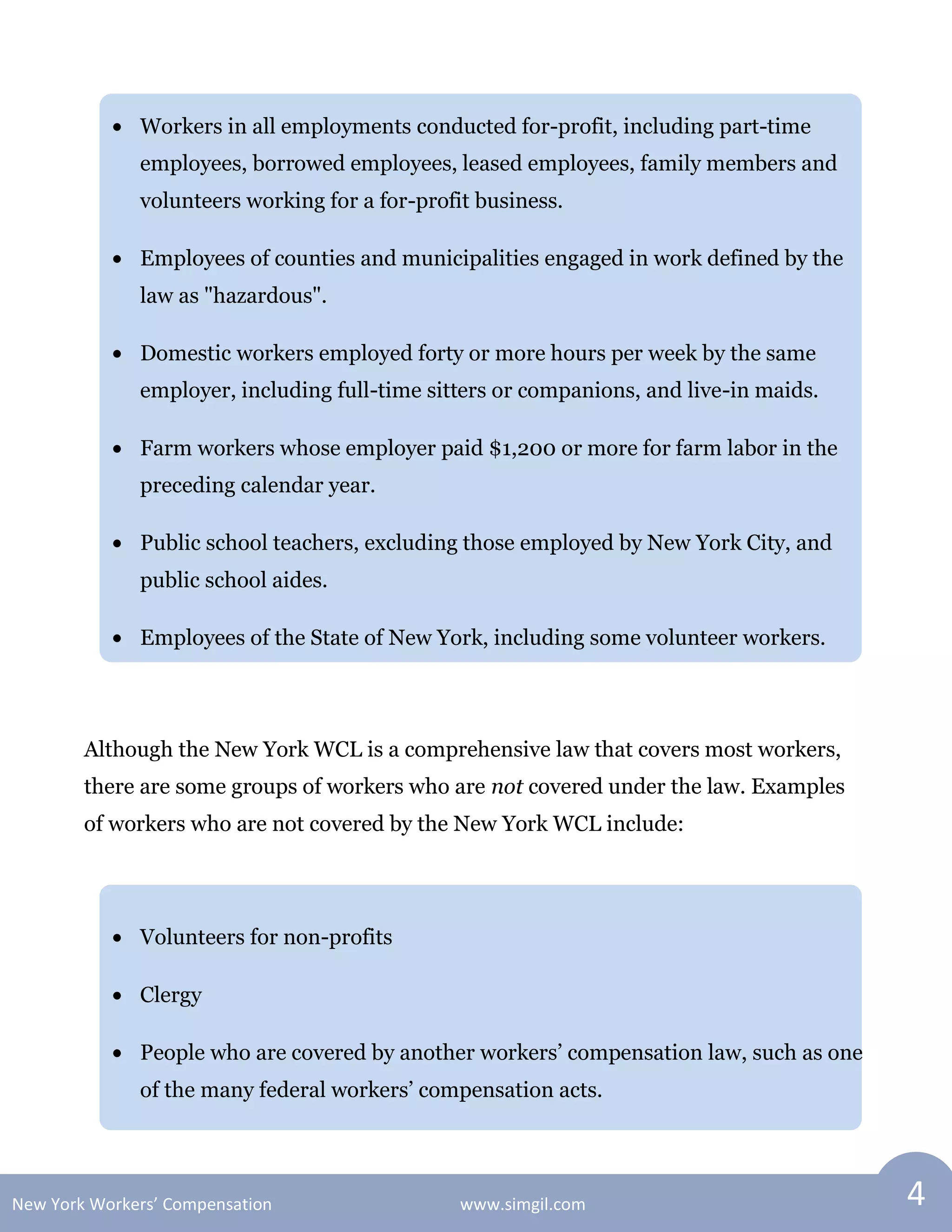
In New York State, the Workers’ Compensation Law mandates that virtually all employers provide workers’ compensation insurance coverage for their employees. However, there are specific instances where an individual or a business entity may be exempt from this requirement. The "exemption" is not a waiver of the law itself, but rather a formal acknowledgement by the state that, based on the current operational structure of the entity, there are no employees requiring coverage.
The document used to prove this status is the Certificate of Attestation of Exemption, commonly referred to as Form CE-200. It is vital to understand that this form is not a blanket exemption. If the structure of your business changes—for example, if you hire your first employee or bring on a part-time worker—the CE-200 becomes invalid, and you are legally required to secure a workers' compensation policy immediately.
Eligibility Criteria for Form CE-200
Before attempting to obtain the exemption, you must determine if you actually qualify. The New York State Workers’ Compensation Board (WCB) issues the CE-200 only to specific entities. Generally, eligibility is restricted to:
- Sole Proprietors: Business owners who have no employees, including no part-time or seasonal staff.
- Executive Officers of Corporations: Officers of a corporation who own all the shares of the corporation and are the only executive officers, provided the corporation has no other employees.
- Partners in Partnerships: Partners in a partnership where there are no employees.
- One- or Two-Person LLCs/LLPs: LLCs or LLPs where all members are executive officers or partners and there are no other employees.
If your business utilizes subcontractors, interns, family members, or part-time help, you likely do not qualify for a CE-200. Misrepresenting your business status to obtain an exemption can lead to severe legal and financial penalties, including "stop-work" orders and significant fines levied by the WCB.
Step-by-Step Procedure to Obtain the Certificate
The New York State Workers’ Compensation Board moved to an entirely electronic system for issuing exemptions. You cannot obtain a paper version of the CE-200 by mailing in a form; it must be requested via the state’s online portal.
1. Prepare Your Information
Before logging into the portal, ensure you have the following information ready:
- Your Federal Employer Identification Number (FEIN) or your Social Security Number (SSN) if you are a sole proprietor without a FEIN.
- The exact legal name of the business entity as registered with the New York State Department of State (if applicable).
- A valid email address for receiving the digital certificate.
2. Accessing the Online Portal
Navigate to the official New York State Workers’ Compensation Board website. Locate the "Certificate of Attestation of Exemption (CE-200)" section. The board utilizes an online system that guides you through a series of questions designed to verify your eligibility.
3. Completing the Questionnaire
The system will ask a series of "Yes/No" questions regarding your business operations. Answer these accurately. The software will evaluate your responses in real-time to determine if you meet the statutory requirements for an exemption.
4. Verification and Submission
Once the questionnaire is complete, the system will generate the application. Review all data for typographical errors, as these can invalidate the certificate when you provide it to a government agency or a general contractor. Upon submission, the system will process the request. In most cases, if you qualify, the certificate is generated instantly.
5. Obtaining the PDF Certificate
Once the CE-200 is issued, you will receive a confirmation. You must download and save the PDF of the certificate. This document contains a unique certificate number and an expiration date.
Comparison of Workers' Compensation Requirements
| Entity Type | Standard Requirement | Exemption (CE-200) Eligibility |
|---|---|---|
| Sole Proprietor (No Employees) | Optional | Eligible |
| Corporation (Officer-Only) | Mandatory (Unless opted out) | Eligible |
| LLC (Member-Managed) | Mandatory | Conditional |
| Business with W-2 Employees | Mandatory | Not Eligible |
| Business with 1099 Subcontractors | Mandatory | Conditional |
Renewals and Expiration
A Certificate of Attestation of Exemption is not a permanent status. The CE-200 is valid for the duration of the permit, license, or contract for which it was issued, or for a maximum of one year. You must track the expiration date of your certificate.
When your certificate expires, or if your business activities change, you must re-apply through the WCB portal. It is considered a best practice to schedule a calendar reminder 30 days prior to the expiration date of your current certificate to ensure there is no lapse in your documentation, especially if you are required to provide this proof to local building departments or licensing boards to maintain your professional status.
Common Pitfalls and Troubleshooting
Many applicants encounter issues because they misunderstand the definition of an "employee." In New York, the distinction between an independent contractor and an employee is strictly governed by the WCB. If you hire someone to perform work for your business and you exert control over how, when, and where that work is performed, the WCB may view them as an employee, regardless of whether you issue a 1099 form or a W-2.
- Invalid Certificates: If you use a CE-200 while you actually have employees, the certificate is legally void. If an accident occurs at your job site, you will be liable for all medical costs and lost wages, and you will face massive non-compliance fines.
- Name Mismatches: Ensure the name on the CE-200 exactly matches the name on your business license or contract. Discrepancies often lead to rejection by permit offices.
- System Downtime: Occasionally, the WCB portal undergoes maintenance. If the site is unavailable, wait 24 hours. Do not attempt to use third-party "fast track" services that claim to expedite the process; these are often scams or unnecessary intermediaries. The official site is the only legal source.
Compliance for General Contractors and Permit Holders
If you are a contractor bidding on a project or a business owner applying for a building permit, you will almost certainly be asked to provide proof of workers' compensation insurance. The CE-200 serves as the legal substitute for the C-105.2 (Certificate of Insurance) in these specific scenarios. Always provide a clear, legible copy of the certificate to the requesting party. It is recommended to keep an electronic copy on your mobile device and a physical copy in your vehicle or office at all times during the term of your project.
Professional Advice Limitation
The information provided here is for guidance purposes regarding the procedural application for a CE-200 form within New York State as of 2026. This content does not constitute legal or financial advice. Workers’ compensation laws are subject to legislative interpretation and individual business circumstances. If you are unsure about your status as an employer, or if you are considering whether to carry insurance despite being eligible for an exemption, consult with a licensed insurance broker or a legal professional specializing in New York labor law.
Frequently Asked Questions
Does a CE-200 cover me if I get injured on the job? No. The CE-200 is an exemption from providing insurance for employees. It does not provide medical or disability coverage for the business owner. If you are an executive officer or sole proprietor without workers’ compensation, you are responsible for your own medical expenses in the event of a work-related injury.
Can I get a CE-200 if I use subcontractors? Generally, if you use subcontractors who do not have their own workers' compensation insurance, the WCB may hold the primary contractor responsible for their coverage. You should consult the WCB’s specific guidelines on independent contractors to ensure your exemption remains valid.
How much does it cost to get a CE-200? The application for a Certificate of Attestation of Exemption is free of charge through the official New York State Workers’ Compensation Board website. If you encounter a website asking for a fee to generate your CE-200, it is likely a third-party service, and you should exit the site immediately.
What happens if I forget to renew my CE-200? If your certificate expires, you are no longer in compliance with the state's documentation requirements. This can result in the suspension of your permits, the inability to receive payments for contracts, or the assessment of penalties for failure to provide proof of coverage.
Is the CE-200 valid in other states? No. The Certificate of Attestation of Exemption is specific to New York State law. Other states have their own distinct insurance requirements and exemption procedures.
Next Steps for Your Business
To maintain compliance in 2026, verify your current operational status. If you are an owner-operator with no employees, navigate to the New York State Workers’ Compensation Board portal to apply for your CE-200. Once obtained, save the file securely and share it only with verified government or contracting entities that have a legitimate need for proof of your exemption status. If your business grows to include staff, immediately contact a licensed insurance provider to transition from an exemption status to a standard workers' compensation policy.
Image Gallery