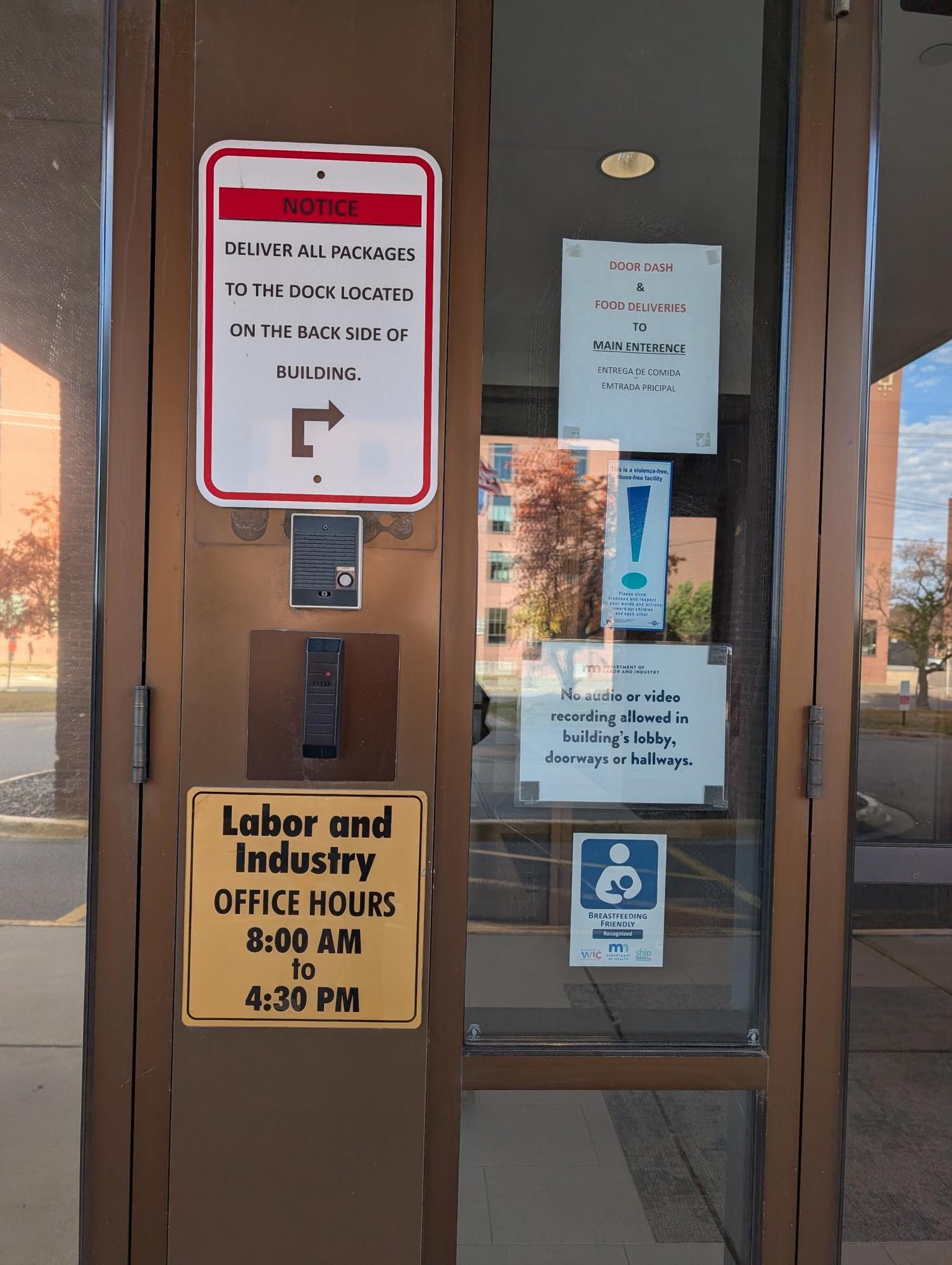
How the MN Department of Labor and Industry Workers Compensation Works
The Minnesota workers’ compensation system, overseen by the Department of Labor and Industry (DLI), is a no-fault insurance program providing medical care, wage replacement, and vocational rehabilitation to employees injured on the job...
The Minnesota workers’ compensation system, overseen by the Department of Labor and Industry (DLI), is a no-fault insurance program providing medical care, wage replacement, and vocational rehabilitation to employees injured on the job. It balances mandatory employer coverage with limited legal liability, ensuring efficient recovery and dispute resolution through administrative and judicial channels.
Contents
As of 2026, the Minnesota Department of Labor and Industry (DLI) continues to manage one of the most structured workers' compensation frameworks in the United States. Governed primarily by Minnesota Statutes Chapter 176, the system serves as a social contract: employees give up the right to sue their employers for negligence in exchange for guaranteed, prompt benefits regardless of fault. Understanding how this system functions is critical for injured workers navigating recovery and for employers maintaining compliance.
The Statutory Framework and the Role of the DLI
The Minnesota workers' compensation system is not a taxpayer-funded government program. Instead, it is an insurance-based system where private insurers or self-insured employers pay for the benefits. The Minnesota Department of Labor and Industry (DLI) acts as the central administrative hub, ensuring that the law is followed, providing information to all parties, and managing the initial stages of disputes.
The DLI’s Administrative Functions
The DLI Workers’ Compensation Division performs several vital tasks:
- Compliance and Enforcement: Monitoring employers to ensure they carry the mandatory insurance coverage required by law.
- Claims Monitoring: Reviewing the First Report of Injury (FROI) and subsequent filings to ensure insurers pay benefits timely and accurately.
- Alternative Dispute Resolution (ADR): Providing mediation and specialist services to resolve disagreements before they escalate to formal litigation.
- The CAMPUS System: Since the early 2020s and continuing through 2026, the DLI has utilized the Claims and Management Processing System (CAMPUS), a digital portal that allows stakeholders to file forms, track claim status, and communicate with the department in real-time.
The No-Fault Principle
The "no-fault" nature of the system means that an injured worker does not need to prove the employer was careless to receive benefits. Conversely, an employer is generally protected from civil lawsuits related to the injury. However, benefits can be denied if the injury was self-inflicted, occurred while intoxicated, or happened while the employee was committing a crime.
Coverage and Eligibility Requirements
For a claim to fall under the jurisdiction of the Minnesota DLI, several criteria must be met. In 2026, these standards remain rigorous to prevent fraud while ensuring broad protections for the workforce.
Employee Status vs. Independent Contractor
Only employees are covered. Independent contractors are generally not eligible for workers' compensation. The DLI uses a "right to control" test to determine status, looking at factors such as who provides tools, who sets the hours, and how the individual is paid. Misclassification is a significant area of enforcement for the DLI, and employers who incorrectly label employees as contractors face steep penalties.
Arising Out Of and In the Course of Employment
An injury must "arise out of" and occur "in the course of" employment. This means the injury must be caused by a hazard related to the work and must happen while the employee is performing their duties.
- Cumulative Trauma: Minnesota recognizes injuries that develop over time, such as carpal tunnel syndrome or repetitive back strain, often referred to as Gillette injuries.
- Mental Health: Post-Traumatic Stress Disorder (PTSD) is compensable in Minnesota for certain professions and under specific circumstances, provided it meets the diagnostic criteria established in the DSM-5 and is linked to the workplace.
Types of Workers' Compensation Benefits
When an injury is admitted by the insurer, the MN DLI oversees the distribution of four primary categories of benefits. These are adjusted annually based on the State Average Weekly Wage (SAWW).
1. Medical Benefits
Injured workers are entitled to "reasonable and necessary" medical care to cure or relieve the effects of the work injury. This includes doctor visits, surgery, hospital stays, physical therapy, and prescriptions. In Minnesota, employees generally have the right to choose their own treating physician, though some employers utilize Managed Care Organizations (MCOs) which may limit choices initially.
2. Wage-Loss Benefits
These benefits compensate for a portion of the income lost due to the injury.
- Temporary Total Disability (TTD): Paid if the employee is completely unable to work. It is typically calculated at two-thirds of the worker's gross weekly wage, subject to state maximums and minimums.
- Temporary Partial Disability (TPD): Paid if the employee can work but at a lower wage due to the injury. The benefit is two-thirds of the difference between what they earned at the time of injury and what they are earning now.
- Permanent Total Disability (PTD): Reserved for those who are permanently and totally incapacitated from working at any occupation that brings an income.
3. Permanent Partial Disability (PPD)
PPD is compensation for the permanent functional loss of a body part. It is determined by a "disability rating" assigned by a doctor according to the Minnesota Permanent Partial Disability Schedule. This is a lump sum or periodic payment that is independent of wage loss.
4. Vocational Rehabilitation
If an employee cannot return to their former job or employer, they may be eligible for vocational rehabilitation. This involves working with a Qualified Rehabilitation Consultant (QRC) to develop a plan for returning to work, which might include job placement services or, in rare cases, retraining.
| Benefit Type | Purpose | 2026 Calculation Basis (General) |
|---|---|---|
| Medical | Health restoration | 100% of reasonable/necessary costs |
| TTD | Total temporary wage loss | 66.67% of pre-injury gross wage |
| TPD | Partial wage loss | 66.67% of the wage difference |
| PPD | Functional impairment | Fixed schedule based on % of disability |
| Vocational | Return to work | Services provided by a licensed QRC |
The Claims Process: From Injury to Resolution
Navigating the MN workers' compensation process requires strict adherence to timelines. Failure to report an injury can result in the forfeiture of benefits.
Step 1: Reporting the Injury
The employee must notify the employer of the injury immediately. Under Minnesota Statute 176.141, failing to report an injury within 30 days can jeopardize the claim, and a delay beyond 180 days usually results in an absolute bar to benefits unless specific exceptions apply.
Step 2: The First Report of Injury (FROI)
Once notified, the employer must complete a First Report of Injury form. If the injury results in lost work time beyond the day of the injury, the employer must file this with their insurer, who then files it with the DLI.
Step 3: The Insurer’s Decision
The insurer has 14 days from the date the employer was notified of the injury to either begin paying benefits or issue a "Notice of Insurer’s Primary Liability Determination" (NOPLD) denying the claim. If they deny the claim, they must provide a specific legal and factual basis for the denial.
Step 4: Dispute Resolution
If a claim is denied or if there is a disagreement over specific benefits (like a surgery request), the DLI provides several paths for resolution:
- Information and Assistance: DLI specialists can often resolve minor issues through informal phone calls.
- Mediation: A voluntary process where a DLI mediator helps parties reach a settlement.
- Administrative Conferences: For smaller disputes (often regarding medical or vocational issues), a DLI presiding officer holds an informal conference and issues a decision.
Formal Litigation and Appeals
When disputes cannot be resolved through the DLI’s administrative channels, they move into the judicial phase.
Office of Administrative Hearings (OAH)
The Minnesota Office of Administrative Hearings is an independent state agency where Workers' Compensation Judges hear formal cases. This is similar to a trial: evidence is presented, witnesses testify, and attorneys make legal arguments. The judge then issues a written Findings and Order.
Workers’ Compensation Court of Appeals (WCCA)
If a party is dissatisfied with the OAH judge’s decision, they can appeal to the WCCA. This is a five-judge panel that reviews the record to ensure the law was applied correctly. The final level of appeal is the Minnesota Supreme Court.
Mandatory Insurance and the Special Compensation Fund
All Minnesota employers, with very few exceptions (such as some family farms or sole proprietors), are required to carry workers' compensation insurance.
Penalties for Non-Compliance
The DLI's Special Compensation Fund (SCF) monitors compliance. If an employer is found to be uninsured, the DLI can issue a "Stop Work Order" and assess penalties of up to $1,000 per employee for each week they were uninsured.
The Role of the Special Compensation Fund
The SCF also steps in to pay benefits to injured workers whose employers failed to obtain insurance. The fund then aggressively pursues the uninsured employer for reimbursement of those benefits plus penalties. This ensures that the worker is not punished for the employer’s failure to follow the law.
Common Pitfalls in the Minnesota System
While the system is designed to be streamlined, several common issues can complicate a claim:
- Independent Medical Examinations (IMEs): Insurers have the right to have a doctor of their choosing examine the worker. These "adverse" exams often result in opinions that the worker is fully recovered or that the injury was not work-related.
- Maximum Medical Improvement (MMI): Once a worker reaches MMI—the point where no further significant recovery is expected—certain benefits like TTD may stop.
- Social Security Offsets: There is a complex interaction between workers' compensation and Social Security Disability benefits. In Minnesota, after a certain amount of TTD or PTD benefits have been paid, the insurer may be entitled to an offset.
FAQ: Minnesota Workers' Compensation
Can I be fired for filing a workers' compensation claim? No. Minnesota law strictly prohibits employers from retaliating against employees for seeking workers' compensation benefits. If you are terminated or harassed because of your claim, you may have grounds for a separate civil lawsuit for retaliatory discharge under Minnesota Statute 176.82.
Do I have to see the company doctor? Initially, your employer may suggest a doctor, but in most cases, you have the right to choose your own healthcare provider. If your employer is part of a certified Managed Care Organization (MCO), you may be required to see a doctor within that network for a specific period.
What if my injury was partially my fault? Because Minnesota is a no-fault state, your negligence does not bar you from receiving benefits. As long as you were not intentionally trying to injure yourself or intoxicated at the time of the incident, you are covered.
How long do I have to file a claim? Beyond the initial reporting to your employer, there is a statute of limitations for filing a formal claim with the DLI. Generally, this is three years from the date the employer filed a FROI with the DLI, but not more than six years from the date of injury. These timelines are complex and should be verified with a legal professional.
Are remote workers covered? Yes. In 2026, the DLI recognizes that "the workplace" includes home offices for remote employees. If an injury occurs while performing work duties at home, it is generally covered, though the burden of proof regarding "in the course of employment" can be higher.
Practical Recommendations
If you are injured on the job in Minnesota, your immediate priority should be seeking medical attention and notifying your supervisor in writing. Keep detailed records of all communications with the insurance company and the DLI. If your claim is denied or if you are pressured to return to work before you are physically ready, consider consulting with a workers' compensation attorney. In Minnesota, attorney fees in these cases are strictly regulated and are usually contingency-based, meaning they are paid out of the benefits recovered rather than out-of-pocket by the worker.
For employers, the best strategy is proactive safety management and maintaining open communication with injured staff. Utilizing the DLI's CAMPUS portal for timely filing and staying informed on the annual adjustments to benefit rates will help avoid unnecessary penalties and litigation.
Image Gallery