Best Dog Crates with Dividers: A Comprehensive Guide for Growing Pets in 2026
Dog crates with dividers are essential tools for pet owners who want to provide a secure, comfortable environment for a puppy that will eventually grow into a large adult. By using a movable internal partition, you can adjust the livin...
Dog crates with dividers are essential tools for pet owners who want to provide a secure, comfortable environment for a puppy that will eventually grow into a large adult. By using a movable internal partition, you can adjust the living space to match your dog's current size, which is critical for effective housebreaking and preventing accidents in the crate.
Contents
Why a Divider Panel is Essential for Puppy Training
The primary reason to invest in a crate with a divider panel is to leverage a dog's natural "denning" instinct. In the wild, canines seek out small, enclosed spaces where they feel protected. Domestically, this instinct translates to a dog's reluctance to soil the area where they sleep.
If you place a small puppy in a large, adult-sized crate without a divider, the puppy will likely sleep at one end and use the other end as a bathroom. This behavior significantly hinders potty training. A divider allows you to restrict the puppy’s space to just enough room for them to stand up, turn around, and lie down comfortably. As the puppy grows, you simply move the divider back, expanding their living quarters until they reach their full adult size and the panel can be removed entirely.
Beyond housebreaking, crates with dividers offer significant financial value. Rather than purchasing a small crate for the puppy stage, a medium one for adolescence, and a large one for adulthood, a single high-quality crate with a divider serves the dog for its entire lifespan. This reduction in consumption is also a more sustainable choice for environmentally conscious pet owners in 2026.
Key Features to Look for in 2026
When evaluating the best dog crates with dividers, several technical specifications and design elements dictate the product's longevity and safety. As of 2026, manufacturing standards have evolved to prioritize "pinch-free" designs and more durable coatings.
Wire Gauge and Material Strength
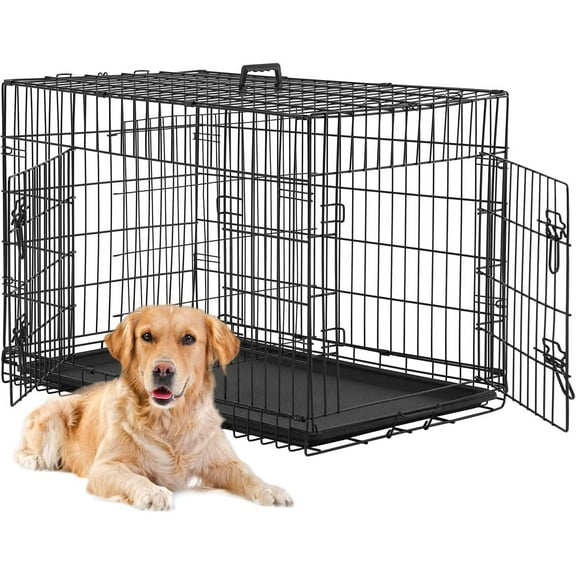
The "gauge" of the wire refers to its thickness; the lower the gauge number, the thicker and stronger the wire. For a standard wire crate, look for a combination of 6-gauge and 9-gauge wire. Lower-quality crates often use thinner 11-gauge or 12-gauge wire, which can be easily bent by a determined dog or damaged during transport. The divider itself should be made of the same gauge material as the crate walls to ensure it doesn't bow or collapse under pressure.
Latching Mechanisms
Security is paramount. In 2026, most top-tier crates utilize multi-point slide-bolt latches. Some premium models have introduced "paw-proof" handles that require a specific sequence of movements to open, preventing "escape artists" from manipulating the door from the inside. Ensure the divider panel attaches securely to the sides of the crate with reinforced hooks to prevent it from sliding out of place.
Coating and Finish
Modern crates typically feature either an e-coat (electro-deposition coating) or a powder-coated finish. E-coat finishes provide a smooth, shiny surface that is highly resistant to rust and corrosion, making them ideal for humid environments. Powder coating is often thicker and provides a matte finish that can withstand heavy chewing without chipping, which is safer for the dog’s digestive system.
Portability and Storage
Even a large crate should be manageable. Look for "suitcase-style" folding designs that allow the crate to be collapsed without tools. This is particularly important for owners who travel or need to store the crate temporarily. Most crates with dividers are designed to be folded with the divider stored flat against one of the panels.
Comparing Top Dog Crates with Dividers
The following table compares the most reliable models available in 2026 based on durability, ease of use, and safety features.
| Model Name | Primary Material | Best For | Divider Type | Key Advantage |
|---|---|---|---|---|
| MidWest iCrate | E-coated Steel | General Use | Hook-on Wire Panel | Most affordable and widely available standard. |
| Precision Pet ProValu | Powder-coated Steel | High Security | Reinforced Slide-in | Five-point locking system for added safety. |
| Diggs Revol Crate | Aluminum & Steel | Luxury / Style | Integrated Proprietary | Ergonomic "garage door" style with easy setup. |
| Carlson Pet Products | Galvanized Steel | Small to Mid Breeds | Bolt-on Panel | Multi-purpose use with built-in small pet door. |
| New World Folding Crate | Heavy-duty Wire | Large Breeds | Universal Hook | Maximum airflow and visibility for larger dogs. |
Detailed Reviews of Leading Models
MidWest iCrate: The Versatile Standard
The MidWest iCrate remains a top recommendation in 2026 due to its consistent build quality and the inclusion of a divider panel in almost every size configuration. The iCrate uses a hook-and-loop system for its divider, which allows for incremental adjustments.
One of its standout features is the composite plastic pan, which is leak-proof and can be easily removed for cleaning without opening the crate door. This is especially helpful during the early stages of puppy training. While the wire is slightly thinner than heavy-duty "professional" models, it is more than sufficient for dogs that are properly crate-trained.
Precision Pet ProValu: Enhanced Security
For owners concerned about their dog escaping, the Precision Pet ProValu offers a more robust latching system. The divider panel on this model is designed with deeper hooks that wrap further around the vertical wires, reducing the "rattle" often associated with wire crates. The ProValu series often features a double-door design (front and side), which provides more flexibility in where you can place the crate in your home while still maintaining access to the divider.
Diggs Revol: The Premium Experience
The Diggs Revol represents the high-end segment of the market. Unlike traditional wire crates, the Revol uses a diamond-mesh pattern and an aluminum frame, which prevents paws from getting caught—a common injury in standard wire crates. The divider for the Revol is custom-fitted and slides into a dedicated track, making it the most stable divider on the market. While significantly more expensive, its aesthetic appeal and safety ratings make it a favorite for urban pet owners in 2026.
Sizing Guide: How to Choose the Right Dimensions
Selecting the correct crate size is the most important step in the process. You must size the crate for the adult version of your dog.
- Measure for Height: Measure your dog from the floor to the top of their head (or ears if they are erect). Add 2 to 4 inches to this measurement.
- Measure for Length: Measure from the tip of the nose to the base of the tail. Do not include the full length of the tail. Add 2 to 4 inches.
- Consult Breed Standards: If you have a puppy, look up the average adult size for their breed or mix. For example, a Golden Retriever usually requires a 42-inch crate, while a Great Dane will need a 48-inch or 54-inch "giant" crate.
The divider panel should then be placed so that the puppy has exactly enough room to lie down on their side and turn around. If you notice the puppy is having accidents, the space is likely too large; move the divider closer to the door.
Safety Considerations and Installation Tips
While crates with dividers are generally safe, improper installation can lead to injury. Follow these guidelines to ensure your pet's safety:
- Check for Gaps: After installing the divider, ensure there are no gaps between the divider and the crate walls larger than the puppy's head or paws. In rare cases, puppies can get stuck if the divider is not hooked properly.
- Remove Collars: Never leave a dog in a crate with a collar or harness on. Tags and buckles can get caught on the wire mesh or the divider hooks, leading to a strangulation risk. This advice is supported by major veterinary associations, including the American Veterinary Medical Association (AVMA).
- Leveling: Ensure the crate is on a level surface. A tilted crate can cause the divider panel to shift or the door latches to become misaligned.
- Bedding: Use a thin, washable crate pad. During the divider phase, do not use heavy blankets that can be bunched up against the divider, as this might allow the puppy to climb or push the panel.
Maintenance and Longevity
To ensure your crate lasts for the life of your dog, regular maintenance is required. The plastic pan should be cleaned weekly with a pet-safe enzymatic cleaner to remove any lingering odors that might attract repeat accidents.
Inspect the wire panels and the divider hooks every month for signs of wear, such as chipped paint or bent wires. If the coating is chipped, it can be touched up with non-toxic, pet-safe paint to prevent rust. For those living in coastal areas, a light wipe-down with a damp cloth can remove salt air residue that accelerates corrosion on metal components.
FAQ
Can I buy a divider panel separately?
Yes, many manufacturers like MidWest and Precision Pet sell replacement divider panels. However, you must ensure the divider is compatible with your specific model and size. Most dividers are not "universal" because the spacing between the horizontal and vertical wires varies by brand. It is always safer to purchase a crate that includes the divider in the original packaging.
How long should I use the divider panel?
The divider should stay in place until your dog is fully housebroken and has reached nearly their full physical size. For most breeds, housebreaking is reliably achieved between 6 and 8 months of age. If your dog is no longer having accidents and seems cramped, it is time to move or remove the divider.
Are plastic crates better than wire crates for dividers?
Plastic "airline-style" crates rarely come with dividers because their solid walls do not provide the necessary attachment points for a movable panel. Wire crates are the industry standard for divider use because they offer the most flexibility in sizing and provide superior ventilation and visibility.
Can a divider handle a high-anxiety dog?
Standard wire dividers are intended for space management, not for containing a dog with severe separation anxiety or "escape artist" tendencies. If your dog aggressively tries to move the divider or chew through the wire, you may need a heavy-duty stationary crate. In these cases, it is often better to consult a professional trainer or animal behaviorist through organizations like the Association of Professional Dog Trainers (APDT).
Is it okay to leave the divider in after the dog is grown?
While it won't necessarily harm the dog, leaving the divider in a crate that is too small for an adult dog can lead to joint stiffness and discomfort. Once the dog is housebroken and physically fits the crate, removing the divider provides them with a more luxurious and comfortable "bedroom."
Final Recommendation
For the vast majority of pet owners in 2026, the MidWest iCrate with an included divider remains the best overall value for its balance of cost, durability, and ease of use. If you have a particularly strong breed or are concerned about aesthetics and paw safety, investing in the Diggs Revol is a worthwhile upgrade that provides peace of mind through superior engineering. Regardless of the model you choose, remember that the divider is a temporary tool designed to foster a lifetime of good habits and a positive relationship between your dog and their "den."
Image Gallery