What Does a Degree in Finance Entail? Curriculum, Careers, and Skills
A degree in finance entails a comprehensive study of how individuals, businesses, and institutions manage money, assets, and liabilities. It combines quantitative mathematical training with strategic theory to teach students how to val...
A degree in finance entails a comprehensive study of how individuals, businesses, and institutions manage money, assets, and liabilities. It combines quantitative mathematical training with strategic theory to teach students how to value investments, assess risk, and optimize capital allocation. Graduates are prepared for high-stakes roles in banking, corporate management, and investment analysis.
Contents
The Core Philosophy of a Finance Education
At its heart, a finance degree is about resource allocation over time under conditions of uncertainty. While many people confuse finance with accounting, the two fields serve different purposes. Accounting is primarily concerned with the historical recording of financial transactions and ensuring regulatory compliance. In contrast, finance is forward-looking. It uses historical data to predict future performance and make decisions about where money should be deployed today to maximize value tomorrow.
By 2026, the study of finance has evolved significantly from its traditional roots. While the fundamental principles of the "time value of money" remain unchanged, the modern curriculum now integrates heavy doses of data science, behavioral psychology, and global regulatory frameworks. A student pursuing this degree will spend as much time analyzing human behavior and algorithmic patterns as they do calculating interest rates or reading balance sheets.
Foundational Coursework and Academic Pillars
A standard four-year bachelor’s degree in finance is typically structured into three tiers: general education, core business requirements, and specialized finance major courses. The specialization phase is where students engage with the technical mechanics of the industry.
Corporate Finance
This is often considered the "anchor" of the degree. Corporate finance focuses on how businesses manage their capital. Students learn about capital budgeting—deciding which long-term projects a company should invest in—and capital structure, which involves balancing debt and equity to fund operations. Key concepts include Net Present Value (NPV), Internal Rate of Return (IRR), and the Weighted Average Cost of Capital (WACC).
Investment and Portfolio Management
In these courses, the focus shifts from the company perspective to the investor perspective. Students analyze different asset classes, including equities (stocks), fixed income (bonds), and derivatives. You will learn the Modern Portfolio Theory (MPT), which explains how to construct a group of assets that maximizes expected return for a given level of risk. This section of the degree also covers the Efficient Market Hypothesis and the tools used to value individual securities.
Financial Markets and Institutions
This subject provides the "macro" view of the financial world. It entails studying the role of central banks (like the Federal Reserve), commercial banks, insurance companies, and investment firms. Understanding how money flows through the global economy—and how interest rates are set—is crucial for any finance professional. By 2026, this curriculum heavily features the role of digital currencies and decentralized finance (DeFi) in the broader institutional landscape.
Quantitative Methods and Financial Modeling
Finance is a data-driven discipline. Students must master statistical analysis and financial modeling, usually using tools like Microsoft Excel, Python, or R. This entails building complex spreadsheets that forecast a company’s future earnings or simulate market volatility. Quantitative training ensures that a graduate can back up strategic recommendations with hard data.
Specialized Electives and Modern Trends in 2026
As the financial industry matures, degrees have become more specialized. Modern programs often offer "tracks" or "concentrations" that allow students to tailor their education to specific career goals.
- Fintech (Financial Technology): This involves the study of blockchain, algorithmic trading, and the automation of financial services. It is designed for students who want to bridge the gap between traditional finance and computer science.
- ESG (Environmental, Social, and Governance) Finance: Sustainable investing is no longer a niche; it is a core component of institutional asset management in 2026. This elective focuses on how to value companies based on their carbon footprint, social impact, and ethical leadership.
- Behavioral Finance: This field challenges the traditional assumption that market participants are always rational. It uses psychology to explain why market bubbles occur and how cognitive biases influence individual investment decisions.
- Risk Management: Students learn how to identify, measure, and mitigate financial risks. This includes everything from market risk and credit risk to operational and reputational risks.
Degree Level Comparison
The depth and duration of a finance education depend on the level of the degree pursued. The following table outlines the standard expectations for different academic paths as of the 2025-2026 academic year.
| Degree Level | Typical Duration | Primary Focus | Common Career Outcomes |
|---|---|---|---|
| Associate Degree | 2 Years | Basic accounting, business math, and personal finance. | Junior bookkeeper, bank teller, or administrative assistant. |
| Bachelor’s Degree | 4 Years | Corporate finance, investments, and quantitative analysis. | Financial analyst, credit analyst, or junior portfolio manager. |
| Master’s in Finance (MSF) | 1-1.5 Years | Advanced technical modeling, derivatives, and theory. | Investment banker, hedge fund analyst, or risk manager. |
| MBA (Finance Track) | 2 Years | Strategic leadership, management, and high-level finance. | CFO, management consultant, or senior director. |
| PhD in Finance | 4-6 Years | Original research, econometrics, and academic theory. | University professor or senior quantitative researcher. |
Essential Skills Developed in a Finance Program
A degree in finance is highly valued by employers because it develops a unique blend of "hard" technical skills and "soft" analytical abilities.
Technical Proficiency
The most obvious skill is financial literacy. Graduates can read and interpret complex financial statements (Balance Sheets, Income Statements, and Cash Flow Statements) to determine the health of an organization. Furthermore, proficiency in software like Bloomberg Terminals, FactSet, or S&P Capital IQ is often integrated into the coursework.
Analytical Thinking
Finance students are trained to look beyond the numbers. For instance, if a company’s revenue is growing, a finance professional must determine if that growth is sustainable or if it is being driven by unsustainable debt. This requires a high degree of critical thinking and the ability to synthesize information from various sources, including economic reports and geopolitical news.
Communication and Negotiation
Contrary to the "numbers-only" stereotype, finance is a relationship-driven industry. Analysts must be able to present their findings to stakeholders, clients, or boards of directors. A finance degree often entails rigorous training in report writing and oral presentations, ensuring that complex data can be translated into actionable business advice.
Career Paths for Finance Graduates
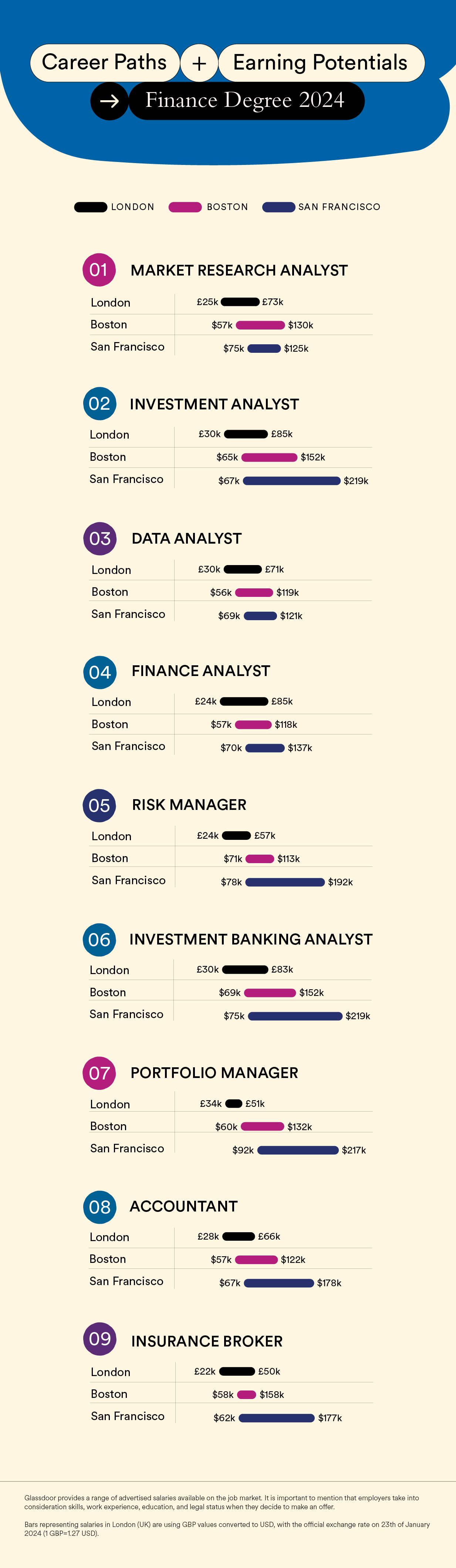
The versatility of a finance degree is one of its greatest strengths. Graduates are not limited to Wall Street; every major organization—whether a tech startup, a non-profit, or a government agency—requires financial expertise.
- Investment Banking: These professionals help corporations raise capital through Initial Public Offerings (IPOs) or debt issuance. They also advise on Mergers and Acquisitions (M&A). This is a high-pressure, high-reward career path.
- Corporate Finance: Working within a company’s internal finance department, these professionals handle budgeting, internal audits, and financial planning and analysis (FP&A). They ensure the company remains profitable and solvent.
- Wealth Management and Financial Planning: These experts work with individuals to manage their personal portfolios, plan for retirement, and optimize tax strategies. This path often requires additional certification, such as the Certified Financial Planner (CFP) designation.
- Equity Research: Analysts in this field study specific industries or companies and issue "buy," "hold," or "sell" recommendations to investors.
- Public Sector and Regulation: Agencies like the Securities and Exchange Commission (SEC) or the Federal Reserve hire finance graduates to monitor markets, enforce regulations, and implement monetary policy.
Post-Graduation Certifications
While a degree provides the foundational knowledge, the finance industry places a heavy emphasis on professional certifications. Many students begin preparing for these during their final year of study.
- Chartered Financial Analyst (CFA): Often considered the "gold standard" for investment professionals. It consists of three levels of exams covering ethics, portfolio management, and advanced investment analysis.
- Certified Public Accountant (CPA): While primarily for accountants, many finance professionals in corporate roles obtain a CPA to bolster their credibility in financial reporting.
- Financial Risk Manager (FRM): A specialized certification for those looking to work in risk management within banks or hedge funds.
Cost and Return on Investment (ROI)
The cost of a finance degree varies widely based on the institution. As of 2026, tuition at public universities in the United States averages between $11,000 and $28,000 per year for in-state students, while private institutions can exceed $60,000 per year.
However, the ROI for finance remains among the highest of all undergraduate majors. According to data from the U.S. Bureau of Labor Statistics, the median annual wage for business and financial occupations is significantly higher than the median for all occupations. Entry-level financial analysts often see starting salaries ranging from $70,000 to $95,000, with substantial bonuses common in the banking and investment sectors.
Frequently Asked Questions
Is a finance degree harder than an accounting degree?
The difficulty is subjective. Accounting is often more rules-based and requires extreme attention to detail regarding tax laws and reporting standards. Finance is more conceptually abstract and involves higher levels of mathematics, statistics, and economic theory. If you enjoy solving puzzles and predicting future outcomes, finance may feel more intuitive.
Do I need to be a math genius to study finance?
No, but you must be comfortable with numbers. You don't necessarily need the advanced calculus required for engineering, but you do need to master algebra, statistics, and financial mathematics. Most of the complex calculations are performed by software; your job is to understand the logic behind the formulas and interpret the results.
Can I get a finance job with a general business degree?
Yes, but a specialized finance degree usually gives you a competitive edge for technical roles like investment banking or quantitative analysis. General business degrees provide a broader overview but may lack the deep-dive modeling skills that finance-specific programs offer.
What is the difference between Finance and Economics?
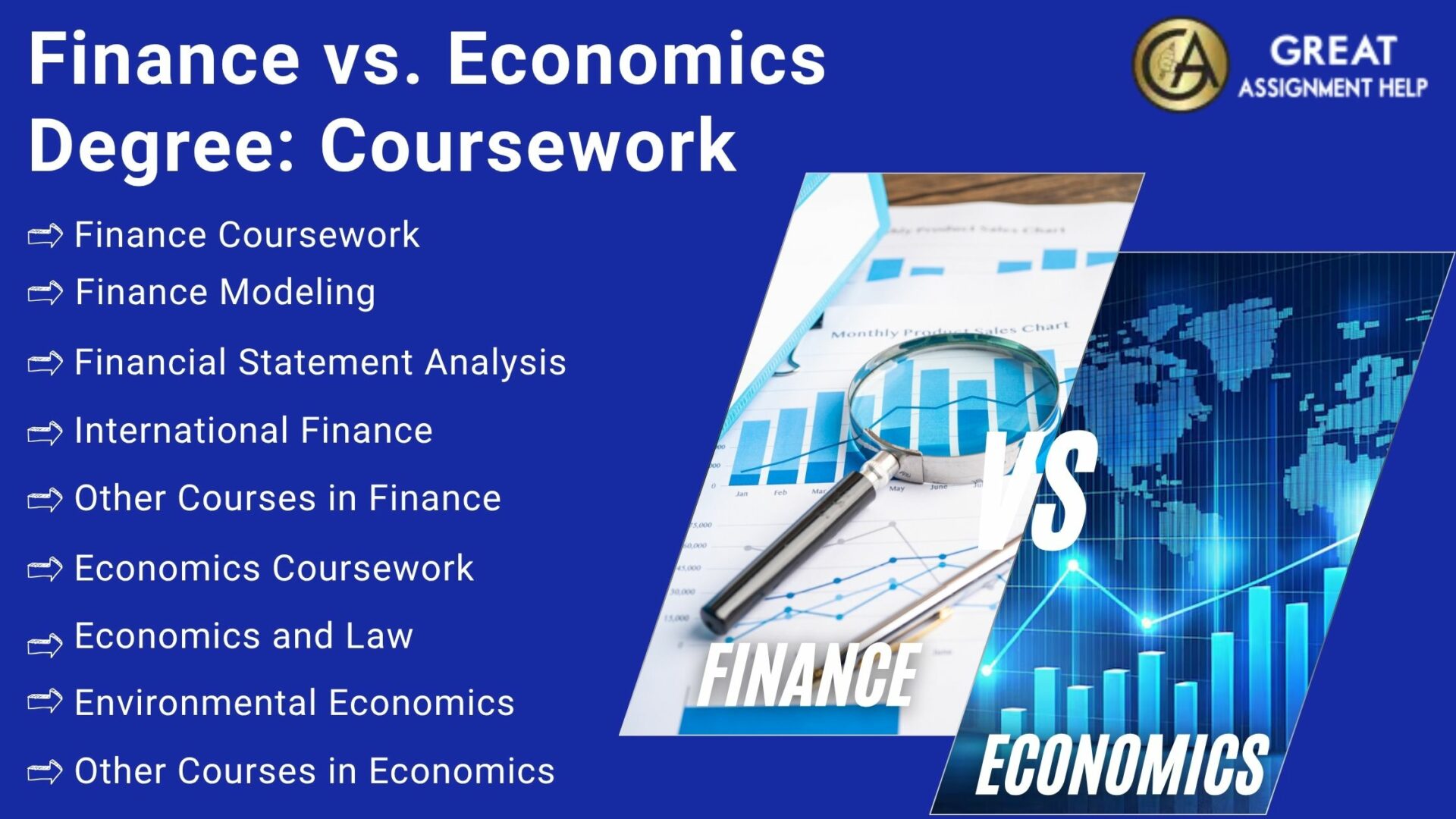
Economics is the study of how society uses resources and is often more theoretical and focused on policy. Finance is a subfield of economics that is more applied and focused on the management of money and assets within specific markets or companies.
Is an internship required for a finance degree?
While not always a formal requirement for graduation, internships are practically mandatory for career success. Most major financial firms hire their full-time analysts directly from their summer internship programs. A student who graduates with a degree but no internship experience will find the job market significantly more challenging.
Practical Recommendation for Prospective Students
If you are considering a degree in finance, the most important step you can take is to develop your technical skills early. Do not wait for your junior year to learn Excel; start mastering VLOOKUPs, pivot tables, and basic macros now. Additionally, stay informed about global markets. Reading publications like The Wall Street Journal or The Financial Times will help you connect classroom theories to real-world events, which is exactly what employers look for during interviews.
Finally, consider the geographic location of your school. Being near a financial hub like New York, London, Singapore, or Chicago can provide significant advantages for networking and securing high-profile internships that often lead to full-time placement.
Image Gallery