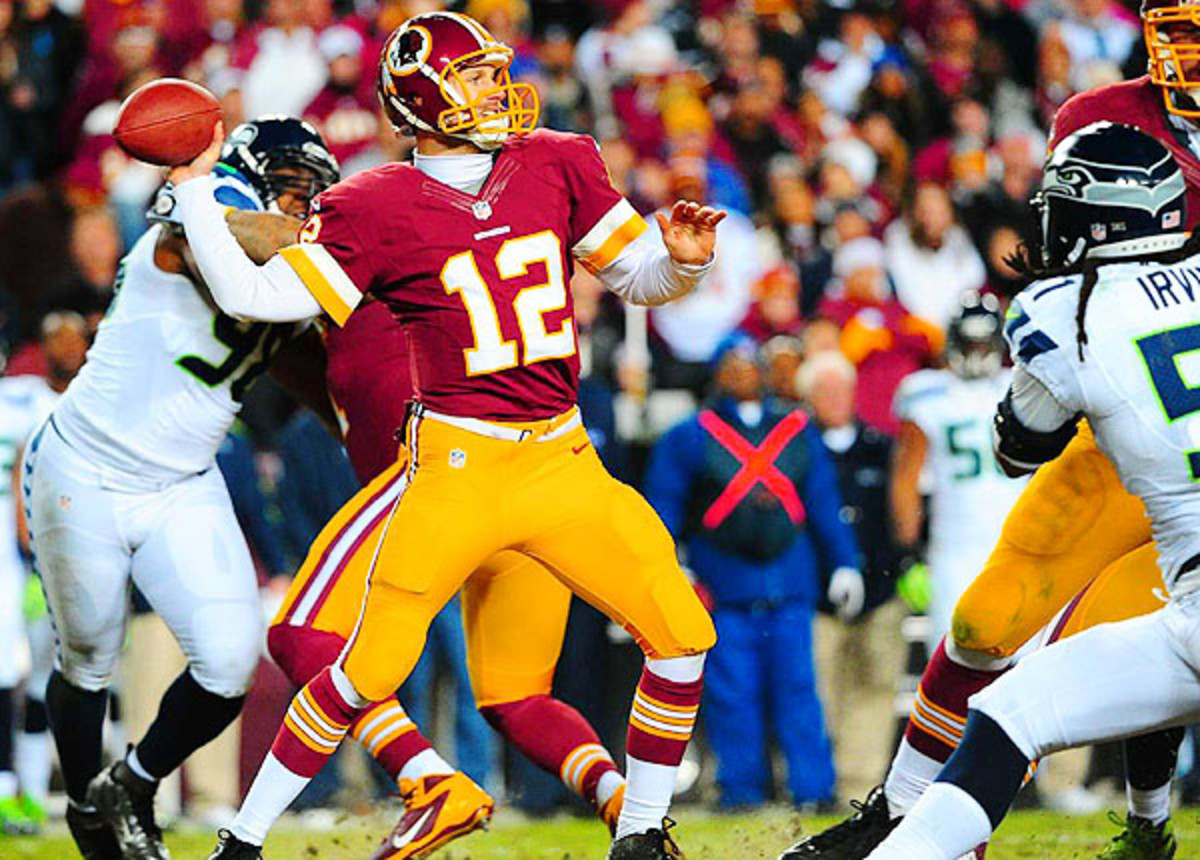
The Legacy of the NFL’s Best Backup Quarterbacks of All Time
In the National Football League, the backup quarterback is often the most important player on the roster who is expected to never play. While starters command the headlines and the salary cap, history has proven that championships are...
In the National Football League, the backup quarterback is often the most important player on the roster who is expected to never play. While starters command the headlines and the salary cap, history has proven that championships are frequently decided by the reliability of those who step in when the primary signal-caller falls. The best backup quarterbacks are characterized by mental preparation, professional longevity, and the rare ability to win high-stakes games on short notice.
Contents
The Strategic Value of the "Next Man Up"
The archetype of the backup quarterback has evolved significantly since the early days of the league. In the modern era, teams prioritize backups who can bridge the gap during injury spells, maintaining offensive structure rather than reinventing it. The most successful backups in NFL history share specific traits: an intimate understanding of complex playbooks, high football IQ, and the composure to manage high-pressure situations without the benefit of practice-week repetitions as the starter.
A truly elite backup is a student of the game. Because they rarely take first-team snaps in practice, they must maintain sharpness through mental visualization and rigorous film study. Their value lies in their utility as a coach on the sideline and their readiness to execute fundamental concepts the moment they enter the huddle.
Historical Giants: Evaluating Sustained Excellence
When examining the best backup quarterbacks, one must distinguish between "spot starters" who filled in briefly and "career backups" who carved out decades of service. Some players, such as Frank Reich and Earl Morrall, redefined the position by stepping onto the field and achieving outcomes that influenced the trajectory of entire franchises.
The Earl Morrall Paradigm
Earl Morrall remains perhaps the most notable example of a backup assuming a critical mantle. During the 1968 season, after Johnny Unitas suffered an injury, Morrall led the Baltimore Colts to an NFL Championship and an appearance in Super Bowl III. Later, he famously spearheaded the perfect 1972 Miami Dolphins season after Bob Griese was injured, maintaining an undefeated streak that stands as a singular achievement in professional football history.
Frank Reich’s Heroics
Frank Reich, long relegated to the bench behind Jim Kelly in Buffalo, demonstrated the quintessential "backup ready to shine" moment during the 1992 AFC Wild Card game. Orchestrating "The Comeback," Reich led the Bills from a 32-point deficit to defeat the Houston Oilers. This performance proved that the best backups are not merely placeholders but athletes capable of elite, game-winning production under the most dire circumstances.
Comparison of Impactful Backup Careers
The following table highlights players who spent significant portions of their careers in relief roles but achieved notable results that transcended their secondary status.
| Player | Primary Team(s) | Career Defining Moment | Role Significance |
|---|---|---|---|
| Earl Morrall | Colts/Dolphins | 1972 Perfect Season | Won MVP while filling in for a starter |
| Frank Reich | Bills | The Comeback (1992) | Largest comeback in playoff history |
| Jeff Hostetler | Giants | Super Bowl XXV Victory | Took over late season to win a title |
| Steve Young | 49ers | Pro Bowl Starter | Transitioned from backup to Hall of Famer |
| Jim Plunkett | Raiders | Two-time SB Winner | Resurrected career as a relief specialist |
The Psychological Component: Readiness and Resilience
One of the most underappreciated aspects of a backup quarterback's role is the psychological burden. Unlike the starter, who has the full support of the coaching staff’s game plan, the backup must remain "cold" for weeks or months, only to be thrust into a game mid-series or on a sudden injury notification. This requires a unique internal stability.
Successful backups possess a "professional ego"—the confidence to believe they can win any game, tempered by the humility required to support the starter fully. This balance is critical for team chemistry. If a backup is perceived as disruptive, it can undermine the authority of the starter, creating a distraction that hurts the team’s overall objective. The best in the business are often described as "locker room glue," players who provide stability and leadership regardless of their status on the depth chart.
The Technical Evolution of the Backup Role
Since the mid-2010s, the NFL has seen a shift toward the "developmental backup." Teams often draft players with specific physical traits—high velocity or mobility—to mirror the athleticism of the starter. This ensures that the scout team defense receives a realistic look during the week, helping the starter prepare for upcoming opponents.
In 2026, the complexity of defensive schemes requires that even the second-string quarterback understands defensive shell rotations and blitz packages as well as the starter. This technical proficiency is the baseline expectation. A quarterback who cannot diagnose the field quickly is no longer viable as an insurance policy, regardless of their arm strength.
Common Misconceptions About Backup Quarterbacks
A recurring misconception is that backup quarterbacks are simply "failed starters." While many backups are former high-round draft picks who did not pan out, others are career veterans who thrive in the backup role because they lack the specific physical traits required for 17 games of starting duty but excel in short-burst scenarios.
Another myth is that all backups should eventually attempt to become starters. In reality, some of the most respected players in the league have identified their strength as mentors and relief specialists. By embracing this role, these individuals have extended their careers, earned significant longevity, and accumulated more total compensation than many short-term starters who struggled with inconsistency.
Frequently Asked Questions
What separates a good backup from a career starter? Consistency and durability. Starters are expected to manage an entire season's worth of variable game conditions and defensive adaptations. Backups are often evaluated on their ability to perform high-efficiency operations for shorter stretches, often protected by simplified play-calling.
Why do some teams prioritize veteran backups over younger prospects? Experience. A veteran backup provides a steady hand in the meeting room, helping the younger starter read coverages and manage the pressures of an NFL season. They offer institutional knowledge that a rookie, regardless of talent, cannot provide.
How does the salary cap impact the backup quarterback position? Because the starting quarterback’s salary is typically the largest on the team, finding a cost-effective backup is essential. Teams often seek players on "bridge" contracts who provide veteran stability without occupying a high percentage of the remaining salary cap space.
Can a backup quarterback truly win a championship? Yes. Historically, teams like the 1990 New York Giants and 2017 Philadelphia Eagles relied heavily on backups or players thrust into starting roles late in the season to secure Lombardi Trophies. It requires a resilient roster that can adapt to the backup’s specific skill set.
What is the "next man up" mentality? It is a cultural philosophy in the NFL where the team operates under the assumption that any player could be injured at any time. This encourages the entire roster to prepare as if they are the starter, ensuring that the team’s performance does not plummet when a backup is forced into action.
Final Considerations for Success
For those evaluating the performance of backup quarterbacks, look beyond simple box-score statistics like passing yards. Focus on completion percentage in high-pressure downs and the player’s ability to protect the football. The best backup quarterback is not the one who throws for the most yards, but the one who prevents the team from losing while the starter is unavailable. As the game becomes increasingly focused on precision and risk mitigation, the value of the prepared, intelligent backup will continue to be a cornerstone of franchise success.
Image Gallery