Conducting Effective Record Searches: A 2026 Professional Guide
Record searches are the formal process of identifying, locating, and retrieving documented information from public or private repositories, such as courthouse archives, government databases, or digital registries. This guide outlines t...
Record searches are the formal process of identifying, locating, and retrieving documented information from public or private repositories, such as courthouse archives, government databases, or digital registries. This guide outlines the technical requirements, legal prerequisites, and systematic workflows necessary to perform accurate, compliant, and efficient information retrieval across various jurisdictions in 2026.
Contents
Understanding the Scope of Public and Private Records
Distinguishing between public, restricted, and private records is the foundational step for any successful search. In the United States, public record laws are governed by a combination of the Freedom of Information Act (FOIA) at the federal level and various state-level Open Records Acts. By 2026, the shift toward digitized, cloud-hosted government portals has made remote access more prevalent, though local physical archives remain critical for older documents.
- Public Records: Documents created or received by government agencies that are generally accessible to the public, including property deeds, marriage/divorce decrees, civil court filings, and UCC filings.
- Restricted Records: Information that contains sensitive personal identifiers, such as Social Security numbers, health records protected by HIPAA, or pending criminal investigations.
- Private Records: Proprietary data held by private entities, requiring specific legal authority, consent, or subpoenas for access.
Essential Prerequisites for Accurate Information Retrieval
Before initiating a search, you must define the search parameters to avoid excessive costs and data noise. Accuracy depends on the quality of the input data and the specific jurisdiction’s indexing standards.
- Unique Identifier Verification: Collect full legal names, date of birth, and known aliases. For property searches, use the Assessor’s Parcel Number (APN) rather than a street address to ensure cross-jurisdictional accuracy.
- Jurisdictional Mapping: Records are rarely centralized. You must determine the exact county or state office of jurisdiction. For federal court records, the PACER (Public Access to Court Electronic Records) system remains the primary standard as of 2026.
- Authentication Requirements: Many digital portals require authenticated user accounts. Ensure you have the necessary credentials, whether for a paid subscription database or a free government repository.
Technical Framework for Executing Record Searches
The methodology for a search changes based on the platform and the type of record requested. Below is a comparative overview of common search channels used by legal, financial, and investigative professionals in 2026.
| Search Channel | Primary Data Type | Accessibility Level | Cost Structure |
|---|---|---|---|
| PACER | Federal Civil/Criminal Cases | High (Account Req) | Per Page Fee (Caps apply) |
| County Recorder Portals | Property Deeds/Liens | Medium (Geographically bound) | Varies by County |
| Secretary of State (SOS) | Business Entity Filings | High (Public) | Free/Nominal Fee |
| National Sex Offender Public Website | Criminal History | High (Public) | Free |
| Third-Party Aggregate Databases | Multi-source profiles | Medium (Subscription) | Monthly/Per search fee |
Utilizing Local Government Portals
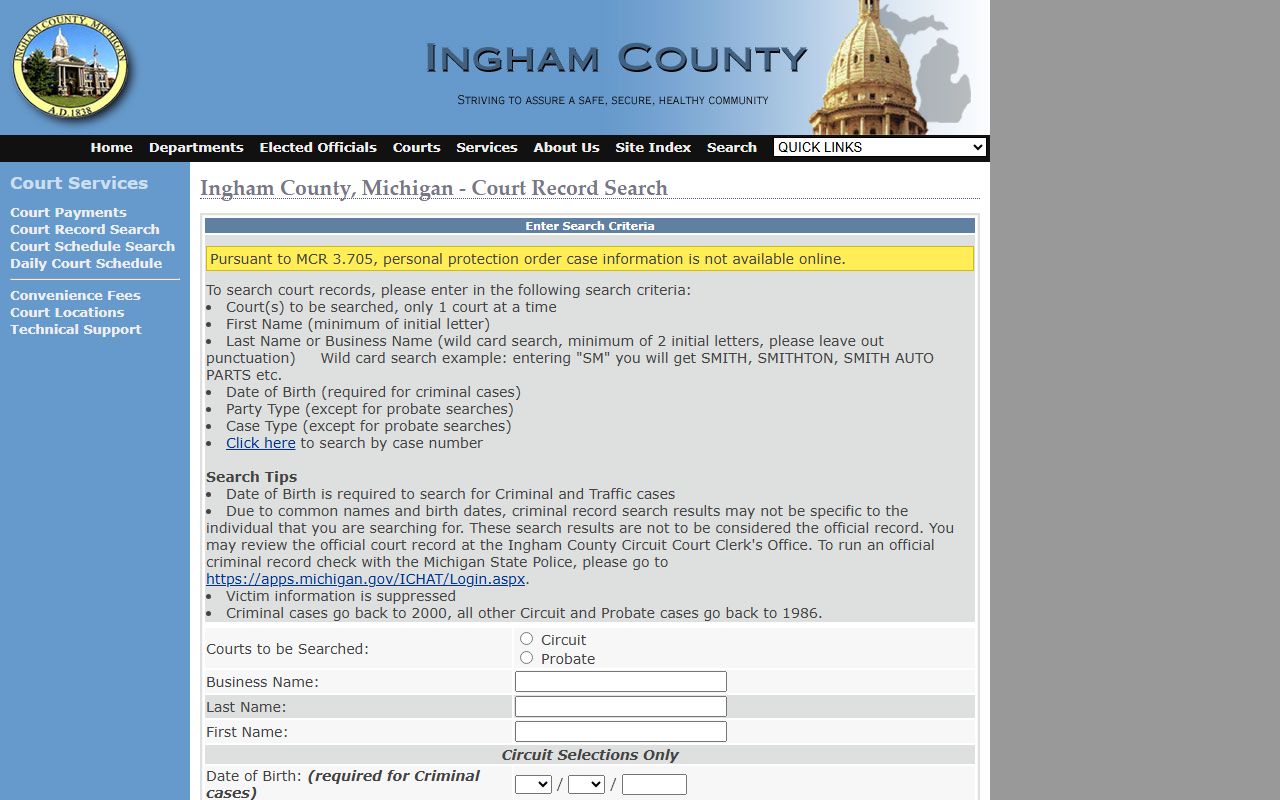
Most local government entities have migrated to cloud-based content management systems (CMS) that allow for advanced filtering by date, document type, and grantor/grantee index. When searching these portals:
- Boolean Logic Application: Use advanced search operators (AND, OR, NOT) to narrow results. Searching for "John Smith" often yields thousands of results; refine by adding a middle initial, specific document category, or date range.
- Image Interpretation: Many older records are archived as scanned PDFs. Use OCR (Optical Character Recognition) software to extract text from these images for keyword indexing.
Legal and Ethical Compliance Standards
Professionals conducting record searches must adhere to strict regulatory frameworks. Violating these standards can lead to legal liability, particularly regarding data privacy acts that have evolved significantly through 2026.
Data Privacy and Fair Credit Reporting Act Compliance
Permissible Use Guidelines If you are using data retrieved from record searches to make decisions regarding employment, housing, or credit, your actions may fall under the Fair Credit Reporting Act (FCRA). Ensure that you are utilizing authorized Consumer Reporting Agencies (CRAs) and maintaining compliance with all disclosure requirements.
Regulatory Adherence Always verify state-specific statutes regarding the dissemination of sensitive data. In many jurisdictions, redaction of personal identifying information (PII) is mandatory before sharing document copies with third parties.
Troubleshooting Common Search Failures
Even with the correct data, record searches often fail due to indexing errors or procedural gaps. Use this systematic approach to troubleshoot missing or inconsistent information.
- Misspelling and Phonetic Variations: Many legacy systems utilize older indexing methods. Try Soundex or phonetic spelling variations if a standard search yields no results.
- Data Lag: Government databases are not always updated in real-time. If a recent transaction does not appear, verify the agency’s "last updated" timestamp. If the delay is significant, contact the County Clerk’s office directly.
- Redaction Overlap: Occasionally, critical fields are redacted under broad privacy exemptions. If you require the full document for legal purposes, submit a formal request for an unredacted copy, citing the legal necessity of the information.
Frequently Asked Questions
What is the most reliable way to perform a national criminal record search? There is no single "national" database that is 100% comprehensive, as criminal records are held at the county level. The most reliable method is to conduct searches in every county where the subject has resided, typically cross-referenced with the state-level Department of Corrections repository.
Are there free alternatives to paid record search services? Yes. For most public records, official government websites (County Clerk, Recorder of Deeds, Secretary of State) provide free access to documents. Paid services typically charge for the convenience of aggregating this data into a single, searchable report.
How do I handle a record that is missing from the public index? If a record is missing, it may be due to a clerical error, a court-ordered sealing of the record, or a system migration. Contact the office of record (e.g., Clerk of Court or Recorder) to inquire about offline archives or to request a physical search of the docket books.
How often should I refresh a background or record search? In 2026, record information is considered "stale" once a new event occurs. For high-stakes investigations, searches should be refreshed every 30 to 90 days to ensure the inclusion of the most recent filings or court activity.
Do I need a lawyer to access court records? In the vast majority of cases, no. Most court records are open to the public under the principle of transparent justice. You only require legal counsel if you are attempting to access sealed or expunged records, which require a specific motion and a judge's order.
Professional Recommendation
For those performing frequent or high-volume searches, the most efficient strategy is to build a repository of direct links to the primary source websites for your specific jurisdictions. Relying on third-party aggregators as a primary source is a common mistake; always verify critical data by clicking through to the primary government-issued digital image of the original document. When in doubt, call the clerk of the court; they are the ultimate arbiters of the records under their jurisdiction and can clarify local indexing procedures.
Image Gallery